
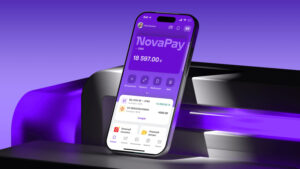
The volume of transfers via the international financial service “NovaPay” (TM NovaPay) in the first half of 2026 increased by 41% compared to the same period in 2025, reaching 391 billion hryvnia, according to a company statement released on Friday.
According to the statement, the number of transfers increased by 12% to 258 million.
The press release, citing NovaPay’s acting CEO Ihor Prykhodko, notes that over the first six months of this year, the financial service paid 19% more in taxes and fees compared to the same period last year—905 million hryvnias.
As previously reported, in the first quarter of 2026, NovaPay increased the volume of transfers by 53% compared to the same period in 2025—to over 200 billion UAH—while the number of transactions rose by 12%—to 126 million.
From January through March 2026, the company transferred approximately 540 million UAH to the state budget, which is 32% more than during the same period in 2025.
In 2025, NovaPay increased its revenue by 10.4% to 10.01 billion UAH, while its net profit decreased by 22% to 2.58 billion UAH.
NovaPay was founded in 2001 as an international financial service provider, part of the Nova Group (“Nova Poshta”), and provides financial services both online and offline at “Nova Poshta” branches. In 2023, the company became the first non-bank financial institution in Ukraine to receive an expanded license from the NBU, which allowed it to open accounts and issue cards; it was also the first non-bank to launch its own financial app with a wide range of financial services at the end of last year.
According to the National Bank of Ukraine, the company accounts for approximately 22.7% of the total volume of domestic money transfers.
The European Union has established a legal framework allowing member states to sell Russian oil that was previously seized and confiscated in the course of cracking down on sanctions evasion.
The relevant provision is included in EU Council Regulation No. 2026/1848 of July 23, 2026, which formalized the 21st package of sanctions against Russia. The document states the need to enable national competent authorities to safely dispose of shipments of Russian oil that they seize and confiscate. Disposing of the cargo may include selling it to third parties.
However, the new provision does not grant EU authorities the automatic right to stop any tanker simply because it is transporting oil of Russian origin. First, the state must have legal grounds to detain the vessel and confiscate the cargo—for example, a violation of the sanctions regime, the absence of a valid flag, the provision of false documents, or other violations of European, national, or international law.
The new regulation primarily specifies what authorities may do with the cargo after its lawful confiscation. Once the confiscation procedure is complete, the former owner does not automatically receive the right to the proceeds from the sale of the cargo. However, the regulation does not establish a uniform procedure for distributing the proceeds across all EU countries, nor does it provide for their automatic transfer to Ukraine. Such decisions will depend on national legislation and the specific case.
According to Euractiv, the measure is primarily aimed at cargo from vessels used to circumvent EU oil sanctions. The option to sell the cargo is intended to address a practical problem: confiscated oil must be unloaded, stored, and safely sold, which entails significant costs and environmental risks.
The mechanism is part of the 21st EU sanctions package, adopted on July 23. The package also increases pressure on the Russian oil sector, traders, and the shadow fleet, and suspends the automatic review of the price cap on Russian oil until July 15, 2027.
In practice, the new rule may make it easier for EU member states to take action against vessels suspected of circumventing sanctions. However, each detention and confiscation must have a separate legal basis, and the owners of the vessels and cargo will be able to challenge such decisions in national and international courts.
According to Fixygen, the global cryptocurrency market is nearing the end of the week without a clear direction: Bitcoin held steady at around $64,500, while Ethereum fell significantly, and inflows into U.S. cryptocurrency ETFs remained volatile.
As of Friday, Bitcoin was trading at approximately $64,400. On Monday, July 20, the leading cryptocurrency opened the week at around $64,680. Thus, the weekly decline was less than 0.5%, indicating consolidation following the market’s massive drop in previous months.
Ethereum showed significantly weaker performance over the same period. At the start of the week, its price was around $1,870, while by Friday it had fallen to approximately $1,620. The weekly decline reached 13%.
The total market capitalization of the cryptocurrency market was estimated at approximately $2.2 trillion. Bitcoin accounted for about 59% of the total market value, reflecting sustained investor demand for the largest and most liquid digital asset amid uncertainty.
U.S. spot Bitcoin ETFs saw about $274 million in net inflows over four trading days from July 20 to 23. On Monday, inflows totaled $226.8 million; on Tuesday, $203.2 million; and on Wednesday, $69.1 million.
However, on Thursday, investors withdrew $225.1 million from Bitcoin ETFs. The bulk of the outflow—$202.5 million—came from BlackRock’s IBIT fund. This virtually wiped out a significant portion of the positive results from the beginning of the week. Data for Friday had not yet been published at the time of writing.
Spot Ethereum ETFs attracted approximately $174.5 million from Monday through Thursday. Net inflows were recorded daily, including $72.7 million on Wednesday and $26.3 million on Thursday. However, these inflows were unable to prevent a decline in the price of Ethereum, indicating that pressure on this asset persists across the broader market.
Earlier, U.S. Bitcoin ETFs broke an eight-week streak of outflows, during which investors withdrew more than $8 billion from the funds. The return to inflows was a positive sign, but the volume remains insufficient to indicate a sustained recovery in institutional demand.
A report published this week by CoinGecko showed that the cryptocurrency market capitalization in the second quarter of 2026 fell by 12.6%—from $2.4 trillion to $2.1 trillion.
The market capitalization of stablecoins decreased by 1.6% to $305.1 billion. This marked the first quarterly decline in this metric since the third quarter of 2023 and may indicate a partial withdrawal of liquidity from the cryptocurrency system.
Spot trading volume on the ten largest centralized crypto exchanges fell by 27.9% in the second quarter—to $1.95 trillion. In May, the figure dropped to $619 billion—the lowest monthly level since the start of the year—before rebounding to $695 billion in June.
Trading volume in perpetual futures on the largest centralized exchanges decreased by 10%—from $14.1 trillion to $12.7 trillion. The more moderate contraction of the derivatives market compared to the spot segment indicates that traders remain primarily interested in short-term and speculative trades.
One of the week’s major regulatory developments was the publication on July 22 of an updated version of the U.S. CLARITY Act. The bill aims to establish comprehensive rules for the digital asset market and allocate authority between the U.S. Securities and Exchange Commission and the Commodity Futures Trading Commission.
In May, the Senate Banking Committee approved the bill by a vote of 15 to 9. However, the updated version sparked new disagreements, particularly regarding investor protection, combating illicit financing, and limiting conflicts of interest among government officials.
Thus, the week did not provide the market with a clear signal. Bitcoin showed relative stability, but Ethereum’s decline, the sharp reversal of flows into Bitcoin ETFs on Thursday, and weak quarterly figures for exchange activity indicate that market participants remain cautious.
The final results of the week will depend on Friday’s flows into U.S. ETFs, the situation in global risk markets, and further progress on cryptocurrency legislation in the U.S.

The Ukraine-Philippines Business Forum, attended by more than 65 representatives of companies, government agencies, financial institutions, law firms, and business associations from both countries, took place on July 23 in Makati City, Philippines.
The event opened with video messages from Ukrainian Foreign Minister Andriy Sybiga and a speech by Philippine Deputy Minister of Trade and Industry Seferino Rodolfo.
Participants discussed opportunities for developing bilateral cooperation in the agri-food sector, information technology, digital services, the food industry, creative industries, as well as in the defense sector and the field of dual-use technologies.
During the forum, the business environment in Ukraine and the Philippines was presented, along with financial and legal tools for foreign companies, the results of Ukraine’s digital transformation, and the capabilities of Ukraine’s defense-industrial complex.
Representatives from the Makati Business Club, the Nordic Chamber of Commerce of the Philippines, the European Chamber of Commerce of the Philippines, and the Philippine Chamber of Commerce and Industry discussed market access, attracting investment, and developing direct contacts between companies with entrepreneurs. These organizations, together with the Ukrainian Embassy, served as partners for the forum.
The event concluded with bilateral B2B matchmaking sessions, during which Ukrainian and Philippine companies were able to discuss specific projects and areas for further cooperation.
The forum was the centerpiece of the Ukrainian business mission to the Philippines, scheduled for July 23 through August 1, 2026. Its goal is to expand the presence of Ukrainian companies in the Philippine market and in Southeast Asia as a whole.
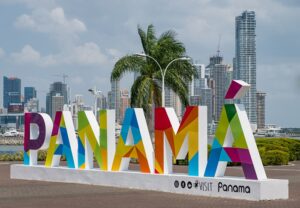
According to Experts.news, the Experts Club think tank analyzed the results of the international Expat Insider 2026 survey, conducted by the InterNations community. Panama, Mexico, and Thailand were named the best countries for expats to live in, while Norway, Germany, and Turkey ranked last.
The survey was conducted from February 1 to March 31, 2026. A total of 7,786 expats representing 162 nationalities participated. The final ranking included 31 countries, each of which received at least 50 completed questionnaires. Participants evaluated up to 53 aspects of life abroad, including work, personal finances, quality of life, living conditions, and ease of social adaptation.
Panama took first place for the third year in a row. About 87% of foreigners living in the country said they were satisfied with their life abroad, while the global average was 70%.
The country ranked first in working conditions and personal finances, second in ease of adaptation and access to essential services, and sixth in quality of life. About 90% of respondents believe their current income is sufficient for a comfortable life, and 76% are satisfied with their financial situation.
Panama also received the highest ratings for housing affordability. Nine out of ten expats reported that it is easy to find housing in the country. 82% of respondents described the visa application process as simple. Retirees make up a significant portion of the expat community—their share reached 37%, and 34% of respondents intend to stay in the country permanently.
Mexico took second place, once again becoming the global leader in ease of social adaptation. About 73% of foreigners said it was easy for them to make friends among locals, compared to a global average of 39%.
However, safety remains a weak point for Mexico. 68% of respondents rated their personal safety positively, compared to a global average of 81%. Despite this, 73% of expats are satisfied with their financial situation, and 38% plan to stay in the country permanently.
Thailand took third place and became the country with the most life-satisfied expats. 86% of respondents reported feeling content, and 42% expect to stay in the country permanently.
Expatriates particularly praised the cost of living, the affordability of rent, and the quality of healthcare. At the same time, Thailand received low ratings for its environmental conditions, digital administrative services, and the ease of opening bank accounts. Only 33% of respondents rated air quality positively, and 80% consider the Thai language difficult to learn.
The top ten in the ranking also included the UAE, Brazil, Spain, Singapore, Portugal, Malaysia, and Luxembourg. The top five countries in the personal finance index are Panama, Thailand, Mexico, Portugal, and Malaysia. In most of the top-ranked countries, expats also rate housing affordability and the attitude of the local population highly.
Norway came in last, at 31st place. Only 46% of foreigners living there are satisfied with their lives, and 72% find it difficult to make friends among the local population. Only 39% of respondents rated their financial situation positively.
At the same time, Norway remains one of the countries with the highest ratings for environmental conditions, air quality, job security, and economic stability. The main challenges for expats were the high cost of living, social isolation, the climate, and limited leisure opportunities.
Germany ranked 30th. About 61% of expats described dealing with the bureaucratic system as difficult. Only 19% rated housing affordability positively, and the same percentage found it easy to find housing.
Germany also ranked last on the index of basic conditions for expats. Survey participants criticized the lack of online access to government services, problems with home internet, and the limited availability of cashless payments. In addition, 57% of expats reported that they found it difficult to make friends among Germans.
Turkey ranked 29th, placing last in terms of working conditions, wages, and economic stability. About 61% of respondents gave a negative assessment of the state of the Turkish economy, and 34% reported an annual income of less than $12,000 before taxes.
Fifty-eight percent of expats are satisfied with life in Turkey, 14% intend to leave the country within the next year, and only 13% plan to stay permanently.
The bottom ten also included Switzerland, Austria, Italy, the Czech Republic, Sweden, Canada, and the United Kingdom. Eight of the ten countries at the bottom of the ranking are in Europe. However, Austria ranked fifth in quality of life, Switzerland eighth, the Czech Republic 13th, and Sweden 15th. This suggests that a low overall ranking is often linked not to infrastructure or safety, but to the high cost of living, bureaucracy, and difficulties with social integration.
According to Maxim Urakin, founder of the Experts Club think tank, the study’s results should not be viewed as a universal ranking of countries’ levels of development.
“The ranking does not show which country is objectively richer or better governed, but rather how easily a specific foreigner can integrate into local daily life. Developed infrastructure and high salaries can go hand in hand with expensive housing, complex bureaucracy, and social exclusivity.
At the same time, less affluent countries may score higher thanks to affordable living costs, simple paperwork, and a welcoming attitude toward newcomers,” Urakin noted.
He added that when choosing a country to move to, it is necessary to analyze immigration laws, the tax system, the labor market, healthcare, education, and real estate prices separately.
InterNations emphasizes that the ranking is based on the subjective satisfaction of respondents, rather than on a comparison of official statistics. It does not take into account a number of important factors, including international taxation and childcare services, and the safety rating reflects respondents’ personal perceptions rather than the actual crime rate.
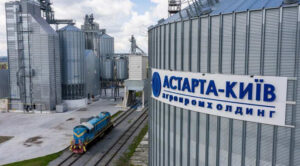
Astarta, an agro-industrial holding and Ukraine’s largest sugar producer, increased its product sales by 34.3% in April–June 2026 compared to the same period in 2025, reaching 266,640 metric tons, according to data published by the holding on the Warsaw Stock Exchange.
According to the data, due to lower prices for sugar and milk, revenue growth was more modest—at 16.9%: in total, the company sold 4.58 billion UAH worth of its main products in the second quarter of this year, compared to 3.91 billion UAH in the second quarter of 2025.
In particular, sugar sales increased by 28% in volume terms in the second quarter of this year—to 92,600 metric tons—while the average selling price fell by 14.3%—to 20,770 UAH per metric ton.
Astarta’s sales volumes of wheat and corn during the reporting period amounted to 62.03 thousand metric tons and 3.18 thousand metric tons, respectively, at average prices of 9.90 thousand UAH per metric ton and 27.45 thousand UAH per metric ton, respectively, whereas the company did not sell these products in the second quarter of last year.
Corn sales, on the other hand, fell by 19.1% to 32.39 thousand metric tons, while the price rose by only 3.9% to 10.02 thousand UAH per metric ton.
Sales of soybean oil in the second quarter of 2026 fell by 27.8% compared to the same period in 2025—to 8.48 thousand metric tons—as the price of this product rose by 13.9%—to 52.28 thousand UAH per metric ton. Sales of soybean meal also fell by 15.8%—to 37.11 thousand metric tons—as the price rose by 23.1%—to 18.76 thousand UAH per metric ton.
The agricultural holding’s milk sales in April–June 2026 increased by 2.6% to 30.84 thousand metric tons, but the price of this product fell by 14.8% to 15.79 thousand UAH per metric ton.
Taking these figures into account, Astarta increased its total sales volume of core products for the first half of the year by 32.3% compared to the same period in 2025, reaching 656.28 thousand metric tons. Due to lower prices for sugar and milk, revenue growth was also lower—by 20.2%: in total, the company generated 10.95 billion UAH in revenue from its core products, compared to 9.11 billion UAH in the first half of 2025.



