
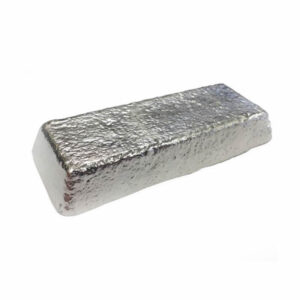
In January–June 2026, Ukraine increased its imports of tin and tin products 2.1-fold compared to the same period last year, reaching $4.061 million, according to Fixygen.
According to customs statistics, imports of tin and tin products in June totaled $769,000.
Exports of tin and tin products in January–June 2026 amounted to $692,000, and in June—$98,000, compared to $86,000 in January–June 2025.
As previously reported, Ukraine increased its imports of tin and tin products by 36.5% in 2025 compared to 2024, reaching $4,352 million. Exports of tin and tin products totaled $241,000, compared to $389,000 for the 12 months of 2024.
Tin is primarily used as a safe, non-toxic, corrosion-resistant coating, either in its pure form or in alloys with other metals. The main industrial applications of tin include tinplate (tinned iron) for food packaging, solders for electronics, plumbing pipes, bearing alloys, and coatings made of tin and its alloys. The most important tin alloy is bronze (with copper).
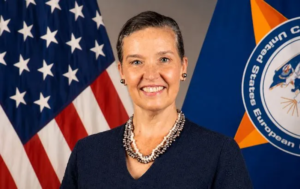
Sandra Oudkirk, who has more than 30 years of experience in the diplomatic service, has become the new U.S. chargé d’affaires in Ukraine.
This was reported on the website of the U.S. Embassy in Ukraine.
Sandra Oudkirk is a career diplomat and a member of the U.S. Senior Foreign Service who has represented the interests of the United States in various countries around the world for more than 30 years, holding positions with a steadily expanding range of authority and responsibility.
Since 2024, she has worked at the U.S. Department of Defense, where she initially served as deputy director of the George C. Marshall European Center for Security Studies and later became the civilian deputy and foreign policy adviser to the United States European Command. From 2021 to 2024, Sandra Oudkirk headed the American Institute in Taiwan.
While working in Washington, Oudkirk held positions in the Bureau of East Asian and Pacific Affairs, the Bureau of Energy Resources, and the Bureau of Economic and Business Affairs. She dealt with issues of strategic competition among major powers, energy security, countering threat financing, and imposing economic sanctions. She previously also worked as a senior watch officer at the U.S. Department of State Operations Center.
Abroad, she served in Taipei, Dublin, Ankara, Kingston, Istanbul, and Beijing.
Sandra Oudkirk was born and raised in Tampa, Florida. She graduated from Georgetown University’s School of Foreign Service. She is married to diplomat Scott Oudkirk and has three adult children. She speaks Chinese (Mandarin) and Turkish.
As reported, Julie Davis had served as U.S. chargé d’affaires in Ukraine since May 2025.
Davis’s predecessor, former U.S. Ambassador Bridget Brink, left the ambassadorial post in April 2025. She later openly stated that she had decided to resign because of the foreign policy of President Donald Trump’s administration.

The Cabinet of Ministers has decided to reorganize the structures of several ministries in accordance with the Verkhovna Rada’s decisions, Ukrainian Prime Minister Serhiy Koretskyi announced.
“We are reorganizing the structure of the ministries in accordance with the parliament’s decisions. We are reinstating the Ministry of Agrarian Policy and are establishing a separate Ministry of Community Affairs, Territories, and Internally Displaced Persons. We have separated the areas of economy and environment and recovery, as well as infrastructure and transportation,” he wrote on his Telegram channel.
According to Cabinet of Ministers Resolution No. 963 issued on Friday, the Ministry of Economy, Environment, and Agriculture has been renamed the Ministry of Economy and Environment of Ukraine; the Ministry of Community Development has been renamed the Ministry of Recovery, Infrastructure, and Transport of Ukraine; the Ministry of Community Affairs, Territories, and Internally Displaced Persons has been established; and the decision to liquidate the Ministry of Agrarian Policy and Food has been revoked.
As previously reported, on July 16, the Verkhovna Rada appointed Serhiy Koretskyi, chairman of the board of Naftogaz of Ukraine, as Prime Minister of Ukraine and, upon his recommendation, approved the new composition of the Cabinet of Ministers.
The number of deputy prime ministers in the new Cabinet has been reduced from four to three, while the number of ministries has increased from 15 to 17 due to the division of large agencies.
This increase in the number of ministries is due to the latest split of the Ministry of Economy, Environment, and Agriculture into the Ministry of Economy and Environment and the Ministry of Agrarian Policy and Food.
The government also no longer has the position of Deputy Prime Minister for the Reconstruction of Ukraine—Minister of Community and Territorial Development—nor the corresponding ministry. In the new Cabinet, these functions are divided between the newly created Ministry of Communities, Territories, and Internally Displaced Persons and the Ministry of Reconstruction, Infrastructure, and Transport.

On Monday, July 20, moderate to heavy rain and thunderstorms are expected across Ukraine—except in the east and southeast—during the day and in most western regions; in some areas, hail and squalls with wind speeds of 15–20 m/s are expected. The wind will be southwesterly, shifting to northwesterly, at 7–12 m/s.
Nighttime temperatures will range from 15–20°; daytime temperatures will range from 22–27°, and in the south and east of the country, from 26–31°.
Weather forecast for Kyiv on July 20: brief showers and thunderstorms. The wind will be southwesterly, shifting to northwesterly, at 7–12 m/s. Nighttime temperatures will range from 17–19°, and daytime temperatures from 26–28°.

The number of inquiries from foreign clients regarding the purchase of luxury real estate in the U.S. during the first five months of 2026 doubled compared to the same period last year, according to an interim report by Coldwell Banker Global Luxury published on July 14.
The calculation is based on data from the international platform JamesEdition and reflects trends in buyer inquiries from January 1 through May 10, 2026, compared to the same period in 2025. Thus, this reflects a rise in interest among potential clients, rather than a doubling in the number of closed deals.
California accounted for the largest share of inquiries from foreign buyers. New York and Florida followed, with New York in particular showing the highest growth rate in interest from abroad. Foreign investors view American premium-class properties as a way to geographically diversify their assets and preserve capital over the long term.
Another trend has been the rise of so-called “landmaxxing”—the acquisition of neighboring homes and land parcels to expand one’s estate, enhance privacy, preserve the view from windows, or create multi-generational family estates. Demand for unique properties—including estates, historic buildings, branded residences, and private islands—has risen by 146%, while interest in land parcels has increased by 97%.
Nearly 40% of luxury real estate professionals surveyed reported that affluent buyers are willing to purchase homes in need of renovation if they are located in a prestigious neighborhood. At the same time, 63% of real estate agents noted an increase in the share of cash transactions among clients in the premium segment, compared to 51% a year earlier.
According to the latest study published by the National Association of Realtors, covering transactions from April 2024 through March 2025, foreigners purchased 78,100 U.S. residential properties with a total value of $56 billion. The number of purchases rose by 44%, and their total value increased by 33.2%. The median price of residential properties purchased by foreign buyers reached a record $494,400, with 47% of transactions paid for entirely in cash.
The top 10 countries of origin for foreign buyers included China with a 15% share, Canada with 14%, Mexico with 8%, India with 6%, the United Kingdom with 4%, as well as Brazil, Colombia, Nigeria, and the UAE, each with 3%. Israel ranked tenth with a 2% share. These figures apply to the entire U.S. residential real estate market, not just the luxury segment.
Among U.S. states, the top destinations for foreign buyers remained Florida, which accounted for 21% of transactions, California—15%, Texas—10%, New York—7%, and Arizona—5%.

Greece is gradually introducing new rules designed to speed up the sale, gifting, and inheritance of real estate, as well as to reduce the number of documents that owners must obtain on their own from government agencies. Some of the provisions are already in effect, while the full implementation of the rest will require additional decisions by government agencies.
One of the key innovations will be the “single window” principle. Notaries will independently obtain, through government digital systems, tax and insurance certificates, electronic property passports, cadastral extracts, and documents required for filing tax returns. This should reduce the number of times sellers and buyers need to contact various government agencies.
However, the “single window” system is not yet fully operational. The date of its practical launch, technical specifications, and the list of available operations must be determined by a joint decision of the relevant ministries.
The law also eliminates the requirement to attach a topographic plan to contracts for properties located in areas where cadastral surveying has already been completed. This provision takes effect upon the law’s publication.
Heirs are permitted to pay inheritance, gift, or property transfer tax on assets received from their parents directly from the proceeds of the property’s sale. Previously, the requirement to pay the tax before the transaction was finalized could force owners to seek additional financing or renounce the inheritance. Between 2013 and 2019, approximately 180,000 renunciations of inherited property were registered in the country.
Certain changes pertain to real estate seized for tax debts. Following the adoption of a supplementary resolution by the Independent State Revenue Service, notaries will be able to conduct the sale of such properties, withholding a portion of the proceeds to settle the debt. Once the specified amount is transferred, the tax lien will be lifted.
In addition, the state will restrict the assertion of rights to private land plots when correcting initial entries in the National Cadastre. Specifically, claims may not be asserted against certain properties whose ownership is confirmed by old purchase agreements, government land allocation deeds, or documents granting plots to resettlers and farmers.
The reform may make the Greek real estate market more accessible to foreign buyers, as it reduces the administrative burden and lowers the risk of transaction delays due to the lack of certain certificates. However, investors should note that some of the measures are being introduced gradually, and verification of a property’s legal status and cadastral records remains mandatory.



