
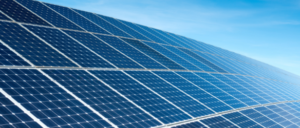
The Antimonopoly Committee of Ukraine (AMCU) may grant permission on Thursday to the Saudi company FAS Energy to acquire four solar power plants from the Ukrainian group of companies SPP Development Ukraine.
According to the committee’s materials, four applications from the commercial company “FAS Energy” regarding the acquisition of more than 50% of the shares in Borodianka Solar Power Plant LLC, “Myhalivska Solar Power Plant,” “Solar Power Plant No. 8,” and “Solar Power Plant No. 11,” which are owned by the Ukrainian group of companies SPP Development Ukraine.
“On granting permission to the commercial company ‘FAS Energy’ to acquire control over Borodianka Solar Power Plant LLC through the direct purchase of shares in the authorized capital, which ensures a majority of more than 50% of the votes in the company’s highest governing body,” – reads one of the four AMCU issues regarding FAS Energy brought up for consideration at Thursday’s meeting.
SPP Development Ukraine is a Ukrainian group of companies specializing in renewable energy and energy infrastructure. The company integrates services in development, engineering, construction, project management (EPC), and operations and maintenance (O&M).
The ultimate beneficial owners (founders) of SPP Development Ukraine LLC are Ukrainian entrepreneurs Roman and Nadiya Petruchenko.
AMCU, FAS Energy, RENEWABLE ENERGY, SOLAR POWER PLANTS', SPP Development Ukraine

Sales of new passenger cars in Ukraine from January through June of this year declined by 1.9% compared to the same period in 2025, to 33,000 units, according to AUTO-Consulting.
Specifically, in June, this market contracted by 7.7% compared to June 2025 (when 6,217 thousand cars were sold).
“So far, the market has entered a downward trend, but AUTO-Consulting does not view this as a catastrophe. It’s worth noting that last year, starting in the summer, there was a boom in electric vehicle sales, as tax incentives were set to expire by the end of 2025, leading to heightened demand; now that such demand has subsided, we’re seeing a slight decline,” the group’s website states.
As noted in the statement, Toyota continues to lead the market, though its sales have declined slightly; Renault came in second, gaining momentum and expanding its model lineup, and surpassed Skoda. In June, Hyundai, Nissan, Mercedes-Benz, and Peugeot also strengthened their positions.
The Renault Duster leads the model rankings, while the Toyota RAV4—awaiting deliveries of the new generation—did not make it into the top three. Instead, the Hyundai Tucson took second place, and the Toyota Land Cruiser Prado took third.
As reported, according to AUTO-Consulting, Ukrainians purchased 83,443 new passenger cars in 2025, which is 17% more than the previous year, with 33,770 cars sold in the first half of the year.
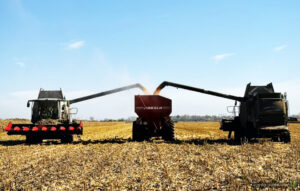
The agricultural holding “Continental Farmers Group” (CFG) has begun harvesting early grain crops and rapeseed on an area of over 70,000 hectares, the company’s press service reported on Thursday.
According to the report, winter wheat will be harvested from 35,300 hectares, winter rapeseed from 26,500 hectares, and winter barley from 8,500 hectares.
“We are starting with the harvest of winter barley in our southern divisions and, with a few days’ interval, will gradually cover all of the company’s clusters. Next, the combines will move on to winter rapeseed and wheat,” the press service quoted Konstantin Shityuk, Chief Operating Officer of Continental Farmers Group, as saying.
The company is deploying 745 units of its own and leased equipment for the harvest. Specifically, this includes 95 combine harvesters, 66 of which are company-owned, including modern combines purchased recently.
The grain harvest will be transported by 650 trucks. Transloading equipment will also be in operation; it has been specially retrofitted with new technical systems for cargo weight control ahead of the harvest.
“The climatic conditions of the current season have stimulated the early ripening of winter crops. According to weather forecasts, the first weeks of the harvest will be marked by dry and hot weather, creating conditions for prompt and uninterrupted harvesting without the risk of rain-related downtime,” the press service reported.
The company also reported that it had secured the necessary fuel reserves well in advance to carry out the harvest in full. Meanwhile, the decline in fuel prices in June is helping to reduce operating costs during the harvest campaign.
As previously reported, the agricultural holding “Continental Farmers Group” (CFG) has joined the global structure of the international agri-food company Olam Agri as a separate business unit.
“Continental Farmers Group” was established in November 2018 as a result of the merger between the ‘Mriya’ agricultural holding and CFG, following “Mriya’s” agreement with the international investor Salic UK regarding the sale of assets.
Continental Farmers Group operates in the Ternopil, Lviv, Ivano-Frankivsk, Khmelnytskyi, and Chernivtsi regions, grows grain and oilseed crops, engages in primary and secondary potato processing, and employs approximately 2,600 people.

The European Commission has launched the Connectivity Agenda Platform—a new platform to coordinate investments in transport, energy, digital infrastructure, and trade between Europe and Central Asia via the Black Sea region and the South Caucasus.
At the same time, the European Commission has signed agreements with international financial institutions to mobilize up to 2 billion euros for strategic infrastructure projects in the Black Sea region and the South Caucasus.
The platform was presented at a high-level ministerial meeting attended by representatives from EU countries, Armenia, Kazakhstan, Kyrgyzstan, Moldova, Tajikistan, Turkmenistan, Turkey, Ukraine, and Uzbekistan, as well as the G7 and international financial institutions.
The main goal of the initiative is to integrate projects for the development of the Trans-Caspian Transport Corridor into a single system; the EU views this corridor as one of the key routes between Europe and Central Asia, bypassing unstable or politically risky routes.
Investments are planned to be directed toward transportation infrastructure, border crossing points, and trade facilitation. The participants also agreed to enhance the operational efficiency of the Trans-Caspian Corridor and asked the European Commission to assess its performance and propose priority measures to improve the route’s competitiveness.
For Ukraine, this initiative is important in several respects. First, Kyiv has been included in the framework for discussions on regional connectivity between the EU, the Black Sea, the South Caucasus, and Central Asia. Second, the development of alternative trade routes reinforces the importance of the Black Sea corridor for exports, logistics, and the restoration of the region’s transit role. Third, such projects could become part of Ukraine’s broader integration into European transport, energy, and digital networks.
The Connectivity Agenda is part of the Global Gateway strategy. This strategy aims to strengthen the EU’s external connections through investments in infrastructure, energy, digital solutions, and sustainable trade.
The European Commission notes that the Trans-Caspian Transport Corridor is already gaining strategic importance as a more resilient route between Europe and Central Asia. According to Marta Kos, European Commissioner for Enlargement, trade along this route could increase fivefold over the next 15 years.
In fact, the EU is seeking to create a new infrastructure architecture along the Europe–Black Sea–South Caucasus–Central Asia axis. For businesses, this means potentially more routes, less dependence on specific transit routes, and new opportunities in logistics, energy, digital projects, and trade.

S1 REIT, an investment company specializing in raising retail investment capital through the REIT model, has attracted more than 1,000 unique investors over the past year, with total funds raised exceeding 110 million hryvnia, the company’s press service told Interfax-Ukraine.
“The average number of certificates per investor is 348. And the total amount of funds raised has already exceeded 110 million hryvnia,” said Viktor Boichuk, commercial director of S1 REIT.
It is noted that more than 15% of investors have invested in two or more of the investment company’s funds.
According to Boichuk, the most significant growth in the number of investors occurred after the start of sales for the “S1 Plaza Poznyaki” fund, when the number of investors quadrupled within a few weeks.
As previously reported, developer Standard One has begun construction of “S1 Plaza Poznyaki” on the Left Bank of the capital. The assets of the “S1 Plaza Poznyaki” fund will include commercial space in a shopping center near the “Poznyaki” metro station in Kyiv. The total area of the property is approximately 5,000 square meters, and the new fund’s issuance amount is 600 million UAH. The initial investment is 1,000 UAH, and the additional investment is 100 UAH. The projected yield for “S1 Plaza Poznyaki” is 10.4% per annum in currency.
S1 REIT is an investment company within the S1 Group. The company operates under the Real Estate Investment Trust (REIT) model, providing investors with the opportunity to participate in the ownership and receipt of income from income-generating properties without directly managing the assets.
The company’s portfolio includes three active funds: “S1 VDNG,” S1 Obolon, and “S1 Plaza Poznyaki.” The assets of these funds consist of income-generating real estate based on development projects by Standard One.

The average price per hectare of agricultural land in Ukraine has nearly tripled in the five years since the market opened—rising from about 30,000 UAH to 87,900 UAH, according to an analytical review by the KSE Center for Food and Land Use Research, dedicated to the fifth anniversary of the opening of the agricultural land market.
According to the study, since the market opened on July 1, 2021, more than 512,800 transactions for the sale of agricultural land have been concluded in Ukraine, covering a total area of 1.154 million hectares and amounting to 51.4 billion UAH.
The average price per hectare during this period was 66,400 UAH, rising to 87,900 UAH in 2026.
The authors of the study note that although the nominal average price of land nearly tripled, when adjusted for inflation, its real value increased by approximately 25%, corresponding to an average annual growth rate of about 4.6%.
The most expensive agricultural land over the five years the market has been operating was sold in Ivano-Frankivsk (139 thousand UAH/ha), Lviv (123.4 thousand UAH/ha), and Kyiv (107.1 thousand UAH/ha) regions
The lowest prices were recorded in Luhansk (24.9 thousand UAH/ha), Kherson (30.5 thousand UAH/ha), Donetsk, and Zaporizhzhia (37 thousand UAH/ha each) regions.
The largest areas of land that changed hands over the five years the market has been operating were recorded in Poltava (107.6 thousand hectares), Dnipropetrovsk (94.8 thousand hectares), and Kharkiv (89.4 thousand hectares) regions.
The study’s authors note that after the market came to a near standstill in the spring of 2022 due to restrictions on access to state registries, activity gradually resumed, and by the second half of 2023, the market had stabilized.
The study also notes that the opening of the market on January 1, 2024, to legal entities with the right to purchase up to 10 thousand hectares did not confirm fears of a sharp increase in demand.
“Despite the concerns of farmers and landowners, the expansion of access did not lead to an abnormal surge in demand—the number of transactions and the area of land sold grew gradually. Although the absolute peak in activity was recorded in the fourth quarter of 2025—nearly 35,000 transactions covering an area of about 70,000 hectares—by the first quarter of 2026, the figures had returned to the usual 2024 level (26,000–28,000 transactions). “This indicates that the market has stabilized and that buyer and seller activity is predictable,” the study notes.
The study was prepared by the Center for Food and Land Use Research at the Kyiv School of Economics (KSE Agrocenter) based on data from the State Geocadastre and the state-owned enterprise “Prozorro.Sales.”



