
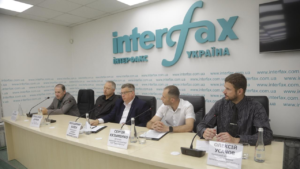
Ukraine’s transport industry, under martial law, staff shortages, border blockades and the rapid adaptation of legislation to EU standards, needs stronger professional representation of carriers’ interests, the development of legal support and the preservation of the institutional capacity of the Association of International Road Carriers of Ukraine (AsMAP). This was stated by the participants of a press conference dedicated to the 35th anniversary of AsMAP Ukraine.
“Despite everything that is happening in our country, the TIR system is operating steadily. We are in fifth place among the associations that work in the guarantee chain system. If last year the guarantee fund amounted to UAH 170 million, today it is UAH 200 million,” said Vice President of AsMAP Ukraine Volodymyr Balin at a press conference at the Interfax-Ukraine agency on Tuesday.
According to him, the IRU requirements for the guarantee fund amount to $3,000 per participant, while some carriers expect a level of $8,000. Balin emphasized that the association is working on financial stability and defending the interests of carriers in matters of employee reservation, interaction with Territorial Recruitment Centers, border crossing by drivers, preventing unlawful disconnection from the “Shliakh” system and preventing decisions that may harm business.
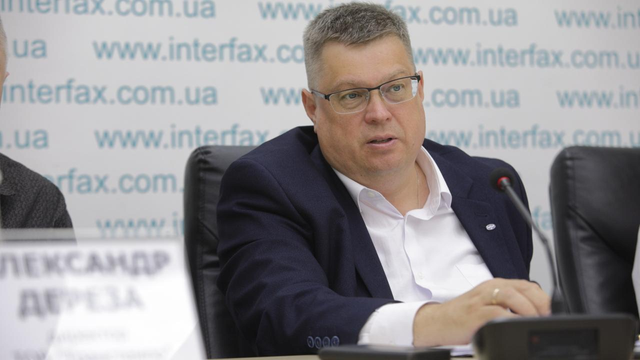
“AsMAP must be the main representative of Ukrainian international road carriers in Ukraine, in the EU and in other international organizations. The protection of every carrier must be a priority — regardless of the size of the company,” the vice president of AsMAP emphasized.
He also reported that he had submitted an application to participate in the competition for the position of president of AsMAP Ukraine.
“I have the experience, knowledge and motivation to effectively perform the duties of president of AsMAP Ukraine. My goal is to strengthen the association, which has influence, enjoys trust and effectively protects every carrier,” Balin stated.
For his part, Oleksandr Dereza, director of Transtempo LLC, which has been operating in the international passenger transportation market for about 25 years, emphasized the importance of practical support for carriers from a professional association.
“There are issues that were not resolved for years and that virtually no one dealt with in the regulatory process. Today AsMAP is probably that ‘lifesaver’ for carriers that represents our interests. New regulatory requirements related to Ukraine’s approximation to European procedures often create difficulties for business due to insufficient preparation of mechanisms for their practical application. In such situations, carriers need a structure that can promptly help and convey the position of business to the authorities,” Dereza noted.
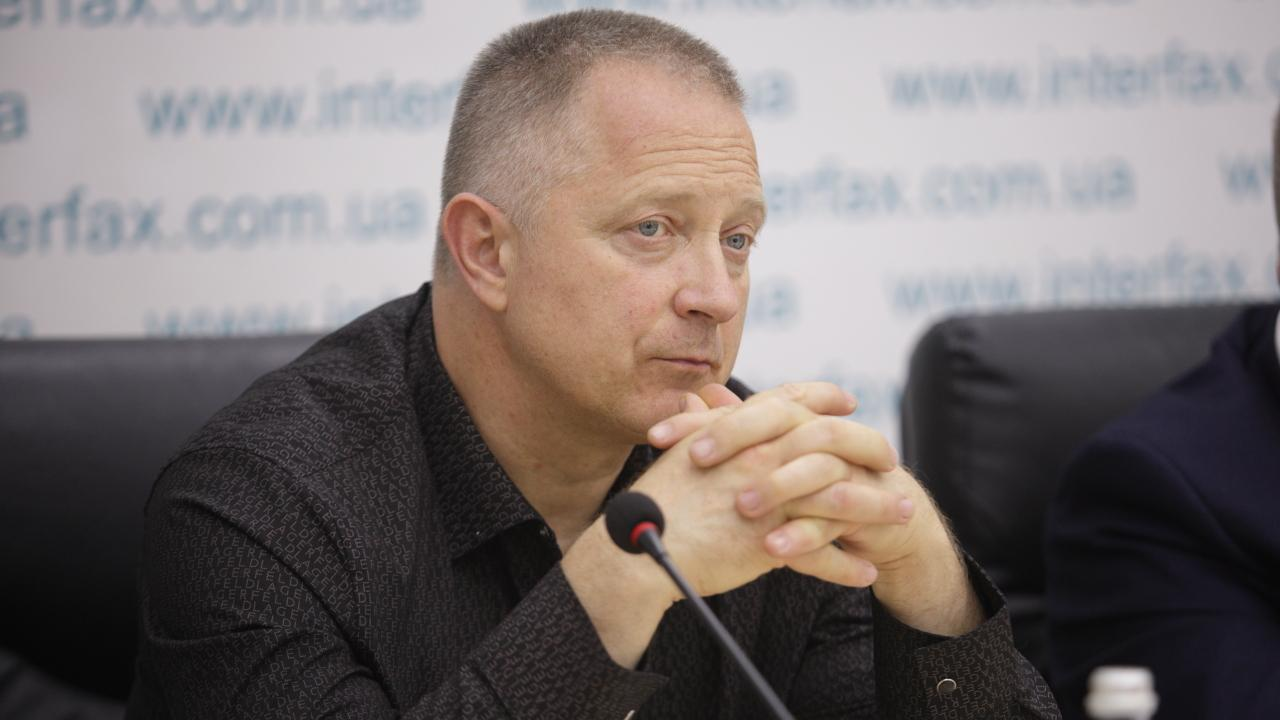
The head of the separate subdivision of the NGO Ukrainian Transport Union in Kyiv region, Oleh Sotnikov, stated that the industry is operating under conditions of rapid legislative reform and therefore needs specialists capable of formulating a consolidated business position and preparing alternative proposals to draft laws and government decisions.
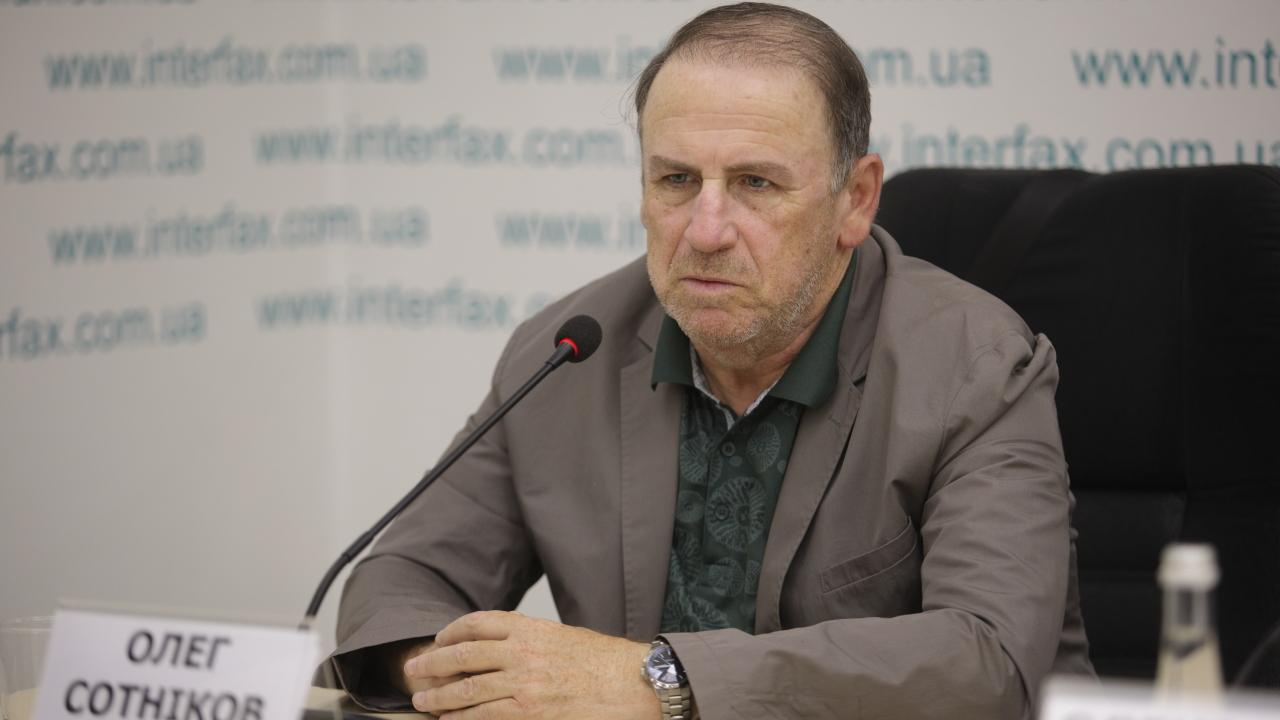
“Ukraine is rapidly adapting its legislation to the legislation of the European Union. The state is transforming legislation, and the transport industry must have people who are able to explain, write alternative draft laws and resolutions of the Cabinet of Ministers,” Sotnikov emphasized.
According to him, in the current flow of changes it is important to work with the relevant ministry and the parliamentary committee already at the stage of preparing documents.
“Volodymyr Balin is a person who in fact accumulates the wishes of the industry and presents the consolidated position of carriers both in the relevant ministry and in the Verkhovna Rada committee on transport issues in order to improve the work of the industry,” Sotnikov noted.
Deputy Director for Operations of Trans-Logistic LLC Serhii Kuzmenko reported that his company has a fleet of more than 220 vehicles, operates in international traffic and within Ukraine, and about half of its vehicles transport temperature-controlled cargo. According to the carrier, the industry is going through difficult times because of the war, border blockades, staff shortages and economic instability.
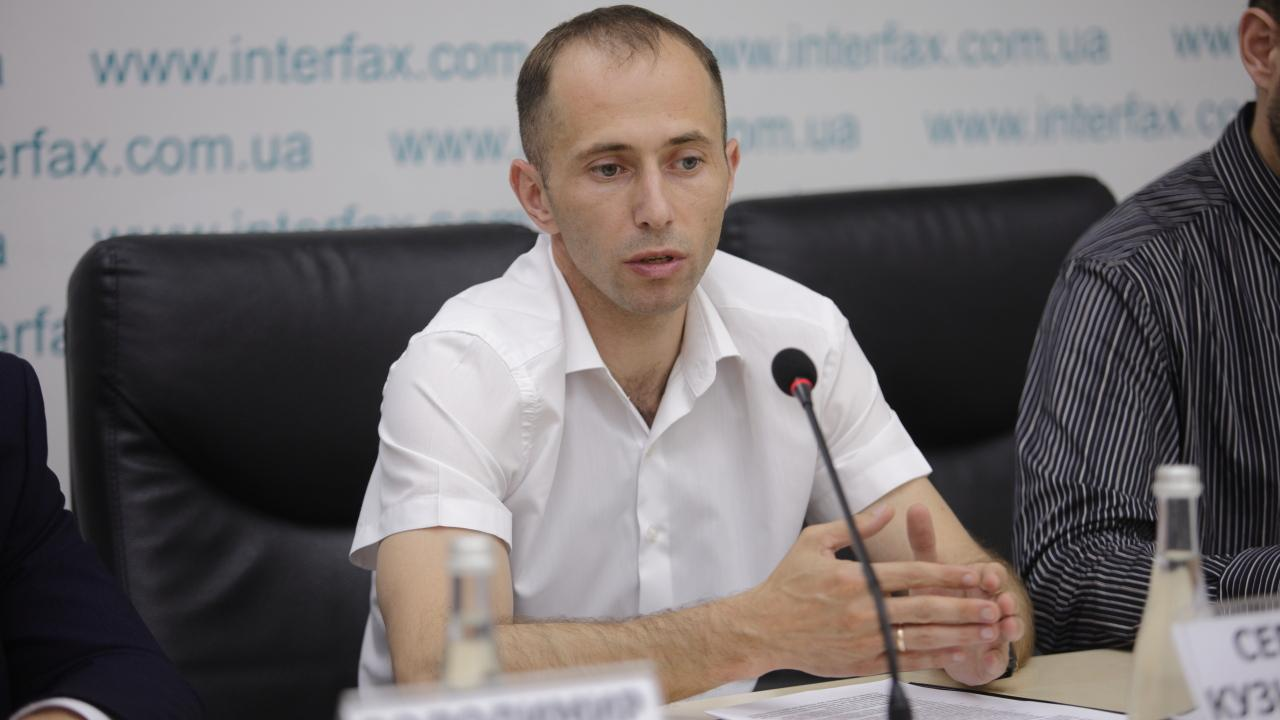
“AsMAP has always been and remains a support for carriers. But today’s challenges force all of us to move to a new level of high-quality, constant and systematic work,” Kuzmenko added.
Among the key problems, he named new requirements regarding drivers’ working and rest time regimes, which, in his opinion, may create risks during the transportation of expensive temperature-controlled cargo.
“From June 26, requirements regarding the driver’s working and rest time regime come into force. Let us imagine a situation: a driver is carrying medicines worth UAH 120–150 million and has no right to spend the night in the cabin. He leaves the vehicle with the cargo and goes to a hotel, but in Ukraine there is in fact not enough infrastructure where such transport can be safely left,” Kuzmenko noted.
He also drew attention to the need for parity conditions for Ukrainian carriers in the international arena and protection from disproportionate fines. According to him, since the beginning of the year the company has paid about $12,000 in fines, some of which were related to technical GPS failures or minor errors in documents.
“The GPS signal did not work, or the dispatcher made a spelling mistake — and for each such case we received a $3,000 fine. These are very significant penalties for things that, in my opinion, are minor,” the representative of Trans-Logistic emphasized.
Kuzmenko called for the creation of a system of round-the-clock international legal support for carriers, and among other problems he named the digitalization of AsMAP, promotion of the driver profession, participation in training programs for women drivers, control over the possible introduction of toll roads, standards for parking areas and services for drivers, revision of restrictions on the movement of freight transport through Kyiv and employee reservation.
The moderator of the press conference, political consultant and chairman of the board of the Institute of Ukrainian Politics Oleksii Usachov, emphasized that Ukrainian carriers had historically been an important part of European trade and logistics routes, and during the full-scale war had proved their critical role for the state, the army and society. According to him, logistics became one of the key factors of Ukraine’s resilience during the evacuation of people, the provision of military logistics and the delivery of humanitarian aid.
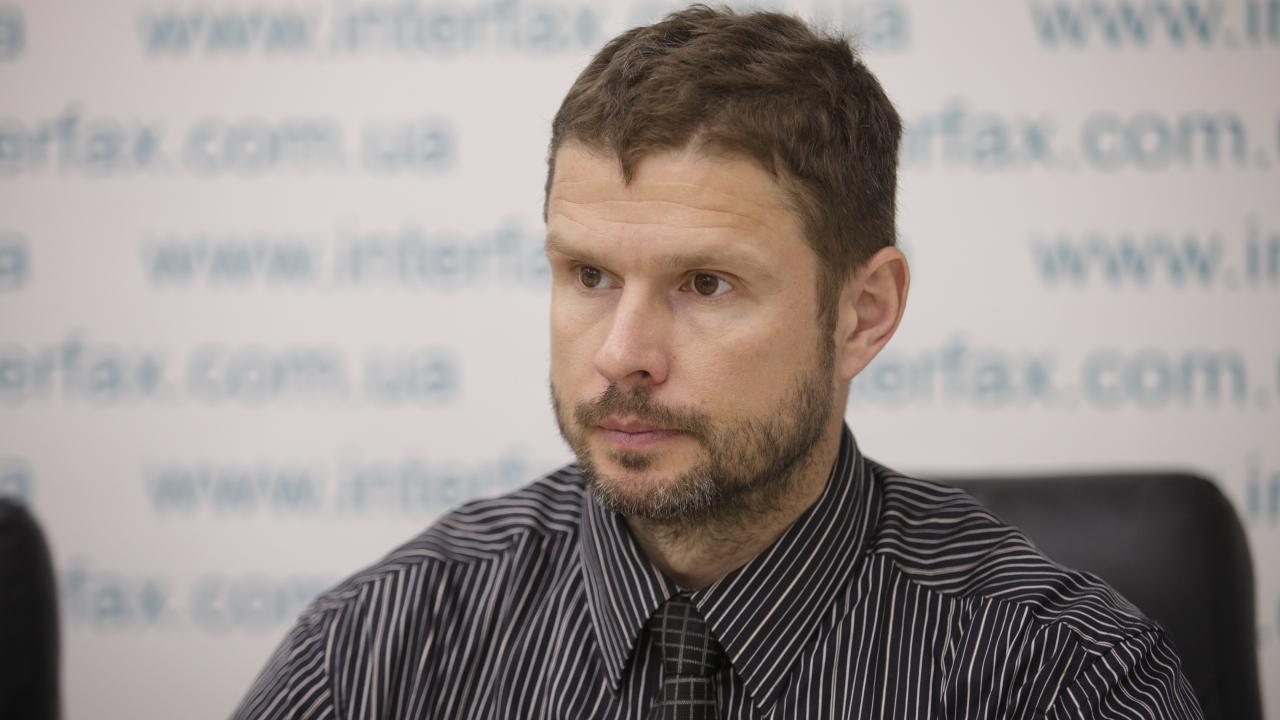
“After the start of the full-scale war, Ukrainian carriers showed their efficiency and heroism during the evacuation of people, the provision of military logistics and the delivery of humanitarian aid. This saved thousands and tens of thousands of lives,” Usachov stated.
He emphasized that AsMAP is needed not only by carriers, but also by the state as an institution that represents Ukrainian business in the international arena and ensures dialogue between the industry and the authorities. At the same time, Usachov stated that there were risks of weakening the association and called on the relevant ministry and law enforcement agencies to monitor the situation around preparations for the election of the organization’s leadership.
“I appeal to the leadership of the relevant ministry and to law enforcement officers to keep the situation under control and not allow manipulations, machinations and falsifications during the process of electing the new leadership of AsMAP,” Usachov emphasized.
Summing up the meeting, Volodymyr Balin expressed hope that international carriers, during the vote, would make a choice in favor of developing an association that would work “for each carrier without exception,” and not for a separate group of individuals.
INTERNATIONAL CARRIERS, LEGAL PROTECTION, OLEH SOTNIKOV, OLEKSII USACHOV, SERHII KUZMENKO, TRANSPORT INDUSTRY, ВОЛОДИМИР БАЛІН, ОЛЕКСАНДР ДЕРЕЗА

Ukraine’s European integration is entering a new practical stage, at which dialogue between the state and business is becoming one of the key tools for preparing the country for future EU membership.
This is stated in a column by Viktoriia Lobun, adviser to the Deputy Prime Minister for European and Euro-Atlantic Integration of Ukraine, published by the Interfax-Ukraine agency.
According to her, a historic step was the opening on June 15, during the Second Intergovernmental Conference between Ukraine and the EU in Luxembourg, of Cluster 1 “Fundamentals of the EU accession process.” This cluster is fundamental for the entire negotiation process, opens it and will remain open until the completion of the negotiations.
“Today Ukraine faces an ambitious task — to ensure the high-quality preparation of the state for future membership and to implement the changes that will allow it to function fully within the European Union,” Lobun noted.
She emphasized that European integration is not limited to the adoption of legislation or the fulfillment of formal negotiation conditions. It is about how changes will affect the economy, individual sectors, communities, citizens, state institutions, local self-government and business.
Some Ukrainian companies are already effectively operating in a single economic space with the EU: entering European markets, looking for partners, adapting to common rules and changing their own business processes. At the same time, the perception of Ukraine by European business is also changing: Ukrainian partners are increasingly viewed not only as an opportunity, but as a factor of competitive advantage in restructuring supply chains, developing new production facilities and strengthening Europe’s economic resilience.
The EU remains Ukraine’s largest trading partner — accounting for more than 63% of foreign trade in goods. The next step, according to Lobun, should be the transition from perceiving Ukraine as an external partner to perceiving it as part of the common market.
Platforms for discussing Ukraine’s economic integration with the EU play a separate role in this process. In particular, these issues were raised at the EU-Ukraine Business Summit in Brussels and will be discussed during the Ukraine Recovery Conference in Gdańsk. As part of the conference, a workshop is planned on how to combine Ukraine’s recovery with preparation for EU membership.
One of the practical tools for preparing for European integration has been a series of regional dialogues with business. In the first half of the year, such dialogues have already taken place for the agricultural sector, the metallurgical industry and the pharmaceutical industry. They were joined by representatives of business, sectoral associations, authorities, parliament and the expert community from different regions of Ukraine.
In fact, this is about creating a permanent mechanism of interaction between the state and business on issues of European integration.
One of the main questions of such dialogues is what Ukraine’s integration into the EU internal market will look like in practice. The transition from the model of external partnership to the model of the common market requires a new balance between competition and integration.
In some areas, this process already has practical examples — in particular in the energy market and roaming. At the same time, there are more complex areas where Ukraine is a strong player, in particular the agricultural sector and metallurgy. It is precisely here that it is important to ensure integration into the EU internal market without losing the competitive advantages of Ukrainian producers.
Lobun notes that dialogue with business makes it possible to better understand the expectations and concerns of companies regarding individual areas of integration. Meetings in the regions where business operates under conditions of constant risks are especially important. This makes it possible to shape policy focused not only on compliance with European requirements, but also on the real capabilities of the Ukrainian economy.
Ahead, Ukraine is expected to fulfill the conditions and benchmarks of the “Fundamentals” Cluster, as well as to work on opening the next negotiation clusters. They cover a significant part of the economic component of future membership — the internal market, competition policy, freedom of movement of goods and services, and other areas important for Ukrainian business.
Thus, dialogue between the state and business is becoming not only a communication tool, but one of the mechanisms for Ukraine’s practical preparation for membership in the European Union.
The success of the negotiation process, as Lobun emphasizes, will be determined not only by the number of opened or closed clusters. Its real result should be the creation of a modern, competitive and resilient state, ready to function fully as part of the European community.
Source: Interfax-Ukraine, Viktoriia Lobun’s column “European integration is moving into the practical dimension: why dialogue with business is becoming critically important.”
Ukrainian citizens ranked second among the largest groups of foreign residents in Germany as of the end of 2025, trailing only Turkish citizens.
According to data from the German Federal Statistical Office, 1.409 million Ukrainian citizens were living in the country as of the end of 2025. This is an increase from the previous year, when the figure stood at 1.334 million.
Turkish citizens remain the largest foreign group in Germany, numbering 1.520 million people. They are followed by Ukrainians, then Syrian citizens (936,3 thousand), Romanian citizens (903,8 thousand), and Polish citizens (839,7 thousand).
Thus, Ukrainians have become the second-largest foreign community in Germany. This is a direct consequence of Russia’s full-scale war against Ukraine and the mass displacement of Ukrainians to EU countries after 2022.
At the same time, the overall demographic situation in Germany has deteriorated. According to Destatis, the country’s population in 2025 declined for the first time since 2020—to 83.5 million people. Net immigration of 235,000 people was no longer sufficient to offset natural population decline: the number of deaths exceeded the number of births by 352,000.
For Germany, Ukrainian migration remains an important demographic and labor factor. Against the backdrop of an aging population and a labor shortage, Ukrainians have already become one of the key groups of foreigners in the country, and their integration into the labor market, education system, and social welfare system will have long-term significance for the German economy.
According to Serbian Economist, several major wildfires have been reported in Croatian Dalmatia—on Hvar, in the Šibenik area, in Teljašica Nature Park, in Plata, and near the border with Montenegro, regional media report.
One of the fires near the border with Montenegro has partially spread into Croatian territory. In the Plata area, a forest fire broke out near a power line; local fire departments and emergency services were dispatched to the scene.
On the island of Hvar, a fire broke out in the area of Sv. Nedelja. According to Croatian media reports, the fire engulfed about 10 hectares of pine forest and approached the edges of vineyards. Local firefighters and additional units from the island participated in extinguishing the blaze.
In the Šibenik area, preliminary data indicate that the fire engulfed about 100 hectares of grass, low vegetation, and pine forest. In Telasčića Nature Park, two hotspots remained active—in the area of Jaz Bay and near Mala Proversa, on the eastern side of the park toward the Kornati Islands.
Firefighters, water bombers, an Air Tractor, and other emergency services are involved in extinguishing the fires. In some areas, the situation is complicated by dry vegetation, wind, and difficult-to-access terrain.
For the region, this marks the beginning of a challenging summer period: Dalmatia traditionally remains one of Croatia’s most vulnerable areas in terms of wildfires. The risks are particularly high on the islands, in coastal pine forests, and in areas with high tourist traffic.
There is no talk of a large-scale evacuation of tourists at this time, but authorities and fire departments are urging residents and visitors to the region to monitor official warnings.
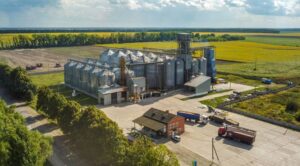
TAS Group is considering new acquisitions in the agricultural sector and would like to expand its land bank by another 20,000–25,000 hectares, said the group’s founder, Serhiy Tihipko.
“We are interested in agriculture. We would gladly acquire 20,000–25,000 hectares right now. We are strengthening our grain elevator operations,” he said at the Concorde Capital investment conference in Kyiv.
The agricultural sector remains one of the areas where the group sees potential for expansion. Earlier, Oleg Zapletnyuk, CEO of the TAS Agro agricultural holding, reported that the strategic plan calls for increasing the land bank from the current 80,000 hectares to 100,000 hectares by the end of 2026.
The next stage, he said, is to grow to 120,000 hectares by 2028.
Strengthening its grain storage infrastructure is important for the agricultural holding in terms of controlling logistics, storing the harvest, and ensuring sales flexibility. Given unstable export logistics and pressure on margins, having its own storage capacity is becoming one of the key factors in competitiveness.
The TAS Group is already active in the agricultural sector through TAS Agro. For the group, expanding its land bank and grain storage capacity could be a way to strengthen vertical integration and reduce dependence on external infrastructure.
agricultural sector, grain storage facility, LAND BANK, TIGIPKO, ТАСС
The Ukrainian fintech market is entering a phase in which the automation of compliance, financial monitoring, and sanctions control is no longer a support function but rather a core component of a business’s financial resilience infrastructure.
This is discussed in a column by the CEO of AML.point, Oksana Gubina, an advisor on RegTech projects at AI FINTECH, for the Interfax-Ukraine news agency, prepared in the context of the Fintech Catalog UA 2026 presentation.
According to the catalog, there are over 300 fintech companies operating in Ukraine. A significant portion of them have already achieved operational self-sufficiency, nearly half are expanding their presence in international markets, and the majority continue to grow using their own resources.
The Fintech Catalog UA 2026 was prepared by the Ukrainian Association of Fintech and Innovative Companies with the support of the National Bank of Ukraine, IFC, SECO, and Sense Bank. The study was conducted in April–May 2026 among fintech companies, banks, and Ukrainian branches of international fintech companies, with 150 respondents participating.
According to Gubina, the Ukrainian fintech sector is developing in an environment where issues of transparency, risk management, and regulatory compliance are no longer secondary. Tighter sanctions controls, financial monitoring, and requirements for transparency regarding the origin of funds and ownership structure have made compliance one of the key elements of corporate resilience.
“Financial companies are increasingly viewing compliance not as external coercion by regulators, but as a tool for building trust, reputation, and long-term competitiveness. That is why investments in RegTech are increasingly seen not as expenses, but as investments in the company’s future stability,” she noted.
RegTech solutions are gradually shifting from the category of ancillary services to that of critical business infrastructure. For banks, financial companies, payment services, credit institutions, and other market participants, the automation of KYC, AML, and sanctions control is already a matter of operational speed, the quality of risk management, and the ability to meet regulatory requirements in near real time.
At the same time, the automation of financial monitoring is not limited to installing software. It requires the integration of various information systems, high-quality data, the establishment of reliable information processing workflows, change control, the preservation of decision histories, and a balance between customer convenience and compliance with regulatory requirements.
One of the emerging market trends is the convergence of ERP and RegTech. ERP systems are responsible for managing a company’s resources and operational processes, while RegTech handles regulatory compliance, financial monitoring, and risk control. However, both areas are increasingly working with large datasets, integrating into operational processes, and helping management make informed decisions.
In practice, this approach allows for the automation of counterparty risk assessments, KYC checks, sanctions screening, transaction monitoring, and the preparation of regulatory reports without placing an excessive burden on staff.
At the same time, according to Gubina, technology does not replace a compliance culture. Automation is effective only when a company has clear internal policies, high-quality data, accountable personnel, and a willingness to systematically manage risks. RegTech does not eliminate the role of the compliance officer but transforms it—shifting the focus from manual verification to managing processes, data, and risk models.
The further development of Ukrainian fintech will be largely driven by integration solutions in the areas of compliance, financial monitoring, and risk management. As requirements for business transparency, sanctions control, and regulatory reporting tighten, the role of RegTech will only grow.
For Ukrainian financial companies, automated compliance is gradually becoming not just an added advantage, but a basic standard for doing business. In the next stage of market development, companies that can combine technological capabilities, transparency, high-quality data, and systematic risk management will gain a competitive advantage.
Sources: Oksana Gubina’s column for “Interfax-Ukraine”, Fintech Catalog UA 2026, Ukrainian Association of Fintech and Innovative Companies.



