

To ensure unhindered bilateral trade with the UK after its withdrawal from the European Union, the State Service of Ukraine on Food Safety and Consumer Protection has agreed on a number of forms of relevant certificates and is negotiating with the UK to deepen cooperation, the agency said in a press release. According to the document, at present, 20 forms of certificates for the export of products to the UK and 12 for the import of products from it have already been agreed.
“After the UK had left the European Union, our efforts were focused on agreeing the forms of certificates for bilateral trade on mutually beneficial terms. Today we already have 20 certificates for exports to the UK and 12 certificates for imports. Work in this direction continues,” head of the service Vladyslava Mahaletska said.
The service also noted that it is negotiating with the competent authorities of the UK on deepening bilateral cooperation, priorities for effective interaction between the parties, resolving veterinary and other issues.
As reported, Ukraine signed a FTA with the UK in 2020. The document provides for access to the British market for 98% of Ukrainian products, and from 2023 it will liberalize trade for another 2%. At the same time, the number of quota goods remains unchanged, although for a number of items their volumes have been expanded.

Exports of Ukrainian organic products to the countries of the European Union in 2020 decreased by 23.1% compared to 2019, to 217,210 tonnes. According to the June report of the European Commission, last year Ukraine ranked fourth in the world among suppliers of organic products to this market, its total share of supplies amounted to 7.8%.
Organic cereals (excluding wheat and rice cereals) became the main Ukrainian export crop to the EU organic market, their exports in 2020 sank by 44%, to 82,900 tonnes. Despite the decline, Ukraine remained the main supplier to the European Union, its share amounted to 74.4% of the total supply.
Exports of organic soybeans from Ukraine to the EU in 2020 increased by 67.8% compared to 2019, to 28.7% (21% of the world exports to Europe), organic oilseeds decreased by one third, to 19,300 tonnes (14.1%), oilseed meal – by 9.4%, to 7,400 tonnes (3.2%).
In 2020, Ukraine also exported 5.9% more fresh and dried organic vegetables to the EU than in 2019, 15,500 tonnes, while the export of fresh, chilled and dried organic vegetables decreased by 13.2%, to 5,400 tonnes.
As reported, the Ministry of Economy in April 2021 planned to allocate UAH 50 million for the development of organic production, the amount of state support may increase due to the redistribution of funds from other state programs.
The ministry intends to provide financial support to organic producers in the amount of UAH 5,000 per hectare of cultivated land (but not more than 20 hectares per farm), as well as for one animal (cattle). In addition, farmers will receive refunds of up to 30% of the cost of certification of organic production.
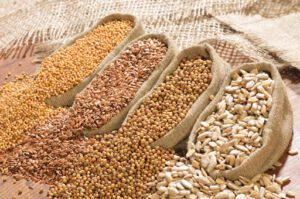
The U.S. Department of Agriculture (USDA) in its June report has improved the forecast for the export of Ukrainian wheat in the 2021/2022 marketing year (MY, July-June) by 500,000 tonnes compared to the forecast in May, to 20.5 million tonnes.
In the report, the department also raised the forecast for the wheat harvest in Ukraine in the new marketing year by 500,000 tonnes, to 29 million tonnes due to a long period of favorable weather conditions.
In June, the USDA retained its forecast for corn exports from Ukraine in the 2021/2022 MY at 30.5 million tonnes, the harvest – at 37.5 million tonnes.
As reported, Ukraine has exported 42.61 million tonnes of grains and legumes since the beginning of the 2020/2021 MY and as of June 9, 2021, which is 22.4% less than on the same date of the previous MY. As of the indicated date, 16.04 million tonnes of wheat and 21.77 million tonnes of corn were exported.

The European Bank for Reconstruction and Development (EBRD) will provide a EUR 10 million two-year committed local currency-denominated working capital loan to the Ukrainian electricity and gas supplier ERU Trading LLC.
As stated in a report of the bank, the decision was made by the board of directors on June 9.
“EBRD funds will be used to support growing gas trading operations of ERU Trading in order to secure low cost gas from EU during summer season and store it in Ukrainian gas storages with further sale in Ukraine,” the EBRD said.
According to EBRD, the proposed project supports a private, independent trader in competing with the dominant player, Naftogaz, in an increasingly liberalised market, and facilitates increased liquidity and competition on the private energy exchange UEEX following the MoU signed by the EBRD in July 2020.
The EBRD will become the first international financial institution in the existing loan portfolio of ERU Trading.
ERU Trading LLC, established in 2016, belongs to Yaroslav Mudry and Dale Perry. According to the information on the company’s website, gas supplies to the population are an important part of its strategy. In February of this year, the company received the license from the energy regulator.
EBRD, ELECTRICITY, GAS, LOAN
Bosch in Ukraine in 2020 increased its sales by 7% compared to 2019, to EUR130 million, CEO of Robert Bosch Ltd. Vitaliy Bulda has said.
“A year ago I spoke about the result of 2019, which became the largest in terms of turnover and profitability (a growth of 34% in turnover), but last year was the largest in terms of these indicators since the beginning of the company’s existence. Although 95% of the company has been quarantined since mid-March due to the pandemic, our warehouses, service and training centers were open 24/7, and a lot of effort was invested in communications,” he said at an online press conference.
Ihor Khazan, the director of the Heating Appliance department (Bosch and Buderus equipment), said that last year the trade turnover in this direction increased by 12% (in euros).
At the same time, more than 120 projects in civil construction were implemented, more than 50 – in commercial construction and more than ten – in industry, and in general, the number of implemented projects increased by 30% from 2019.
According to him, among the key ones are a boiler house with a capacity of 16 MW on fire-tube boilers with very low emissions in the Fayna Town residential complex (Kyiv), a boiler house of 1.6 MW in the LvivTechCity innovation park, a boiler house with a capacity of 15 tonnes of steam per hour for a LinkSel dry yeast plant being under construction in Lviv.
Khazan noted that since 2020, there has been an increasing demand for condensing equipment in housing construction: construction and development companies are increasingly using condensing boilers, which significantly reduce the consumption of natural gas, electricity, reduce harmful emissions, and in private houses, the demand for household condensing boilers and heat pumps is growing.
The director of the department of power tools, Oleksandr Hryniv, noted that 170,000 power tools were sold in 2020, which is 3% more than a year earlier, while 100 new products were offered.
He clarified that more than 30% of sales of power tools came from online sales, which were actively developing.
According to the director of the department of auto parts and equipment, Volodymyr Matusevych, in 2020 the increase in the turnover of this direction amounted to 20% from 2019, which was also very successful.
He noted that the development of the Bosch Auto Service network continues: today there are 100 stations in Ukraine (including Bosch Diesel Service).

Eight Ukrainian higher education institutions are represented in the QS World University Rankings 2022, according to the Ministry of Education and Science of Ukraine.
“Eight Ukrainian higher educational institutions are represented in the QS World University Rankings 2022. This year, the university rating is the largest in the entire history of the study, it includes 1,300 higher educational institutions,” the ministry’s press service said.
It is noted that the highest position in the ranking among Ukrainian universities according to the research results is occupied by Karazin Kharkiv National University (511-520 position).
Further the ranking include Taras Shevchenko National University of Kyiv with 601-650 position; Kharkiv Polytechnic Institute with 651-700 position; Ihor Sikorsky Kyiv Polytechnic Institute with 701-750 position; Sumy State University with 701-750 position; Lviv Polytechnic National University with 801-1000 position; National University of Kyiv-Mohyla Academy with 1001-1200 position; Ivan Franko National University of Lviv, which entered the rating for the first time, with 1001-1200 position.
According to the statement, the top position in the ranking for the tenth consecutive year is occupied by the Massachusetts Institute of Technology.
The QS World University Rankings, which was founded in 2004, has evolved into an authoritative benchmarking tool for benchmarking university performance.



