

TK-Home Textiles, part of the Textile-Contact (TK Group) of companies, shipped goods worth over EUR160,000 to a customer in Denmark, marking the largest export shipment since the start of this year, according to TK Group owner Oleksandr Sokolovskyi.
“We’ve had our largest export shipment since the start of the year—two full truckloads of products manufactured by TK-Home Textiles were shipped to Denmark. And this is just for one client who started working with us very cautiously last year but has already increased the order volume fivefold since the start of the year compared to 2025,” Sokolovsky wrote on Facebook.
He reported that the shipment included jackets, thermal underwear, knitwear (sweaters, hats, scarves), and children’s shoes.
“And while we’ve only recently started manufacturing shoes ourselves at the factory in Chyhyryn (which we took over), we’ve been sewing all other items for a long time at our own production facilities in Kyiv, Chernihiv, and Odesa. Cotton fabrics and insulation (siliconized synthetic down) also come from our own factories, which allows us to minimize costs and remain independent of imports with their constant logistical risks,” the post reads.
Sokolovsky emphasized that the company’s European partners primarily value geographical proximity and fast logistics; full-cycle, diversified production—from the creation of threads and fabric to the finished product; the quality of natural cotton materials; consistent quality control at every stage; as well as “fair and competitive prices.”
“The last point is very important because all customers are counting their money, and we have to withstand fierce competition from Chinese, Turkish, and other powerful manufacturers who, at the same time, operate in peaceful and stable conditions without facing our military, energy, personnel, and other risks,” he emphasized.
Sokolovsky also added that it has become more difficult for Ukrainian manufacturers to “compete” for European customers, and the company must constantly prove that even in the event of force majeure at any of the TK-Group factories, other factories will cover the orders and the products will be shipped on time.
“While in 2022–2023 European customers genuinely sympathized with us and sincerely tried to support us with orders, over the past couple of years—even when we offer competitive prices and guarantee quality—it has been very difficult to turn discussions into signed contracts. Whether they’ve ‘grown tired’ of our war, whether their insurance companies are giving them a hard time, or whether it’s just politics—who knows… But their protocols point to risks, and it’s easier for them to turn us down and shift orders somewhere in Asia,” he wrote.
In addition, the owner of “TK-Group” emphasized that we must fight for every foreign client also because demand for textile products in the domestic market has significantly decreased for obvious reasons (population decline and reduced purchasing power).
“Cheap imports, mostly contraband, have unfortunately not disappeared either,” the post notes.
“TK-Home Textiles” is a leading manufacturer of fabrics, home textiles, and children’s products in Ukraine. Its portfolio of assets includes one of the few finishing factories in Ukraine producing cotton fabrics in Chernihiv, “TK-DT Chernihiv.” Its assets also include sewing factories in Kyiv, Ternopil, Chernihiv, and Odesa; a shoe factory in Chyhyryn; a knitting facility; and a synthetic fiber production facility in Chernihiv.
As reported, the countries importing “TK DT” products include Denmark, Germany, Lithuania, Latvia, Georgia, France, Romania, Sweden, and Slovakia.
TK Group was founded in 1995. It currently operates as a holding company that encompasses the full range of services in the textile industry—from raw materials and yarns to finished solutions for B2B, B2G, and B2C clients. The group’s founder is Sokolovsky, chairman of the Light Industry Defense Procurement Committee at the Federation of Employers of Ukraine.

Amid an industrial downturn and challenges in the automotive sector, Germany is indeed accelerating the reorientation of some of its production capacity toward defense products; however, this does not mean a complete abandonment of the automotive industry, but rather a significant strengthening of the defense-industrial sector. The Wall Street Journal reports on this, and other international media outlets have previously confirmed specific examples of this shift.
According to the WSJ, Berlin is attempting to utilize idle capacity, engineering expertise, and the workforce of traditional industries—primarily the automotive sector—to expand the production of defense-related goods. The newspaper links this shift to the industrial downturn, rising defense spending in Germany and Europe, as well as heightened security threats amid Russia’s war against Ukraine and Europe’s declining confidence in long-term U.S. guarantees.
Part of this trend has already been confirmed at the level of specific companies. For instance, Reuters previously reported that Rheinmetall intended to repurpose two of its automotive plants in Germany for primarily defense production, retaining only a portion of civilian output. Additionally, Volkswagen is exploring the possibility of using its site in Osnabrück to manufacture military equipment, though it emphasized that no final production decisions have been made yet.
Another example is the negotiations regarding the potential production of components for the Iron Dome air defense system at one of Volkswagen’s German plants. However, Reuters separately noted that the automaker itself ruled out the production of weapons per se and spoke only of exploring options for utilizing the facility and producing components.
At the same time, pressure on the German auto industry is mounting. Reuters reported in February that nearly half of the auto suppliers surveyed were cutting jobs in Germany, and the industry association VDA described the situation as a crisis. Against this backdrop, the defense sector is becoming one of the few growing markets with a long-term order horizon for some manufacturers.
An additional factor has been the sharp intensification of Germany’s own defense policy. Following changes to budget rules and an expansion of borrowing capacity, Berlin has gained the leeway to significantly increase military spending in the coming years. Reuters previously reported that Germany’s total defense spending could rise from €95.1 billion in the 2025 draft budget to €161.8 billion by 2029, while the total volume of potential borrowing for defense in 2025–2029 was estimated at €380 billion.
auto industry, CRISIS, DEFENSE SECTOR, GERMANY, MANUFACTURING, reorientation
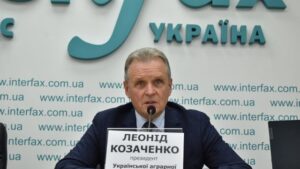
The establishment of the first Ukrainian agri-hub in Ghana is a positive step toward expanding Ukraine’s presence in the African market, however, to establish a foothold in the region, Ukraine must engage international financial institutions as guarantors of security and transition from exporting raw materials to supplying value-added products, stated Leonid Kozachenko, President of the Ukrainian Agrarian Confederation (UAC).
“Africa is a complex region, but at the same time, it is the continent that suffers most from food shortages in the world. Ukraine produces five times more food than it consumes itself. Therefore, expanding our presence in the African market means both saving lives and opening up enormous economic prospects,” he said on Ukrainian Radio.
According to him, previous attempts by Ukrainian businesses to invest in production in Africa or to independently supply grain often resulted in financial losses and incidents of piracy due to political instability. To minimize such risks, Kozachenko proposes involving UN agencies, particularly the FAO, and global financial institutions that can act as intermediaries and guarantors of trade transactions.
Currently, Ukrainian goods account for less than 5% of total imports to African countries. To increase volumes, the expert advises drawing on the experience of Turkey and the UAE, which supply the continent not with raw materials but with finished products—flour, pasta, and grains.
According to Kozachenko, the state’s strategic goal should be to attract approximately $85–90 billion in investments over the next 10 years specifically for domestic processing. This would allow annual agricultural exports to increase from the current $27 billion to over $120 billion.
When assessing potential locations for a hub, the head of the UAC noted that West Africa is a challenging region due to internal conflicts. He considers North Africa, particularly Morocco, to be a more promising destination for logistics centers, as it has a more stable economy and opportunities for further distribution of products across the continent.
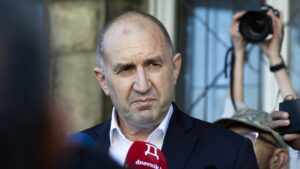
According to the results of Bulgaria’s early parliamentary elections, the Progressive Bulgaria coalition, linked to former President Rumen Radev, came in first. According to Reuters, citing partial official results after 91.68% of ballots were counted, the coalition received 44.7% of the vote. GERB came in second with 13.4%, and Continue the Change – Democratic Bulgaria came in third with 13.2%.
According to data from Bulgarian agencies and exit polls, the Movement for Rights and Freedoms and Vazrazhdane also secured seats in parliament, while the BSP – United Left hovered around the threshold. Thus, the new composition of the National Assembly remains multiparty, though the winner secured a significantly stronger mandate than any party in recent elections.
The key issue now is the formation of a government. If Progressive Bulgaria secures a sufficient number of seats (which is highly likely), Bulgaria could see a single-party or dominant cabinet for the first time in a long while. If, however, it fails to secure a majority, the country faces negotiations on a coalition or external parliamentary support. This is particularly important after several years of political instability and frequent changes in government.
For Bulgaria’s economy, the election result is significant in terms of fiscal policy, infrastructure decisions, and managing the implications of the country’s entry into the eurozone on January 1, 2026. A strong government could theoretically accelerate decision-making on investments and reforms, but much will depend on how quickly the winner can translate electoral success into a functioning executive model.
For the region, the election results are significant due to Bulgaria’s role as a member of the EU and NATO, as well as a country in the Black Sea basin. Any changes in Sofia’s foreign policy could affect regional coordination on energy, security, and issues related to the conflict between Russia and Ukraine.

Egg exports from Ukraine reached 216.2 million units in March 2026, marking a five-year high, according to the Ukrainian Poultry Farmers’ Union, citing customs statistics.
The association noted that compared to February, physical shipment volumes increased by 23% and by 25% compared to March 2025—a 25% increase. At the same time, foreign exchange revenue showed a much sharper increase, rising by 57% compared to March 2025—to $24 million.
“In total, during the first quarter of 2026, 579.5 million eggs were shipped to foreign markets for a total of $66 million. Physical exports during this period increased by 17%, while revenue surged by 74% compared to the same period last year,” the association clarified.
EU countries remained the main consumers of Ukrainian products in January–March, accounting for 74% of the export structure. The largest volumes went to Spain (26.1%), the United Kingdom (13.1%), Poland (11.7%), and Israel (8.3%).
As noted by the industry association, this gap between the growth rates of physical volumes and revenue is explained by the favorable price conditions that prevailed in the European market at the beginning of the year.

S1 REIT, an investment firm that manages real estate funds under the REIT model, has registered a new fund, “S1 Plaza Poznyaki,” whose assets will include commercial space in a shopping center, the company’s press office announced.
“This is the first commercial real estate-based fund in the company’s portfolio. For us, its launch is a logical step in our development, and for investors, it is an opportunity to diversify their capital across various asset classes. Under the S1 REIT umbrella brand, we are building a diverse portfolio: not only income-generating residential real estate, but also commercial real estate,” noted S1 REIT CEO Igor Gifes.
As reported, the National Securities and Stock Market Commission (NSSMC) has registered the prospectus and the issuance of investment certificates for the S1 Plaza Poznyaki closed-end investment fund with a total par value of UAH 600 million, with a par value of UAH 100 per certificate, in a quantity of 6 million units.
A key feature of the “S1 Plaza Poznyaki” fund is its lower entry threshold. While the initial investment for the S1 VDNH and S1 Obolon funds is at least UAH 122,000, the entry threshold for the new fund is significantly lower—starting at UAH 1,000. The minimum additional investment in “S1 Plaza Poznyaki” is just 100 UAH.
The projected return for S1 Plaza Poznyaki is 10.4% per annum in currency. Dividend payments to investors will be made immediately, even before the facility’s construction is completed.
“Until construction is completed, returns will be generated through capitalization and effective asset management. We have developed a model that will allow us to pay dividends to investors from day one, without waiting for construction to be completed. At the same time, we already have a clear vision for generating cash flow from leasing the property. More than 60% of the shopping center’s space has already been reserved by international and national retail chains,” Gifes said.
The “S1 Plaza Poznyaki” shopping center, with a total area of 5,000 square meters, is part of a large-scale residential project by developer Standard One. The project is being built in the Darnytskyi district of Kyiv, near the Poznyaki metro station and Lake Serebryany Kol. High foot traffic to the commercial spaces will be ensured not only by the area’s heavy pedestrian traffic but also by residents of the complex, which will comprise over 750 apartments.
Sales of certificates for the new fund are scheduled to begin as early as May of this year.
S1 REIT is Ukraine’s first operator of collective investments in income-generating real estate, offering the opportunity to become a co-owner of profitable properties with an entry threshold that is dozens of times lower than the cost of a single residential or commercial unit. The company operates under the Real Estate
Investment Trust (REIT) model, providing investors with the opportunity to participate in the ownership and receipt of income from profitable properties without directly managing the assets.
Three funds are available for investment: “S1 VDNH,” “S1 Obolon,” and “S1 Plaza Poznyaki.” The assets of these funds consist of income-generating real estate based on development projects by Standard One.



