

Following a meeting on March 26, the National Council of Ukraine on Television and Radio Broadcasting announced the suspension of terrestrial broadcasting operations for the sports channel “XSport” (Totveld LLC) and the music channel “M1” (Teleodin LLC).
“The media outlet operated 24 hours a day on the MX-3 multi-channel electronic network, DVB-T2 (MPEG-4) standard, nationwide category. The reason for revoking the license is a deterioration in financial condition linked to the ongoing decline in the advertising market,” the regulator commented on the decision regarding “XSport.”
The National Council added that it also revoked the registration of two linear media outlets, “Totveld,” which broadcast without using the radio frequency spectrum under the logos “XSPORT+” and “XSPORT.”
“National category. The media outlet broadcast programs 24/7 on the MX-2 terrestrial multichannel communication network, DVB-T2 (MPEG-4) standard. In its statement, the company cites a significant decline in the advertising market, rising distribution costs, a shrinking audience for terrestrial digital broadcasting, and the economic unfeasibility of maintaining this distribution method,“ according to the regulator’s statement regarding ”M1.”
In turn, the “M1” TV channel explained its decision to cease terrestrial broadcasting on Monday as a transition to a new content distribution model “as part of a strategy to optimize and adapt to current market conditions.”
“The decision to exit the terrestrial digital space is a logical continuation of our policy of efficient resource management. Given the economic situation in the country and the rapid change in viewers’ consumption habits, we are focusing our presence where the audience is most active and loyal,” the statement on its website reads.
It is noted that broadcasting continues in full via OTT platforms and cable networks.
According to the press release, the Ukrainian music channel “M2” already has similar positive experience operating in this distribution format, so it is also continuing its broadcasts via OTT services and cable networks.
“Today we are choosing the path of maximum efficiency. Due to the difficult economic situation in the country and low demand for outdated broadcast formats, we have made a conscious decision to focus on a new broadcasting strategy,“ commented Natela Chkhartishvili-Zatsarinnaya, executive producer of the ”M1“ and ‘M2’ TV channels, noting that this year marks the 25th anniversary of the ”M1” channel.
The National Council also noted that due to the inability to resume broadcasting because of financial and organizational difficulties caused by the full-scale invasion, a number of Kyiv-based companies with 24-hour broadcasting, which operated under the logos “UNIAN TV,” “UNIAN. Dnipro,“ ”UNIAN. Mykolaiv,“ and ”UNIAN. Nikopol.“
XSport is a nationwide multisport channel that began broadcasting on January 22, 2012. It previously aired under the name ”Hockey.”
According to YouControl, the owner of Totveld LLC is Donbas Hockey Club LLC, and the beneficial owner is listed as former Deputy Prime Minister, former Minister of Infrastructure, and Member of Parliament Boris Kolesnikov.
The owner of “Teleodin” LLC is “Ukrainian Youth and Music Channel M1” TV and Radio Company LLC, and the beneficial owners are Mykola Bagraev (74%) and Maksym Pavlenko (25%).
ADVERTISING, broadcast, M1, National Council, TV CHANNEL, XSPORT
The Ministry of Economy, Environment, and Agriculture, by order dated March 26, included the insurance company “Guardian” (Kyiv) in the list of insurers authorized to insure agricultural products with state support. This was announced by Taras Vysotsky, Deputy Minister of Economy, Environment, and Agriculture of Ukraine, on Friday while speaking at the “All-Ukrainian National Insurance Conference 2026” in Kyiv.
He noted that he “signed the order to include the company in this list.” Fifteen companies will be able to provide such insurance, the deputy minister added.
The ministry’s website reports that currently, the insurance companies “INGO,” “Universalna,” “VUSO,” “ARKS,” PZU “Ukraine,” and IC “Guardian” are authorized to provide such insurance.
As reported, the 2026 state budget allocates 60 million hryvnias for the first time to support agricultural insurance, for which the Cabinet of Ministers approved relevant amendments to the procedure for providing state support on December 31, 2025.
The government resolution provides for compensation of a portion of paid insurance premiums, specifically up to 60% of the cost of insurance premiums for agricultural producers operating in frontline communities, and up to 45% for other agricultural producers.
To insure agricultural products, an agricultural producer must apply to insurance companies that, in agreement with the National Bank of Ukraine, have been authorized to provide such insurance. A list of these companies is published on the Ministry of Economy’s website.
Agricultural product insurance contracts will be concluded in accordance with a list of standardized insurance products, which, in particular, provide coverage for the area of winter grain crops during the overwintering period, winter grain crops for the entire growing season, and the future grain crop harvest during the spring-summer growing season.
Insurance Company “Express Insurance” (Kyiv) collected insurance premiums totaling UAH 197.3 million in January-February 2026, which is 8.6% more than in the same period of 2025, according to the insurer’s website. Specifically, premiums under comprehensive auto insurance (CASCO) policies totaled 121.2 million UAH in January-February 2026, an increase of 1.8% compared to the same period last year.
Premiums for MTPL insurance rose by 24.9% to UAH 71 million.
As reported, in January–February 2026, the company paid out UAH 91.7 million in insurance claims, which is 36.5% more than during the same period in 2025.
Under comprehensive auto insurance (CASCO) policies, UAH 65.1 million was paid out in the first two months of 2026, which is 22.8% higher than the figure for the same period last year. Payments under MTPL insurance totaled UAH 25.5 million (+96.4% compared to January–February 2025). For other types of insurance, clients were reimbursed over UAH 1 million.
Express Insurance LLC was founded in 2008 with the participation of the leader of the Ukrainian automotive market—Ukravto Group. The company specializes in auto insurance. It is represented at over 60 sales points throughout Ukraine and is actively expanding its network of partner service stations.
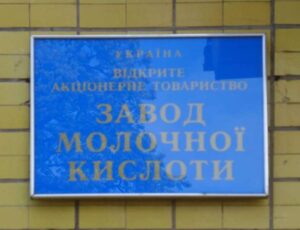
According to Fixygen, the lactic acid plant (PJSC) will hold its annual general meeting of shareholders on April 3, 2026, via remote participation.
The agenda includes the company’s performance results and standard corporate governance matters.
The company operates at the intersection of the chemical and food industries. Lactic acid is widely used in food production, pharmaceuticals, cosmetics, and a number of industrial processes, making such plants part of the country’s broader processing economy.
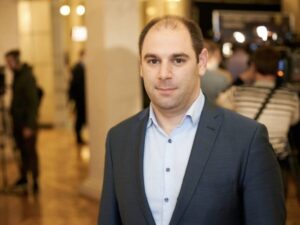
The procedure for rezoning agricultural land for industrial and energy facilities now takes 1.5 to 2 months instead of the previous one to three years, said Dmytro Kysilevsky, deputy chairman of the Verkhovna Rada Committee on Economic Development.
“Given the need to construct new energy facilities before next winter, this streamlined procedure will resolve many issues for communities concerned with energy independence,” he wrote on his Facebook page.
The MP explained that he and his team developed a step-by-step procedure—from submitting an application to issuing a reasoned conclusion. The purpose of the document is to establish a uniform standard of operation for all regions of Ukraine. Kysilevsky emphasized that the mechanism allows for the rapid conversion of agricultural land for industrial use outside populated areas, even where urban planning documentation has not yet been developed.
According to the guidelines, this procedure will remain in effect during martial law and for five years after its conclusion. It permits the construction of industrial and energy facilities (excluding nuclear), warehouses, and agricultural buildings. A separate list of critical infrastructure, specifically electricity and gas supply networks, may be established under this scheme within cities and villages as well.
The process begins with submitting a request through the Unified State Electronic System for Construction (USESC). Executive authorities, local governments, or private landowners have the right to do so. Tenants cannot submit such a request on their own. The document must include the facility’s classification code, development parameters, hazard class, and estimated resource usage volumes.
The authorized architectural authority must review the request within 10 business days to ensure there are no environmental or historical-cultural restrictions. The result is a reasoned conclusion. In the event of a positive decision, the document is automatically considered a special type of urban planning conditions and restrictions (UPCR), which eliminates the need to obtain additional documents for the facility’s design.
The conclusion serves as the basis for making changes to the State Geocadastre without developing land management documentation. Design of the facility can begin immediately; however, a construction permit is issued only after the land status has been finalized. The procedure for obtaining technical specifications has also been simplified: the client may obtain them at any stage, but must do so before the facility is put into operation.
Kysilevsky clarified that the procedure has already been sent to the Regional State Administration for transmission to urban planning authorities in local communities.
As previously reported, the Verkhovna Rada had earlier passed a law allowing, during martial law, for the simplified rezoning of land for industry, logistics, and relocated enterprises without the preparation of urban planning documentation.
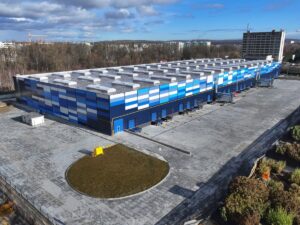
Dragon Capital has begun construction of the second phase of the M10 Lviv Industrial Park and is preparing to resume development of two industrial park projects in the Kyiv region, according to Andriy Brynzylo, CEO of Dragon Capital’s industrial parks division.
“The development of the M10 Lviv Industrial Park is part of Dragon Capital’s strategy to build a portfolio of new industrial real estate in Kyiv and Lviv. Demand for high-quality warehouse and manufacturing space in Ukraine is growing, despite the hostilities, particularly from companies relocating their businesses. In addition to this ongoing project, we are working on resuming the development of two other industrial park projects in the Kyiv region, which we will announce separately in the near future,” Brinzilo said.
According to him, the launch of the second phase of M10 (Class A warehouse and industrial space with a total area of 22,000 sq. m.) will offer the market new opportunities for development.
M10 Lviv Industrial Park is located in the Ryasne-2 industrial zone of Lviv, directly on the M10 highway, 60 km from the Krakivets border crossing on the border with Poland. The park’s total area is 23.5 hectares and provides for the development of warehouse and industrial real estate facilities with a total area of over 140,000 square meters. The first phase of the project, with a total area of 14,400 square meters, was commissioned in February 2024 and is fully operational.
The project is being implemented in partnership with the European Bank for Reconstruction and Development (EBRD) and the Ukraine Investment Fund managed by Norfund, which hold 35% and 30% stakes in the project, respectively.
In September 2023, the World Bank’s Multilateral Investment Guarantee Agency (MIGA) provided the project with a 10-year guarantee covering risks of physical damage to the facility due to military action or loss of control over it.
The facility is managed by the Dragon Capital Property Management team. The project aims to obtain “green” certification in accordance with international standards. The first building at M10 Lviv Industrial Park has already been certified under the EDGE standard (energy efficiency and environmental sustainability).
Dragon Capital is one of the largest groups of companies in Ukraine operating in the investment and financial services sector. The company has over 20 years of experience in direct investments in leading Ukrainian companies, as well as in landmark residential and commercial real estate projects.
Dragon Capital Property Management is a management company that manages a portfolio of commercial real estate. It manages 25 properties (business centers, shopping malls, and logistics complexes) with a total area of over 570,000 square meters.
Currently, Dragon Capital has two industrial park projects in its portfolio: M10 Lviv Industrial Park in Lviv with a total area of 140,000 sq. m and E40 Industrial Park near Kyiv with an area of 200,000 sq. m.



