
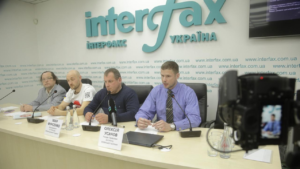
Holding elections in Ukraine during the active phase of hostilities is impossible for security and legal reasons, but preparations for the first post-war elections must begin in advance, as the country will have to resolve a range of issues related to voting by the military, Ukrainians abroad, internally displaced persons, and residents of de-occupied territories, participants in a press conference at the Interfax-Ukraine agency said on Thursday.
Oleksiy Usachov, chairman of the board of the Ukrainian Politics Institute, noted that the topic of elections has long been at the center of public debate, and recent months have only intensified the sense of political activism. According to him, the impression of preparations for possible early elections is reinforced by the activation of the Central Election Commission and the work of parliamentary groups on possible changes to the electoral law.

“The issue of elections, possible elections, must be considered through the prism of two planes — their necessity and their possibility. Because war is a process that is ongoing in Ukraine. It should also be remembered that no elections in Ukraine have been held during the active phase of military operations in all the years of independence,” Usachov stressed.
At the same time, he warned against attempts to rewrite the rules to suit the political situation. In his opinion, one of the chronic problems of the Ukrainian electoral system remains the desire of each new government to adapt legislation to its own interests, which creates additional risks for confidence in the future electoral process.
“The main drawback of the electoral system in Ukraine is the constant change in legislation for each election, for each government, that is, the adjustment of legislation to the needs that politicians have identified for themselves in their political careers. And this is a great danger,” Usachov said.
He also drew attention to the need for technological protection of the expression of will. According to Usachov, Ukraine already has digital identification tools, but any technological solutions can only work if there is a high level of trust, professional administration, and no possibility of political manipulation.
“The main thing is that politicians do not juggle their capabilities and do not try to falsify elections and rig votes in their favor through electronic systems. Protecting votes and citizens during voting, and ensuring the safety of citizens, is an important priority,” he said.
Ivan Fursenko, vice president of the NGO Congress of Local Self-Government of Ukraine, in turn, stressed that even after the cessation of hostilities, the country will not be able to move to the electoral process immediately. According to him, professional communications suggest a minimum of three months after the cessation of hostilities, but he believes that this is not enough time.

“The preliminary minimum period that has been announced is three months after the cessation of hostilities. But I am deeply convinced that it is absolutely impossible to hold elections within three months. It will take at least six months,” Fursenko added.
He explained that the key challenges remain the organization of voting abroad, the participation of military personnel, and the lack of complete certainty regarding the electoral infrastructure. Fursenko recalled that before the full-scale war, voting abroad was mainly conducted at diplomatic and consular missions, but now the number of Ukrainians in European countries is so large that this resource is no longer sufficient.
“Even in Poland, the Czech Republic, and Germany, new polling stations need to be opened. We do not understand how to open them, because the legislation of some countries prohibits the holding of elections of other states on the territory of non-diplomatic institutions. If this work is not done, we will deprive a large number of Ukrainian citizens of their constitutional right to vote and be elected, and this will reduce the legitimacy of the entire electoral process,” he stressed.
Another set of problems, according to Fursenko, is the participation of military personnel in elections, both as voters and as potential candidates. He noted that this requires separate legal mechanisms that will simultaneously guarantee the right to vote and not undermine the logic of national defense.
Ihor Bondarchuk, chairman of the board of the Stop Corruption NGO, said that there are already signs of political activation in the regions, which can be interpreted as preparation for a potential election campaign. According to him, some politicians have returned to more active work in their constituencies, and civil society must closely monitor whether this activity turns into covert campaigning using administrative or financial resources.
“We are seeing a certain transformation, with political forces becoming more active and PR campaigns surrounding this. This is the first indicator. Therefore, it is not just discussion that is important, but also control and, in some cases, legislative regulation,” said Bondarchuk.
He stressed that the public sector must be prepared to monitor abuses right from the start of the upcoming election process. According to him, the Stop Corruption network in the regions makes it possible to quickly receive signals about the potential use of shadow funds, administrative resources, and other non-transparent mechanisms of political work.

“Our organization has 98 territorial divisions throughout Ukraine, so we can receive information from each region in real time. On our part, the issue is more about exposing and stopping abuses that are already taking place,” Bondarchuk said.
The head of the League of Energy Development of Ukraine, Oleksandr Golizdra, also spoke out against holding elections during the war, stressing that social solidarity remains a key condition for the country’s stability at present. In his opinion, full-fledged electoral competition during the war inevitably weakens this solidarity, but this does not negate the need to prepare amendments to the legislation now.
“Elections during wartime are impossible because one of the main themes of our struggle against the enemy is solidarity. And what kind of solidarity can there be when political forces and candidates compete with each other personally? But this does not negate the need to prepare changes to the legislation,” Golizdra said.

He separately emphasized the need for increased public control if the country does decide to move toward greater digitization of electoral procedures. In his opinion, this should not be a one-time oversight, but rather the professional and systematic participation of civil society organizations, volunteer networks, and trained observers in the development and control of new procedures.
Summing up the discussion, the participants agreed that Ukraine does not have a ready-made model for automatically transferring foreign experience, as the war has created unprecedented conditions for the state and the electoral system. At the same time, they stressed that preparations for post-war elections cannot be postponed: the state, parliament, CEC, civil society, journalists, and international partners must already be working on solutions that will allow elections to be held legitimately, safely, and with the widest possible participation of citizens.
ELECTIONS IN UKRAINE, IHOR BONDARCHUK, OLEKSANDR HOLIZDRA, OLEKSII USACHOV, ІВАН ФУРСЕНКО

On June 16–19, 2026, the Tashkent International Investment Forum (TIIF-2026) will be held in Tashkent.
The event will be held at the Central Asian Expo (CAEx) and will be the country’s largest economic event aimed at attracting foreign investment and developing strategic partnerships.
More than 3,000 representatives from over 93 countries are expected to attend, including investors, heads of international companies, and experts in sustainable development, innovation, and digital transformation.
The TIIF-2026 program covers a wide range of relevant topics:
For more details on the program and other information, please visit the link.
An investment exhibition will be organized as part of the forum, where large international and local companies will present their projects.
The Embassy of the Republic of Uzbekistan invites interested parties to participate in the forum.
You can register and find out more details at the link.

The Tea&Food division of Biosphere Corporation, represented by the Graff and Ritz Barton brands, increased its production and sales by 2.5 times compared to the previous year, according to the company’s press service.
According to the report, sales volume increased from 1.4 million packs in 2024 to 3.5 million packs in 2025. Monthly turnover at the end of the year exceeded UAH 35 million, and the Graff brand entered the top 4 tea brands in Ukraine in terms of sales volume in retail chains. The company’s share of the domestic tea market is estimated at 5%.
“The growth of our tea business was driven by a strong marketing strategy and the development of relationships with major retail chains. The next step in our development is international expansion,” said Andriy Zdesenko, founder and CEO of Biosphere Corporation.
CupSoul CEO Iryna Broslavtseva emphasized the brand’s readiness to compete in foreign markets.
“The quality of our tea has been recognized not only by Ukrainian consumers, but also by numerous awards, including international ones. This proves that we are creating a European-quality product in Ukraine that can be competitive in foreign markets,” the press service quoted Broslavtseva as saying.
CupSoul, which is responsible for the tea division within the corporation, added that at the end of 2025, it began exporting Graff tea to Spain. During 2026, it plans to enter the Canadian market and further expand in Europe, particularly in Germany, Poland, and the Czech Republic, where the trademark has already been registered.
Despite a rocket attack on the production complex in Dnipro in the spring of 2025, which damaged the workshop and destroyed raw material stocks, the company resumed production within a month. Currently, the tea range includes 124 items. Over the past year, the brand has received a number of professional awards, including the Red Dot Award for packaging design and bronze awards at the Effie Awards Ukraine.
Biosphere Corporation is a leading manufacturer and distributor of household and personal hygiene products in Ukraine and one of the leaders in Eastern Europe and Central Asia. Its production facilities consist of six modern factories in Ukraine and two in Europe. Its portfolio of 25 brands includes Freken BOK, Smile, Novita, Lady Cotton, PRO service, Alufix, Vortex, Graff, and others, with about 2,000 SKUs. According to the release, Biosphere products are represented in more than 25 countries and over 100 retail chains, including METRO, Auchan, Spar, Billa, Carrefour, Albert, and Hofer.
The founder and CEO of the corporation is Andriy Zdesenko.

According to the Interfax-Ukraine Culture project, the works of Ukrainian artist Nazariy Streliaiev-Nazark have become part of the new collection of the French fashion house Louis Vuitton, presented during Fashion Week in Paris, the artist reports on his Instagram page.
“I sincerely thank Nicolas Ghesquière and Florent Buono for their trust and for inviting me to participate in the creation of this collection. It was a real pleasure to see my works through your vision and from a new perspective,” the artist said.
The collection, created by the brand’s creative director Nicolas Ghesquière, uses motifs from the Ukrainian artist’s paintings, in particular elements of the work Paramnesia, written in 2023.
The image from the painting was adapted for the fashion show: on one of the prints, the lamb depicted on the canvas was given boots with the brand’s signature monogram.
Streliaiev-Nazarko was born in Kharkiv and now lives and works in Milan. His work combines elements of symbolism, surrealism, and contemporary painting. The artist’s works have been exhibited in galleries in Europe and the United States.
The collection was presented on March 10 during Paris Fashion Week, one of the world’s key fashion industry events.
Nazariy Streliaev-Nazarko is a Ukrainian artist from Kharkiv who currently lives and works in Milan. His work combines elements of classical European painting, symbolism, and contemporary art. In his works, the artist often addresses themes of memory, myth, and human experience, creating images that combine reality and symbolism. His paintings have been exhibited in galleries across Europe and featured in international art projects.
https://interfax.com.ua/news/culture/1151144.html
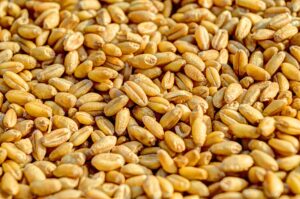
Prices for wheat in the ports of Greater Odessa (CPT port basis) began to rise this week, according to the information and analytical agency APK-Inform.
According to monitoring data, as of March 11, 2026, traders’ prices for class 2 wheat most often range from 10,600 to 11,000 UAH/ton CPT port, which is 100-150 UAH/ton higher than at the end of the previous week. In dollar terms, demand prices also rose and amounted to $215-225/ton CPT port.
According to analysts, prices were supported by the rise in grain prices on a FOB basis amid increased demand and restrained sales by farmers, as well as the devaluation of the national currency against the dollar.
“Individual export-oriented companies declared lower prices due to the lack of need to urgently form volumes to fulfill previously concluded contracts,” the agency stated.
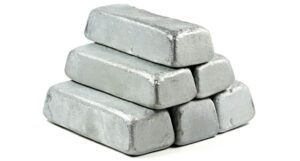
In January-February 2026, imports of tin and tin products increased by 18.8% to $727 thousand (in February – $559 thousand).
Exports of tin and tin products in January-February 2026 amounted to $248,000 (in February – $23,000), while in January-February 2025 they amounted to $5,000.
In 2025, imports of tin and tin products increased by 36.5% to $4.352 million.
Exports of tin and tin products amounted to $241,000, compared to $389,000 in the 12 months of 2024.
Tin is mainly used as a safe, non-toxic, corrosion-resistant coating in its pure form or in alloys with other metals. The main industrial applications of tin are in white tinplate (tinned iron) for the manufacture of food containers, in solders for electronics, in domestic piping, in bearing alloys, and in coatings made of tin and its alloys. The most important tin alloy is bronze (with copper).



