
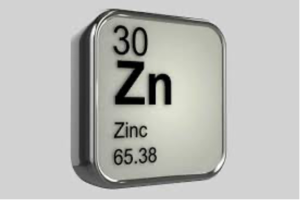
In January-February 2026, Ukraine reduced imports of zinc and zinc products by 29% to $4.269 million (in February – $2.282 million).
Zinc exports for the two months reached $81,000 (in February – $1,000), while in January-February 2025 they were $178,000.
In 2025, imports of zinc and zinc products fell by 9.6% to $52.982 million.
Zinc exports last year reached $1.234 million, while in 2024 they amounted to $563 thousand.
Pure zinc metal is used to recover precious metals, protect steel from corrosion, and for other purposes.

Based on the results of non-resident supervision of the non-bank financial services market, the National Bank of Ukraine imposed sanctions on five insurance companies for violating regulatory requirements.
According to the NBU website, the measures were applied to: Busin Insurance Company, ASKO DS Insurance Company, Insurance Guarantees of Ukraine, Colonne Ukraine Insurance Company, and Suzirya Insurance Company.
According to the information, Busin Insurance Company was fined UAH 259,410 thousand, ASKO DS Insurance Company, Insurance Guarantees of Ukraine, Colonneed Ukraine Insurance Company, and Suzyria Insurance Company were each fined UAH 129,705 for submitting regulatory reports containing inaccurate data to the National Bank.
All of the above insurers are required to pay the fines within one month from the date these decisions come into force.
Insurance company Busin was registered in February 1993. It specializes in risk insurance. It is a member of a number of professional and industry associations, including the League of Insurance Organizations of Ukraine, the Insurance Payments Club, the International Association of Aviation Insurers (UA), the Nuclear Insurance Pool, the American Chamber of Commerce in Ukraine, and the British Business Club.
ASKO DS Insurance Company was registered in November 1991. Since 1994, it has been a member of the Motor (Transport) Insurance Bureau of Ukraine, and since 2015, a member of the Insurance Business Association.
Insurance Guarantees of Ukraine was registered in November 2005. It has licenses to carry out 15 types of insurance activities: four for compulsory insurance and 11 for voluntary insurance.
SK Kolonney Ukraine (until 2016 – PJSC II QBE Ukraine) was founded in 1998 as the first international insurer on the Ukrainian market.
SK “Suzirya” has been operating in the Ukrainian insurance market since 1994. It is a permanent member of the League of Insurance Organizations of Ukraine and a member of the Ukrainian Union of Industrialists and Entrepreneurs.

In January-February of this year, Ukrainian enterprises reduced imports of copper and copper products in monetary terms by 11.6% compared to the same period last year, to $26.757 million.
According to customs statistics released by the State Customs Service of Ukraine on Tuesday, exports of copper and copper products during the specified period decreased by 14.6% to $12.213 million.
In February, copper imports amounted to $15.724 million, while exports amounted to $7.260 million.
As reported, in 2025, Ukrainian enterprises increased imports of copper and copper products in monetary terms by 23.2% compared to the previous year, to $173.453 million, while exports of copper and copper products grew by 17.7%, to $103.848 million.
Copper is widely used in electrical engineering, in the production of pipes, for creating alloys, in medicine, and in other industries.
Earlier, the Experts Club information and analytical center released a video dedicated to global copper production and leading producing countries – https://youtube.com/shorts/_h8iU50z8C0?si=a-XkgGEfeUxseQNa
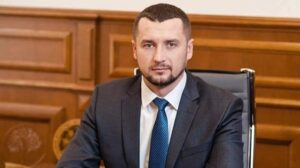
The Appeals Chamber of the High Anti-Corruption Court (HACC) has dismissed the charges against Yuriy Bolokhovets, CEO of the State Enterprise “Forests of Ukraine,” according to a statement by lawyer Volodymyr Volodymyrov on Facebook.
According to a statement by the Advanq Law Firm (ADVANQ), which provided legal representation, the court’s decision is final and cannot be appealed. According to the lawyer, the court found the charges against the head of the state-owned enterprise to be unfounded.
“Even before the case was transferred to NABU, the investigation had done a tremendous amount of work, gathering a large amount of material, but was unable to find evidence of land seizure, receipt and legalization of illegal funds, or abuse of official authority. Four of the five charges were not confirmed at the investigation stage, and in court we managed to prove the groundlessness of the last one,” Volodymyr said.
He emphasized that the reason for the persecution of Bolokhovets was the forest reform, as a result of which “the old system was destroyed, and billions in revenues from the sale of state timber began to be paid into the budget.”
The lawyer recalled that last year Bolokhovets was held in custody for two months with an “unrealistic bail amount” imposed, and his family, colleagues, and defenders were also subjected to pressure and information attacks. At the same time, he expressed his respect for the anti-corruption authorities for their objective analysis of the materials despite external pressure.
The press service of the State Enterprise “Forests of Ukraine” emphasized that the pressure on the CEO was due to his position on the introduction of transparent market mechanisms for the sale of timber and the de-shadowing of the forestry industry.
As reported, Yuriy Bolokhovets was notified of the suspicion in July 2025. During the investigation, he was held in custody with the possibility of bail.
State Enterprise “Forests of Ukraine” is one of the largest forest users in Europe and is under the management of the State Agency of Forest Resources of Ukraine. The enterprise manages 6.6 million hectares of state forest fund land.
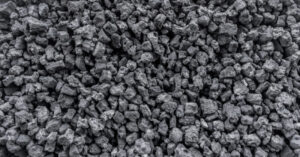
In January-February of this year, Ukraine reduced imports of coke and semi-coke in physical terms by 21% compared to the same period last year, to 123,104 tons.
According to statistics released by the State Customs Service (SCS) on Tuesday, 54,408 tons of coke were imported in February.
Coke imports in monetary terms fell by 14.1% in January-February 2026, to $42.747 million. Coke was imported from Poland (98.37% of supplies in monetary terms), the Czech Republic (1.15%), and Colombia (0.44%).
The country did not export coke in the first two months of the year.
As reported, in 2025, Ukraine increased its imports of coke and semi-coke in physical terms by 5.9% compared to the previous year, to 700,650 thousand tons, and increased its revenue by 1.4%, to $238.656 million. Coke was mainly imported from Poland (93.37% of supplies in monetary terms), Indonesia (4.01%), and the Czech Republic (2.59%).
In 2025, Ukraine exported 3 tons of coke worth $2,000 to Albania.
In addition, it was reported that Metinvest suspended the operation of the Pokrovsk Coal Group in January 2025 due to changes in the situation on the front line, electricity shortages, and the deterioration of the security situation.

The Tekom Agro Group agricultural association (Odesa region) has started its 2026 spring sowing campaign with the sowing of red lentils, according to a post on its Facebook page on Tuesday.
It is noted that the first to start work were two farms of the association: Chornomorets LLC and Pivdenna Agricultural Company. In total, more than 1,000 hectares have been allocated for red lentils in four farms of the group.
“The temperature of +15°C allows us to start this year’s spring sowing. There is still enough moisture in the soil. In the Odessa region, in particular, where Chornomorets LLC operates, we are sowing lentils for the first time, and about 300 hectares are planned for this crop,” said Sergey Shtyrbulov, deputy head of production at Tekom Agro Group, whose words are quoted in the report.
According to the company, the Canadian variety Maxim (predecessor — winter wheat) was selected for sowing. The work is being carried out using John Deere sowing complexes with simultaneous fertilizer application.
Tekom Agro Group is a management company of an agricultural association in the Odesa region that operates according to a vertically integrated model. The holding’s land bank is over 26,000 hectares, on which the agricultural companies Yasni Zori, Pivdenna, Chornomorets, and Lyman operate. It specializes in growing winter wheat, barley, and rapeseed, as well as sunflowers and lentils.
The storage infrastructure consists of two elevators in the Podilskyi district — Podilskyi Grain Processing Enterprise and Chubivskyi Bread Products Plant — with a total one-time storage capacity of 100,000 tons. The enterprises are equipped with grain dryers and have their own certified laboratories. Chubivsky KHP has a seed line that provides the group’s farms with planting material.
According to YouControl, the founders of Tekom Agro Group are Yuriy Rodin and Mark Becker.



