

The Central State Historical Archive of Ukraine in Kyiv (CSHAU) held an extended meeting of its board, during which it summarized the institution’s activities for 2025 and identified key priorities for 2026, according to the archive’s Facebook page.
“An extended meeting of the board of the Central State Historical Archive of Ukraine in Kyiv was held, during which the results of the archive’s work in 2025 were summarized and priorities for 2026 were determined. The main results of the archive’s work are reflected in the presentation,” said the head of the Central State Historical Archive of Ukraine, Yaroslav Fayzulin.
The meeting was attended by the director and deputy directors of the archive, heads of structural units, as well as invited members of the board, in particular, Iryna Dubok, head of the archival department of the State Archival Service of Ukraine, Viktor Brekhunenko, head of the department of archival archaeography at the M.S. Hrushevsky Institute of Ukrainian Archaeography and Source Studies of the National Academy of Sciences of Ukraine, Iryna Matyash, leading researcher at the Institute of History of Ukraine of the National Academy of Sciences of Ukraine, and the head of the department of archival science and source studies at the National Academy of Sciences of Ukraine. M.S. Hrushevsky Institute of Ukrainian Archeography and Source Studies of the National Academy of Sciences of Ukraine, Iryna Matyash, leading researcher at the Institute of History of Ukraine of the National Academy of Sciences of Ukraine, and Marina Palienko, head of the Department of Archival Studies and Special Fields of Historical Science at the Faculty of History of Taras Shevchenko National University of Kyiv.
As noted, the results of the work of the Central State Archives of Ukraine in 2025 and the main priority tasks for 2026 were announced in a report by the director of the archives, Yaroslav Fayzulin.
After hearing and discussing the report, the board recognized the work of the archive over the past year as satisfactory and determined the main areas of activity for 2026, taking into account the Strategy for the Protection of Documentary Heritage as a guarantee of the preservation of national identity and statehood for the period until 2027, as well as the priorities of the State Archival Service of Ukraine.
The results of the activities of the Central State Historical Archive of Ukraine are also reflected in a presentation prepared by the archive.
As previously reported, documents on the birth of Taras Shevchenko were displayed at the Central State Historical Archive of Ukraine in Kyiv. In addition, the head of the archive, Yaroslav Fayzulin, in a comment for the “Culture” section of the Interfax-Ukraine agency, spoke about the institution’s most valuable collections and demonstrated a selection of unique documents, old prints, maps, and manuscripts that form the “treasure trove of Ukraine’s archival heritage” and present it to the world.

The “Carpathian Spring 2026” professional music festival will take place from March 15 to 29 at the Ivano-Frankivsk Regional Philharmonic, according to a post on the Ivano-Frankivsk Regional Philharmonic named after Iryna Malanyuk’s Facebook page, noting that the festival traditionally opens the spring music season and brings together leading performers, chamber ensembles, orchestras, and young musicians on one stage.
“Every year, with the arrival of spring, the stage of the Frankivsk Philharmonic is filled with a special atmosphere — an atmosphere of renewal, creative inspiration, and live music,” the festival organizers note.
According to the philharmonic, this year’s festival program offers listeners a journey through different musical eras and styles, from Baroque interpretations and classical chamber programs to contemporary music projects and large-scale opera productions.
Soloists from various cities in Ukraine and Europe, chamber ensembles, the philharmonic choir and symphony orchestra, as well as young performers representing the new generation of Ukrainian musicians will perform on stage. The organizers emphasize that the festival will combine both premiere performances and well-known works from the world and Ukrainian repertoire.
In particular, the program includes the premiere of the children’s ballet “The Girl with Blue Eyes,” a series of chamber concerts dedicated to Ukrainian musical masterpieces, baroque programs, and contemporary musical experiments.
The final event of the festival will be the opera production “Penelope. Seven Ways to Wait,” which will close the music forum.
Tickets for the festival events can be purchased at the box office of the Ivano-Frankivsk Regional Philharmonic.
The “Prykarpattia Spring” festival is traditionally considered one of the key musical events in the region, bringing together professional musicians, fans of academic music, and young performers every year.
https://interfax.com.ua/news/culture/1150500.html
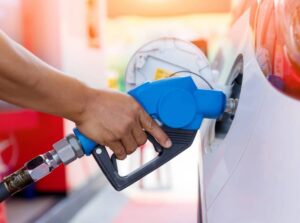
The Experts Club think tank has analyzed European countries’ responses to the fuel crisis. European countries’ responses to the 2026 fuel crisis have so far been mixed. Some governments are directly intervening in the fuel market by restricting exports, introducing price caps, and releasing reserves. Others are limiting themselves to price monitoring and coordination at the EU and G7 levels, trying not to provoke a shortage with even tougher measures.
Serbia has chosen the most aggressive form of intervention. The authorities have temporarily suspended exports of oil, gasoline, and diesel until March 19, explaining that this is to protect the domestic market from shortages and price spikes. Reuters notes that Serbia had already been controlling fuel prices since February 2022, meaning that the current decision is a continuation of a more interventionist regulatory model.
Hungary has opted for a mixed scenario. On the one hand, Budapest has introduced a price cap on gasoline and diesel for cars registered in Hungary. On the other hand, the government decided to use state reserves, and the Minister of Economy, according to Hungarian media reports, also announced a reduction in excise duties and a ban on the export of some petroleum products. This is a typical example of a combined anti-crisis scheme, where the authorities simultaneously try to keep retail prices down and maintain the physical availability of fuel on the market.
Croatia has chosen a softer approach—limiting maximum retail prices for a two-week period. The government has set a maximum price of EUR1.50 per liter for Eurosuper, EUR1.55 for diesel, and EUR0.89 for “blue diesel,” and has also limited prices for liquefied gas. Zagreb has stated outright that without this measure, diesel would cost EUR 1.72 per liter and gasoline EUR 1.55. This means that Croatia is trying not to isolate the market, but to soften the final effect on households and businesses.
Slovakia and, to some extent, the Czech Republic have focused not on retail regulation but on supporting physical supplies. After the failure of supplies via Druzhba, Slovakia approved the use of 250,000 tons of oil from strategic reserves for refining, while Hungary and Slovakia began negotiations on the use of reserves back in February. The Czech Republic, in turn, announced its readiness to send small volumes of oil to Slovakia via the eastern Druzhba pipeline.
The UK has not yet introduced price caps or export bans. Treasury Secretary Rachel Reeves said the government was monitoring the situation closely and warned retailers that it would not allow “excessive profits” amid the oil shock. This approach is closer to a supervisory model: the authorities are signaling to the market that they are ready to tighten control over the behavior of sellers, but are not moving to direct price administration.
At the pan-European level, caution prevails for now. The G7 and the EU are discussing possible measures, including the use of strategic reserves, tax changes, and carbon price adjustments, but no decision on coordinated release of reserves has been made yet. France, as chair of the G7, says that “all options are on the table,” but acknowledges that there is no immediate shortage in Europe.
The European Commission, for its part, points to the structural vulnerability of Europe, which imports more than 90% of its oil and about 80% of its gas.
The main conclusion for Europe now is that countries are responding differently depending on their own vulnerability. Balkan and Central European countries, which are dependent on imports and specific supply routes, tend to act faster and more aggressively — through bans, price caps, and reserves. The large economies of Western Europe are still favoring coordination, market pressure, and preparing tools in case the situation worsens. But if the oil shock drags on, the current targeted measures could turn into a broader wave of European intervention in the fuel market.
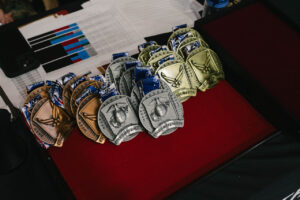
From February 20 to March 3, the Marine Corps & Air Force Trials 2026, a major veterans’ competition, took place in San Diego, California. This is an annual competition for servicemen and veterans of the US Marine Corps and Air Force, which serves as a qualifying stage for the American team for the Warrior Games.
The Ukrainian team was invited as an international team along with the British team to expand cooperation and exchange experience in the field of veteran sports and rehabilitation through sports.
The competitions included wheelchair basketball and rugby, sitting volleyball, archery and shooting, rowing on simulators, athletics, powerlifting, cycling, and swimming.
First and foremost, the team did not go for awards or achievements, but for the rehabilitation of participants through sport. However, the team managed to win quite a few prizes at the competition in California.
The Ukrainian team won first place in sitting volleyball and second place in wheelchair rugby. This is a first for our team.
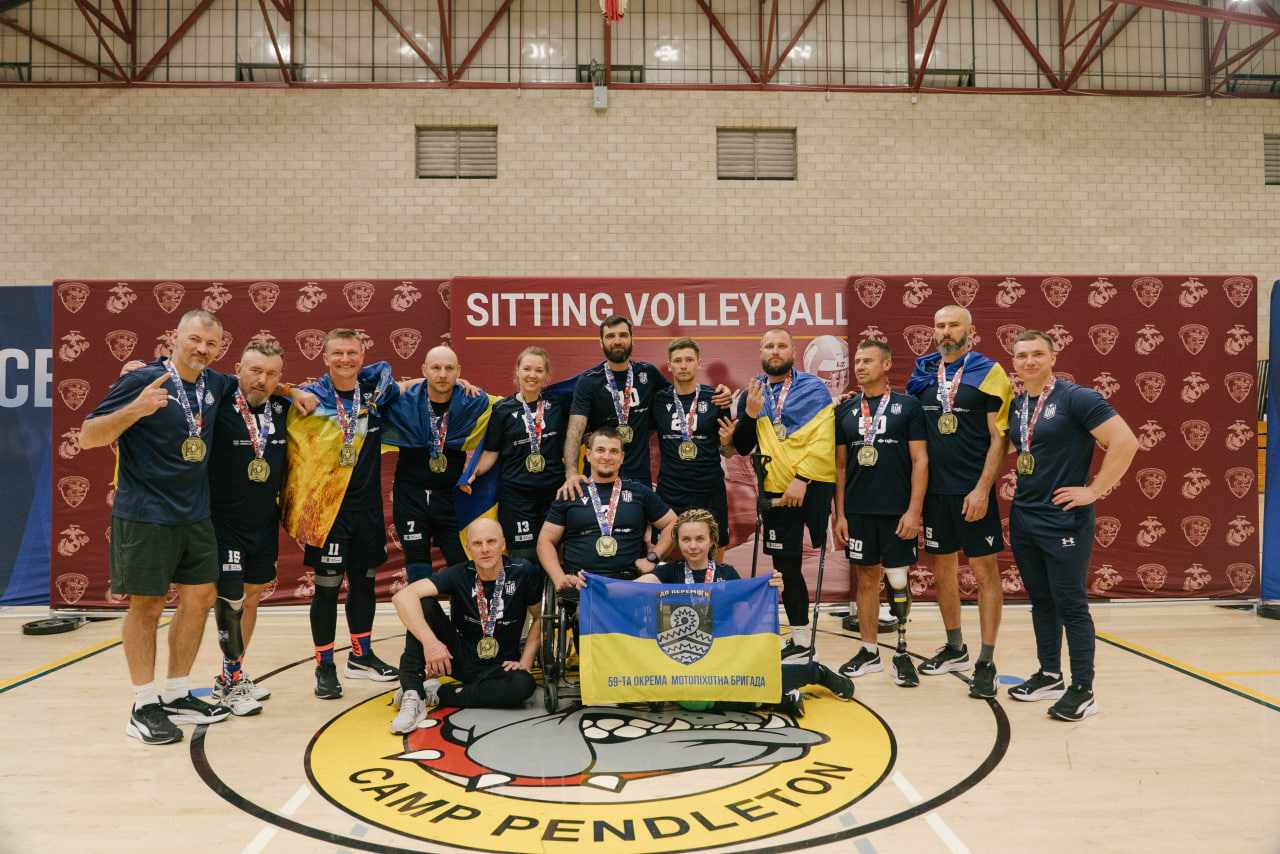
In swimming, rowing on simulators, and cycling, Yaroslav Begas, Ivan Artyukh, and Oksana Rudyk took first place, while Artem Peredeev took first place in powerlifting. In archery, Oleksandr Zirka took first place in the individual competition. In the team competition, Oleksandr Zirka, Artem Perederyev, and Mariana Nitskevich took second place. Mariana Nitskevich also took second place in the individual competition.
In running, Oleksiy Dernov took first place in the 1500 meters. He also took third place in the 800, 400, 200, and 100 meters. In cycling, Vadym Goncharenko and Oleksiy Dernov finished second. In the shot put, Oleksandr Batalov and Vadym Honcharenko took first place. Oleksandr Batalov also came second in the discus throw.
The qualifying stage for the Ukrainian national team was the all-Ukrainian competition “GART” — the first national multi-sport competition for veterans who were wounded, injured, or fell ill during military service. The national team for the 2026 Marine Corps & Air Force Trials was selected from among the 400 participants in this tournament. It consists of 13 male veterans and 2 female veterans.
The formation, training, and participation of the Ukrainian national team is provided by the Ministry of Veterans Affairs of Ukraine in cooperation with the Come Back Alive Initiative Center. The general partner of the Ukrainian team is Ukrgasbank.
We would like to add that in April, the “Gart” wheelchair basketball competition for veterans will start in Lviv, preceded by a week-long camp for beginners in this sport. We invite veterans to participate in the tournament.
Registration form: https://docs.google.com/forms/d/e/1FAIpQLSdQCmcejNST02gPuvrMr-Cax2fAP6iLGD7WkADLjpXQNAP9Vg/viewform
COMPETITION, Marine Corps & Air Force Trials 2026, UKRGASBANK, veterans' team
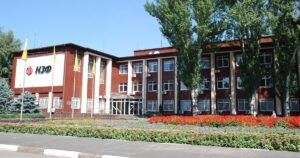
PrJSC Nikopol Ferroalloy Plant (NFP, Dnipropetrovsk region) is trying to recover UAH 95.825 million in debt from PrJSC Marganetsky Mining and Processing Plant (MGZK, Dnipropetrovsk region) under a repayable financial assistance agreement.
According to court documents in case No. 904/1083/26 in the Commercial Court of Dnipropetrovsk region, copies of which are available to Interfax-Ukraine, NZF has filed a lawsuit against MGZK and is seeking to recover the debt.
The claims are based on the defendant’s improper performance of the terms of the agreement for the provision of repayable financial assistance No. 2203530 dated November 21, 2022.
The court left the statement of claim without consideration and gave the plaintiff seven days from the date of delivery of this ruling to remedy the deficiencies in the statement of claim, namely to provide proper evidence of payment of the court fee in the amount of UAH 831,840 thousand.
The ruling came into force upon its signing by the judge on March 6, 2026, and was made public on March 9.
Earlier it was reported that the Zaporizhzhya Ferroalloy Plant (ZFP) filed a lawsuit to recover from MGZK the debt under the contract for the supply of ferroalloys No. 11-2022/32 dated January 27, 2022, in the total amount of UAH 42 million 174.790 thousand. The claims are based on the defendant’s breach of contract in terms of payment for the delivered goods.
NZF, ZZF, and MGZK are part of the informal Privat Group.
NZF is Ukraine’s largest producer of silicon and ferromanganese. The average monthly output of ferroalloys during stable operation of the enterprise is about 55-60 thousand tons.
According to the NDU data for the fourth quarter of 2025, Sofalon Investments Limited owns 15.503% of the shares of PJSC, Rougella Properties Ltd. – 9.6904%, Dolemia Consulting Ltd. – 15.7056%, Sonerio Holdings Ltd. – 9.2158%, Manjalom Limited – 5.8824%, Treelon Investments Limited (all – Cyprus) – 15.1013%.
The NFP is controlled by the EastOne group, created in the fall of 2007 as a result of the restructuring of the Interpipe group, as well as the Privat group (both based in Dnipro).
MGZK develops the eastern part of the Nikopol manganese ore deposit (Grushevsko-Basanska section). The combine includes four mines, one of which is under construction, one quarry – Grushevsky, and an enrichment plant.
According to NDU data for the fourth quarter of 2025, the largest shareholders of MGZK are Couttenmax Holdings Limited, Mosfilia Investments Limited, and Humax Enterprises Limited, each of which owns 23.8933% of the company’s shares, as well as Fianex Holdings Limited (all based in Cyprus), which owns 24% of the shares.

The cost of this year’s sowing campaign for Ukrainian farmers will increase by about 15% compared to last year and will amount to about UAH 700 billion ($17 billion), said Denis Marchuk, deputy head of the All-Ukrainian Agrarian Council (VAR).
“The difficulty is that this season’s sowing campaign will be more expensive. In total, it will cost Ukrainian producers around UAH 700 billion to carry out this work. Accordingly, this will be reflected in the final price of food products,” the expert said.
According to him, the main reasons for the increase in prices are the rise in fuel prices (by 10-15%), mineral fertilizers (by 20%), plant protection products, and seeds. This will lead to an increase in the price of the final food product by 3-5%.
Marchuk also added that due to weather conditions and snow cover in some regions, sowing will begin with a delay of about two weeks. At the same time, work is already actively underway in the south of the country.
The structure of crops will remain largely traditional: sunflower, corn, spring wheat, barley, soybeans, and buckwheat. At the same time, due to climate change, farmers are increasingly experimenting with niche crops, in particular chickpeas.
The deputy head of the UAA emphasized the importance of government support for agricultural producers, especially in frontline regions, where working conditions are the most difficult.



