

McDonald’s Ukraine Ltd., which operates the McDonald’s fast food restaurant chain in Ukraine, has invested UAH 4.84 billion in expansion and modernization in 2022-2025, the company’s press service told Interfax-Ukraine.
In 2025, the company opened 12 new restaurants and renovated five existing ones. The chain appeared for the first time in the Zakarpattia region – in Uzhhorod and Mukachevo, as well as in Hatne, Kyiv region, and in Lypyny, near Lutsk. In addition, the first McDonald’s restaurant with a sustainable design concept began operating in Lviv. In total, the company has opened 33 new restaurants since 2022, expanding the chain by more than 25% during this period.
At the same time, McDonald’s continued to work on the sustainability of the chain: the share of restaurants equipped with generators increased to over 95%, which supports the operation of establishments during power outages.
The number of customers in 2025 increased by 17%. The chain’s customer satisfaction level in 2025 rose to 98.3% compared to 96.7% in 2024. Throughout the year, the company expanded its offerings and adapted its menu to current consumer demands, in particular, bringing back breakfast items and launching new value-added offers.
The company continues to implement measures aimed at the rational use of resources and improving waste management efficiency. In 2025, the chain sent more than 2,700 tons of waste for recycling and continued to gradually reduce its use of plastic.
A separate area of development was the digitalization of services. During the year, the company improved its mobile app, expanded its personalized voucher program, and continued to introduce self-service terminals in all establishments. Currently, 85% of orders in restaurants are placed through self-service terminals, the number of registered users of the mobile app has increased by 44.5%, and the new “Mobile Order” feature has generated over 100,000 orders in its first two months of operation.
Along with the development of its business, the company continued to support social initiatives in cooperation with the Ronald McDonald House Charities in Ukraine. In 2025, McDonald’s customers participated in charity campaigns in the chain’s restaurants more than 1 million times, raising nearly UAH 28 million to support the work of family rooms and the construction of Ukraine’s first Ronald McDonald House on the grounds of the Okhmatdyt National Children’s Specialized Hospital in Kyiv.
In 2026, McDonald’s plans to continue expanding its network and strengthening its presence in the regions of Ukraine. Earlier this year, the company opened two new restaurants in Irpin and Kyiv.
The first McDonald’s restaurant in Ukraine opened on May 24, 1997, in Kyiv. McDonald’s currently employs nearly 11,000 Ukrainians and has 138 restaurants, of which 123 are currently operating in 42 locations.
According to the analytical system OpenDataBot, McDonald’s in Ukraine received UAH 21.3 billion in revenue in 2025, which is 26.6% more than in the same period last year. Net profit increased by 21.3% to UAH 1.567 billion. In 2025, the company paid UAH 3.5 billion in taxes to the budget.
The owner of McDonald’s Ukraine Ltd. is listed as MCD Europe Limited (100%, London, United Kingdom).

When the clock on the screen counts down the minutes, many candidates suddenly feel that their thinking “disappears,” their hands tremble, and their answers cease to be logical. This is not surprising — it is biology and neuropsychology in action. In this article, we will analyze what exactly happens to the brain under time pressure, how it affects Reading, Listening, Speaking, and Writing on the TOEFL, and provide practical exercises to help you learn how to turn nervousness into working energy. TOEFL preparation will be logically integrated into sections with practical tips — after all, training under pressure is at the heart of effective preparation.
● Cognitive resources are limited. When you think about the content of the task and worry about time at the same time, you are “sharing” the same working memory.
● Perfectionism during the test slows you down: striving to make every answer perfect takes time.
● Incorrect timing strategies: for example, spending too much time on a difficult task and not having enough time for others.
Reading: Due to narrowing your focus, you may miss the main idea of a paragraph or misinterpret details.
Listening: It is easy to miss cause-and-effect relationships in a lecture.
Speaking: Panic causes pauses, stuttering, repetitions, and abandonment of the answer plan.
Writing: The ability to structure an essay and maintain logical sequence is reduced.
Below is a practical training plan that you can include in your TOEFL preparation schedule. Key idea: gradually increasing the load on executive functions in controlled conditions — “progressive loading” for the brain. ● Box breathing exercise (4 seconds inhale — 4 seconds hold — 4 seconds exhale — 4 seconds pause) — 5 cycles.
● Before training and before the official test: 60 seconds of slow breathing to lower your heart rate.
Why: stabilizes the autonomic nervous system and signals to the brain that there is no threat.
● Reading micro-drill: 20-minute block — 3 short texts of 300 words each with 5 questions. Under stimulating conditions, work on timing: 6 minutes per text + answers.
● Listening micro-drill: 15 minutes — 2 short lectures/conversations, listen to the recording 1.5–2x faster, take notes, answer 5 questions.
Why: to adapt your attention to an intense rhythm.
● Pomodoro structure: 25 min of intensive work (reading or writing) + 5 min of active rest (movement, breathing).
● Every 2 hours — 10 min of active change of activity (for example, speaking instead of reading).
Why: trains the ability to quickly switch and refocus.
● Simple exercise: read 3 sentences, close your eyes, and repeat the main ideas aloud. Then gradually increase the number of sentences.
● Executive function training: plan a short answer to a Speaking task (2 minutes of planning, 1 minute of signaling) and practice without preparation.
Why: working memory is a “bridge” between attention and logic — training it reduces the likelihood of timing errors.
● One day a week, do a full TOEFL replica in simulated conditions (without internet helpers, with appropriate timing). After the test, be sure to analyze: what went wrong emotionally? Where did you get stuck?
● After each simulation, work on a “recovery plan”: 3 specific steps for the following week.
Why: interval endurance of the nervous system and strategic analysis of mistakes.
Reading:
● Find the topic by reading the first sentences of each paragraph; then go back to the details for difficult questions.
● Identify “difficulty indicators”: if a question requires proof, give it an extra 1-2 minutes; but if there are several, put them aside and come back later.
Listening:
● During the first listening, take maximum notes on the main points: who, what, why, consequence.
● Don’t try to write everything down: structure your notes in 3 columns: fact / argument / example.
Speaking:
● Template 1-2-3: thesis (15–20 sec) — example/explanation (30–40 sec) — conclusion (10–15 sec).
● If you get stuck, say “Let me rephrase” or “In other words” and continue; this sounds more natural than long pauses.
Writing:
● Planning 3–5 minutes is a worthwhile investment of time. Without a clear plan, you will spend 10 minutes correcting the structure.
● Write bullet points: each paragraph — one idea, the first sentence — the thesis.
● Sleep: 7–8 hours of stable sleep before the test and a regular sleep rhythm during preparation reduce the baseline level of cortisol.
● Nutrition: a balanced breakfast with protein and slow-release carbohydrates provides stable energy for the brain.
● Exercise: 20–30 minutes of cardio 3–4 times a week helps regulate your response to stress.
● Reading speed with comprehension: goal — +5% per week or consistently read 3 texts of 300–400 words in 18 minutes.
● Speaking: record 3 answers per week, analyze the number of pauses and lexical repetitions — goal is to reduce pauses by 30% per month.
● Writing: 1 essay per week on time, the percentage of structural errors should decrease.
Talent is a nice bonus, but panic can be trained and “rewritten.” We offer a concise 8-week core TOEFL preparation plan focused on stress resistance:
Weeks 1–2: basic breathing techniques, micro-drives, short simulations.
Weeks 3–4: interval attention training, working on working memory, first full sections in timing.
Weeks 5–6: Full simulations with recovery strategies, work on Speaking under recording.
Weeks 7–8: Consolidation, final simulations, test day practice (sleep, food, logistics).
● Keep a “what helped” journal: after each training session, write down 1-2 techniques that reduced your anxiety.
● Small victories: celebrate even small improvements, this reduces the cycle of self-blame.
● Train yourself to perceive failure as information: mistakes are not a disaster, but data for correction.
Panic under time pressure is not a death sentence. It is a normal reaction of the body to limited time, and it can be systematically trained to work for you, not against you. Preparing for the TOEFL is not just about learning vocabulary and grammar; it’s about training your brain under pressure, developing timing strategies, and regularly simulating difficult conditions. Step by step, you can turn your anxiety into energy that will push you to achieve better results.
Our courses offer just that approach: individual lessons with timing training, regular simulations in real test mode, feedback not only on mistakes in your answers, but also on your reaction to stress, breathing techniques, and “micro-restart” strategies. Paying for individual lessons allows you to try out the format, while package deals ensure a gradual increase in endurance and confidence. If you are ready to work not only on your language skills but also on your confidence under time pressure, we will help you take your results to the next level.
Prepared by TOEFL.KH.UA

Mineral water and beverage producer Orlan (Kyiv) reported a net profit of UAH 8.0443 million for 2025, according to information disclosed by the company to the National Securities and Stock Market Commission (NSSMC).
According to the draft resolution of the general meeting of shareholders scheduled for April 13, 2026, it is proposed to allocate the entire profit to cover losses from previous years. No dividends are planned to be accrued and paid for 2025.
The agenda of the meeting, which will be held remotely, also includes the approval of the supervisory board’s report and the auditor’s conclusions for 2025. In addition, the shareholders intend to appoint LLC “AF ”Respect” as the auditor to audit the financial statements for the current year, terminate the powers of the current supervisory board, and elect its new members.
According to Opendatabot, in 2025, the company received UAH 128.977 million in net income, which is 11.8% less than in 2024, while net profit amounted to UAH 8.44 million compared to UAH 10.66 million in net losses in 2024. The company’s assets grew by 10.7% to UAH 139.56 million compared to UAH 125.59 million, and total accounts receivable to UAH 32.66 million compared to UAH 28.49 million a year earlier. Orlan PJSC’s current liabilities at the end of the year amounted to UAH 72.49 million, which is 10.4% more than in 2024 (UAH 65.66 million). The average number of employees is 144. The authorized capital is UAH 10 million 793.3 thousand.
Orlan PJSC was founded in 1994. It specializes in bottling mineral water and soft drinks. The production complex is equipped with two lines (KHS, Krones, Siedel) with a total capacity of 53 thousand bottles per hour. The company also provides co-packing services (bottling under its customers’ own trademarks) and is certified according to the ISO 22000:2018/HACPP standard.
The major shareholders are Mervinalo Holding Ltd. (24.85%), Sitefeli Investments Ltd. (24.15%), Sopresso Holding Ltd. (17.49%), Volenio Holding Ltd. (15.47%), and Advores Holding Ltd. (12%).
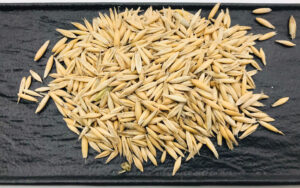
Oat exports from Ukraine in January-February 2026 decreased by 98% compared to the same period in 2025, according to the information and analytical agency APK-Inform, citing its own monitoring data.
According to the report, 506 tons of oats were shipped to foreign markets in January, while in February, exports fell to 215 tons. The main buyers of Ukrainian oats in December 2025 were Turkey and India, whose shares in the structure of shipments were 90.3% and 4%, respectively.
“The decline in exports is due to the suspension of purchases by leading importing countries — Turkey and India. At the same time, demand prices for oats in 2026 are mainly fixed in the previously formed range — 8,900-10,500 UAH/ton CPT port,” analysts said.
APK-Inform noted that despite minimal export volumes, the domestic market maintains stable price indicators in ports. This allows producers to hold grain in anticipation of a recovery in demand from major trading partners.

You are not alone. Most adults who start or resume learning a language face the same obstacle: the fear of saying a phrase incorrectly, the fear of looking helpless or ridiculous, the inner perfectionist demand to speak perfectly on the first try. This state is often described with one word — shyness — but there are clear psychological mechanisms behind it. In this article, we will explore where the shyness of speaking English comes from, how it slows down your progress, and, most importantly, what specific practical steps will help you overcome it. ✨
Shyness in speaking arises when you expect evaluation from others and anticipate a negative outcome: laughter, disagreement, misunderstanding. It is a social emotion associated with structuring your own image in the eyes of those around you. When it comes to a foreign language, cognitive factors are also added to this: low confidence in one’s knowledge, fear of making mistakes, insufficient practice in pronunciation. As a result, speakers avoid speaking and choose passive strategies (reading, passive viewing), which slows down real progress.
● “I have no talent for languages” — language skills can be trained; they are not a gift.
● “If I make a mistake, they’ll think I’m stupid” — the most forgiving listeners are people who have been in your shoes before.
● “I have to know everything before I speak” — this is practically impossible; speech is about communication, not perfection.
Break down the task of “speaking” into tiny steps: a 30-second introduction to a conversation, one question to a stranger, a 1-minute monologue at home in front of the mirror. When you systematically take small steps, your fear decreases and your confidence grows.
Every mistake is information about what exactly needs to be practiced. Instead of “I’m bad at languages,” say “this is what I want to work on next time.” This will translate emotion into concrete action.
Prepare several standard scripts for everyday, work, or travel situations. This gives you a foundation — you already have a “framework,” and your brain doesn’t have to waste resources generating it from scratch.
Listen to a short phrase and repeat it synchronously — shadowing. This improves pronunciation, rhythm, and automaticity. It is better to do 5 minutes every day than 1 hour once a week.
Start with partners who specifically emphasize support: a teacher, language buddy, or “English for beginners” groups, where mistakes are expected and acceptable. Here you can practice without fear of social judgment.
Write down negative thoughts and challenge them with evidence. For example, if you think, “I’ll sound ridiculous,” ask yourself, “What facts support this? How many people actually laughed?“ Often, you will find that most of the imagined scenarios never happened.
Shift your attention from ”how my English sounds“ to ”what I want to convey.” The purpose of language is communication. When the message is more important than the form, you move faster.
This question comes up often, and it’s logical: people want timelines. But there is no universal answer — it depends on your starting level, how often you practice, your goals, and the quality of your lessons. When someone asks “how long will it take me to learn English,” the best answer is a specific roadmap: assess your starting level, set a goal (conversational confidence, working vocabulary, exam), and set realistic deadlines with progress checkpoints. Convert uncertainty into a plan — this relieves anxiety.
Problem: Elena is shy about speaking in front of the group because she is afraid of making mistakes.
Plan:
Problem: fear of public speaking in front of an unknown audience.
Plan:
Problem: lack of confidence in basic phrases.
Plan:
● 10–15 min. of speaking (aloud or recorded).
● 5 min. of shadowing a short video phrase.
● 1 “social experiment”: ask a salesperson or colleague a question in English.
● Review your own recording: find 1 sentence to improve.
● Positive affirmation: “I am learning, I am making progress” — once in the morning.
Measure not by the absence of mistakes, but by the increase in the number of attempts to speak, the duration of monologues, and the number of emotionally positive interactions. Write down how many times this week you spoke for 30+ seconds. These are steps that boost confidence faster than a “black and white” assessment.
● Lack of time: the “5 minutes” rule — better 5 minutes every day than nothing.
● Shyness in front of acquaintances: start with strangers online.
● Feeling of stagnation: change the format — podcast instead of video, roleplay instead of reading.
Shyness is a natural response, but it can be overcome through systematic work: regular practice, small experiments, support, and reframing mistakes as learning opportunities. When you view the process as a series of steps, fear loses its power.
If you are looking for structured support and a safe environment for your first steps, our courses are just what you need. We develop programs for real people with real fears: short scenarios for practice, individual plans for the topics you fear most, and group sessions where mistakes are part of the process. Let us create a plan for you and guide you to the point where speaking becomes enjoyable. Learn more and get started on our school’s website: english.kh.ua
I wish you the courage to take small steps every day — they are the path to greater confidence.
In January-February 2026, Ukraine reduced imports of zinc and zinc products by 29% to $4.269 million (in February – $2.282 million).
Zinc exports for the two months reached $81,000 (in February – $1,000), while in January-February 2025 they were $178,000.
In 2025, imports of zinc and zinc products fell by 9.6% to $52.982 million.
Zinc exports last year reached $1.234 million, while in 2024 they amounted to $563 thousand.
Pure zinc metal is used to recover precious metals, protect steel from corrosion, and for other purposes.



