

Aluminum prices hit a nearly four-year high on Wednesday amid fears of supply disruptions from the Middle East.
The price of aluminum futures on the London Metal Exchange (LME) rose 3.1% to $3,379.8 per ton by 3:00 p.m. During the session, the price exceeded $3,400 for the first time since April 2022.
Aluminium Bahrain (Alba, one of the largest aluminium producers in the Middle East) announced force majeure on its contracts on Wednesday because it is unable to ship aluminium products.
“This is due to the situation in the Strait of Hormuz, which prevents us from shipping. Therefore, we are continuing production, but the metal is here in Alba,” he told Reuters.
According to AZ China, the Middle East accounts for about 9% of global aluminum production.
For a more detailed overview of global aluminum production from 1970 to 2024, see the video on the Experts Club YouTube channel.

Adonis Multidisciplinary Medical Center has launched the Metabolic Reset program for weight control and obesity treatment.
According to the center’s press release, the new standard of obesity treatment, Metabolic Reset | GLP-1 clinic, involves a comprehensive medical approach that begins with identifying the causes of weight gain, more than 15 laboratory tests, and seven instrumental studies to assess hormonal balance, metabolic status, insulin resistance, body composition, and internal organ function.
“Based on the results of the study, a personalized treatment strategy is developed: drug therapy, correction of eating habits, and elimination of metabolic disorders,” the clinic notes.
The weight control program at Adonis is led by endocrinologist and therapist Kateryna Komisarenko, who has more than 10 years of experience. She specializes in the treatment of metabolic disorders, insulin resistance, and hormone-related weight gain.
According to a study by STEPS and the Ukrainian Ministry of Health, 59% of the country’s adult population is overweight, and about 25% is obese. This means that virtually one in four Ukrainians is obese.
Founded in 1997, Adonis is a multidisciplinary medical center for adults and children. The medical group includes seven modern clinics in Kyiv and the surrounding region, more than 80 medical specialties, its own laboratories, operating centers, inpatient facilities, and departments of specialized specialists.

The number of Spanish residents born outside the country has exceeded 10 million for the first time, reaching 10,004,581 as of January 1, 2026, according to data from the Spanish Institute of Statistics (INE).
The total population of Spain on that date reached 49,570,725, meaning that the proportion of residents born abroad was close to 20%.
The INE notes that the population growth was mainly due to an increase in the number of people born outside the country, while the number of people born in Spain continued to decline. At the same time, the number of residents with foreign citizenship as of January 1, 2026, was 7,243,561, which is less than the number of “foreign-born” due to the process of obtaining Spanish citizenship.
In the fourth quarter of 2025, Spain’s population increased by 81,520 people, and in annual terms, the increase is estimated at 442,428 people. Among the main nationalities that arrived in the fourth quarter of 2025, INE highlights Colombian, Venezuelan, and Moroccan.
For comparison with Ukrainians: according to Spanish data, as of December 31, 2025, there were 338,576 Ukrainian citizens with valid residence permits in the country, with 73% of such permits granted under the temporary protection mechanism.
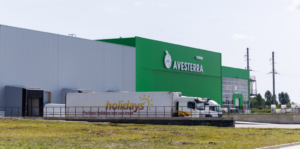
Agroholding Avesterra Group plans to invest around EUR300 million in the construction of new production facilities, incubators, parent flocks, and a biomethane plant over the next five years, company owner Dmytro Dobkin announced during the opening of a new site in Volyn on Tuesday.
“Investments in new poultry houses are part of a long-term strategy to modernize production in Ukraine. We have invested EUR15 million in this site, and this is only the first step. By 2028, we plan to build six such production sites with 20 poultry houses each and invest a total of about EUR 100 million. This will allow us to fully utilize our capacity and reach a production of about a quarter of a million broilers per day,” said the owner of Avesterra Group.
According to the company’s CEO, Svitlana Sobipan, the new facility, with an area of over 55,000 square meters, is located on 19 hectares and is equipped with modern German Big Dutchman equipment. Today, the group’s poultry division comprises 120 poultry houses, which provide for the rearing of up to 35.1 million birds per year.
“We are building the company systematically, with a focus on technology, biosafety, and consistent quality. Even in difficult times, we continue to implement strategic projects,” the CEO emphasized.
During the full-scale war, Avesterra Group invested over EUR 75 million in modernization. In 2025, the holding’s enterprises paid over UAH 500 million to budgets at all levels, and the total amount of tax deductions since the beginning of the invasion exceeded UAH 1.5 billion.
Avesterra Group is one of the leading chicken producers in Ukraine. The company is among the top four producers in the industry and provides a full production cycle: from grain cultivation to processing and logistics of finished products. The company employs over 1,500 people, operates 120 poultry houses, and has a modern meat processing complex with a capacity of 13,500 broilers per hour. The company’s products are represented on the Ukrainian market under the brands “Epicur” and “Chebaturochka” and on international markets under the brand Delika.

A large inter-museum project, “Carpathians. These Mountains Know No Submission,“ which will use paintings, graphics, and decorative and applied arts to tell the story of the cultural image of the mountainous region and its significance for Ukrainian identity. This was reported by the museum’s press service.
”The Carpathians are an inexhaustible source of creative inspiration and national spirit. The region of Cheremosh and Prut was a Ukrainian citadel even in times when artists were deprived of the freedom to freely create national art,“ said Oksana Pidsukha, acting director general of the National Museum ”Kyiv Art Gallery.”
According to the organizers, the exhibition reveals the multifaceted image of the Carpathians through mountain landscapes, portraits of the freedom-loving inhabitants of the region, and genre scenes from the life of the highlanders. The museum emphasizes that the natural landscape has shaped the national character of Ukrainians for centuries, influenced the historical fate of the people, and found reflection in art.
The official presentation of the project will take place on March 10 at 5 p.m.
The exhibition is based on paintings, graphic works, and decorative and applied art by Ukrainian artists from the 1950s to the 1970s. A special place among them is occupied by the works of the Shistdesiatnyky artists — a generation of artists for whom the Carpathians became a symbol of spiritual freedom and a space for the search for national identity.
After World War II, artists went to the mountains to learn more about Ukrainian culture, feel the power of traditions, and demonstrate their inner freedom at a time when the Soviet system was trying to subordinate art to the canons of socialist realism. It was in the Carpathians that they sought new meanings and explored the interconnection between nature, man, and everyday life.
The exhibition features works by famous Ukrainian artists, including Veniamin Kushnir and Lyubov Panchenko, whose paintings convey the atmosphere of the mountainous region and its cultural depth.
A separate section of the exhibition is dedicated to the Transcarpathian school of painting, represented by works by Yosyp Bokshay, Adalbert and Janos Erdeli, Ernest Kontratovich, Gavril Gluck, Zoltan Sholtes, Anton Kashshay, Adalbert Marton, and Vladimir Sidoruk. In their works, the beauty of the Carpathians is conveyed through a subtle sense of light, a rich color palette, and the special atmosphere of the highland landscapes.
The thematic and stylistic palette of the exhibition is complemented by works by Ukrainian classics of the 20th century — Mykola Hluschenko, Serhiy Shyshko, Mykola Maksymenko, and Roman Selsky.
Special emphasis is placed on the graphic works of Heorhii Yakutovych, in particular the illustrations for Mykhailo Kotsyubynsky’s novel “Shadows of Forgotten Ancestors,” as well as his linocuts from the series “People of the Village of Dzembronia,” which deeply convey the spirit of Carpathian culture and the life of mountain communities.
The exhibition is also complemented by porcelain figurines and majolica by famous Ukrainian sculptors. Some of these works were created for the anniversary dates of the Soviet period associated with the so-called annexation of Western Ukraine to the USSR.
The exhibition includes works from the collections of the National Museum “Kyiv Art Gallery,” the Museum of the Sixties — a branch of the Museum of the History of Kyiv, the galleries “NYU ART,” ARS Kerylos, “Nostalgia,” “Vernissage,” as well as from private collections.
The magazine DNA is the project’s information partner.
The museum is open from 11:00 a.m. to 6:00 p.m. (except Mondays and Thursdays), and until 7:00 p.m. on Tuesdays. The full ticket price is 200 UAH, and 100 UAH for eligible categories.
According to Serbian Economist, Serbia has introduced a special procedure that determines which EXPO 2027 Belgrade participants will be eligible for VAT (PDV) and excise duty exemptions, as well as the conditions and procedure for obtaining such benefits.
According to the explanations, the right to benefits is granted, in particular, to the offices of section commissioners of countries and international organizations participating in the exhibition for the purchase of goods and services related to the construction, installation, operation, and dismantling of national pavilions, as well as for administrative needs. A separate category is authorized personnel of national sections, and in some cases their family members, on a principle comparable to the privileges enjoyed by diplomatic personnel.
The privileges apply to operations directly related to EXPO, including the temporary importation of exhibition equipment and materials, as well as certain supplies within the exhibition infrastructure, such as power supply and operating resources. For official personnel, there are conditions under which VAT exemptions may also apply to personal goods, including furniture and one car per person, and excise duty exemptions may apply to fuel and lubricants for transport serving the commissioners’ offices, within established limits.
Exemptions are not automatic – participants must obtain confirmation from the EXPO organizer. This document, known as the EXPO 2027 certificate, is issued upon request and must be presented before the goods are imported or before the goods and services are delivered within the country; the certificate is issued in triplicate, and without it, the exemption does not apply.
At the end of January 2026, the Expo 2027 organizing committee reported that more than 130 countries had already officially confirmed their participation in the exhibition. Among the largest economies listed as confirmed participants are China, the United States, India, Germany, and many others. Ukraine has not yet confirmed its participation in EXPO-2027 in Belgrade.
https://t.me/relocationrs/2368



