

Ukraine will export 23.8 million tons of corn in the 2025-2026 marketing year (MY, July-June), which is 8.3% more than in the previous MY, according to the Ukrainian Agribusiness Club (UACB) on Facebook.
According to the association, production volumes are gradually recovering after the occupation of part of the territory: the harvest will reach 29.9 million tons (+11.2% compared to last year), although this is 6.8% less than the average for the last five years.
Analysts explained the improvement in gross harvest by an 11.6% increase in acreage to 4.5 million hectares. At the same time, due to heavy autumn rains, the harvest was delayed, and the average yield was 6.6 t/ha, which is 0.3% less than in the previous marketing year.
The UAC noted that in the 2024/25 marketing year, corn exports decreased by 25.6% (to 22.0 million tons) due to lower production and a decrease in carryover stocks from 6.4 million tons to 3.7 million tons. Experts estimated total domestic consumption in 2025/26 MY at 6.2 million tons, of which 5.2 million tons will be used for feed, 182 thousand tons for seeds, and 418 thousand tons for non-food processing.
“The Ukrainian corn market remains flexible. Despite the loss of land due to temporary occupation and difficult weather conditions, farmers are managing to increase acreage and gross harvest. The crop meets domestic demand for animal feed and is returning to export growth, remaining one of the mainstays of Ukrainian exports,” the UCAAB concluded.
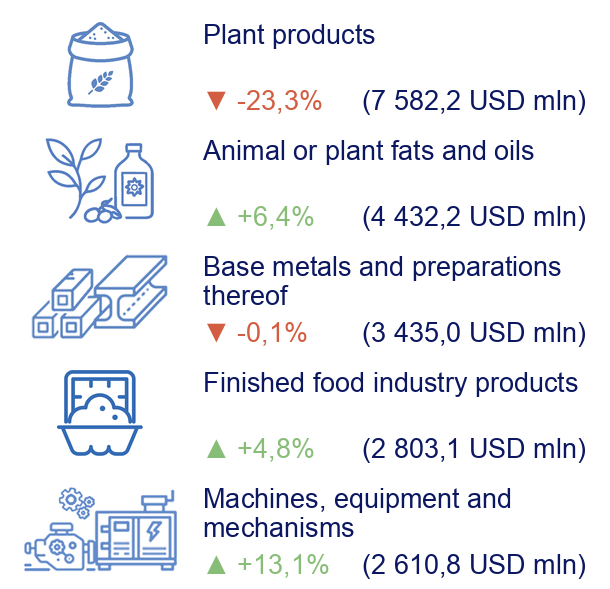
Dynamics of export of goods in January-September 2025 by most important items in relation to same period of 2024, %
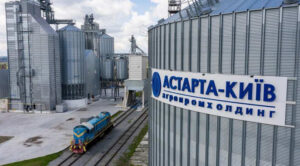
Astarta, Ukraine’s largest sugar producer, supplied over 870,000 tons of agricultural products to foreign markets in 2025, the company reported on its website.
According to the report, exports of soybean products (oil and meal) increased by 15% compared to 2024. The main markets in this segment were Hungary, Poland, Romania, and Austria. In addition, the company exported sugar to 25 countries, mainly to the MENA region (Middle East and North Africa) and Europe.
In 2025, wheat and corn were supplied to EU countries (Italy, the Netherlands, Spain), the United Kingdom, as well as Indonesia, Saudi Arabia, Turkey, and Vietnam.
“Global trade uncertainty requires new approaches. We continue to export and adapt our work through interaction within our partner ecosystem,” said Vyacheslav Chuk, Director of Commercial Operations and Strategic Marketing at Astarta.
Astarta is a vertically integrated agro-industrial holding operating in eight regions of Ukraine. It includes six sugar factories, agricultural enterprises with a land bank of 220,000 hectares and dairy farms with 22,000 head of cattle, an oil extraction plant in Hlobyn (Poltava region), seven elevators, and a biogas complex.
According to the results of 2025, Astarta reduced its total revenue from sales of key product categories by 15.6% compared to 2024, to UAH 21.05 billion, while physical sales volumes of its main products fell by 23.5%, to 1.21 million tons.

Kernel, one of Ukraine’s largest agricultural holdings, reported EBITDA of $103 million in October-December 2026 fiscal year (FY, July 2025-June 2026), down 13% from the same period last year, according to a report on Friday.
According to the report, consolidated revenue in the second quarter of FY 2026 amounted to $1 billion 98 million, which is 4% less than in the second quarter of FY 2025, but compared to the previous quarter, revenue grew by 33% thanks to an increase in sales of grain, vegetable oils, and meal as the harvest campaign gained momentum and export activity accelerated.
Kernel noted that the loss from changes in the fair value of biological assets in the second quarter of FY 2026 amounted to $43 million, compared to $33 million in the second quarter of FY 2025.
The cost of goods sold increased by 28% compared to the previous quarter, mainly reflecting higher costs of goods for resale and raw materials used, as well as a 55% increase in delivery and handling costs due to higher insurance premiums amid increased Russian attacks on civilian vessels during the reporting period.
As a result, gross profit decreased by 20% year-on-year to $126 million, reflecting lower profitability in the infrastructure, trading, and oilseed processing segments.
At the same time, Kernel managed to reduce general and administrative expenses by 26% to $55 million, reflecting a decrease in payroll-related expenses.
The company’s net profit for October-December 2025 amounted to $13 million, which is 2.3 times less than in October-December 2025. It is noted that the group incurred financial expenses of $21 million, which is 21% more than in the previous quarter, mainly due to an increase in expenses related to the extension and modification of lease agreements, while other expenses in the second quarter of FY 2026 reached $20 million, mainly due to an increase in the Group’s social expenses.
It is noted that Kernel received an operating profit before working capital changes of $113 million in the second quarter of FY 2026, which is 2.3 times more than in the previous year. The strong growth mainly reflects a low comparative base, as the previous year’s result was significantly affected by non-cash trading gains recognized by Avere.
According to the report, changes in working capital resulted in a cash outflow of $249 million in the second quarter of FY 2026, to $331 million, primarily due to an increase in inventories of $209 million, to $644 million, as well as the temporary allocation of a portion of liquidity to liquid securities.
“This reflects a normalization of seasonal purchasing patterns as the company resumed its typical inventory build following the harvest in the first half of the fiscal year. The previous season was atypical due to slower sales by farmers and a smaller grain harvest, which limited inventory accumulation and distorted the normal working capital cycle,” the document says.
It is specified that stocks related to the oilseed processing segment increased by 23% compared to the previous quarter, to $348 million, thanks to growth in sunflower seed and vegetable oil stocks. Grain stocks grew more sharply, 2.3 times compared to the previous quarter, to $296 million, as the group accumulated corn and other grains during the peak harvest season.
In physical terms, edible oil volumes by weight increased by 8% compared to the previous quarter, to 106,000 tons, while sunflower seed stocks reached 334,000 tons. Grain stocks, mainly corn, wheat, and soybeans, increased 2.6 times compared to the previous quarter, to 1.6 million tons.
Net cash flow used in investing activities amounted to $145 million during October-December 2025: the outflow consisted mainly of $120 million invested in financial assets as part of the group’s liquidity management strategy and $25 million in capital expenditures, mainly related to the reconstruction of the transshipment terminal in Chornomorsk, agricultural equipment, backup power equipment, and grain railcars.
As of the end of 2025, Kernel’s total debt amounted to $782 million, up 8% from the previous quarter. The increase was mainly due to more active use of credit lines to finance seasonal working capital requirements.
Net debt increased 3.4 times compared to the previous quarter to $451 million, while the leverage ratio as of December 31, 2025, decreased to 1.1 times net debt to EBITDA.
Overall, in the first half of FY 2026, consolidated revenue decreased by 1% compared to the same period in FY 2025, to $1 billion 924 million, EBITDA decreased by 14%, to $247 million, and net profit decreased by 33%, to $119 million.

The National Bank of Ukraine has increased the deadline for settlements on agricultural and specialized equipment export transactions carried out from March 1, 2026, from 180 to 270 days.
This applies to goods classified under UKT VED codes 8424, 8428, 8432, and 8716.
The NBU specifies that the decision was made following consultations with the Ministry of Economy, Environment, and Agriculture and taking into account the government’s proposals (Cabinet of Ministers Order No. 573-r of June 21, 2024).
The changes were approved by NBU Board Resolution No. 18 dated February 26, 2026, which comes into force on February 28, 2026.
The Ministry of Economy believes that extending the deadline “from 180 to 270 calendar days” will help exporters avoid the risks of reduced supplies due to long production cycles and the specifics of fulfilling foreign economic contracts, as well as support the continuity of contracts and the inflow of foreign currency earnings.
AGRICULTURAL MACHINERY, EXPORTS, foreign currency earnings, NBU, REGULATION

Kyiv ranked 254th out of 304 cities in the Quality of Life Index by City 2026 ranking published by Numbeo, with an index of 118.0 points.
The Hague in the Netherlands topped the ranking with a score of 230.1, followed by other Dutch cities in the top ten, including Utrecht, Eindhoven, Groningen, Rotterdam, and Amsterdam, as well as Luxembourg, Vienna, Ghent, and Nuremberg.
At the bottom of the list are Colombo (56.1), Manila (53.2), and Lagos (0.0).
Numbeo emphasizes that the 2026 version is a “historical snapshot” and is published periodically as a snapshot of data at a specific point in time, while the “current” ranking is updated continuously.
The Numbeo Quality of Life Index is a composite indicator calculated based on sub-indices of purchasing power, safety, healthcare, cost of living, housing affordability, travel time, pollution, and climate. The index is based on data and user surveys/contributions from website visitors, with Numbeo stating that it filters out potential spam and requires a sufficient number of participants for each location; the formula uses the Math.max(0, …) restriction, which may result in outsiders being assigned a value of 0.0.



