

In January of this year, ferrous metal scrap trading companies reduced their procurement of ferrous metal scrap by 18.5% to 97,100 tons from 149,000 tons.
According to data from the Ukrainian Association of Secondary Metals (UAVtormet), scrap collectors reduced their supplies of scrap to Ukrainian metallurgical plants by 26.7% compared to the same period last year, to 92.5 thousand tons from 126.2 thousand tons. At the same time, steel production during the same period decreased by 16.4% to 511 thousand tons from 611 thousand tons.
According to UAVtormet estimates, in the first month of the scrap export ban, more than 20-25% of companies in the industry partially suspended their operations, and another 12-15% completely stopped their activities. Experts predict that by April-May of this year, about 4-4.5 thousand workers in the scrap collection industry will lose their jobs.
As reported, according to data from the State Customs Service, Ukrainian scrap collection companies increased their exports of ferrous metal scrap by 45.3% in 2025 compared to the previous year, to 448,700 tons, and in monetary terms by 44.5%, to $131.9 million. In 2024, exports of these products increased by 60.7% in physical terms and by 73.2% in monetary terms.
Due to such a sharp increase in exports, the Cabinet of Ministers introduced a zero quota for exports of these products for 2026, whereas previously there was an export duty of EUR 180/ton, which, at the same time, was not paid when exporting to the EU, with which Ukraine has a free trade zone.
According to customs data, in January this year, Ukraine reduced exports of ferrous metal scrap by 40.7% compared to January last year, to 9.3 thousand tons, and compared to the December 2025 figure of 68.5 thousand tons, the decline was sevenfold. In monetary terms, scrap exports in January decreased by 38% compared to January 2025, to $2.73 million.
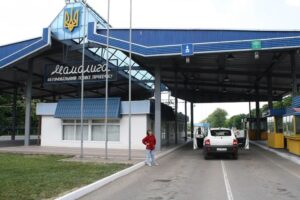
The State Border Service has announced that traffic will be restricted from 5:00 a.m. on February 18 at border crossing points located on the border with Moldova due to difficult weather conditions.
“Attention international carriers! Traffic through border crossing points located on the border with Moldova will be restricted,” the State Border Service said in a statement on its Telegram channel on Tuesday.
It is reported that the temporary restriction will be imposed on the M-15 Odessa-Reni (to Bucharest) public highway, km 11+920 – km 308+000, from 5:00 a.m. on February 18, 2026. The restriction applies to trucks and passenger vehicles (buses, minibuses).
The reason for the traffic restrictions is difficult weather conditions, which create an increased danger for all road users, as well as to ensure the timely elimination of the consequences of bad weather and prevent accidents.
In this regard, traffic to and from the checkpoints “Palanka-Mayaki-Udobnoe,” “Starokozachye,” “Serpnevoe,” “Maloyaroslavets,” “Lesnoye,” “Reni,” “Dolinskoe,” “Orlovka,” “Vinogradovka,” “Tabaki,” “Novye Trojany” for the specified category of vehicles will be suspended. This has been communicated to our Moldovan colleagues.

KAZGELATIN LLP intends to build a plant in Almaty region to produce gelatin with capacity of 10 thousand tons per year, the press service of the Ministry of Agriculture of Kazakhstan reported.
“The project provides for the construction of a plant in Alma-Ata region to produce food gelatin and products of deep processing of animal by-products – hides, bones and other collagen-containing raw materials,” – said in the message following the meeting of Deputy Minister of Agriculture Ermek Kenzhekhanuly with representatives of the company.
In addition to the main products, the plant will produce collagen components, fodder proteins and technical fats. Total investment in the project is estimated at 58 billion tenge ($117.9 million at current exchange rates).
“Currently, the domestic market’s needs for food gelatin are fully covered by imports, despite the availability of a sufficient raw material base in the country. Kazakhstan has significant volumes of animal by-products, which, if properly processed, can become a source of high value-added products. The launch of production will reduce import dependence, increase the level of processing of agricultural raw materials and strengthen food security,” the ministry said.
Special attention was paid to the creation of a network of procurement organizations in the regions to accept hides and bones of farm animals.
As reported, in January “daughter” of Turkish Iskefe Holding began to build a plant in Almaty for the production of food gelatin with a capacity of 7 thousand tons per year. The products of this enterprise will be used in food, pharmaceutical and cosmetic industries.
According to the Ministry of Agriculture of Kazakhstan, in the sphere of processing of leather raw materials there are 11 enterprises in the country, capable to process annually 3.3 million hides of cattle and 3.1 million hides of small horned cattle. However, the actual level of processing remains low: in 2024, only 5.9% of raw materials were sent for processing, 7.7% were exported, and 86.4% remained unclaimed.
Within the framework of a comprehensive plan for the development of processing of agricultural products for 2024-2028, it is envisaged to create more than 70 collection points for wool and about 200 collection points for hides to form a stable raw material base for processing enterprises, the department said.

The new owner of PJSC “Production and Trade Confectionery ”Lasoschi” (Ivano-Frankivsk) has become a Cypriot company GDP Global Data Plus BI Ltd of Ivano-Frankivsk businessman Roman Kritsun, which concentrated 99.502% of shares of the company.
According to the message of the issuer in the information disclosure system of the National Commission on Securities and Stock Market (NCSSM), the information on acquisition of the controlling stake was received by the company on February 13, 2026.
GDP Global Data Plus BI Ltd, in particular, bought out the stakes of the previous foreign shareholders – Swiss Hosta International AG and Polish Wawel S.A. The total number of acquired shares amounted to 1,620,991 (99.502% of the authorized capital). The highest price at which the buyer acquired shares of PJSC “PTCF ”Lasoschi” during 12 months preceding the day of acquisition of such block of shares, including the day of acquisition, amounted to EUR0.64335 per share. Prior to this agreement, the new owner and persons affiliated with him did not own shares of the company.
Against the background of the change of ownership, the company’s shareholders plan to consider a complete renewal of the Supervisory Board at the general meeting on March 18, 2026, which will be held remotely. In particular, the powers of the current members of the Supervisory Board – representatives of foreign shareholders Laura Opferkuch, Christoph Kenline and Wieslaw Latali – will be terminated. It is proposed to elect Roman Kritsun, Maria Domczak and Nikolai Jatskiv as representatives of the new shareholder, GDP Global Data Plus BI Ltd, to replace them for a period of three years.
According to the agenda, the shareholders will also consider the change of the company’s activity types, supplementing them with KVEDs in the sphere of development: organization of construction, erection of residential and non-residential buildings, as well as leasing and operation of real estate.
In addition, they are proposed to approve the results of operations for 2025 and to cover the losses incurred at the expense of equity capital. The shareholders also intend to pre-approve the execution of significant transactions with the aggregate marginal value of UAH 100 mln for a period of one year.
PJSC “PTCF ”Lasoschi” (Ivano-Frankivsk) was founded in 1997 on the basis of capacities of the local confectionery factory, which had been operating since 1912. It specializes in the production of sweets, caramel, waffles and confectionery glaze (TM Lasoschi).
According to YouControl, the company’s revenue in 2023 amounted to UAH 47 thousand, in 2024 – UAH 11.9 thousand. At the same time, net profit at the end of 2024 is declared at the level of UAH 3.3 mln. The assets of the company as of the beginning of 2026 are estimated at UAH 7.7 mln, liabilities – about UAH 40 mln.
The main shareholders of the company before the agreement were German Hosta International AG (51%) and Polish Wawel S.A. (48.5%). The ultimate beneficiary is Laura Silvia Opferkuch (Germany).
GDP Global Data Plus BI Ltd (Cyprus) was incorporated on June 8, 2024 in Nicosia as a private limited liability company. The directors of the company are Roman Kritsun and Renos Pasias and the secretary is Vpserve Nominees Ltd.
Roman Krytsun is an Ivano-Frankivsk entrepreneur, beneficiary of Ivano-Frankivsk Food Factory PJSC and manager of Xenia Ltd (confectionery production). He specializes in asset management in the food industry, wholesale trade and development.

The Director-General of the International Committee of the Red Cross (ICRC), Pierre Krehhenbühl, has arrived in Ukraine and will spend the next few days in Lviv and Kyiv.
According to the ICRC press service, Krehhenbühl will hold meetings with Ukrainian authorities and the Ukrainian Red Cross.
“Mr. Krehhenbühl is visiting Ukraine during one of the harshest winters in recent years, when critical infrastructure across the country is suffering extensive damage from strikes. For many people across Ukraine, the consequences of these attacks on electricity and heating systems are extremely severe. Mr. Krechenbühl will meet with workers who are involved in the ongoing support provided by the ICRC, particularly to frontline communities,” the statement said.
During his visit, Krechenbühl will also meet with families of those who are missing, presumed or confirmed dead in combat or captured, to listen to these families and give them an opportunity to ask questions.
Together with the head of the delegation in Ukraine, Juan Pedro Scherer, he will meet with medical staff and patients at two facilities supported by the ICRC: the Burn Center of Kyiv City Clinical Hospital No. 2 and the Rehabilitation Department of Kyiv Regional Clinical Hospital. Krehhenbühl will also visit the Single Center for the Identification of Deceased Persons in the village of Tsybli, Kyiv region, which also receives support from the ICRC.
Since February 2022, the ICRC has increased the scope of its activities. During the winter season of 2025-2026, this assistance included: Cash assistance to more than 18,000 residents of frontline areas to purchase essential items before the onset of winter; Support for critical heating infrastructure, in particular the Mykolaiv and Kherson thermal power plants, the Teplokommunenergo municipal enterprise in Chernihiv, and municipal heating companies in Zelenodolsk, Dnipropetrovsk region, which provide heat to around 435,000 people; 35 providers of essential services, including 10 hospitals, received 2,635 tons of fuel briquettes to ensure heat supply during the winter.
The ICRC has been active in Ukraine since 2014 and currently has more than 750 staff working throughout the country.

In Greece, from April 1, 2026, residential and commercial property rentals will only be payable by bank transfer to the landlord’s account. The measure is enshrined in amendments that postpone the launch date of mandatory cashless payments for rent to April 2026 and tighten controls on the declaration of rental income.
According to explanations provided by the Greek media and the regulations they refer to, payments must be made to an IBAN registered to the owner and declared to the AADE tax service. Payments to third-party accounts (relatives, lawyers, trustees, management companies) will not be recognized for tax purposes, and in the case of joint ownership, each co-owner will be required to provide their IBAN for the correct distribution of income.
Failure to comply with the rules will result in financial consequences for all parties to the transaction. Owners lose the standard 5% tax deduction on rental income; tenants lose their entitlement to housing benefits, including annual rent compensation of up to €800; businesses will not be able to count rent as an expense if they pay outside the banking system (as an example, there is a risk of losing €8,400 in deductible expenses per year when renting €700 per month).
The authorities link the innovation to the task of matching declared rental income with bank transactions and reducing the share of “gray” payments in the rental market, with AADE having to set up data collection from payment service providers to monitor compliance with the regime.



