

Lithuania wants Ukraine to become a member of the European Union by 2030 and will focus on this during its presidency of the EU Council in 2027, Lithuanian President Gitanas Nausėda said.
“Lithuania wants Ukraine to become a member of the European Union by 2030. This would be a decisive step towards ensuring long-term stability, security, and prosperity not only in this country but also for peace in the region. This is a strategic interest for Lithuania, which we want to continue to focus on during our presidency of the EU Council in 2027,” Nausėda said during a press conference in Vilnius with Polish President Karol Nawrocki and Ukrainian President Volodymyr Zelensky.
Nausėda said that Lithuania has already provided more than €1 billion in financial aid to Ukraine and called for long-term funding for the Ukrainian army. In addition, Lithuania has allocated more than €100 million for the reconstruction of Ukrainian schools.

On January 26, Ukraine’s eastern, northeastern, and most western regions are expected to see no precipitation; the rest of the country will see light snow, with rain in the south, west, and Vinnytsia region (during the day, and in Zhytomyr, Kyiv, and Kirovohrad regions), according to the Ukrainian Hydrometeorological Center.
In the southwestern part, in the Cherkasy and Kirovohrad regions, there will be fog at night and in the morning, and during the day (in the Zhytomyr, Kyiv, and Kherson regions) there will be freezing rain.
There will be icy patches on the country’s roads in some places.
The wind will be southeasterly, 7-12 m/s, with gusts of 15-20 m/s in some places on the right bank during the day.
The temperature in the east and northeast of the country will be 12-17° below zero at night and 7-12° below zero during the day; in the south, west, and Vinnytsia regions, temperatures will range from 4° below zero to 1° above zero at night and from 2° below zero to 3° above zero during the day (in Zakarpattia, Odesa region, and Crimea, temperatures will range from 0-5° above zero at night and 4-9° above zero during the day); in the rest of the territory, at night 5-10° below zero, during the day from 4° below zero to 1° above zero.
In Kyiv on January 26, light snow, during the day with rain; during the day, sleet. Icy roads in some places.
Southeast wind, 7-12 m/s. Temperature at night 7-9° below zero, during the day around 0°.
According to the Boris Sreznevsky Central Geophysical Observatory, in Kyiv on January 26, the highest temperature during the day was 7.4° in 2025, the lowest at night was -22.4° in 1891.
On January 26, in the southwestern part, in the Cherkasy and Kirovohrad regions, there will be fog at night and in the morning, visibility 200-500 m, during the day (in the Zhytomyr, Kyiv, and Kherson regions) there will be ice (level I danger, yellow).
Weather conditions may complicate the work of energy, construction, and utility companies and transport.
On Tuesday, January 27, there will be snow in Ukraine, with rain on the right bank (no precipitation in the east of the country).
In the northern, central, and southern regions, there will be ice in some places; on the country’s roads, there will be black ice in some places.
The wind will be southeasterly, 7-12 m/s, with gusts of 15-20 m/s in some places in the southeast at night.
The temperature on the left bank will be 5-10° below zero at night (up to 14° below zero in the east) and 2-7° below zero during the day. in Zakarpattia, Odesa region, and Crimea, temperatures will range from 2° below zero to 3° above zero at night and 2-7° above zero during the day; in the rest of the country, temperatures will range from 4° below zero to 1° above zero at night and during the day.
In Kyiv on January 27, snow, rain during the day, sleet. Icy roads in some places. South-easterly wind, 7-12 m/s.
Temperature at night 2-4° below zero, during the day around 0°.

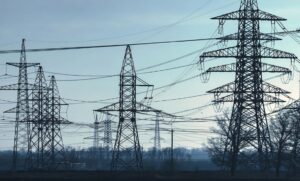
On Monday, NEC Ukrenergo will restrict electricity supply in all regions of Ukraine.
“Tomorrow, January 26, hourly power cuts and power restrictions (for industrial consumers) will be applied in all regions of Ukraine,” Ukrenergo said in a statement on Telegram.
The reason for the restrictive measures is the consequences of Russian missile and drone attacks on energy facilities, the NEC notes.
The press service of NEC Ukrenergo reports that the situation in the energy system may change.
Naftogaz Group increased electricity imports from Europe this week based on a government decision and with the aim of stabilizing the situation in the energy system, said Sergey Koretsky, chairman of the board of Naftogaz of Ukraine.
“The volume of imported electricity already covers more than 50% of the needs of all the Group’s enterprises, as provided for by the government’s resolution,” he said in a Facebook post on Saturday.
Koretsky explained that the corresponding amount of electricity has been allocated for the needs of domestic consumers.
“We are coordinating our actions with the government in order to stabilize the situation in the energy system as quickly as possible after the Russian shelling,” the chairman of the board of Naftogaz emphasized.
As reported, amid the deteriorating situation in Ukraine’s energy system due to massive Russian shelling of energy infrastructure, the government has instructed state-owned companies to increase electricity imports.
During the “Question Time to the Government” in the Verkhovna Rada on January 16, First Deputy Prime Minister of Energy Denys Shmyhal pointed out that, on behalf of the government, Naftogaz of Ukraine, Ukrzaliznytsia, and part of the industrial complex will import at least 50% of their electricity needs.
“This will make it possible to free up 1.5 MW for people’s needs. I hope this will happen in the coming days,” Shmyhal said at the time.

The document on security guarantees from the US is 100% ready, and Ukraine is waiting for its partners to confirm the date and place of signing, Ukrainian President Volodymyr Zelensky said.
“For us, a security guarantee is, first and foremost, a bilateral security guarantee from the United States of America. The document is 100% ready, we are waiting for our partners to be ready to provide a venue for us to sign it, and then the document will go for ratification in the US Congress and the Ukrainian parliament,” Zelensky said during a press conference in Vilnius on Sunday.
On December 23, Zelensky announced that the agreement on security guarantees from the US was ready for signing, and that the date and place of signing depended on US President Donald Trump.
“It’s up to him. We are ready to sign these documents, which are so important to us. I emphasize once again that we are confident that these are historic documents,” Zelensky said during a conversation with journalists.

The development of industrial parks in Ukraine in 2026 will include several key areas that have begun to take shape over the past three years, in particular, steady growth in the number of both registered and operating industrial parks (up to 30 registered per year, 15-20 operating), according to Valery Kirilko, CEO of the Industrial Parks of Ukraine group of companies.
As noted in the final report on the development of industrial parks provided by Kirilko, they will develop in the direction of greater specialization, innovation, and environmental friendliness.
“State support, attracting foreign investors, and developing infrastructure will make it possible to create powerful industrial clusters that will become the driving force behind the country’s economic recovery and growth,” the report says.
The report notes that at the end of 2025, there were 118 industrial parks registered in the register of industrial parks in Ukraine (in January 2026, seven parks were excluded, so now there are 111).
At the same time, during the period of wartime from 2022 to 2025, 80 IPs were registered, which is almost 70% of the total number. Last year, 27 parks were registered and eight were excluded from the register.
As reported, by the end of 2025, 37 industrial enterprises had been built or were under construction in IPs, of which 22 plants had been built and another 15 were under construction. These are enterprises in the fields of agro-processing, food production, furniture and woodworking, and mechanical engineering.
According to data provided by Kirilko, Kyiv region became the leader in terms of the number of registrations – four IPs, Zhytomyr, Odesa, and Khmelnytskyi regions have three each, and Vinnytsia, Zakarpattia, and Lviv regions have two each. Eight more regions registered one industrial park each.
“We would like to note the appearance of the first industrial park registered in the Kirovohrad region,” the article notes.
Overall, the leader in terms of the number of registered IPs is the Lviv region, which currently has 20 parks registered, followed by the Kyiv region with 15, and the Zakarpattia region with 12.
“The largest increase during the war was also demonstrated by the Lviv region with 12 parks, the Zakarpattia region with 11, and the Kyiv region with eight parks. There are still no industrial parks in three regions: Kharkiv, Kherson, and Zaporizhzhia,” the report says.
Among the initiators in 2025, there were more private initiators (19) than municipal ones (8).
“Among municipal parks, it is worth noting the emergence of a new type of synergy in the creation of parks, the so-called combined industrial parks. These are municipal IPs that are created by a municipal initiator for a specific investor, who then enters as a management company and begins to develop it as an attracted developer or production “anchor” operator. Of the eight municipal parks, at least three were created on this principle,” the material notes.
The largest number of specialized industrial parks are associated with the industrial agricultural sector and food production, followed by the production of building materials, and separately among them, the production of metal structures.
“Next comes warehouse real estate, although this is not a sign of IP, but many parks have recently been registered as transshipment and storage bases with an additional industrial block. And then there are mixed parks that do not have any specialization,” the report notes.
A separate type of participant has also emerged that meets the requirements of the times: energy companies operating solar power plants, gas piston power plants, plants that convert waste into electricity and biogas, energy storage operators, and other combinations of such participants.
“In this regard, questions and problems arise when it is planned to place such electricity operators on industrial land. But gradually, practical cases are adapting the conditions for the implementation of such projects within industrial parks,” experts note.
The article reminds us that the total amount of state incentives for industrial parks in 2025 was UAH 900.681 million, and more than UAH 4 billion was financed by private business – 98% of these investments were of Ukrainian origin.
“Unfortunately, the opportunities for attracting international grants or technical assistance programs for the development of IP infrastructure are currently limited. The main reason is that international organizations and donors are focused on supporting specific enterprises or residents that already operate or plan to operate in the parks, rather than financing infrastructure projects such as communications, road construction, or railway branches,” the article states.
In addition, infrastructure investments are risky for MFIs because they have no guarantee of return.
“The only known case is the Riasne-2/M-10 Lviv Industrial Park in Lviv, which is managed by Dragon Capital. They received a loan from the EBRD for more than $24.5 million, insured against military risks by MIGA. However, these funds were used not only for infrastructure, but also for the construction of facilities for residents,” the article says.
Experts also note that today there are three main types of industrial park initiators: industrial (a private initiator creates an industrial park for its own production projects); municipal (community in the form of a local council, municipality); developer (private owner or tenant of a land plot or industrial zone).
At the same time, they note a sharp increase in private parks in relation to municipal ones—if until 2022, municipal parks accounted for about 80% of the total number, then over the past three years, the share of registered municipal parks has been 35%, and private ones, respectively, 65%.
Among the trends in the development of IPs this year, experts also mention an increasing shift from quantity to quality, increased government support and incentives, active attraction of foreign investors, and environmental friendliness.
In addition, they believe that IPs are increasingly focused on creating technology clusters, and industrial clusters, where residents complement each other, will become more widespread.
An increase in the number of network management companies specializing in IP development is also expected, and foreign management companies, especially from Europe and Asia, will begin to enter the Ukrainian market more actively.
Another important step will be the creation of the All-Ukrainian Association of Industrial Parks, and development companies will become increasingly interested in industrial parks.



