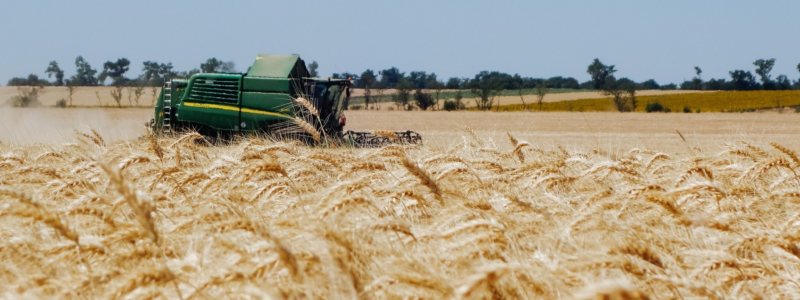
Global grain production in 2026 could reach one of the highest levels on record, but international trade is declining due to logistical restrictions, particularly shipping problems in the Black Sea. Ensuring global food security depends not only on the volume of production but also on the ability to transport products to consumers on time and at an affordable price, SEEDS reports, citing an analysis by international expert Kateryna Zvierieva.
According to the latest estimates by the Food and Agriculture Organization of the United Nations (FAO), global grain production in 2026 is forecast at 2.979 billion tonnes. This is the second-highest figure on record. At the same time, the volume of international grain trade is projected to decrease by 3.5% to 505.8 million tonnes.
Among the main factors behind the decline in trade, FAO identifies shipping difficulties in the Black Sea and insufficient capacity of alternative transport corridors. As a result, even with high production volumes, certain regions may face supply disruptions and rising costs of imported food.
As Kateryna Zvierieva, an international expert in strategic communications in the agri-food sector, sustainable development and food systems, notes in an article for the Italian publication Agricultura.it, risks to food security are not necessarily associated with a physical shortage of grain. The availability of transport routes, delivery speed and logistics costs play a significant role.
The situation in Ukraine is particularly illustrative in this context, as grain exports remain dependent on security conditions, the operation of port infrastructure and the capacity of alternative routes.
According to the State Customs Service of Ukraine, as of October 16, the country had exported 5.929 million tonnes of grain and leguminous crops since the beginning of the 2026/27 marketing year. This is 24.9% less than during the corresponding period of the previous season.
At the same time, export trends for individual crops differ significantly. In particular, wheat shipments decreased by 40.5%, while corn exports increased by approximately 80%. This difference indicates that logistical and market factors have varying effects on individual segments of the grain market.
The structure of transport routes has also changed. According to the European Commission, in September 2026, about 90% of Ukrainian exports of grain, oilseeds and related products were transported through the Solidarity Lanes between Ukraine and the EU. Meanwhile, approximately 10% of shipments passed through Black Sea ports.
Rail, road and river transport make it possible to maintain exports even under restrictions on maritime logistics. However, their capacity remains an important factor determining the volumes, delivery times and costs of agricultural product shipments.
Logistical difficulties also affect global food prices. According to FAO, the Food Price Index rose by 1.5% in September compared with August and by 5.8% year-on-year. Meanwhile, the cereal price sub-index increased by 5.1% over the month and by 17.2% compared with September 2025.
In particular, global wheat prices rose by 6.3% during the month. Among the reasons cited are restrictions on transport connections in the Black Sea region and dry weather conditions in certain areas of North America. Corn became 5.6% more expensive amid expectations regarding yields in the United States and a reduction in export supplies from Brazil.
According to Zvierieva, delays in transporting products create risks not only for international trade but also for the financial stability of agricultural enterprises. Longer delivery times and higher transport costs affect farmers’ working capital, their ability to finance current operations and investments in subsequent production cycles.
At the same time, high global harvests and declining trade do not automatically mean the emergence of a global food crisis. However, the current situation demonstrates the dependence of food markets on transport infrastructure and the stability of international supply chains.
Thus, ensuring global food security increasingly depends on countries’ ability to maintain stable logistics routes, diversify transport corridors and reduce food delivery costs.
Kateryna Zvierieva is an international expert in strategic communications in the agri-food sector, sustainable development and food systems. She has collaborated with FAO and the European Bank for Reconstruction and Development (EBRD). She is the founder of Sapienza.media.
Agricultural exports, FAO, FOOD SECURITY, GLOBAL MARKETS, GRAINS, KATERYNA ZVIERIEVA, LOGISTICS, UKRAINE