

According to the results of a study conducted by Active Group and the Experts Club analytical center in February and presented at the Interfax-Ukraine press center, only 13.1% of respondents reported that they use the state drug reimbursement program, 70.6% do not use it, 16.3% had heard of it but did not use it.
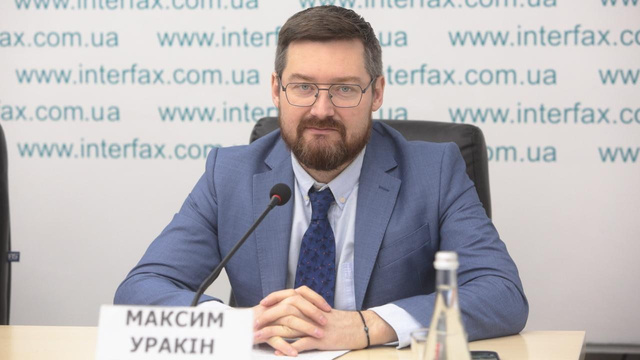
“Low use of the program is often associated not with a lack of need, but with barriers to awareness and access,” said Experts Club founder Maxim Urakin.
“If people ‘have heard of it but have not used it,’ then the patient’s path to compensation remains difficult,” added Alexander Pozniy.

The survey was conducted on the SunFlowerSociology online panel on a representative sample on February 11-12, 2026.
The survey involved 1,000 respondents from a representative sample in all regions of Ukraine, except for the temporarily occupied territories.
ACTIVE GROUP, ALEXANDER POZNIY, EXPERTS CLUB, MAXIM URAKIN, MEDICINES, Reimbursement

According to the results of a survey conducted by the research company Active Group and the analytical center Experts Club in early February, 52.3% of respondents said that the prices of medicines they buy regularly have increased significantly, 43.9% said they have increased slightly, 3.6% said they have not changed, and 0.2% said they have decreased.

“The widespread perception of rising prices is a factor that directly affects adherence to treatment,” said Experts Club founder Maksim Urakin.

“Rising prices are prompting some patients to delay purchases and self-medicate, which increases the risk of complications,” said Active Group CEO and co-founder Alexander Pozniy.

The survey was conducted on the SunFlowerSociology online panel using a representative sample on February 11-12, 2026. The survey involved 1,000 respondents from a representative sample in all regions of Ukraine, except for the temporarily occupied territories.

More than 11% of Ukrainians never visit a doctor, while almost 10% do so more than 10 times a year.
According to the results of a survey conducted by the research company Active Group and the Experts Club analytical center in early February, 41.3% visit doctors 1-2 times a year, 27.2% – 3-5 times, and 10.4% – 6-10 times.

“The group of people who do not visit doctors at all requires a separate study of the reasons, which may include financial barriers, mistrust, and psychological burnout,” said Alexander Pozniy, director and co-founder of the research company Active Group.
He drew attention to the fact that most respondents visit a doctor once or twice a year, but noted that there may be different reasons for this.
“We need to ask the question, why is this so: because our people are so healthy, or because people cannot go to the doctor or do not trust doctors. But this is a question for the medical professionals themselves,” he said.

Pozniy also noted that according to the survey results, “family doctors are accessible to the majority of the population, especially in cities,” while access to specialists, especially for rural populations and populations in small or remote communities, raises questions “primarily due to the lack of the necessary number of specialists.”
For his part, Grigory Soloninka, a member of the board of the public organization “Kyiv Regional Organization of the All-Ukrainian Medical Society” (VUO), professor of the Department of Internal and Occupational Diseases at the Kyiv Medical University, noted that “we need to return to the issue of rural medicine and, perhaps, make certain changes so that the rural population does not receive fewer services than the urban population.”

“If we take a remote village, then, perhaps, there is a problem with getting to a narrow specialist and receiving specialized medical care,” he said.
For his part, Experts Club founder Maxim Urakin noted that “medicine is part of the country’s economic stability, and when medical expenses erode family budgets, it affects consumption, savings, and people’s ability to work and recover.”
“In Ukraine, almost a quarter of the population spends up to 20% of their family budget on medicine, and one in five spends more than 20%. If we translate this into the language of economic financial analysis, then from the point of view of international methodology, the fact that a person spends more than 10% of their budget is catastrophic. In other words, we see a sign of a serious financial burden,” he said.

The study was conducted on the SunFlowerSociology online panel on a representative sample on February 11-12, 2026. The survey involved 1,000 respondents from a representative sample in all regions of Ukraine, except for the temporarily occupied territories.
ACTIVE GROUP, EXPERTS CLUB, Pozniy, SOCIOLOGY, SOLONINKA, SURVEY, URAKIN, Єременко

According to a survey conducted by research company Active Group and the Experts Club analytical center in early February, 28.4% of Ukrainians prefer Ukrainian medicines.
According to Alexander Pozniy, CEO and co-founder of Active Group, 33.4% of respondents more often choose imported medicines, while for 38.2% of respondents, the country of origin of the drug is irrelevant.

“For manufacturers, this means that competition is based on reputation, proven effectiveness, and stability of supply, and Ukrainian brands can strengthen their position through quality and clear communication,” said Alexander Pozniy, CEO and co-founder of Active Group.
According to Experts Club founder Maxim Urakin, “the fact that almost a third of consumers choose domestic drugs shows the importance of accessibility and trust in quality in the domestic market.”
The study was conducted on the SunFlowerSociology online panel on a representative sample on February 11-12, 2026. The survey involved 1,000 respondents from a representative sample in all regions of Ukraine, except for the temporarily occupied territories.
ACTIVE GROUP, EXPERTS CLUB, Pozniy, SOCIOLOGY, SOLONINKA, SURVEY, URAKIN

According to the results of a survey conducted by the research company Active Group and the Experts Club analytical center in early February and presented at the Interfax-Ukraine press center, 31.4% of respondents called electronic prescriptions “very convenient,” 44.1% called them “rather convenient,” 18.7% called them “rather inconvenient,” and 5.9% called them “very inconvenient.”

“Digital tools gain support when they save time and really simplify access to medicines,” said Experts Club founder Maxim Urakin.
“Negative attitudes among some users are usually associated with practical failures and varying levels of digital literacy, and this needs to be taken into account when fine-tuning the service,” said Alexander Pozniy, CEO and co-founder of Active Group.
The study was conducted on the SunFlowerSociology online panel using a representative sample on February 11-12, 2026. The survey involved 1,000 respondents from a representative sample in all regions of Ukraine, except for the temporarily occupied territories.
ACTIVE GROUP, EXPERTS CLUB, Poznyi, SOCIOLOGY, SOLONINKA, SURVEY, URAKIN, Єременко

According to the results of a survey conducted by the research company Active Group and the Experts Club analytical center and published in the Interfax-Ukraine press center, when buying medicines, 50.5% of respondents primarily focus on the combination of price and effectiveness, 25.0% on price, and 24.5% on effectiveness.

The survey was conducted online on February 11-12, 2026, with 1,000 respondents (18+).
“The choice of ‘price plus effectiveness’ reflects the desire to get results, but within a limited budget,” said Experts Club founder Maxim Urakin.
“Consumers are becoming more rational, and this intensifies competition among manufacturers for trust and affordability,” said Active Group CEO and co-founder Alexander Pozniy.
The study was conducted on the SunFlowerSociology online panel using a representative sample on February 11-12, 2026. The survey involved 1,000 respondents from a representative sample in all regions of Ukraine, except for the temporarily occupied territories.
ACTIVE GROUP, EXPERTS CLUB, Pozniy, SOCIOLOGY, SOLONINKA, SURVEY, URAKIN



