
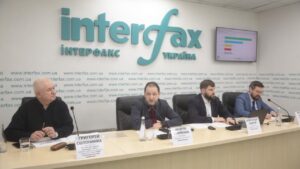
More than 15% of Ukrainians noticed that the cost of medicines increased by more than 50% during 2024-2025, while 52% of Ukrainians noted a 20%-50% increase in the cost of medicines.
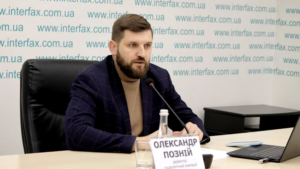
According to Alexander Pozniy, director of the research company Active Group, this is evidenced by the results of a survey conducted by Active Group and the Experts Club analytical center in early February and presented to Interfax-Ukraine on Friday.
Pozniy noted that a third of those surveyed said that medicine prices had remained almost unchanged, while 2.6% said that they had even decreased.
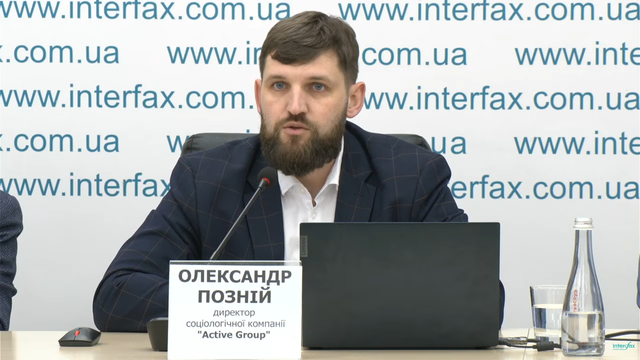
“In general, it can be noted that the cost of medicines has risen quite significantly, and this is noted by almost the absolute majority (of respondents),” he said, explaining that medicines account for about 10-20% of the household budget, which is why the price increase is so noticeable.
Pozniy noted that, according to the survey, when buying medicines, 25% of Ukrainians pay attention to price, while 24.5% pay attention to effectiveness.
“That is, slightly more than half pay attention to the combination of price and effectiveness of the selected medicines. Therefore, people try to find the optimal combination that would provide the best effect and the least financial burden in terms of treatment,” he said.
In addition, Pozniy said that 28.4% of respondents prefer Ukrainian medicines, while 33.4% prefer imported ones. For 38% of respondents, the country of origin of the drugs does not matter.
According to the results, 31.4% of respondents believe that using electronic prescriptions is very convenient, 44% believe it is somewhat convenient, 18.7% believe it is somewhat inconvenient, and only 5.9% believe it is very inconvenient.
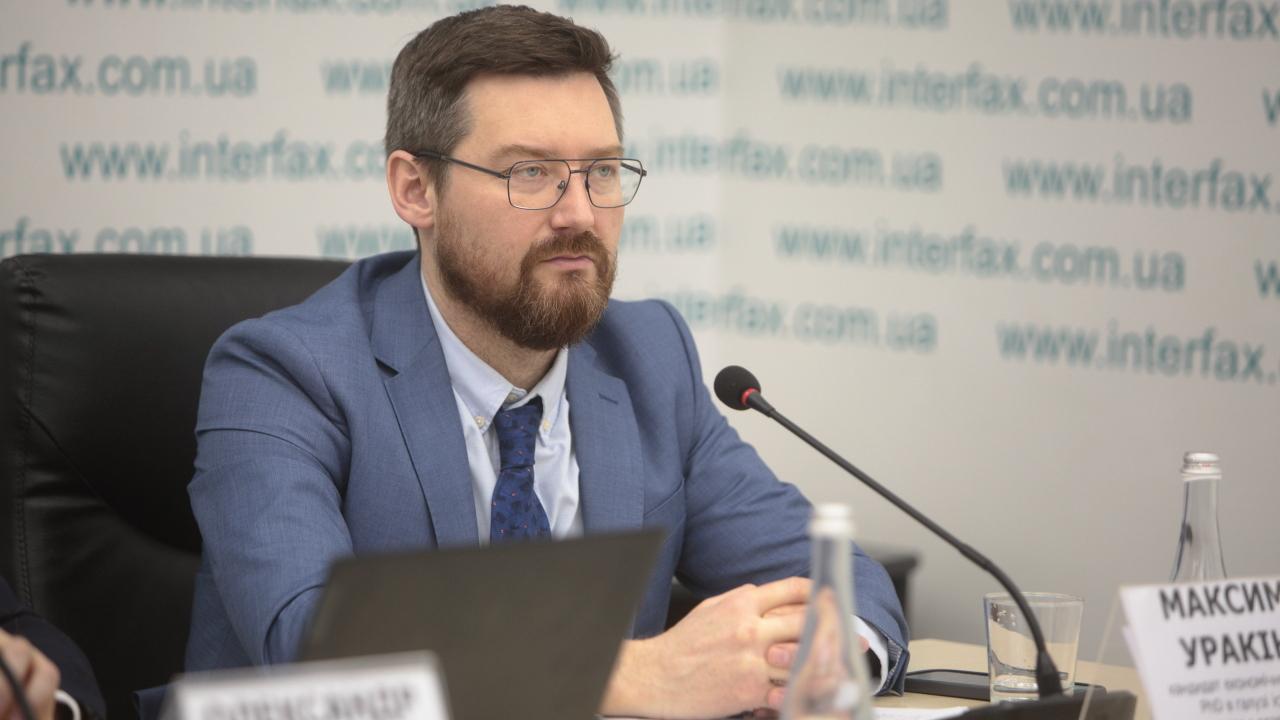
For his part, Maksim Urakin, founder of the Experts Club information and analytical center, noted that the price of medicines is a key factor for Ukrainian citizens.
“Against this backdrop, it is particularly important how state mechanisms for reimbursement and compensation for the cost of medicines work. There is a state reimbursement program, but only 13% of Ukrainians use it. Therefore, reimbursement needs to be promoted among citizens,” he said.
The survey was conducted on the SunFlowerSociology online panel using a representative sample on February 11-12, 2026. The survey involved 1,000 respondents from a representative sample in all regions of Ukraine, except for the temporarily occupied territories.
ACTIVE GROUP, EXPERTS CLUB, MEDICINE, Pozniy, REFORM, URAKIN

Ukrainians cite the outflow of medical personnel and the destruction of medical infrastructure by the aggressor as the main reasons for the deterioration in the availability of medical services during the war.
According to the results of a survey conducted by the research company Active Group and the Experts Club analytical center in early February and presented to the Interfax-Ukraine agency on Friday, 48% of respondents noted that they felt a deterioration in medical services during the war.
Among the main problems of medicine in wartime, 60% of respondents cited the outflow of medical personnel, 22.7% cited the destruction of medical infrastructure, and 13.4% cited a shortage of medicines.
“Considering that the deterioration in medical services is due to the fact that medical facilities have either been physically destroyed or doctors have left them, the fact that only 48% of respondents felt a deterioration is not a bad result. The main problems in medicine during the war are the outflow of medical personnel, followed by the destruction of infrastructure, and then the shortage of medicines. In other words, we see that the main problem is the shortage of medical personnel,” said Active Group founder Andrey Eremenko.

The reforms carried out in the medical sector in recent years have contributed to the fact that medicine continues to function, and the fact that people talk about the lack of improvement or deterioration in the quality of medical services, according to the expert, is still “not subject to harsh criticism.”
According to the survey, 7.2% currently rate the state of affairs in the healthcare system as very poor, 18.7% as rather poor, 16.7% as rather good, and 2% as very good. At the same time, 54.6% gave it an average rating.
At the same time, 29.5% of respondents completely trust their family doctor, and 61.9% trust them partially.
When assessing the possibility of obtaining consultations from a family doctor in their region, 88.8% of respondents said that it was very easy or easy to do so, while 21% said it was very difficult or difficult.
Just over 10% of respondents noted that their local hospital has a sufficient supply of medicines and modern equipment, while 45.8% said that there is a partial supply.
At the same time, 40% of respondents noted that consultations with a specialist take up to a week, 28.4% take 1-2 weeks, and 11.5% take more than a month. In 2024-2025, 68% of respondents regularly paid for medical services themselves.
At the same time, 16% of respondents noted that they spend less than 5% of their family budget on medicine, while almost 21% of respondents reported spending more than 20%.

“The study revealed both the positive and painful aspects of the Ukrainian healthcare system. The most painful issue is the brain drain. But it is important to see the strengths as well. I was very pleased that the level of trust in family doctors is very high. So, the foundation for the development of the healthcare system is there, although, in particular due to the war, there are economic barriers and barriers to accessibility,” said Maksim Urakin, founder of the Experts Club information and analytical center.

50.5% of Ukrainians said they had not seen any improvements after the medical reforms (in particular, the introduction of the National Health Service), 24.7% reported improvements, and another 24.8% were undecided.
At the same time, 64% of respondents said they had encountered unofficial payments in medical institutions, and 52.2% considered the medical system to be corrupt (another 44.3% considered it to be “partially corrupt”). This is according to the results of a survey conducted by the research company Active Group using the SunFlowerSociology online panel.
Active Group Director Oleksandr Pozniy noted that against the backdrop of more critical assessments of the reform, people often separate their trust in a particular doctor from their trust in the system as a whole.
“We can say that family doctors, especially those who have been specifically and consciously chosen, are trusted. It is quite a common situation when people may not trust the system, but trust a specific doctor they know. At the same time, reform exists when it changes everyday experience, and although some changes have taken place, there is still dissatisfaction with this reform,” he said at a press conference at the Interfax-Ukraine agency on Friday.

According to the study, Ukrainians most often assess the state of the healthcare system as “average” (54.6%), “rather poor” (18.7%), or “very poor” (7.2%); 2.9% said “very good” and 16.7% said “rather good.”
At the same time, the level of trust in family doctors remains relatively high: 29.5% of respondents said they completely trust them, 61.9% said they partially trust them, and 8.6% said they do not trust them.
The survey also identified problems with access to medical care and resources at the local level. In particular, 23.8% of respondents believe that it is “very easy” to get a consultation with a family doctor, 55.1% say it is “easy,” 18.1% say it is “difficult,” and 2.9% say it is “very difficult.” Only 10.1% responded that their local hospital has “enough” modern equipment and medicines, 45.8% said “somewhat enough,” and 32.4% said “no.”
In addition, according to respondents, the wait time for an appointment with a specialist exceeds one month in 11.5% of cases, lasts 2–4 weeks in 19.8% of cases, 1–2 weeks in 28.4% of cases, and up to one week in 40.2% of cases.
Active Group founder Andriy Yeremenko attributed some of the negative assessments to the scale of direct household expenses.

“In fact, we see that more than 90% pay for treatment in one way or another, although medicine is formally free. If you don’t have insurance, you still pay — either for medicine or for procedures. Therefore, the issue of financial accessibility remains key for most families,” he said.
According to the survey results, in 2024–2025, 68.2% of respondents said they paid for medical services or medicines themselves on a regular basis, 25.1% said they did so occasionally, and 6.7% said they did not pay.
At the same time, 20.9% reported spending more than 20% of their family budget on medicine, another 23.2% spent 11-20%, 39.8% spent 5-10%, and 16.1% spent less than 5%.
Maksym Urakin, PhD in Economics and founder of the Experts Club information and analytical center, commenting on the survey data, said that high proportions of healthcare costs affect not only well-being but also economic stability.

“As an economist, I want to emphasize that medicine is an integral part of a country’s economic stability, and when healthcare costs erode family budgets, it affects consumption and people’s ability to recover. In international monitoring methodology, it is considered catastrophic if a person spends more than 10% of their budget on medicines. And here we see a sign of a serious financial burden,” he stressed.
Separately, participants drew attention to the dynamics of medicine prices and the effectiveness of compensation mechanisms. Thus, 52.3% of respondents said that the prices of medicines they buy regularly had “increased significantly,” 43.9% said they had “increased slightly,” 3.6% said they had “remained unchanged,” and 0.2% said they had “decreased.”
Regarding the state program for reimbursement of the cost of medicines, 13.1% of respondents said they use it, 70.6% said they do not use it, and another 16.3% said they have heard of it but have not used it. Among those who received medicines under the program, 24.7% said they received them free of charge, and 75.3% said they paid extra.
Grigory Soloninka, a member of the board of the Kyiv Regional Organization “VULT” and professor at the Kyiv Medical University, believes that the pandemic and full-scale war have significantly influenced the perception of the reform, but there are also “positive elements.”

“To a certain extent, there are reforms: there are positive aspects and there are negative aspects. But this negativity was largely influenced, first of all, by the pandemic, then by the war — that is, our reforms began, perhaps, at the wrong time. But there are positives from these reforms, and we see that there is a good program for people over 40, screening,” he said.
The survey also separately assessed the impact of the war on the availability of medical services: 48.1% of respondents reported that they felt access had deteriorated due to the war, 36.9% said no, and 15% were undecided. Respondents identified the outflow of medical personnel (60.3%) as the most acute problem in healthcare during wartime, followed by the destruction of infrastructure (22.7%) and a shortage of medicines (13.4%).
The survey was conducted on February 11–12, 2026, using a self-administered questionnaire, with a sample of 1,000 respondents aged 18 and older throughout Ukraine, excluding temporarily occupied territories. The theoretical statistical error is up to 3.1% with a 95% confidence level.
ACTIVE GROUP, EXPERTS CLUB, Pozniy, SOCIOLOGY, SOLONINKA, SURVEY, URAKIN
Personnel reshuffles initiated by the President of Ukraine at the start of 2026 are perceived by society with restraint: amid high awareness, Ukrainians more often speak of cautious hope than of a feeling of real renewal of power, according to the results of a nationwide survey by the research company Active Group.
According to the published data, 79.2% of respondents reported that they had heard about the personnel changes, and another 14.8% noted that they “had heard something but are not sure about the details.” 6.0% of those surveyed learned about these decisions for the first time – thus, the overall level of awareness exceeds 94%.
At the same time, assessments of the consequences of the personnel changes remain uncertain: 43.6% of respondents believe that these decisions brought more benefit to the country, 18.3% – more harm, and almost 38.0% were unable to give an unambiguous answer.
The founder of the sociological company Active Group, Andrii Yeremenko, commenting on the survey results, noted that the recorded high awareness of the personnel decisions did not transform into a formed assessment of their consequences.

“We see a situation where more than 94% of respondents have at least heard about these appointments, but almost 38% cannot say whether this is more benefit or harm. This means that society currently does not have sufficiently clear markers of effectiveness – people expect practical results, not signals of a ‘reset’ at the level of personalities. The distribution of answers regarding the ‘renewal of power’ almost equally additionally confirms that there is a demand for change, but it is tied to governance logic and the implementation of decisions, not to the very fact of personnel replacements,” Yeremenko emphasized.
When asked whether the decisions of recent weeks can be considered a renewal of power, 42.5% answered in the affirmative, while 46.7% answered negatively. In the emotional dimension, 52.1% of respondents stated that the personnel reshuffles give more hope, while 29.1% said that disillusionment prevails; at the same time, 10.2% feel “only hope.”
Among the areas of state policy that, in respondents’ opinion, may be strengthened as a result of the appointments, foreign policy, diplomacy and the negotiating track were most often named: 41.5% expect strengthening, 13.2% – weakening. Regarding the defense of the state, 39.0% forecast strengthening, 20.5% – weakening. For a number of domestic areas – social policy, the economy, the work of law enforcement agencies and the fight against corruption – restrained or negative expectations prevail, while a significant share of “hard to say” answers remains.
Assessing the impact of personnel decisions on trust in key officials, most respondents report no changes. In particular, regarding President Volodymyr Zelensky, 63.8% noted that the level of trust did not change, 17.5% speak of an increase in trust, and 13.5% – of a decrease. Regarding Kyrylo Budanov, 54.5% did not feel changes, 24.0% record an increase in trust, and 13.4% – a decrease; regarding Mykhailo Fedorov, respectively 55.3%, 18.6% and 15.8%. The most critical indicators are for Denys Shmyhal: 57.5% stated no change, 24.9% – a decrease, and 8.2% – an increase in trust.
The director of the sociological company Active Group, Oleksandr Poznyi, emphasized that the emotional background around the reshuffles remains restrained, and the impact on trust in key figures is limited.

“More than half of respondents say that personnel decisions give more hope, but only about 10% feel this hope unconditionally. At the same time, for most of those involved in the appointments, the dominant answer is ‘trust has not changed,’ which indicates the absence of an effect of rapid restoration of trust. In such a situation, society will assess these decisions through concrete results – primarily in the external contour and the security sphere, where the balance of expectations is more positive, while in domestic areas, in particular the economy, the law enforcement system and anti-corruption policy, significant skepticism remains,” Poznyi added.
The distribution of trust in well-known public figures, according to the survey data, indicates fragmentation: the highest level of trust is held by Kyrylo Budanov (43.2%), followed by Valerii Zaluzhnyi (37.7%) and Volodymyr Zelensky (27.4%). Also on the list are: Andrii Biletskyi (15.6%), Petro Poroshenko (13.1%), Denys Prokopenko (13.0%), Serhii Prytula (12.0%), Dmytro Razumkov (11.6%), and Vitalii Klychko (10.1%). Separately, 21.3% of respondents stated that they do not trust any of those listed.
The highest indicators of distrust, according to the study, are recorded for Oleksii Arestovych (68.5%), Yuliia Tymoshenko (60.7%) and Yurii Boiko (54.5%); Petro Poroshenko (46.7%) and Vitalii Klychko (36.5%) also have high levels of distrust. At the same time, distrust is also expressed toward Volodymyr Zelensky (33.1%), Valerii Zaluzhnyi (16.6%) and Kyrylo Budanov (15.6%).
More than half of Ukrainians already feel the start of the election campaign: 54.2% answered “yes” (including 17.3% – “definitely yes”), 32.6% – “no,” and 13.2% were undecided.
In February 2026, the highest support among potential presidential candidates is held by Volodymyr Zelensky – 22.3% (compared to 17.8% in December 2025 and 21.7% in January 2026). Support for Valerii Zaluzhnyi, according to the survey, decreased to 10.8% (from 16.6% in December and 14.9% in January). Kyrylo Budanov’s rating increased to 9.4% (after 6.3% in January), Petro Poroshenko has 7.4%, and other candidates do not exceed 4%. The share of those ready to vote “against all” or spoil the ballot increased to 10.6% (from 7.5% in December), 7.2% do not plan to take part in the elections, and 14.5% were undecided. In the negative ratings, the greatest rejection is toward Oleksii Arestovych (56.5%) and Yuliia Tymoshenko (52.2%), followed by Yurii Boiko (45.3%) and Petro Poroshenko (42.5%).
Electoral attitudes regarding possible elections to the Verkhovna Rada also do not form a dominant force. Valerii Zaluzhnyi’s party has 11.9% in February (against 14.2% in December), Kyrylo Budanov’s party – 10.1% (after 8.8% in January), Volodymyr Zelensky’s party fluctuates within 9.9–10.7%, and European Solidarity – 10.3% in February (after 11.0% in January). The Azov party decreased to 6.1% (from 7.6% in December). The share of those ready to vote “against all” increased to 10.1% (from 6.3% in December), 7.7% do not plan to participate in the elections, and 13.1% were undecided.
The survey was conducted by Active Group using the SunFlower Sociology online panel методом self-completion of questionnaires among citizens of Ukraine aged 18+. The sample size is 2,000 respondents; the sample is representative by age, gender and regions of Ukraine. The data collection period was January 31 – February 1, 2026. The theoretical margin of error at a confidence probability of 0.95 does not exceed 2.2%.
At the end of 2025, 56.2% of Ukrainians believe that the country is moving exclusively or predominantly in the right direction, while 30.6% assess this movement as wrong, according to the results of a nationwide sociological survey by Active Group, presented at a press conference at Interfax-Ukraine on Monday.
According to the published data, among Ukraine’s main achievements since the start of the full-scale invasion, respondents most often cited the attraction of international aid (61.4%). Respondents also noted the organization of the country’s defense (43.1%), the unification of society around support for defenders (32.8%), and the development of the domestic defense industry (32.6%).
At the same time, Ukrainians consider corruption to be the key internal challenge, with 79.2% of respondents naming it as the country’s main problem. Among other problems, respondents pointed to mobilization (39.7%), economic support (32.2%), and defense organization (33.7%). At the same time, 41.7% believe that the real fight against corruption has intensified, while 47.3% say it has weakened.

“Ukrainians are approaching the end of the year with a combination of cautious optimism and a demand for justice, which is why corruption remains the main internal challenge for society,” said Alexander Pozniy, director of the research company Active Group, commenting on the results of the study.
The survey also showed a high level of support for the idea of peace talks: 78.0% of Ukrainians view negotiations to end the war very or somewhat positively. At the same time, views on the terms of peace remain ambiguous. Thus, 46.5% admit the possibility of a temporary loss of certain territories during the truce, while 56.3% consider a freeze on the front line to be acceptable. The greatest resistance is caused by scenarios involving strategic concessions: 66.2% do not allow the withdrawal of Ukrainian troops from the controlled part of Donbas, and 57.6% do not agree to a complete refusal to return the occupied territories by military means. At the same time, 76.2% support the idea of deploying NATO troops in Ukraine as a security guarantee.
Regarding elections during wartime, a total of 53.7% of respondents expressed a negative attitude towards holding elections before the end of hostilities, while 33.8% viewed the idea positively.
In the simulation of the first round of the presidential election, Volodymyr Zelensky (17.8%) and Valery Zaluzhny (16.6%) received the most support, followed by Kirill Budanov (7.3%), Petro Poroshenko (6.5%), and Dmytro Razumkov (5.4%). At the same time, 18.4% of respondents were undecided, and another 15.2% said they intended not to vote or to spoil their ballot.
Modeling of the second round shows Valery Zaluzhny leading against Volodymyr Zelensky with 38.5% to 26.7%, and against Kirill Budanov with 34.6% to 28.7%. According to the survey results, the most competitive scenario for the second round appears to be between Volodymyr Zelensky and Kirill Budanov: 32.1% would support Budanov, while 29.8% would support Zelensky.
In hypothetical parliamentary elections, Valery Zaluzhny’s party leads (14.2%), ahead of Volodymyr Zelensky’s party (10.4%) and European Solidarity (9.0%). Potential party projects associated with Kirill Budanov (9.3%) also show noticeable results. The share of those who are undecided is 17.8%.
The survey was conducted by Active Group using the SunFlower Sociology online panel. The method involved self-completion of questionnaires by Ukrainian citizens aged 18+. The sample consisted of 2,000 questionnaires, representative in terms of age, gender, and region of Ukraine. The theoretical error at a confidence level of 0.95 does not exceed 2.2%. The data collection period was December 21-23, 2025.
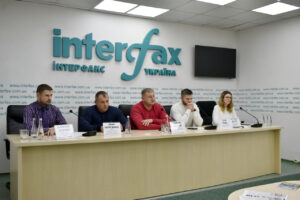
Participants in a press conference on “Problems of the capital’s agglomeration: the boundaries of the city of Kyiv” called for systematic dialogue between the Kyiv city authorities and communities in the suburban area, stressing that the lack of coordinated approaches hinders development and provokes legal disputes.
“There are many problems, but there are solutions to all problems if there is a will. If there are not enough laws, new ones can be passed. If there are not enough codes, they must be created. However, if the Kyiv authorities are not interested, the result will be the same. International partners are ready to provide Ukraine with financial and technical assistance to implement reforms, but practical progress depends on the willingness of central and local authorities to work together,” said Oleksiy Usachov, chairman of the board of the Ukrainian Policy Institute, at a press conference at the Interfax-Ukraine agency on Wednesday.
He noted that systematic cooperation based on mutual respect and openness to dialogue should be a key factor in the development of the capital’s agglomeration. Usachov stressed that further ignoring the problem would lead to a loss of time and investment. In conclusion, the moderator noted that the issue of agglomeration development will only gain real momentum if democratic elections are held and local authorities resume their political responsibility.
Serhiy Danish, head of the Kotsyubynska ATC, said that the community does not object to substantive dialogue on the future of the village, but expects clear proposals and guarantees from Kyiv.
“If Kyiv wants to annex us, our territory, our people, then it must have something to offer. The Kyiv City Council’s decision on ‘annexation for zero hryvnias’ does not correspond to the realities and needs of the residents. Instead, the capital must first demonstrate its willingness to invest in social infrastructure — kindergartens, schools, roads — so that people themselves will go to Kyiv because of better conditions and services,” he stressed.
Danish also pointed to conflicts with the state cadastre and fiscal charges. According to him, more than half of the village was entered into the cadastre as Kyiv, after which the village council was sent demands to pay land tax “under the village council’s land.”
According to Danish, despite the fact that the Kotsyubynska, district, and regional councils had prepared a complete set of documents, the head of the cadastre went on sick leave and effectively blocked the case, citing the unresolved issue with Kyiv. As an illustration of the risks of annexation without proper guarantees, he cited the example of Zhuliany, where after joining the capital there are no roads, no lighting, no infrastructure, and the interests of the community are represented on a residual basis.
Svitlana Dakhno, head of the land relations department of the Kyiv Regional State Administration’s Department of Urban Development and Architecture, reported that the Kyiv Regional State Administration is cooperating with the Kotsyubynska community and other adjacent ATCs, but “the lack of a coordinated position between the city community of Kyiv and the communities near the capital negatively affects development and generates a significant number of legal disputes.” She noted that the lack of a coordinated position between Kyiv and the surrounding communities already has tangible consequences, particularly in the area of land relations and territorial planning.
“The Kyiv Regional State Administration works directly with the Kotsyubynska community. The lack of a coordinated position between the Kyiv city community and the communities surrounding the capital has a negative impact on development and gives rise to a significant number of legal disputes. The regional administration supports the position of the territorial communities and is interested in developing a common position and bringing the issue into line with the law, as this directly affects the development of communities and their ability to exercise their powers in the relevant territories,” Dakhno said.
Igor Reva, deputy head of the Kyiv City Military Administration, stressed the need to “lower the level of dialogue” to the public arena so that the topic of agglomeration becomes socially significant and “public pressure” for decision-making emerges.
“If we keep doing the same things, we will get the same results… We need to create a platform where the public can exchange ideas, develop specific decisions, and continue to put pressure on the authorities,” he said.
Ivan Fursenko, advisor to the Association of Ukrainian Cities, noted that substantive discussion of the Kyiv agglomeration became possible in 2020 after the formation of capable communities with equal powers around the capital. In his opinion, the key is consistency in management decisions and strategic planning based on European approaches.
“Europe relies on strategic planning documents at the agglomeration level. Consistency of power and political will are needed: someone has to take on additional responsibility, and someone has to give it up,” the expert stressed.
According to regional authorities, the legislative framework is sufficient for developing models of cooperation and coordination, but strict compliance with the rules is necessary. Oleg Ivanenko stressed that agglomeration policy cannot be based on unilateral decisions. He noted that the Kotsyubynska community is capable and has a sufficient budget, and any agreements must be made in a civilized manner with the participation of all parties.
The issue of suburban communities’ investment participation in joint infrastructure projects and possible adjustments to powers in the event of the adoption of a special law on the Kyiv agglomeration was discussed separately.
“Satellite cities must be prepared to invest significantly in bilateral cooperation; if an agglomeration is created, their powers in terms of planning and development may be partially redistributed,” it was noted at the event.
Participants also recalled that the Kyiv agglomeration is the largest urban entity in Ukraine with a population of several million, so the task is to ensure a comfortable living space and balanced development of both the capital and the surrounding communities.
The press conference was attended by: Oleg Ivanenko, deputy of the Kyiv Regional Council and Paralympian; Andriy Yeremenko, sociologist and founder of Active Group; Ivan Fursenko, advisor to the Association of Ukrainian Cities; Svitlana Dakhno, head of the Land Relations Department of the Kyiv Regional State Administration; Serhiy Danish, head of the Kotsyubynska OTG; Ihor Reva, deputy head of the KMVA. Moderator — Oleksiy Usachov, chairman of the board of the Institute of Ukrainian Politics.
Source: https://interfax.com.ua/news/press-conference/1118304.html
ACTIVE GROUP, Dakhno, DANISH, Єременко, Іваненко, Рева, Усачов, Фурсенко



