

State-owned Oschadbank issued 3.3 billion UAH in loans to microbusinesses from January through June 2026, which is 37% more than during the same period last year, the financial institution reported on its website.
It is noted that the number of loans issued rose by 27% to 2,596.
Oschadbank’s microbusiness loan portfolio has grown by nearly 20% since the beginning of the year and exceeded 7.6 billion hryvnias.
During the first half of the year, the bank processed 2,799 applications from microbusiness representatives.
As part of its cooperation with the Fund for Partial Guarantees of Agricultural Loans, Oschadbank issued 313 microloans to agricultural producers during this period under portfolio guarantees totaling 459.8 million UAH.
According to the National Bank, as of July 1, 2026, Oschadbank, with total assets of 518.87 billion hryvnias, ranked second among Ukraine’s 59 banks. The bank’s total loan portfolio grew by 6.7% in the first half of the year, reaching 136.83 billion hryvnias.
agricultural producer, BANK, LOAN, microbusiness, OSCHADBANK

Nibulon Joint Venture LLC exported 3.15 million metric tons of agricultural products in the 2025/2026 marketing year (MY), a 32% increase from the previous season, when exports totaled 2.39 million metric tons, the company’s press service reported.
As noted in the statement, the company’s share of grain exports rose to 7% from 5.1% a year earlier.
The company attributes this growth to expanded cooperation with agricultural producers, updated trading approaches, an expanded export footprint, and a strengthened international trade presence.
According to the company, it currently works with approximately 4,000 agricultural producers and exports Ukrainian agricultural products to 26 countries worldwide.
Before the war, Nibulon Joint Venture LLC cultivated 82,000 hectares of land across 12 regions of Ukraine and exported agricultural products to more than 70 countries worldwide. In 2021, the grain trader exported 5.64 million metric tons of agricultural products—the highest volume in its history. After the war began, the company was forced to relocate its headquarters from Mykolaiv to Kyiv. In addition to 23 grain elevator complexes,
“Nibulon” has its own trucking and rail transport capabilities, as well as a fleet built at its own shipyard. During wartime, this fleet continues to provide river transportation services.
The company is also actively developing its own humanitarian demining unit to restore safety on leased lands and assist Ukraine’s agricultural sector. Nibulon is a certified mine action operator.
agricultural producer, AGRICULTURAL PRODUCTS, EXPORTS, GRAIN, NIBULON
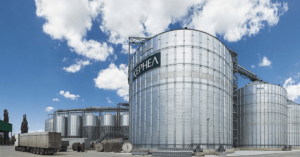
The Kernel agricultural holding’s elevator network, in fiscal year 2026 (FY, July 2025–June 2026) accepted more than 1 million metric tons of grain from third-party agricultural producers for the first time following the implementation of a new business model, under which the company opened its elevators for commercial storage and logistics services, the holding’s press service reported.
“Thanks to a shift in our approach to partnerships and our willingness to share our infrastructure, we were able to attract record volumes of grain,” the press service quoted Serhiy Shcherban, head of Kernel’s storage department, as saying.
According to him, competing in this market requires not just available storage space, but a guarantee of prompt acceptance, legally sound terms, and predictable logistics.
According to Kernel’s report for the first nine months of 2026 FR, the volume of grain and oilseeds accepted into the elevator network increased by 50% compared to the same period in the 2025 fiscal year—reaching 4.02 million metric tons. This includes 2.29 million metric tons accepted in January–March of this year, compared to just 0.09 million metric tons in January–March of last year.
According to the 2025F report, Kernel owns Ukraine’s largest private network of grain storage facilities, with a one-time storage capacity of 2.2 million metric tons.
The company explained that previously, the elevator network primarily served the holding’s own needs, but now it also works with independent agricultural producers. To this end, the agricultural holding revised its pricing policy, expanded its range of services, and introduced digital monitoring of grain movement—from electronic queuing to receipt and shipment.
In addition, Shcherban assured that during the current season, the company will pass on to third-party clients only the increase in electricity costs, while Kernel will cover all other additional operating expenses itself.
The Kernel agricultural holding is the world’s largest producer and exporter of sunflower oil, Ukraine’s largest grain exporter, the operator of an extensive network of logistics assets, and a leading producer of grains and oilseeds in Ukraine. It is one of the largest producers and sellers of bottled oil in Ukraine. It is engaged in the cultivation and sale of agricultural products.
According to results for the first nine months of fiscal year 2026 (July 2025–March 2026), Kernel’s net profit decreased by 5% to $208 million, while its revenue increased by 0.4% to $3.092 billion, and EBITDA rose by 1% to $403 million.
agricultural producer, GRAIN, GRAIN ELEVATOR, KERNEL, LOGISTICS

Starting July 1, 2026, Ukraine will begin accepting applications through the State Agrarian Registry (DAR) for participation in the open rapeseed export program, according to a press release from the Ministry of Economy, Environment, and Agriculture.
“The launch of the open export program for soybeans and rapeseed is another step toward creating transparent and clear rules for the agricultural sector. We have digitized the process as much as possible so that producers can quickly submit an application through the SAR, and the government has an effective tool for administering exports,” the press service quoted Taras Vysotsky, Deputy Minister of Economy, Environment, and Agriculture, as saying.
As noted in the announcement, legal entities and individual entrepreneurs who are agricultural producers may participate in the program. Applications will be submitted exclusively through the DAR system.
For rapeseed, applications will be accepted from July 1 of this year through April 1 of next year; for soybeans, from September 1 through June 1 of next year.
The program sets a maximum export volume of 5 metric tons of rapeseed per hectare of farmland and 3.5 metric tons of soybeans per hectare. During the application period, producers will have the right to adjust information regarding their planned or actual harvest once.
According to Vysotsky, the mechanism provides for maximum automation of the process without additional bureaucratic procedures or the need to obtain opinions from the Chamber of Commerce and Industry.
As previously reported, in May 2026, the Cabinet of Ministers amended the procedure for confirming the right of agricultural producers and agricultural cooperatives to be exempt from export duties when exporting their own soybeans and rapeseed. The new mechanism provides for automatic verification through the State Agrarian Register instead of obtaining opinions from the Chamber of Commerce and Industry.
agricultural producer, EXPORT, RAPESEED, SOYBEANS, State Agrarian Register
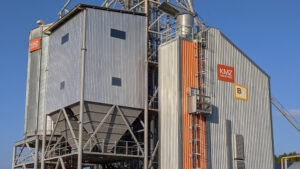
KMZ Industries (Karliv Machine-Building Plant, Poltava Oblast) will install a Brice-Baker grain drying complex for an agricultural producer in Zhytomyr Oblast that is developing its own post-harvest grain processing infrastructure, the plant announced.
“The project involves the installation of a Brice-Baker grain dryer and the necessary conveyor equipment, which will ensure grain transportation and the complex’s uninterrupted operation,” according to a statement on the plant’s website.
KMZ notes that thanks to the new equipment, the farm will be able to dry grain independently, optimize production processes, and reduce logistics costs.
“More and more farmers are realizing that having their own grain dryer means they can be independent of third-party grain elevators. It allows them to independently plan grain drying and shipping schedules, avoid seasonal queues, and avoid rushing to sell the harvest immediately after harvesting, when prices are usually at their lowest,” said Yuriy Musienko, regional manager of KMZ Industries, as quoted in the statement.
KMZ Industries has noted a rise in demand for grain drying complexes among farming operations.
According to the plant, in June it also completed the manufacture and installation of a Brice-Baker grain dryer for a company in the Kirovohrad region that specializes in processing soybeans, sunflowers, and rapeseed.
A key feature of the project was the use of steam as a heat source for drying grain and oilseeds, which allows the grain dryer to be integrated into the enterprise’s existing production processes and maximizes the use of available energy resources.
The scope of delivery included a grain dryer with a dust suppression system, an automated process control system, a power supply system, an axial fan with a noise silencer, and a set of sensors for monitoring temperature and process parameters.
The dryer’s rated capacity when processing different crops is up to 28 metric tons per hour for wheat, up to 16 metric tons per hour for corn, and up to 14 metric tons per hour for sunflower seeds, depending on the initial moisture content of the grain.
“The key challenge in this project was to integrate the new grain dryer into the company’s existing production cycle and ensure efficient operation in tandem with existing equipment. That is why we did not simply supply the equipment, but offered a solution that takes into account the customer’s current technology and its potential for future development,” said Regional Manager Anton Goncharuk, as quoted in the press release.
KMZ Industries is the largest manufacturer of grain storage equipment in Ukraine and produces a full range of products, including silos, grain dryers, conveying equipment, and separators, as well as providing automation and installation services.
According to the company, it has built over 5,000 facilities.
According to data from YouControl, in January–March of this year, the plant increased its net revenue by 70.7% compared to the first quarter of 2025—to 96.7 million UAH—while its loss increased by 23%—to 34 million UAH.
agricultural producer, Brice-Baker, GRAIN DRYER, GRAIN ELEVATOR, KMZ INDUSTRIES
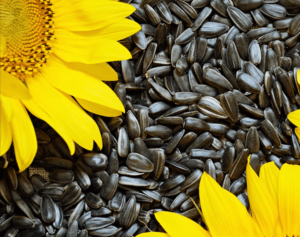
As of December 5, farmers have harvested 53.597 million tons of grain and legumes from 10.55 million hectares, which is 91% of the area sown with these crops, according to the Ministry of Economy, Environment, and Agriculture.
According to the Ministry of Economy, 23.5 million tons of corn have been harvested from 3.44 million hectares. As for wheat, its yield is slightly higher than a year ago – 22.96 million tons from 5.05 million hectares compared to 22.40 million tons from 4.9 million hectares, while barley is slightly lower – 5.42 million tons from 1.36 million hectares compared to last year’s 5.6 million tons from 1.41 million hectares.
This year’s pea harvest is significantly higher – 672,500 tons from 275,100 hectares compared to 469,000 tons from 212,300 hectares a year ago, while buckwheat and millet are still significantly lower – 82.7 thousand tons compared to 131.7 thousand tons and 62.1 thousand tons compared to 161.3 thousand tons, respectively.
The harvest of other cereals and legumes this year reached 899.6 thousand tons from 327.8 thousand hectares as of December 5, compared to 1 million tons a year ago.
The Ministry of Economy has calculated that the corn harvest has been gathered from 78% of the production areas allocated for this crop, millet – from 88%, buckwheat – from 97%, wheat and barley – from 98%.
As for oilseeds, their harvest as of December 5 is 17.11 million tons. In general, sunflower has been harvested from 93% of the sown areas, and soybeans from 97%. The rapeseed harvest has been completed, and it turned out to be only slightly less than last year’s – 3.31 million tons against 3.5 million tons from almost identical areas – about 1.3 million hectares.
Currently, 4.75 million tons of soybeans have been harvested from 2.00 million hectares, while 9.04 million tons of sunflower seeds have been harvested from 4.81 million hectares.
In addition, the harvest of sugar beets is also lagging behind: 98% of the production area has been harvested, yielding 10.39 million tons from 195,000 hectares.
In its October inflation report, the National Bank of Ukraine increased its estimate of the grain and legume harvest in 2025 to 61.5 million tons from 57.9 million tons in the July report, while lowering its estimate of the oilseed harvest to 19.3 million tons from 21.0 million tons.
The NBU recalled that last year, the grain harvest in Ukraine fell to 56.2 million tons from 59.8 million tons in 2023, and oilseeds from 21.7 million tons to 20 million tons.



