
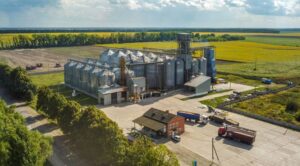
TAS Group is considering new acquisitions in the agricultural sector and would like to expand its land bank by another 20,000–25,000 hectares, said the group’s founder, Serhiy Tihipko.
“We are interested in agriculture. We would gladly acquire 20,000–25,000 hectares right now. We are strengthening our grain elevator operations,” he said at the Concorde Capital investment conference in Kyiv.
The agricultural sector remains one of the areas where the group sees potential for expansion. Earlier, Oleg Zapletnyuk, CEO of the TAS Agro agricultural holding, reported that the strategic plan calls for increasing the land bank from the current 80,000 hectares to 100,000 hectares by the end of 2026.
The next stage, he said, is to grow to 120,000 hectares by 2028.
Strengthening its grain storage infrastructure is important for the agricultural holding in terms of controlling logistics, storing the harvest, and ensuring sales flexibility. Given unstable export logistics and pressure on margins, having its own storage capacity is becoming one of the key factors in competitiveness.
The TAS Group is already active in the agricultural sector through TAS Agro. For the group, expanding its land bank and grain storage capacity could be a way to strengthen vertical integration and reduce dependence on external infrastructure.
agricultural sector, grain storage facility, LAND BANK, TIGIPKO, ТАСС
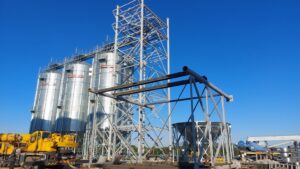
The TAS Group plans to invest $250–300 million in the authorized capital of banks, insurance companies, and other assets it holds in the financial sector, It also aims to expand its land bank and strengthen its grain storage operations in the agricultural sector, is actively investing in real estate development, and is exploring opportunities in logistics and port infrastructure, according to the group’s founder and head, Serhiy Tihipko.
“We are currently the largest private owner in the Ukrainian financial sector. And we are accelerating our pace here. Therefore, whether we want to or not, we will have to invest in authorized capital. “I think we’ll invest somewhere between $250 million and $300 million just to increase authorized capital,” said Tigipko at the Concorde Capital investment conference, which the investment firm held for the first time since 2019 last week in Kyiv.
“As for everything else, we’ll explore options. We’re interested in agriculture. We’d be happy to buy 20–25 thousand hectares right now. We’re expanding our grain storage facilities,” the founder added.
He noted that the group has now begun actively investing in real estate development.
“We’ve started a 220,000-square-meter project in Obolon. We’ve purchased an additional 5 hectares for the same project. In 2027, we’ll start a 350,000 (square meters) project on the Left Bank. These are fairly large investments,” the businessman clarified.
According to him, the group is also looking into logistics and port infrastructure, and Tigipko himself has personally visited Chornomorsk.
“I can say that I don’t really like the sector: in my opinion, it’s overvalued; everyone has gotten used to some kind of abnormal rate that existed at the start of the war. That won’t happen again,” the group’s owner noted.
He emphasized that the group constantly analyzes projects “every year, every day.”
“We’re sitting and waiting for a good, juicy deal to come along. We wanted to buy an insurance company (MetLife), but the Poles (PZU) beat us to it. That’s okay, we’ll wait. I told (Richard) Branson that deals are like a rail bus: one leaves, another will arrive. We’ll wait for the next one,” said Tihipko.
The TAS Group is one of the largest financial and industrial groups in Ukraine, operating in the banking sector, insurance, railcar manufacturing, metallurgy, logistics, the agricultural sector, the food industry, the production of packaging materials, and real estate. Among others, it includes TAScombank, Universal Bank (mono), and Idea Bank.
Oleg Zapletnyuk, CEO of the agricultural holding “TAS Agro,” reported earlier this year that the strategic plan calls for expanding the land bank from the current 80,000 hectares to 100,000 hectares by the end of 2026. “The next step is to increase it to 120,000 hectares, but that will be by 2028,” he said.
agricultural sector, DEVELOPMENT, financial sector, TAS, TIGIPKO
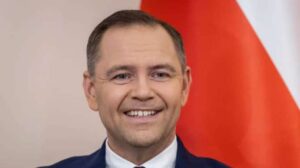
Polish President Karol Nawrocki stated that Ukraine’s accession to the European Union would pose a threat to Polish agriculture.
“I acknowledge that Ukraine’s accession to the EU poses a threat to Polish agriculture. As President of Poland, and while understanding Ukraine’s aspirations, I will always advocate for fair treatment of Polish farmers and Polish agricultural products, particularly in the context of the ‘Green Deal’ and EU decisions,”
Navrotsky said, according to a press release from the Office of the President.
He also added that Poland has “land that is far too beautiful” to “surrender Polish agriculture to either ideology or someone else.”
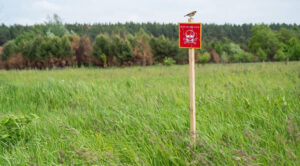
Since the start of Russia’s full-scale invasion, the Food and Agriculture Organization of the United Nations (FAO) has allocated $176.7 million to support Ukraine’s agricultural sector, with priorities including demining and training for agribusiness development, according to Shakhnoza Muminova, head of the FAO office in Ukraine.
“From 2022 to the present, FAO, together with its partners, has allocated $176.7 million to support approximately 300,000 families in rural areas and 17,000 farmers,” she told the Interfax-Ukraine news agency on the sidelines of the Agro Ukraine Summit on Wednesday.
According to Muminova, one of the most underfunded yet most critical areas remains the humanitarian demining of agricultural land.
“First and foremost, mine action requires significant funding because it is expensive. Ukraine currently has the world’s largest area of contaminated agricultural land. If this sector is underfunded, demining could drag on for several decades. And we want to return the land to production as soon as possible,” she noted.
The head of the FAO office reported that currently 133,000 square kilometers of Ukraine’s territory require surveying and are at risk of being contaminated with explosive ordnance.
According to her, the FAO’s work in Ukraine focuses on several key areas: supporting families and farmers in rural areas, as well as providing technical support to the government. Particular attention is being paid to surveying potentially contaminated areas and providing vouchers to resume agricultural activities on cleared plots.
Muminova also highlighted the lack of funding for training and agribusiness development programs.
“The Ukrainian agricultural sector is currently experiencing a significant exodus of people due to the hostilities. Many people are leaving, and the agricultural sector is suffering greatly as a result. Therefore, training remains one of the key areas in need of support,” she explained.
According to the FAO representative, the organization plans to provide support to an additional 240,000 households and farmers between 2026 and 2028. To implement this plan, the FAO needs to raise $193 million, but the initiative remains underfunded at this time.
“What strikes me most is that people do not want to leave their homeland, even if it is dangerous,” Muminova added.
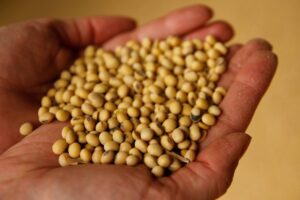
Soybean acreage in 2026 reached 2.1 million hectares, an increase of 5% compared to last year, Taras Vysotsky, Ukraine’s Deputy Minister of Economy, Environment, and Agriculture, told reporters on the sidelines of the Grain Ukraine 2026 international conference on Friday.
“This year, soybean acreage did not decrease; in fact, it increased by 5%. Several factors contributed to this simultaneously—the rising cost of fertilizers and fuel. Consequently, farmers have shifted their focus to crops that require fewer fertilizers, namely soybeans. It requires lower costs for cultivation, transportation, and export,” Vysotsky noted.
As reported, pursuant to Law No. 4536-IX of July 16, 2025, a 10% export duty on rapeseed and soybeans was introduced in Ukraine effective September 4, 2025. The document provides for a gradual reduction of the rate by 1% annually, starting January 1, 2030, to 5% by 2035. At the same time, the law includes a preferential regime for direct producers and cooperatives, who are exempt from paying the duty when exporting their own-grown products.
Experts from the American Chamber of Commerce (ACC) have argued that this could lead to a significant reduction in soybean acreage in 2026 due to this law.
According to the Ministry of Economy, as of June 2, 1.96 million hectares had been planted with soybeans, or 96% of the forecast, whereas last year, as of May 30, according to the Ministry of Agrarian Policy, soybean plantings totaled 2.23 million hectares.
agricultural sector, export duty, MINISTRY OF ECONOMY, planting season, SOYBEANS
Former majority owner of the Agro-Region agricultural holding and former Minister of Economic Development and Trade of Ukraine Aivaras Abromavičius will focus on investments in the Ukrainian technology sector and projects related to the future reconstruction of the country after selling the asset to the Kernel group.
“The day after the deal was closed, I already invested in a Ukrainian technology company. I think the corresponding press release will appear in the coming weeks. My wife and I want to remain very active people, so I am not planning to retire. On the contrary, now we must look at those Ukrainian companies that will become critically interesting when large-scale reconstruction begins,” he said during a Business Breakfast at Forbes Ukraine.
According to Abromavichus, shifting focus from the agricultural sector to IT and infrastructure projects is a logical step after almost 20 years of investing in Agro-Region. He noted that the technology market in Ukraine is currently showing high stability, and the upcoming reconstruction will create demand for assets in areas that will ensure economic recovery.
The investor added that despite his exit from agribusiness, he plans to attract foreign capital to Ukraine, focusing on companies with high growth potential.
Details of the new deal in the technology sector are not being disclosed until the investment round is officially completed.
Abromavichus also announced a number of promising areas for investment in Ukraine. He noted that the country has already become a “world champion in agrotech and militech,” so these are the areas to invest in. The businessman paid special attention to infrastructure and noted that although logistics was a step “where everyone wanted to be present,” now, due to falling prices, “it’s a different game.”
In his opinion, investors should focus on assets that will be in demand during reconstruction and software companies.
“I really like technology companies… we should go to Ukraine and look at them,” he concluded.
Aivaras Abromavičius is a Lithuanian-Ukrainian entrepreneur, former Minister of Economic Development and Trade of Ukraine (2014-2016) and former Chairman of the Supervisory Board of Ukroboronprom (2019-2020), who was a key partner of the investment company East Capital for a long time. Currently, Abromavičius owns shares in a number of Ukrainian IT startups and technology companies through controlled investment structures, and also has interests in real estate and consulting.
The sale of 100% of the Agro-Region group of companies (shareholders — Aivaras Abromavičius and Lars Erik Hokansson) to Andriy Verevsky’s Enselco group was one of the largest M&A transactions in Ukraine’s agricultural sector since February 2022. The investment company Dragon Capital acted as the exclusive financial advisor to the sellers, while OMP provided legal support. As a result of the acquisition of assets with a land bank of 41,000 hectares in the Kyiv, Chernihiv, Zhytomyr, and Khmelnytskyi regions, the Kernel Group (through Enselco) has increased its total land fund to 550-600 thousand hectares.
The Agro-Region Group is a high-tech integrated business comprising three operating clusters and approximately 200,000 tons of elevator capacity. The company specializes in growing corn, wheat, sunflowers, rapeseed, and soybeans, with an annual harvest of 200,000 tons. According to YouControl, at the time of the transaction, Aivaras Abromavičius owned a controlling stake in the holding (53.6%) through Garna Stockholm Holding AB, while Lars Erik Hokansson’s share was 44.28%. The deal was closed after receiving all necessary regulatory approvals, becoming a landmark investment signal for the industry amid martial law.



