
The Warsaw Stock Exchange (WSE) suspended trading in shares of the Ukrainian agricultural holding Astarta on Tuesday after their price plummeted by 19.14% since the start of the day—from 37.25 zloty to 30.2 zloty.
According to exchange data, Astarta’s shares were last this cheap in September 2024, whereas in May of this year, their price even exceeded 60 zlotys.
According to the exchange, trading volume in Astarta shares prior to the suspension totaled 1.52 million PLN.
The WIG-Ukraine index of Ukrainian stocks fell by 3.38% at the start of trading on Tuesday, while the Warsaw Stock Exchange’s main index, the WIG20, fell by 1.24%. Specifically, shares of the agricultural holding IMC fell by 9.21%, Agrotona by 1.63%, KSG Agro by 1.37%, and Milkiland by 1.19%.
As previously reported, the Astarta agricultural holding posted a net loss of 14.07 million euros in the first half of 2026, compared to a net profit of 42.27 million euros for the same period last year. While all segments generated a net profit in January–June of last year, this year each segment recorded a loss: in sugar production, a loss of 3.83 million euros instead of a profit of 8.35 million euros; in crop farming, a profit of 20.07 million euros turned into a loss of 3.76 million euros; in cattle breeding, a loss of 2.41 million euros was recorded instead of a profit of 10.68 million euros; in soybean processing, a loss of 2.27 million euros was recorded instead of a profit of 5.84 million euros.
Astarta’s consolidated revenue for the first half of this year decreased by only 0.1% to 226.47 million euros; export sales accounted for 62% of total revenue, compared to 61% in the first half of last year.
At the current price on the Warsaw Stock Exchange (WSE), Astarta’s market capitalization stands at 755 million zlotys ($193.5 million at the current exchange rate).
AGRICULTURAL HOLDING, ASTARTA, stock, UKRAINE, Warsaw Stock Exchange
Agricultural holding company Astarta reported a net loss of EUR14.07 million in the first half of 2026, compared to a net profit of EUR42.27 million for the same period last year, according to a report filed by the company with the Warsaw Stock Exchange on Thursday.
According to the report, while all segments generated net profit in January–June of last year, each segment recorded a loss this year: in sugar production, a loss of EUR3.83 million replaced a profit of EUR8.35 million; in crop production, a profit of EUR20.07 million turned into a loss of EUR3.76 million; in cattle farming, a loss of EUR2.41 million was recorded instead of a profit of EUR10.68 million; and in soybean processing, a loss of EUR2.27 million was recorded instead of a profit of EUR5.84 million.
Crop production and soybean processing reported operating profits, while sugar production and livestock farming posted operating losses. Furthermore, livestock farming also reported a gross loss.
According to the report, Astarta’s consolidated revenue for the first half of the year decreased by only 0.1% to EUR 226.47 million, with export sales accounting for 62% compared to 61% in the first half of last year.
The agriculture sector led the way, with sales growing by 27% to EUR78 million, or 34% of total revenue. In sugar production, sales fell by 10% to EUR72 million, or 32% of total revenue; in soybean processing, by 7% to EUR51 million; and in livestock farming, by 15% to EUR25 million.
Gross profit for January–June of this year fell by half—to EUR46.01 million—as the cost of goods sold rose by 10% compared to the same period last year, and the estimated value of crops and livestock was reduced due to falling agricultural prices and rising costs.
Consolidated EBITDA fell 2.4-fold compared to the same period last year, to EUR34.32 million.
It is noted that net investments decreased by 41% to EUR27 million following the completion of investments in a protein concentrate production plant and ongoing planned capital expenditures in other segments.
According to the report, in the first half of 2026, net financial debt (excluding lease obligations) amounted to EUR81 million, compared to EUR28 million in the first half of 2025. Total net debt (including leases) increased by 44% to EUR220 million.
“Astarta” is a vertically integrated agro-industrial holding operating in eight regions of Ukraine and is the largest sugar producer in Ukraine. It comprises six sugar plants, agricultural enterprises with a land bank of 220,000 hectares, dairy farms with 22,000 head of cattle, an oil extraction plant in Hlobine (Poltava Oblast), seven grain elevators, and a biogas complex.
Astarta’s net profit for 2025 fell 4.2 times—to $19.94 million—while consolidated revenue decreased by 23%—to $472 million.
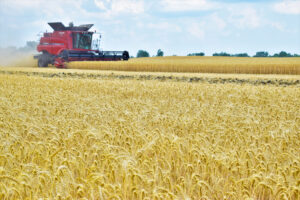
The agricultural holding company “Astarta” has completed the harvest of early grain crops and winter rapeseed across an area of 54,000 hectares, yielding approximately 256,000 metric tons, the company reported.
According to the report, the agricultural holding harvested over 210,000 metric tons of wheat and 43,000 metric tons of winter rapeseed.
The average yield of winter wheat at Astarta was 5.4 metric tons per hectare, and that of winter rapeseed was 3.1 metric tons per hectare. The highest yields were recorded at Khmilnytske LLC in the Vinnytsia region—7.7 metric tons per hectare of winter wheat and 3.8 metric tons per hectare of winter rapeseed.
Andriy Zagorulko, Director of the Agricultural Holding’s Department of Crop Production, Logistics, and Mechanization, noted that the season was challenging due to unfavorable weather conditions and diseases affecting winter rapeseed.
Astarta has already begun preparing the soil for the winter crop planting season.
Astarta is a vertically integrated agribusiness holding company operating in seven regions of Ukraine and is the country’s largest sugar producer. The company’s portfolio includes five sugar refineries, agricultural enterprises with a land bank of 214,000 hectares (including 129,000 hectares in the Poltava region, 42,000 hectares in the Khmelnytskyi region, and 16,000 hectares in the Vinnytsia region), and dairy farms with 30,000 head of cattle. The holding company also operates a soybean processing plant and a bioenergy complex in the Poltava region, as well as a network of six grain elevators.
Astarta’s net profit for 2025 fell 4.2-fold to $19.94 million, while consolidated revenue decreased by 23% to $472 million.
Astarta, an agro-industrial holding and Ukraine’s largest sugar producer, increased its product sales by 34.3% in April–June 2026 compared to the same period in 2025, reaching 266,640 metric tons, according to data published by the holding on the Warsaw Stock Exchange.
According to the data, due to lower prices for sugar and milk, revenue growth was more modest—at 16.9%: in total, the company sold 4.58 billion UAH worth of its main products in the second quarter of this year, compared to 3.91 billion UAH in the second quarter of 2025.
In particular, sugar sales increased by 28% in volume terms in the second quarter of this year—to 92,600 metric tons—while the average selling price fell by 14.3%—to 20,770 UAH per metric ton.
Astarta’s sales volumes of wheat and corn during the reporting period amounted to 62.03 thousand metric tons and 3.18 thousand metric tons, respectively, at average prices of 9.90 thousand UAH per metric ton and 27.45 thousand UAH per metric ton, respectively, whereas the company did not sell these products in the second quarter of last year.
Corn sales, on the other hand, fell by 19.1% to 32.39 thousand metric tons, while the price rose by only 3.9% to 10.02 thousand UAH per metric ton.
Sales of soybean oil in the second quarter of 2026 fell by 27.8% compared to the same period in 2025—to 8.48 thousand metric tons—as the price of this product rose by 13.9%—to 52.28 thousand UAH per metric ton. Sales of soybean meal also fell by 15.8%—to 37.11 thousand metric tons—as the price rose by 23.1%—to 18.76 thousand UAH per metric ton.
The agricultural holding’s milk sales in April–June 2026 increased by 2.6% to 30.84 thousand metric tons, but the price of this product fell by 14.8% to 15.79 thousand UAH per metric ton.
Taking these figures into account, Astarta increased its total sales volume of core products for the first half of the year by 32.3% compared to the same period in 2025, reaching 656.28 thousand metric tons. Due to lower prices for sugar and milk, revenue growth was also lower—by 20.2%: in total, the company generated 10.95 billion UAH in revenue from its core products, compared to 9.11 billion UAH in the first half of 2025.
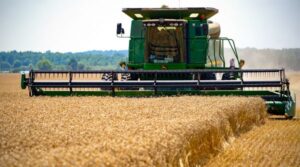
The Astarta agricultural holding has begun the harvest at its farms in Poltava Oblast and plans to harvest winter wheat from 38,000 hectares and winter rapeseed from 14,000 hectares, the company’s press service reported.
“Despite a delayed start to spring fieldwork due to unfavorable weather conditions, the harvest of early-maturing grains began at the optimal time,” the press service quoted Andriy Zagorulko, director of the holding’s Department of Crop Production, Logistics, and Mechanization, as saying.
He noted that production teams had completed all necessary preparatory work, and that the key priorities during the harvest remain harvest quality, minimizing losses, worker safety, and seamless coordination among all involved teams.
In the third ten-day period of July, enterprises in the Western region will join the harvest campaign.
“Astarta” is a vertically integrated agro-industrial holding operating in seven regions of Ukraine and is the country’s largest sugar producer. The company’s portfolio includes five sugar refineries, agricultural enterprises with a land bank of 214,000 hectares (including 129,000 hectares in Poltava Oblast, 42,000 hectares in Khmelnytskyi Oblast, and 16,000 hectares in Vinnytsia Oblast), and dairy farms with 30,000 head of cattle. The holding company also operates a soybean processing plant and a bioenergy complex in the Poltava region, as well as a network of six grain elevators. Astarta’s shares are listed on the Warsaw Stock Exchange.
Astarta’s net profit for 2025 fell 4.2-fold to $19.94 million, while consolidated revenue declined by 23% to $472 million.

The agro-industrial holding Astarta is considering the sale of its agricultural enterprise, Chernihiv Eco Plus LLC, which cultivates approximately 4,000 hectares of land and has associated production infrastructure; the buyer is Ridne Group of Companies LLC, a company affiliated with the Ridne consortium “Ridne Group of Companies” LLC.
According to Astarta’s announcement on the Warsaw Stock Exchange, the decision to sell is in line with the company’s strategy to review its agricultural portfolio and is aimed at optimizing its land bank by focusing on regions with higher agronomic efficiency and yield potential.
On July 2, the potential buyer already received approval from the Antimonopoly Committee of Ukraine to acquire control over the asset.
At the same time, Astarta noted that obtaining such approval was a procedural step that allows the parties to continue assessing the feasibility of the deal. As of the end of last week, a final agreement on the sale of the asset had not been concluded.
“Astarta” is a vertically integrated agro-industrial holding company operating in seven regions of Ukraine and is the country’s largest sugar producer. The company’s portfolio includes five sugar refineries, agricultural enterprises with a land bank of 214,000 hectares (including 129,000 hectares in Poltava Oblast, 42,000 hectares in Khmelnytskyi Oblast, and 16,000 hectares in Vinnytsia Oblast), and dairy farms with 30,000 head of cattle. The holding company also operates a soybean processing plant and a bioenergy complex in the Poltava region, as well as a network of six grain elevators. Astarta’s shares are listed on the Warsaw Stock Exchange.
Astarta’s net profit for 2025 fell 4.2-fold to $19.94 million, while consolidated revenue decreased by 23% to $472 million.
The co-owners of “Ridne Group of Companies,” on an equal footing, are Oleksiy Khvorostiany and Serhiy Kovalchuk, the CEO and COO of the “Ridne” consortium, respectively.
According to information on its website, the “Ridne” consortium was established in 2022 following the start of the Russian invasion; it brings together 80 farms and 11 Ukrainian food producers: cereals, flour, canned meat, vegetables, and fish, pasta, sunflower oil, and dairy products, and also operates its own packaging center.
The consortium members listed include Ridne Food Factories LLC (Ivanki, Cherkasy Oblast), Grocery Products Factory LLC (TM “Zhmenka,” Skvyra, Kyiv Oblast), Central Fish LLC (Cherkasy), KLM Group LLC (Kyiv), Agroproduct LLC (Znam’yanka, Kirovohrad Oblast), “Conservatory” Canning Plant LLC (Kolomyia, Ivano-Frankivsk Oblast), the Bila Tserkva Agro-Industrial Group (Bila Tserkva, Poltava Oblast), “Fabrika Zdorovo” LLC (Chernihiv), “Azot Agro” JSC (Cherkasy), and “Nadiya” LLC (Zlatopil, Kharkiv Oblast).
AGRICULTURAL HOLDING, AMCU, asset, ASTARTA, Chernihiv Eco Plus, LAND BANK, Ridne



