
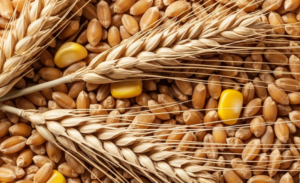
In its May report, the U.S. Department of Agriculture (USDA) issued its first forecast for wheat and corn exports from Ukraine in the 2026/2026 marketing year (MY) – 13 million tons and 23 million tons, respectively, which is 0.5 million tons and 1 million tons more than in the current MY.
According to USDA estimates, Ukraine’s wheat harvest in the next MY will decline to 23 million tons from 24.1 million tons last year, but ending stocks for the year will increase by only 0.9 million tons—to 4.53 million tons—while this year they are expected to rise by 2.9 million tons.
As for the corn harvest, USDA analysts forecast it at 30 million tons this year, compared to 30.9 million tons last year. The increase in exports is also expected to result from a decrease in ending stocks by 0.19 million tons, while this marketing year they are projected to increase by 1.91 million tons.
Taking other crops into account, the U.S. Department of Agriculture expects this year’s forage grain harvest to decrease to 36.08 million tons from 37.22 million tons last year, but an increase in its exports next marketing year to 25.19 million tons from 24.30 million tons this marketing year, also due to carryover stocks accumulated this year.
As reported, the Ministry of Economy forecasts a grain harvest of approximately 60.4 million tons in 2026, which is only 1%, or 0.64 million tons, less than last year. According to preliminary estimates by the Ministry of Economy, the harvest of major crops may amount to: wheat – about 22.4 million tons, barley – about 4.7 million tons, and corn – about 31.6 million tons.
According to the State Statistics Service, the wheat harvest in 2025 increased by 3.6% to 23.34 million tons, corn by 14.6% to 30.9 million tons, while the barley harvest decreased by 2.4% to 5.2 million tons.
The U.S. Department of Agriculture expects this year’s wheat harvest to decrease to 819.06 million tons and its exports to 211.70 million tons, down from 843.84 million tons and 222.68 million tons, respectively, last year.
The USDA’s first forecast for global corn production this year is 1,295.38 million tons, with exports for the 2026/27 marketing year at 206.91 million tons, while last year’s harvest was 1,312.68 million tons, and exports for the 2025-26 marketing year are expected to reach 213.59 million tons.
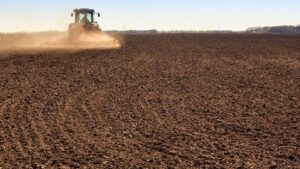
According to its annual report, the Astarta agricultural holding achieved a gross harvest of grain and oilseed crops of approximately 0.6 million tons in 2025, matching the previous year’s result.
“Climate instability, logistical constraints, and rising costs prompted the Company to increase acreage for crops with predictable sales and stable economics, such as corn and sunflower. However, unfavorable weather put significant pressure on crops, reducing productivity,” the company’s report noted.
The holding revised its crop rotation structure in response to climatic and logistical factors. Corn acreage more than doubled—to 12,000 hectares—resulting in a harvest of 94,000 tons of grain (+134% compared to 2024), while sunflower production increased by 32%—to 61,000 tons.
The soybean harvest decreased by 27%—to 122,000 tons (including the 2026 harvest), and the rapeseed harvest by 23%—to 31,000 tons due to weather anomalies. The sugar beet harvest amounted to 1.8 million tons, which is only 2% less than the previous year thanks to a 12.2% increase in yield, which almost completely offset the 13% reduction in acreage. Wheat production fell by 9% to 237,000 tons amid a reduction in acreage and a slight decline in productivity.
Yields for the holding’s main crops generally exceeded the national average. The yield for corn was 7.6 t/ha compared to 7.2 t/ha nationwide, and for wheat, 5.2 t/ha compared to 4.5 t/ha. A gap was also recorded for sunflowers—2.1 t/ha versus 1.9 t/ha—and rapeseed—2.8 t/ha versus 2.7 t/ha—while sugar beet yields stood at 55 t/ha.
In 2026, Astarta plans to expand its corn acreage by 66%, to 20,000 ha, and increase winter rapeseed acreage by 36%, to 15,000 ha, compared to last year. A reduction in acreage is expected for sunflowers by 20% to 23,000 ha, wheat by 15% to 39,000 ha, and sugar beets by 6% to 32,000 ha. The area under soybeans will remain stable at 56,000 hectares, which is 1.7 times less than the peak figure of 70,000 hectares in 2024.
“The condition of winter crops is generally satisfactory, as the insulating snow cover protects the plants from severe cold. Significant moisture reserves also create the potential for higher yields of spring crops,“ the agricultural holding noted.
”Astarta” is a vertically integrated agro-industrial holding operating in seven regions of Ukraine and is the country’s largest sugar producer. The company’s portfolio includes five sugar refineries, agricultural enterprises with a land bank of 214,000 hectares (including 129,000 hectares in Poltava, 42,000 hectares in Khmelnytskyi, and 16,000 hectares in Vinnytsia regions) and dairy farms with 30,000 head of cattle. The holding also operates a soybean processing plant and a bioenergy complex in Poltava Oblast, as well as a network of six grain elevators.
Astarta’s net profit for 2025 fell 4.2-fold to $19.94 million, while consolidated revenue decreased by 23% to $472 million. The agriholding’s EBITDA fell by 37% to $100 million, with a margin of 21%. The company’s net debt doubled over the past year and stood at $226 million at the end of the period.

Nibulon Joint Venture LLC (Mykolaiv), one of Ukraine’s leading grain market operators, has sown about 20% of the planned acreage in each of its production clusters as part of the current spring planting campaign, the company’s press service reported.
According to the report, the agricultural holding is implementing an adaptive management model that involves moving away from standardized solutions in favor of regional planning based on weather and soil conditions. In particular, the start of work in the Cherkasy and Kamianets-Podilskyi clusters has been postponed until the soil warms up sufficiently.
Corn remains Nibulon’s key crop for the 2026 season, with approximately 28,500 hectares allocated for it. The company plans to complete corn planting within each division within 10–12 days. Soybeans will occupy nearly 3,000 hectares, with plantings concentrated primarily in the central and western regions.
The most significant changes have occurred in the crop structure of the Mykolaiv cluster. Due to the prolonged lack of rainfall and high climatic risks in the south, the company has completely abandoned spring crops in this region, relying exclusively on winter crops with a short growing season. This will allow for more efficient use of winter moisture and reduce dependence on spring and summer rainfall.
Before the war, Nibulon cultivated 82,000 hectares of land across 12 regions of Ukraine and exported agricultural products to over 70 countries worldwide. In 2021, the grain trader exported a record 5.64 million tons of agricultural products. After the war began, the company was forced to relocate its headquarters from Mykolaiv to Kyiv. In addition to 23 grain storage complexes, Nibulon has its own road and rail transport capabilities, as well as a fleet built at its own shipyard. During wartime, this fleet continues to carry out river transport operations.
The company is also actively developing its own humanitarian demining unit to restore safety on leased lands and assist Ukraine’s agricultural sector. Nibulon is a certified mine action operator.
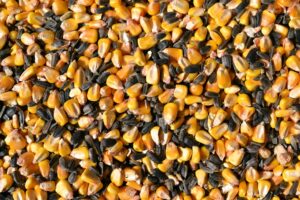
Agrotrade Group has launched its 2026 spring sowing campaign in four regions of Ukraine, namely Chernihiv, Sumy, Kharkiv and Poltava regions, Ivan Kriuchkov, director of the group’s agro-industrial department, said on the agricultural holding’s Facebook page.
According to the statement, the agricultural holding revised its crop rotation structure for the 2026 season: the areas under sunflower and corn were increased at the expense of soybean plantings. About 16.5 thousand hectares were allocated for corn (24.9% of the total structure), 16 thousand hectares for sunflower (28.6%), while soybeans will occupy 3 thousand hectares.
“We have good expectations for this season. Timely implementation of agricultural operations and proper crop care are important conditions for success. The team is focused on delivering everything planned,” Kriuchkov said.
As of April 21, the agricultural holding had completed sowing on about 12% of the planned production area, using 18 seeders. The campaign is expected to be completed within three weeks. In 2026, Agrotrade plans to improve efficiency through the introduction of Strip-Till and no-till technologies.
As reported, corn became the most productive crop for Agrotrade in 2025 and showed an average yield of 9.89 tonnes per hectare, which was 17% above plan. In particular, the borderland clusters in Sumy and Chernihiv regions recorded yields of 10.3-10.4 tonnes per hectare.
Agrotrade Group is a vertically integrated holding cultivating more than 70 thousand hectares of land. It owns a network of elevators with a total capacity of 570 thousand tonnes and a seed plant based at the Kolos farm in Kharkiv region. Its founder and CEO is Vsevolod Kozhemiako.

Agro-Region, which became part of the Enselco group following its acquisition by the Kernel agricultural holding, plans to sow nearly 27,000 hectares during the current spring planting season, the company’s agronomic service reported on its Facebook page.
According to the report, half of the planned acreage will be allocated to corn. Compared to last year, the company has significantly increased the share of this crop in its planting mix: while in 2025, 4,600 hectares (43.4%) were allocated to it in the Kyiv cluster and 3,500 hectares (36%) in the Western cluster, corn now accounts for 50% of the spring crop (about 13,500 hectares).
The company specified that 10 seeding complexes are being used for the work. Due to weather conditions, farmers have to carry out sowing on a tight schedule, taking advantage of every favorable temperature “window.”
“Yes, the weather dictates its own rules, and we have to seize every window of warmth. However, we all know the value of time: what is being sown now is not just seeds, but the result for the entire coming year, or, as the saying goes, the time when ‘one day feeds the whole year,’” emphasized Agro-Region.
As reported, in March 2026, the Enselco agricultural group completed the integration of Agro-Region’s operations, resulting in its land bank growing to 190,000 hectares. According to the plans of company owner Andriy Verevsky, this year’s spring campaign marks the first stage of the unified structure’s operations under common technological standards.
The Agro-Region group of companies operates in the Kyiv, Chernihiv, Zhytomyr, and Khmelnytskyi regions. It specializes in crop production, dairy farming, and grain storage. The consolidated Enselco group plans to harvest 1.4 million tons in the 2026 season.
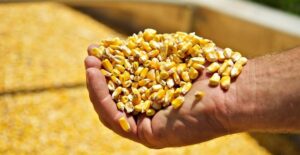
Turkey’s decision to open an import quota for 3 million tons of corn with a reduced tariff rate of 5% has significantly altered market conditions, according to the information and analytical agency “UkrAgroConsult.”
“This move is expected to stabilize domestic prices in Turkey and meet high demand. The country’s domestic balance dictates the need for active imports: domestic production amounts to about 8 million tons, while consumption exceeds 10 million tons,” analysts noted.
According to the agency, Ankara’s customs policy remains strict: a 130% tariff applies outside the quota. However, the market is adapting thanks to temporary preferential regimes. Under these conditions, Ukraine is strengthening its presence and already accounts for 85–87% of Turkish imports due to significant supply and favorable logistics.
“Currently, the key competitive factor is the speed of shipments and traders’ willingness to assemble flexible shipments. Market dynamics are driven by raw material shortages within the importing country and the efficiency of logistics chains,” emphasized UkrAgroConsult.
Among the main trends, experts highlighted the transformation of demand due to quotas and the dominance of regional suppliers amid shortages. The agency forecasts that Ukraine will maintain its status as Turkey’s key partner precisely due to the speed of deliveries, despite protective tariffs on non-quota volumes.



