
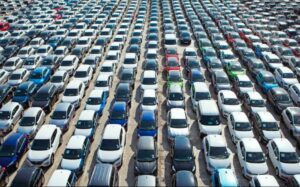
According to Open4business, the United States retained its status as the largest supplier of imported passenger cars to Ukraine in the first half of 2026, accounting for 43% of the total number of imported cars. According to data from the State Customs Service published on July 28, 73,200 passenger cars were imported from the U.S. to Ukraine between January and June.
Germany ranked second among supplier countries, accounting for 17,300 cars, or 10% of total imports. Poland ranked third with 14,600 cars, or 9%.
Collectively, the United States, Germany, and Poland supplied 105,100 passenger cars to Ukraine. These three countries accounted for about 62% of total imports.
Overall, in the first half of the year, cars were imported from more than 50 countries. The total volume of imports exceeded 169,000 vehicles, and their declared value amounted to nearly 96.6 billion UAH.
Customs revenues from passenger car imports reached 32.1 billion UAH.
According to estimates by the Experts Club analytical center, gasoline-powered cars led in terms of customs revenue. They contributed 14.6 billion UAH to the budget, or 45.5% of the total.
Diesel cars generated 8.4 billion UAH, hybrids—7.1 billion UAH, and electric cars—about 2 billion UAH.
Used cars accounted for over 70% of the total number of imported vehicles and generated 17.7 billion UAH in customs duties. New cars accounted for less than 30% of imports and 14.4 billion UAH in revenue.
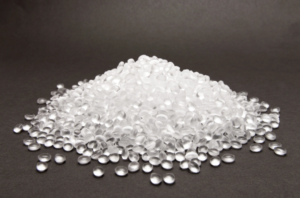
Uzbekistan has abolished excise duties on imports of polyethylene granules and customs duties on primary forms of ethylene and propylene polymers. This is provided for by a decree of the President of Uzbekistan dated August 18 this year to support domestic manufacturers of high value-added ethylene and propylene polymer products.
According to the document, from September 1, 2025, to January 1, 2028, there will be a zero excise tax rate on polyethylene granules (currently 10%) that are not produced in the country and are imported according to an approved list.
Until 2028, import duties on certain primary forms of ethylene and propylene polymers (HS codes 3901 10 900 0, 3901 30, 3901 40, 3902 10 000 0), which currently stand at 5%.
At the same time, the Customs Committee and the Uzbek Agency for Technical Regulation, based on the ex officio principle, must take measures against the import of low-quality and counterfeit flexible packaging — polyethylene and polypropylene films, non-woven materials, bags, big bags, and other products.
customs duty, EXCISE DUTY, IMPORT, polymer raw materials, UZBEKISTAN



