
Direct funding for security and defense in Ukraine’s draft 2027 state budget amounts to approximately UAH 4.855 trillion, or 66.8% of all planned expenditures, reports the Experts Club information and analytical center.
Including UAH 30 billion in state guarantees, the government declares a total defense resource of UAH 4.885 trillion. Compared with the 2026 plan, this represents an increase of approximately UAH 517.8 billion, or 11.9%.
Most of the increase is allocated to military pay and salaries with related charges, which rise from UAH 1.454 trillion to UAH 1.792 trillion. Meanwhile, the comparable allocation for weapons and military equipment in the Finance Ministry’s presentation remains virtually unchanged at UAH 2.299 trillion, compared with UAH 2.297 trillion in 2026.
Civilian sectors will also receive nominal funding increases. Social spending rises to UAH 540.3 billion, education to UAH 328.5 billion, and healthcare to UAH 292.5 billion. However, part of these increases will be absorbed by projected average annual inflation of 8.6%.
The draft budget also relies on several tax measures that still require legislative approval. In particular, the calculations include an increase in the standard VAT rate from 20% to 21%, expected to generate an additional UAH 58.7 billion. Four proposed tax measures together are expected to raise UAH 117.3 billion.
The macroeconomic forecast assumes real GDP growth of 1.3% in 2027, average annual inflation of 8.6%, and an average exchange rate of UAH 47.1 per US dollar, compared with an expected UAH 44.4 in 2026. The year-end 2027 exchange rate is projected at UAH 48.3 per dollar.

Italian Foreign Minister Antonio Tajani confirmed that a new aid package for Ukraine is being prepared, as well as the continuation of the Italian government’s commitments regarding Ukraine’s security, recovery, and defense.
According to the website of the Italian Ministry of Foreign Affairs and International Cooperation, Tajani made these remarks during a phone call with Ukrainian Foreign Minister Andriy Sybiga on the occasion of the 35th anniversary of Ukraine’s restoration of independence.
During the conversation, Tajani condemned the ongoing Russian attacks on Ukrainian territory and reaffirmed the Italian government’s full support for the Ukrainian people.
“The minister reaffirmed the government’s commitment to maintaining maximum pressure on Moscow, as demonstrated by Prime Minister Giorgia Meloni’s participation today in the Coalition of the Willing. Tajani confirmed that the government’s commitment to Ukraine’s security, reconstruction, and defense remains firm, in particular thanks to a new Italian aid package currently being prepared, as well as support through EU sanctions,” the statement reads.
Separately, the parties discussed food security and maritime safety. Tajani emphasized the importance of the Black Sea and the entire Mediterranean for global food security and ensuring the continuity of Ukrainian grain exports.
He reaffirmed Italy’s readiness to cooperate with Kyiv, in particular by exploring avenues for collaboration with MED9+ initiatives regarding the Strait of Hormuz, underscoring the interconnection between maritime security, economic stability, energy flows, and food security.
The conversation also touched on Ukraine’s recovery. According to the Italian Ministry of Foreign Affairs, Italy has already allocated approximately 3.2 billion euros to support Ukraine’s recovery and reconstruction, in part through contributions from Italian companies.
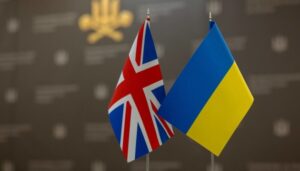
According to The Guardian, the United Kingdom will gain access to Ukrainian battlefield data to train artificial intelligence systems that are planned to be used to protect military facilities and critical infrastructure from sabotage, drones, and other threats.
Ukraine and the UK signed a partnership agreement on artificial intelligence on August 24, 2026. The UK will become the first foreign partner to gain access to the Ukrainian platform Avengers AI Labs, the British government reported.
Avengers AI Labs aggregates a vast amount of real-world data collected by thousands of daytime cameras and infrared sensors on the battlefield. The system contains data on millions of objects, including tanks, artillery, air defense systems, personnel, and aerial targets—such as Shahed strike drones and reconnaissance drones. This data is used to train artificial intelligence models.
According to The Guardian, one of the first British pilot projects will be a system to protect a military facility using underground fiber-optic cables, which, with the help of AI, will be able to recognize characteristic movements of people and vehicles. In the future, such technologies could be applied at airports, railways, energy facilities, and prisons.
Three British technology companies—Sintela, Mind Foundry, and Skyral—have already been involved in the pilot projects. In particular, Sintela specializes in using fiber-optic networks as distributed sensors.
Another area of cooperation will be the development of a new generation of energy-efficient AI chips for drones, robotics, and autonomous systems. It is expected that such solutions will allow these systems to operate autonomously for longer periods and respond more quickly in challenging conditions.
The agreement calls for collaboration among governments, businesses, universities, and research centers in both countries. Ukraine provides unique data and experience in applying technologies under real combat conditions, while the United Kingdom contributes its research infrastructure, universities, and technology companies.
British Prime Minister Andy Burnham stated that combining Ukraine’s combat experience with British expertise in AI will accelerate the development of technologies for both Ukraine’s defense and the protection of critical British infrastructure.
The partnership is part of a 100-year agreement between Ukraine and the United Kingdom. The joint declaration calls for the development of AI models, secure data-sharing mechanisms, autonomous systems, cybersecurity technologies, and solutions for the defense industry.
artificial intelligence, DEFENSE, INFRASTRUCTURE, UKRAINE, UNITED KINGDOM

The Norwegian government will propose to the Storting (parliament) to extend emergency aid to Ukraine in the amount of 85 billion Norwegian kroner (approximately $9.1 billion) into 2027 as well, the government’s press service reported.
“Norway will continue to support Ukraine’s defense efforts. Ukraine is facing a difficult winter. We are now sending a clear signal that Norway will continue to support Ukraine, both through civilian and military aid,” said Prime Minister Jonas Gar Støre.
As noted, the government’s proposal was conveyed to Ukrainian President Volodymyr Zelenskyy during a meeting between Stere and Zelenskyy in Kyiv on Sunday.
The Norwegian prime minister noted that supporting and rebuilding Ukraine is also important for European security. Norwegian support is provided through the Nansen Program for Ukraine and is directed toward both civilian and military purposes.
“The bulk of the funds will go toward military support, specifically purchases from the Ukrainian defense industry. The government will revisit the distinction between military and civilian services at a later date,” the press release states.
The Nansen Program for Ukraine is Norway’s long-term government program to support Ukraine, launched in February 2023 with broad cross-party support from the Norwegian parliament—the Storting. It initially allocated 75 billion NOK for 2023–2027, but the program was subsequently expanded and extended through 2030.
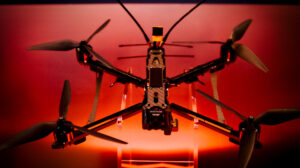
Ukrainian defense technology manufacturer TAF Industries, in partnership with the Danish company Upteko, has signed a memorandum of understanding (MoU) to establish a joint venture (JV) in Denmark, which is expected to produce thousands of drones per month starting in early 2027.
According to a press release, the memorandum was signed during the DALO Industry Days in Herning, Denmark. This collaboration is part of the “Build with Ukraine” initiative.
Under the agreement, the companies are expected to work on scaling up production capacity in the field of FPV drones and strengthening supply chains.
“Today’s agreement is another strategic step that will contribute to further deepening cooperation both between our companies and between Ukraine and Denmark,” TAF Industries CEO Volodymyr Zinovsky is quoted as saying in the press release.
For his part, Upteko founder Benjamin Meinerz added that the companies jointly aim to foster innovation by developing high-performance systems and building an organization capable of adapting to future challenges.
“Establishing a manufacturing facility and a development office outside of Ukraine creates a solid foundation for cooperation in the fields of research, engineering, and manufacturing,” noted the founder of Upteko.
In June, TAF Industries, together with the Polish Defense Group (Polska Grupa Zbrojeniowa), signed a memorandum of understanding regarding the further localization of production in Poland and the expansion of manufacturing capacity.
The Danish technology company Upteko was founded in 2018 and specializes in developing drone solutions for the maritime and industrial sectors. The company collaborates with industrial partners, government agencies, and representatives of the maritime sector.
Ukrainian defense technology manufacturer TAF Industries produces over 30 types of defense products, including FPV drones and reconnaissance UAVs, electronic warfare systems, remote control solutions, and AI-based combat technologies. The company’s monthly production of FPV drones reaches up to 80,000 units.
According to Dw.com, German law enforcement authorities detained a 33-year-old Ukrainian citizen suspected of gathering information about a defense contractor in Bavaria to prepare for possible sabotage.
As reported on August 6 by the Munich Public Prosecutor’s Office and the Bavarian State Criminal Police Office, the man was detained on August 2 in the federal state of Thuringia with the assistance of local police. The following day, a Munich district court issued an arrest warrant, after which the suspect was placed in a pretrial detention center in Bavaria.
According to the investigation, in June 2026, the man allegedly photographed the premises of a defense contractor in southern Germany and transmitted the images to his client. German law enforcement officials suspect that this material could have been used to prepare acts of sabotage.
The suspect is considered a so-called “low-level agent.” German security agencies use this term to describe individuals whom foreign intelligence services may recruit to carry out specific, straightforward tasks, such as photographing facilities, conducting surveillance, or gathering publicly available information.
The prosecutor’s office has not disclosed which country’s intelligence service may have recruited the man. The name of the defense contractor is also being withheld due to the ongoing investigation.
In Germany, suspicion of espionage aimed at preparing acts of sabotage carries criminal liability. The investigation is currently ongoing, and the detainee’s guilt has not been established by a court.
German security agencies have previously warned of an increase in attempts by foreign intelligence services to recruit operatives via social media and messaging apps. Defense companies, military facilities, and transportation and energy infrastructure were cited as potential targets of such operations. At the same time, law enforcement officials have not yet officially linked the new arrest to a specific country or other investigations.



