
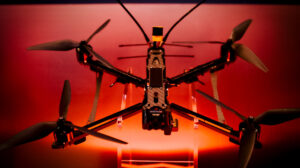
Ukrainian defense technology manufacturer TAF Industries, in partnership with the Danish company Upteko, has signed a memorandum of understanding (MoU) to establish a joint venture (JV) in Denmark, which is expected to produce thousands of drones per month starting in early 2027.
According to a press release, the memorandum was signed during the DALO Industry Days in Herning, Denmark. This collaboration is part of the “Build with Ukraine” initiative.
Under the agreement, the companies are expected to work on scaling up production capacity in the field of FPV drones and strengthening supply chains.
“Today’s agreement is another strategic step that will contribute to further deepening cooperation both between our companies and between Ukraine and Denmark,” TAF Industries CEO Volodymyr Zinovsky is quoted as saying in the press release.
For his part, Upteko founder Benjamin Meinerz added that the companies jointly aim to foster innovation by developing high-performance systems and building an organization capable of adapting to future challenges.
“Establishing a manufacturing facility and a development office outside of Ukraine creates a solid foundation for cooperation in the fields of research, engineering, and manufacturing,” noted the founder of Upteko.
In June, TAF Industries, together with the Polish Defense Group (Polska Grupa Zbrojeniowa), signed a memorandum of understanding regarding the further localization of production in Poland and the expansion of manufacturing capacity.
The Danish technology company Upteko was founded in 2018 and specializes in developing drone solutions for the maritime and industrial sectors. The company collaborates with industrial partners, government agencies, and representatives of the maritime sector.
Ukrainian defense technology manufacturer TAF Industries produces over 30 types of defense products, including FPV drones and reconnaissance UAVs, electronic warfare systems, remote control solutions, and AI-based combat technologies. The company’s monthly production of FPV drones reaches up to 80,000 units.

According to Dw.com, German law enforcement authorities detained a 33-year-old Ukrainian citizen suspected of gathering information about a defense contractor in Bavaria to prepare for possible sabotage.
As reported on August 6 by the Munich Public Prosecutor’s Office and the Bavarian State Criminal Police Office, the man was detained on August 2 in the federal state of Thuringia with the assistance of local police. The following day, a Munich district court issued an arrest warrant, after which the suspect was placed in a pretrial detention center in Bavaria.
According to the investigation, in June 2026, the man allegedly photographed the premises of a defense contractor in southern Germany and transmitted the images to his client. German law enforcement officials suspect that this material could have been used to prepare acts of sabotage.
The suspect is considered a so-called “low-level agent.” German security agencies use this term to describe individuals whom foreign intelligence services may recruit to carry out specific, straightforward tasks, such as photographing facilities, conducting surveillance, or gathering publicly available information.
The prosecutor’s office has not disclosed which country’s intelligence service may have recruited the man. The name of the defense contractor is also being withheld due to the ongoing investigation.
In Germany, suspicion of espionage aimed at preparing acts of sabotage carries criminal liability. The investigation is currently ongoing, and the detainee’s guilt has not been established by a court.
German security agencies have previously warned of an increase in attempts by foreign intelligence services to recruit operatives via social media and messaging apps. Defense companies, military facilities, and transportation and energy infrastructure were cited as potential targets of such operations. At the same time, law enforcement officials have not yet officially linked the new arrest to a specific country or other investigations.
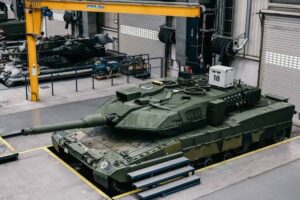
The Lithuanian defense contractor UAB Lithuania Defence Services has signed a contract with the construction company YIT Lietuva for the construction of a tank assembly and repair plant within the Kaunas Free Economic Zone, Lithuanian media reported on Monday.
“Construction is scheduled to begin in August of this year and be completed in November 2027,” the report states.
The first tank assembled in Lithuania is expected to roll off the plant’s assembly line in late 2028.
“The 13,000-square-meter plant will become one of the most important elements of Lithuania’s defense industry infrastructure—in the future, the state-of-the-art Leopard 2A8 tanks and other heavy equipment of the Lithuanian Armed Forces will be assembled and maintained here. The total cost of the project is approximately EUR29 million,” the statement added.
As previously reported, at the end of 2025, the Lithuanian Ministry of Defense and the republic’s state-owned energy holding company EPSO-G, on the one hand, and the German companies KNDS Deutschland and Rheinmetall Landsysteme, on the other, signed a memorandum of understanding on industrial cooperation in the development of infrastructure for the assembly and maintenance of Leopard 2A8 tanks.
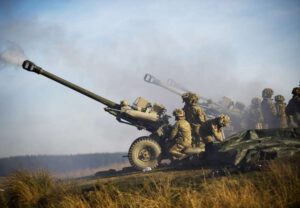
At the Farnborough International Airshow (United Kingdom), BAE Systems signed a licensing agreement to support local production of the Light Gun artillery system in Ukraine, according to the company’s press office.
“The licensing agreement will provide access to technical information and support from BAE Systems necessary for the manufacture of the first test gun. This strategic partnership will facilitate the development of a modified version of the L119 light gun for use by the Armed Forces of Ukraine,” the statement said.
It is noted that the L119 is a 105-mm light howitzer developed by BAE Systems—a highly effective and proven towed artillery system valued for its mobility and reliability.
The agreement is based on BAE Systems’ long-term support for Ukraine and its collaboration with Ukrainian industry to strengthen the country’s sovereign defense capabilities. It reflects a shared commitment to developing a sustainable industrial base capable of providing long-term support to the Armed Forces of Ukraine.
“A robust defense capability depends on reliable strategic partnerships in the industrial sector. This agreement combines BAE Systems’ expertise in artillery with our strategic defense partner’s knowledge of Ukraine’s operational needs to support the development of sovereign defense capabilities where they are most needed. Supporting Ukraine is not just about supplying equipment. It is also about working together to build the industrial resilience, skills, and capabilities needed to ensure long-term defense capabilities,” said Giles Ambrose, Director of Engineering, Technology, and Strategy at BAE Systems.

Romania, Bulgaria, and Turkey have agreed to expand the mission of the joint Black Sea Mine Countermeasures Task Group by adding the protection of critical infrastructure to its mandate.
The agreement was reached during the NATO summit in Ankara. This involves expanding the authority of the Mine Countermeasures Black Sea Task Group, which had previously focused primarily on locating and neutralizing mines in the Black Sea.
According to Reuters, the new mandate calls for the protection of energy and telecommunications facilities and undersea pipelines owned or operated by the three countries.
The Romanian Ministry of Defense stated that protecting critical infrastructure in the Black Sea requires a comprehensive, integrated, and long-term approach. The ministry also noted that a memorandum establishing the mine countermeasures security group was signed on January 11, 2024, by the defense ministers of Romania, Bulgaria, and Turkey.
The joint group became the first trilateral initiative of its kind among the three NATO countries with access to the Black Sea. Its initial task was to improve the safety of navigation following the appearance of drifting mines in the sea as a result of Russia’s war against Ukraine.
According to Reuters, the group has already neutralized more than 150 mines since its creation. The expansion of its mandate reflects growing concerns among countries in the region regarding the security of maritime infrastructure, particularly against the backdrop of developing gas projects in the Black Sea.
For Ukraine, this decision is of direct importance, as Black Sea security affects shipping, export routes, energy infrastructure, and the overall naval situation in the region. Stronger coordination between Romania, Bulgaria, and Turkey also signals greater NATO focus on the Black Sea region.
BLACK SEA, BULGARIA, DEFENSE, INFRASTRUCTURE, ROMANIA, TURKEY

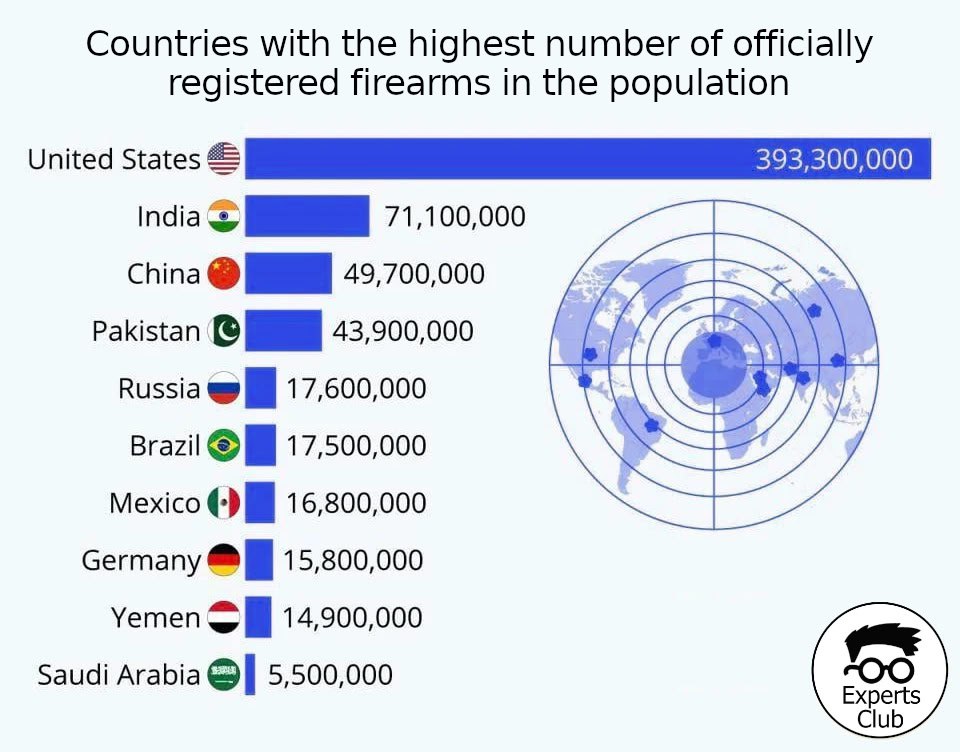
The global ranking of armed populations, compiled on the basis of the Small Arms Survey, shows that the ten countries with the largest number of civilian weapons include the United States, India, China, Pakistan, Russia, Brazil, Mexico, Germany, Yemen, and Saudi Arabia. Ukraine is not on this list, but even before Russia’s full-scale invasion, the country was among the states with a significant amount of weapons in the hands of citizens. The Experts Club Analytical Center analyzed global and Ukrainian statistics.
According to the Small Arms Survey for 2017-18, there were about 4.4 million civilian weapons in Ukraine—approximately 9.9 guns per 100 inhabitants. Of these, only about 800,000 were officially registered, and about 3.6 million belonged to the illegal segment.
According to the National Police database, as of July 31, 2018, there were 892,854 registered weapons in the country. In 2021, the Ministry of Internal Affairs estimated the number of weapons legally owned by citizens at approximately 1.3 million, against the backdrop of tighter regulations and growing public interest in self-defense after 2014.
The full-scale war of 2022 dramatically changed the picture. Against the backdrop of the formation of territorial defense and volunteer units, the state massively transferred small arms to citizens; at the same time, a significant number of captured and illegal firearms ended up in the hands of the population. Estimates today vary widely: according to Interior Minister Ihor Klymenko, Ukrainians may have between 1 and 5 million weapons, while a number of think tanks put the figure at 4–5 million, of which 2–3 million may be in illegal circulation.
Research by Small Arms Survey using sociological surveys shows that up to 11% of Ukrainian households may have at least one weapon, which on a national scale gives a range of 865,000 to 1.42 million armed households. At the same time, the share of households that openly report the presence of weapons in 2023–2024 remains at 5–6%, which indicates both a high level of distrust and the sensitivity of the issue in wartime.
To bring order, Ukraine has launched a Unified Weapons Register. By July 2024, 63% of households that own weapons stated that some or all of their weapons were registered; among those who are aware of the system, 74% claim to have registered all their weapons, but about 10% continue to keep unregistered weapons.
Thus, while before the war there were approximately 1.3 million registered weapons in Ukraine and several times more illegal firearms, now, against the backdrop of full-scale hostilities, there are millions of weapons, a significant portion of which must gradually be registered or confiscated.
This makes the issue of civilian weapons control one of the key issues for post-war security, law enforcement reform, and Ukraine’s negotiations with the EU on the harmonization of weapons legislation.
Source: https://expertsclub.eu/ukrayina-na-tli-svitovogo-rynku-czyvilnoyi-zbroyi/



