

According to the Serbian business publication Parametar, construction of the first phase of a new plant to manufacture electric motors for drones is nearing completion in the village of Kotraža near Lučani. The equipment has already been delivered, some employees have been hired and are undergoing training, and production is expected to begin in early October.
In the first phase, the plant is expected to employ about 50 people; after the completion of all three phases, the workforce will grow to 60–70 employees. Earlier reports mentioned the possibility of expanding the workforce to 150 employees. The plant’s projected production capacity is up to 40,000 motors per month.
Businessman Milenko Kostić stated that the idea to establish the production facility came from Želko Mitrović. For the small town of Dragacheva, the project is significant not only from a technological standpoint: the plant is effectively being created as a new industrial employment hub in a rural area.

The Romanian Navy has begun testing the new Black Talon drone countermeasure system at the military port of Constanța on the Black Sea. The system, developed as part of a long-standing collaboration with the U.S. Navy, is scheduled to enter operational service by the end of October 2026.
Black Talon is designed to detect, track, and monitor unmanned aerial vehicles near critical port infrastructure. According to the Romanian military, the system includes a high-performance 3D radar, electro-optical equipment, and passive electromagnetic radiation detection devices. The system provides a 360-degree field of view and can target detected objects.
The threat detection radius is approximately 10 km. One of the primary countermeasures is electronic jamming—Black Talon is capable of disrupting the communication channel between a drone and its operator, allowing the threat to be neutralized without necessarily destroying the drone physically.
Currently, Romanian military personnel are undergoing training to operate the new equipment. Following Constanta, plans are in place to equip the military ports of Mangalia, Tulcea, and Braila with similar systems. The U.S. side is to provide three more systems. Thus, protection will cover Romania’s military ports on both the Black Sea and the Danube, particularly near the Ukrainian border.
At the same time, the Romanian Navy is preparing to deploy the Sentinel system to monitor threats from the sea and underwater. It will use sonar capable of detecting unmanned underwater vehicles, combat divers, and mini-submarines. According to Navy officials, Black Talon and Sentinel can be integrated to form a comprehensive surveillance system covering the air, surface, and underwater spaces around the military ports.
The commander of the Constanta military port, Rear Admiral Ciprian Mandaki, announced on September 16 that the program has been implemented jointly with the U.S. Navy for several years and has now entered the operational phase. Black Talon is primarily intended to protect critical military infrastructure from aerial drones.
The強化 of security in Constanța follows a serious incident on June 5, 2026, when a maritime drone was detected in the civilian section of the port, near Pier No. 78. At approximately 10:30 a.m., the drone self-detonated. There were no casualties, as the area had already been cordoned off by Romanian intelligence services, the coast guard, and the military. The Romanian Ministry of Defense officially reported that the drone did not belong to the Romanian military and was of a type used in the war in Ukraine. The investigation into the incident was handed over to the prosecutor’s office.
Following this incident, Romanian authorities ordered the acceleration of measures to protect port infrastructure. At the same time, the Black Talon program itself had been launched earlier and was being developed as part of Romania’s cooperation with the United States in the field of maritime security.
For Ukraine, the strengthening of security at Romanian ports is of particular importance due to the proximity of Constanța and the Danube ports to the Ukrainian border and their role in the region’s Black Sea and Danube transportation infrastructure.
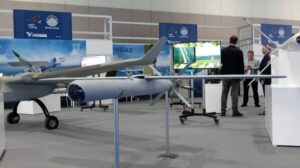
According to the “Serbian Economist,” a new plant for assembling Israeli-designed military drones has been built in Serbia. According to Aleksandar Vučić, the plant will employ about 100 people, and its products are intended for both the Serbian Armed Forces and the armed forces of other countries.
Journalists were not allowed inside the plant.
Vucic attributed this to the confidentiality of the production process. Some of the models being produced were shown only in a video he released.
At the same time, the current plant is intended to be only the first phase of cooperation with Israel. Vucic stated that he expects to open at least three more similar plants in Serbia. He named areas near the Lajevci and Niš airports as potential locations for the new production facilities.
Earlier, an investigation by BIRN and Haaretz reported that Serbia’s partner in the project is Elbit Systems, Israel’s largest defense company. According to the journalists, Elbit is set to hold a 51% stake in the joint venture, while the Serbian state-owned company Yugoimport-SDPR will hold 49%.
The plan is to produce both drones for close-range missions and more sophisticated aircraft for long-range flights. Elbit and SDPR have not publicly disclosed details of the project.
Serbia is gradually building its own drone manufacturing cluster by bringing together local defense companies with the technologies of foreign partners. Vučić stated that the project’s goal is to strengthen the capabilities of the Serbian army while also expanding exports of military products.
Estonian Defense Minister Hanno Pevkur stated that the republic provided Ukraine with military aid totaling over EUR50 million in 2026, of which over EUR40 million consisted of products from the Estonian defense industry.
“This year’s contribution of at least 0.28% of GDP and the growing share of Estonian defense products in our aid to Ukraine demonstrate the consistency of our support. Ukraine can count on both us and its other allies,” said Pevkur, as quoted by the ministry’s press service.
He noted that in 2023, the Estonian government set a goal of providing support to Ukraine at a level of at least 0.25% of GDP per year. In 2025, this aid reached 0.35% of GDP.
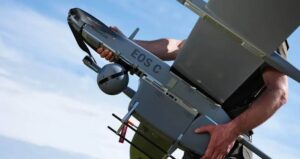
The bulk of Estonia’s military aid is provided in the form of products from Estonian companies. Part of the aid package for 2026 has already been delivered: Estonia has purchased drones and related equipment for Ukraine. Aid measures for 2027 will be announced shortly.
As part of the NATO PURL (Prioritized Ukraine Requirement List) initiative, products from the U.S. defense industry are also being procured for Ukraine. Estonia has contributed EUR 21 million to the initiative.
In total, since the start of the war in Ukraine in 2022, Estonia has provided over EUR 850 million in support to the country through various military aid initiatives, according to the Ministry of Defense.
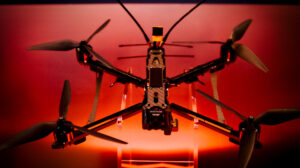
Ukrainian defense technology manufacturer TAF Industries, in partnership with the Danish company Upteko, has signed a memorandum of understanding (MoU) to establish a joint venture (JV) in Denmark, which is expected to produce thousands of drones per month starting in early 2027.
According to a press release, the memorandum was signed during the DALO Industry Days in Herning, Denmark. This collaboration is part of the “Build with Ukraine” initiative.
Under the agreement, the companies are expected to work on scaling up production capacity in the field of FPV drones and strengthening supply chains.
“Today’s agreement is another strategic step that will contribute to further deepening cooperation both between our companies and between Ukraine and Denmark,” TAF Industries CEO Volodymyr Zinovsky is quoted as saying in the press release.
For his part, Upteko founder Benjamin Meinerz added that the companies jointly aim to foster innovation by developing high-performance systems and building an organization capable of adapting to future challenges.
“Establishing a manufacturing facility and a development office outside of Ukraine creates a solid foundation for cooperation in the fields of research, engineering, and manufacturing,” noted the founder of Upteko.
In June, TAF Industries, together with the Polish Defense Group (Polska Grupa Zbrojeniowa), signed a memorandum of understanding regarding the further localization of production in Poland and the expansion of manufacturing capacity.
The Danish technology company Upteko was founded in 2018 and specializes in developing drone solutions for the maritime and industrial sectors. The company collaborates with industrial partners, government agencies, and representatives of the maritime sector.
Ukrainian defense technology manufacturer TAF Industries produces over 30 types of defense products, including FPV drones and reconnaissance UAVs, electronic warfare systems, remote control solutions, and AI-based combat technologies. The company’s monthly production of FPV drones reaches up to 80,000 units.
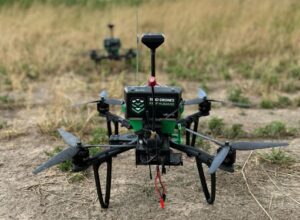
Ukrainian defense startup Swarmer, which went public on the Nasdaq in March of this year (ticker SWMR), reported in its financial statement that in the second quarter of 2026, its net loss increased from $1.6 million in the same period of 2025 to $7.3 million, while revenue rose from $138,200 to $216,000.
“The second quarter of 2026 was our first full quarter as a public company and a period of significant progress across all areas of our business. We successfully attracted new customers and made progress in implementing projects to deploy our solutions on various unmanned platforms, while continuing to invest in the team and technologies necessary to ensure future growth,” the press release quotes company co-founder Alex Fink as saying.
According to the report, the company’s gross profit for the second quarter of 2026 was $183,600, compared to $82,000 in April–June 2025. This growth was primarily driven by licensing revenue recognized under the SkyKnight program.
It is noted that Swarmer’s operating expenses for this reporting period totaled $7.5 million, compared to $854,800 a year ago.
“This increase is primarily due to investments in personnel, engineering development, product creation, and platform integration capabilities, as well as higher expenses for consulting, legal, and professional services related to the company’s operations as a public entity,” the company noted.
Operating expenses for the second quarter of 2026 also included, among other things, approximately $1.2 million in non-cash stock-based compensation expenses and certain one-time expenses for equipment purchases, which are not expected to recur on a regular basis.
The report added that during the second quarter of this year, the company billed drone manufacturer SkyKnight $1.5 million. Specifically, $0.2 million was recognized as revenue, $0.1 million was recorded as deferred revenue, and the remaining amount was recorded as an advance payment on the balance sheet.
The company noted that as of the end of June 2026, cash and cash equivalents had increased to $25.3 million from $9.3 million as of December 31, 2025.
Swarmer explains that this growth was driven by approximately $16 million raised from its initial public offering (IPO), $8.8 million raised under a share-for-equity financing facility, and $3.5 million from the sale of Series A-1 convertible preferred shares.
In April–June of this year, Swarmer also signed a memorandum of understanding (MOU) with the technology company Autonomous Power Corporation (Powerus) to explore the potential integration of Swarmer’s battle-proven software with Powerus’s autonomous aerial and maritime platforms.
The company’s core areas of activity include autonomous swarm coordination, integration of multi-domain unmanned systems, AI-based collaborative autonomy, and software for commanding and controlling distributed robotic operations, according to the press release. In addition, the company’s clients include drone manufacturers that license Swarmer’s software for integration with their hardware platforms.
As previously reported, Swarmer posted a net loss of $4.5 million for January–March 2026, compared to $0.7 million for the same period in 2025. Revenue fell to $20,300 from $110,700, while operating expenses rose to $4.5 million from $0.8 million.
The company was founded by Serhiy Kuprienko and Alex Fink in May 2023. Its registered headquarters and marketing and sales office are in Austin, Texas, USA, while its engineering divisions are split between offices in Kyiv, Ukraine, and Warsaw, Poland. The company’s holding structure includes “subsidiary” companies in Ukraine, Poland, and Estonia.
Prior to the IPO, Kuprienko held a 27.4% stake and Fink held 15.1%, while other shareholders included Theseus Capital Partners—where Philip Wagenheim, a member of the board of directors, serves as managing partner—with 22%, D3 Fund (Evelyn Buchacki) with 10.1%, RG.AI Technologies, led by Charles Eberle von Sexi, held 14%, Green Flag Fund I held 5.3%, and Radius Fund I held 6.9%
Swarmer’s revenue in 2025 fell to $0.31 million from $0.33 million a year earlier, while its net loss increased to $8.53 million from $2.07 million.



