
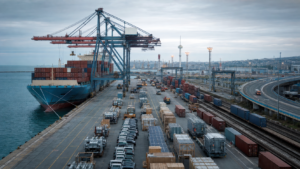
In January–June 2026, Ukraine recorded a merchandise trade deficit with 37 of its 50 largest trading partners, according to calculations by the Experts Club information and analytical center based on foreign trade data.
Total trade turnover with the TOP 50 countries amounted to $66.97 billion. Imports reached $47.35 billion, exports totaled $19.62 billion, and the overall trade deficit stood at $27.73 billion.
The combined deficit in trade with the 37 countries from which imports exceeded exports amounted to $30.72 billion. A surplus of $2.99 billion with the remaining 13 partners partially offset this gap.
For comparison, according to official data from the State Customs Service, Ukraine’s total trade turnover in the first half of the year amounted to $70.3 billion, including $49.3 billion in imports and $21 billion in exports. Thus, the TOP 50 partners accounted for more than 95% of Ukraine’s foreign trade in goods.
The ten largest deficit-generating trade routes accounted for $41.78 billion in trade turnover. Ukraine imported $32.95 billion worth of goods from these countries while exporting only $8.83 billion. The deficit amounted to $24.12 billion, or approximately 87% of the net trade deficit with the TOP 50 partners.
The import coverage ratio by exports in this group was 26.8%. In other words, every dollar of Ukrainian exports corresponded to approximately $3.73 in imports.
The top five countries—China, Poland, Germany, the United States, and Türkiye—generated a deficit of $20.59 billion. This represented 74.3% of the net trade deficit with the TOP 50 partners.
China ranked first by a wide margin. Imports of Chinese products amounted to $13.9 billion, while exports of Ukrainian goods totaled only $778.4 million. The deficit reached $13.12 billion, or 47.3% of the total trade deficit with the TOP 50.
Exports covered only 5.6% of imports. Thus, the volume of Chinese supplies to Ukraine was almost 18 times greater than the flow of goods in the opposite direction.
According to the State Customs Service’s publicly available commodity breakdown, the leading categories of Chinese imports were electric batteries at $1.62 billion, transmission, television, and video equipment at $1.11 billion, fiber-optic products at $770.5 million, transformers and chokes at $720.8 million, and unmanned aerial vehicles at $684.4 million.
Significant volumes also included telephone and telecommunications equipment at $620.8 million, electric motors and generators at $589.8 million, computer equipment at $363.7 million, and semiconductor devices at $347.8 million.
Thus, the deficit with China is generated not by a single category but by a broad range of technological, energy, electronic, and consumer products.
Poland ranked second in terms of the trade deficit, at $2.29 billion. At the same time, trade with Poland was considerably more balanced than trade with China: Ukrainian exports covered 51% of imports, while Poland remained the largest individual market for Ukrainian products.
The largest disclosed category of imports of Polish origin was oil and petroleum products, totaling $904.6 million. These were followed by petroleum gases at $205.6 million, aircraft parts at $192 million, unmanned aerial vehicles at $133.9 million, compound fertilizers at $121.6 million, electricity at $114.4 million, and coke and semi-coke at $111 million.
The structure of these supplies indicates that Poland serves Ukraine not only as a trading partner but also as an important energy, industrial, and logistics hub.
Germany generated the third-largest deficit, at $1.94 billion. Ukrainian exports covered 39.5% of imports.
The main disclosed categories of German products were passenger cars at $347.6 million, medicines at $220.2 million, petroleum products at $151.9 million, crop-harvesting machinery at $115.3 million, soil cultivation equipment at $97.1 million, plant protection products at $93.5 million, and tractors at $84.3 million.
The trade deficit with the United States amounted to $1.9 billion, while exports covered only 23.6% of imports. The largest publicly available categories of US supplies were petroleum products at $436.6 million, passenger cars at $417.9 million, coal at $182.2 million, and telecommunications equipment at $155.3 million.
Imports from the United States also included tractors, ethylene polymers, petroleum gases, medicines, frozen fish, and electronic equipment. Production, transport, and energy goods accounted for a significant share of both US and German imports.
Türkiye ranked fifth, with a deficit of $1.34 billion. At the same time, the import coverage ratio by exports stood at 57.1%, the highest figure among the top five countries.
Radar and radio navigation instruments and remote-control apparatus, totaling $332.8 million, stood out in the publicly available commodity structure. Significant supplies also included rolled steel products, petroleum products at $110.1 million, citrus fruits at $83.3 million, electric generator sets at $73.1 million, sunflower seeds at $59.2 million, automotive components, vegetables, and other food products. Trade with Türkiye combines industrial products, technological equipment, metals, and foodstuffs, while the country remains one of the largest markets for Ukrainian exports.
The trade deficit with Greece amounted to $861.5 million. Oil and petroleum products accounted for almost $809 million in the publicly available commodity breakdown. Other categories included petroleum coke and bitumen at $38.1 million, petroleum gases at $36.4 million, and fertilizers at $35.1 million. The structure of the deficit with Lithuania, which reached $607.7 million, was similar. Petroleum products accounted for $576.1 million of disclosed imports, while petroleum gases accounted for $46.4 million. Ukraine also imported passenger cars, freight vehicles, petroleum coke, fertilizers, polymers, and animal feed.
Unlike China, where the deficit is distributed among numerous technological categories, the imbalance with Greece and Lithuania is largely associated with energy purchases.
The trade deficit with the Czech Republic amounted to $752.4 million. The main import categories included aircraft parts at $101.8 million, passenger cars at $101 million, electric generator sets at $96.6 million, batteries at $44.5 million, telecommunications equipment at $34.3 million, and coal at $32.3 million.
The trade deficit with Hungary reached $658.1 million. The publicly available structure of supplies was dominated by electricity at $349.9 million, petroleum gases at $157.4 million, passenger cars at $113.2 million, and cable products at $87.8 million.
The deficit with France amounted to $648.9 million. The largest categories were plant protection products at $120 million, medicines at $76.1 million, passenger cars at $72.5 million, trucks at $47.7 million, tractors at $39.9 million, and automotive components at $35.3 million. Supplies of sunflower and corn seeds, as well as cosmetic products, were also significant.
Immediately outside the top ten was Sweden, with a deficit of $606.9 million. Exports covered only 8.3% of imports. The main publicly available categories included petroleum products, passenger cars, medicines, and agricultural machinery.
The deficit with Taiwan amounted to $563.8 million, with Vietnam to $544.2 million, and with Japan to $496.9 million. The import coverage ratio by exports in trade with these countries ranged from only 3.8% to 5.8%. Supplies from Taiwan included unmanned aerial vehicles at $205.3 million, radar and navigation equipment at $58.4 million, integrated electronic circuits at $55 million, and navigation instruments at $47.6 million.
Imports from Vietnam included unmanned aerial vehicles at $132.7 million, telecommunications equipment at $108.7 million, computer equipment, rolled steel products, footwear, coffee, and fish products. Japanese imports were dominated by passenger cars at $302.5 million, as well as motorcycles, automotive components, printing, medical, and construction equipment.
The overall structure of purchases explains a significant part of the trade gap. According to the State Customs Service, machinery, equipment, and transport accounted for $21.3 billion of imports in the first half of 2026, fuel and energy products for $7.4 billion, and chemical industry products for $6.9 billion. Together, these three categories accounted for 72% of imported goods.
Thus, the deficit is not associated solely with the consumption of finished foreign products. A significant part of it is generated by purchases of energy resources, passenger cars, production equipment, electronics, batteries, generators, pharmaceutical products, agricultural machinery, and components.
“The trade deficit cannot be assessed exclusively as a negative indicator. Amid the war and large-scale reconstruction, a significant share of imports serves a critical or investment purpose. Ukraine purchases energy resources, generators, batteries, transport, industrial equipment, electronics, medicines, and components without which it would be impossible to maintain the functioning of the economy, energy sector, and infrastructure,” emphasized Maksym Urakin, founder of the Experts Club information and analytical center.
At the same time, according to him, the concentration of the deficit creates risks of dependence on individual suppliers, increases demand for foreign currency, and demonstrates the insufficient presence of Ukrainian producers in key foreign markets.
“The problem arises when imports of finished products grow systematically while Ukrainian exports and domestic production fail to develop at a corresponding pace. Trade with China is particularly indicative, as Ukrainian exports cover less than 6% of imports. Such a disparity increases dependence on a single supplier and creates constant additional demand for foreign currency,” the economist stressed.
According to Urakin, the most realistic response lies not in mechanically restricting imports but in localizing the production of goods for which Ukraine has the necessary technological and resource prerequisites, developing industrial cooperation, expanding exports of processed goods, and encouraging foreign suppliers to establish production capacity within the country.
The production of energy equipment, battery systems, electrical equipment, automotive components, construction materials, agricultural machinery, highly processed food products, and certain types of chemical products holds particular potential.

According to Interfax-Ukraine, this article presents key macroeconomic indicators for Ukraine and the global economy as of the end of April 2026. The analysis is based on data from the State Statistics Service of Ukraine, the National Bank of Ukraine, the Ministry of Finance, the State Customs Service, the International Monetary Fund, Eurostat, BEA, BLS, NBS, ONS, TurkStat, IBGE, and other official institutions. Monthly and quarterly statistical data published after the end of the reporting period were used for April indicators.
Maksim Urakin, Ph.D. in Economics and founder of the information and analytical center Experts Club, presented an overview of the key trends that shaped the state of the Ukrainian and global economies in April and early May 2026.
Ukraine’s Macroeconomic Indicators
As of the end of April, the Ukrainian economy remained macro-financially stable, although inflationary, currency, and foreign trade risks had intensified. Compared to March, consumer inflation accelerated, international reserves declined for the third consecutive month, and the trade deficit continued to widen. At the same time, the government ensured funding for defense, social benefits, and critical budgetary needs, while the National Bank of Ukraine (NBU) maintained control over the foreign exchange market.
According to a preliminary estimate by the State Statistics Service, Ukraine’s real GDP in the first quarter of 2026 decreased by 0.6% compared to the first quarter of 2025. On a seasonally adjusted basis, the decline was 0.7% compared to the previous quarter.
Nominal GDP amounted to 2,047.2 billion UAH. This negative trend was attributed to electricity shortages, infrastructure damage, delays in external financing, weak investment activity, and adverse weather conditions at the beginning of the year. At the same time, private consumption remained relatively stable, while the manufacturing sector, trade, and certain service sectors showed growth.
In its April forecast, the National Bank revised downward its estimate for Ukraine’s real GDP growth in 2026 to 1.3%. The main reasons were further damage to energy and logistics infrastructure, a larger electricity shortage, high energy prices, and weaker first-quarter results. The NBU expected economic growth to be supported by consumer demand and investments in reconstruction and the defense-industrial complex, but did not forecast a rapid transition to a sustainable recovery.
“The first-quarter results confirmed that the Ukrainian economy remains extremely sensitive to energy, military, and fiscal shocks. Positive domestic demand and business resilience can no longer fully offset the losses from infrastructure destruction, electricity shortages, and weak exports. The 1.3% growth forecast implies actual stagnation on a per-capita basis. “Therefore, the main priority should be not only to maintain financial stability but also to restore production capacity,” Urakin noted.
The inflation situation worsened in April. Consumer inflation accelerated to 8.6% year-over-year, up from 7.9% in March. Prices rose by 1.4% over the month and by 4.9% since the beginning of the year. Core inflation rose to 7.6% year-over-year, inflation for services reached 13.3%, and the increase in fuel prices hit 36.1% year-over-year.
The main source of inflationary pressure was the rise in energy and fuel prices, which increased business costs for logistics, electricity, and production. Additional factors included wage increases, the pass-through of the hryvnia’s earlier depreciation to consumer prices, and rising costs of certain food products and transportation services. Bread, grains, sunflower oil, fish, restaurant services, and household services saw the fastest price increases.
The NBU’s April forecast projected that inflation would accelerate to 9.4% by the end of 2026. A return to a steady decline was expected in 2027, when inflation was projected to slow to 6.5%, and to reach the 5% target in 2028.
On April 30, the National Bank’s Board kept the policy rate at 15% per annum. The regulator explained the decision by the need to maintain the attractiveness of hryvnia-denominated assets, keep inflation expectations under control, and ensure the stability of the foreign exchange market. The NBU’s forecast called for keeping the rate at 15% at least until the second quarter of 2027. In the event of further intensification of price pressures, the regulator did not rule out the use of additional measures, including a rate hike.
“The acceleration of inflation to 8.6% and the sharp rise in fuel prices left the National Bank no room to continue its policy easing cycle. Under current conditions, the 15% rate is not so much a tool for curbing lending as it is a mechanism for safeguarding confidence in the hryvnia. The risk of a premature rate cut now significantly outweighs the potential short-term effect on economic activity,” Urakin emphasized.
The foreign exchange sector remained under control but required significant support from the regulator. As of May 1, 2026, Ukraine’s international reserves stood at $48.215 billion, having declined by 7.3% in April. This marked the third consecutive monthly decline in reserves.
In April, the NBU sold $3.577 billion on the foreign exchange market, while inflows into the government’s foreign currency accounts totaled only $377.9 million. $716.6 million was allocated to service and repay foreign-currency government debt, and Ukraine paid another $255.3 million to the IMF. The losses were partially offset by a positive revaluation of financial instruments amounting to $378 million. Despite the decline, the reserves were sufficient to finance 4.9 months of future imports.
“The decline in reserves from nearly $52 billion to $48.2 billion in a single month is significant, but not yet critical. Far more important is the underlying cause: the private foreign exchange market remains structurally in deficit, and international inflows do not always coincide with the timing of intervention needs and debt payments. Therefore, the stability of the hryvnia will continue to depend on the regularity of external financing and Ukraine’s ability to narrow the trade gap,” Urakin believes.
According to the State Customs Service, Ukraine’s trade turnover in January–April 2026 amounted to $46.1 billion. Imports reached $32.2 billion, while exports totaled $13.9 billion. Thus, the trade deficit for the four-month period was approximately $18.3 billion, with imports exceeding exports by a factor of 2.3.
Ukraine imported the most goods from China—$8.7 billion—followed by Poland—$3.1 billion—and Turkey—$2.2 billion. The main destinations for Ukrainian exports were Poland—$1.5 billion—Turkey—$1.2 billion—and Italy—$857 million.
In the import structure, machinery, equipment, and transportation accounted for $13.3 billion; fuel and energy products—$5.3 billion; and chemical industry products—$4.6 billion. Exports were primarily driven by food products at $8.5 billion, metals and metal products at $1.3 billion, and machinery, equipment, and transportation at $1.2 billion.
“The increase in the trade deficit to $18.3 billion in just four months is one of the main macroeconomic challenges. A significant portion of imports is objectively necessary—these include energy resources, equipment, transportation, and defense products. However, the export base remains too narrow and reliant on raw materials. Without the development of processing, machine building, the defense industry, and service exports, Ukraine will continue to offset the trade deficit with international aid and reserves,” Urakin emphasized.
The budgetary situation remained tense but under control. From January through April, the general fund of the state budget received 1.04 trillion UAH. Total cash expenditures from the general fund amounted to 1.35 trillion UAH, which is 13.8% more than during the same period in 2025. In April alone, General Fund revenues totaled 302.6 billion hryvnias, while expenditures amounted to 433.1 billion hryvnias.
Expenditures on security and defense over the four-month period reached 854.1 billion hryvnias, or 63.3% of all General Fund expenditures. In April, 283.1 billion hryvnias were allocated for these purposes. UAH 555.5 billion was spent on public sector wages and related benefits, UAH 235 billion on social security, UAH 205.4 billion on subsidies and transfers to enterprises, UAH 151.4 billion on goods and services, and UAH 103.2 billion on servicing the national debt.
International grants for January–April totaled 228.2 billion hryvnias, with 55.1 billion hryvnias received in April alone. In total, 1.43 trillion hryvnias flowed into the general and special funds of the state budget over the four-month period, while state budget cash expenditures amounted to 1.7 trillion hryvnias.
“The budget remains functional, but its structure is entirely dictated by the war. When nearly two-thirds of the general fund’s expenditures are directed toward defense and security, the capacity to finance long-term development remains limited. Under these conditions, it is particularly important that international aid cover the budget’s civilian needs, while domestic resources are directed as effectively as possible toward defense, energy, and industrial recovery,” Urakin noted.
The Global Economy
As of the end of April 2026, the global economy remained resilient, but the geopolitical and inflationary environment had deteriorated significantly. The war in the Middle East caused energy prices to rise, heightened inflationary expectations, and forced major central banks to postpone further monetary easing.
In its April World Economic Outlook, the International Monetary Fund projected global economic growth of 3.1% in 2026 and 3.2% in 2027, assuming the conflict would be limited in duration and scope. The IMF warned that a longer war, deepening geopolitical fragmentation, new trade disputes, and high public debt could significantly worsen the outlook.
The U.S. economy maintained positive momentum. According to the BEA’s revised estimate, real GDP in the first quarter of 2026 grew by 2.1% on an annualized basis compared with the previous quarter. Growth was driven by investment, exports, and government and consumer spending.
At the same time, inflation in the U.S. continued to accelerate. In April, the CPI rose by 3.8% year-over-year, following a 3.3% increase in March. Core inflation stood at 2.8%, while energy inflation reached 17.9%. In just one month, energy prices rose by 3.8%, and gasoline prices by 5.4%.
On April 29, the Federal Reserve kept the federal funds rate target range at 3.5–3.75%. The Fed cited elevated inflation, rising global energy prices, and high uncertainty surrounding events in the Middle East.
The eurozone showed significantly weaker economic momentum. According to a preliminary Eurostat estimate released on April 30, eurozone GDP in the first quarter grew by only 0.1% compared to the previous quarter and by 0.8% year-over-year. This indicated that the region’s economy was effectively stagnating.
Annual inflation in the eurozone accelerated to 3.0% in April, up from 2.6% in March. In the European Union, it rose to 3.2%. Services, energy, and food made the largest contributions to the rise in prices.
On April 30, the European Central Bank kept its deposit rate at 2.0%, its main refinancing rate at 2.15%, and its marginal lending rate at 2.40%. The ECB emphasized that risks of rising inflation and a slowdown in economic growth had intensified due to the energy shock.
In the United Kingdom, by contrast, inflation slowed to 2.8% year-over-year in April, down from 3.3% in March. Core CPI fell to 2.5%, and services inflation to 3.2%. At the same time, motor fuel prices rose significantly due to the external energy shock.
On April 30, the Bank of England kept its base rate at 3.75%. Eight members of the Monetary Policy Committee supported this decision, while one voted to raise the rate to 4%.
“April showed that the global cycle of rapid interest rate cuts has effectively been put on hold. The U.S. faced accelerating inflation to 3.8%, the eurozone to 3%, and central banks were once again forced to focus on energy risks. For Ukraine, this means more expensive global capital, more challenging conditions for exports, and additional pressure due to fuel prices,” Urakin noted.
China’s economy grew by 5.0% year-over-year in the first quarter of 2026. Nominal GDP reached 33.419 trillion yuan. Industrial production increased by 6.1%, the services sector by 5.2%, and foreign trade in goods by 15%. At the same time, real estate investment fell by 11.2%, indicating that structural problems persist. In April, China’s CPI rose by 1.2% year-over-year and by 0.3% month-over-month. Average inflation for January–April stood at 0.9%. Meanwhile, retail sales in April grew by only 0.2% year-over-year, indicating weakness in domestic consumer demand.
India maintained the highest growth rates among major economies. Following the transition to a new statistical base, the official estimate for real GDP growth in fiscal year 2025/26 was raised to 7.6%, and nominal GDP growth to 8.6%. The main drivers remained the services sector, domestic consumption, construction, and government investment.
Turkey again faced a sharp spike in inflation in April. Consumer prices rose by 4.18% month-over-month and by 32.37% year-over-year. Year-to-date inflation stood at 14.64%. The figure exceeded March’s level of 30.87%, indicating the instability of the disinflation process. At the same time, Turkey’s GDP grew by approximately 3.6% in 2025, confirming the economy’s ability to sustain business activity even amid high price pressures.
Brazil showed more balanced dynamics, although inflation also accelerated. The country’s GDP grew by 2.3% in 2025, reaching 12.7 trillion reais at current prices. In April 2026, the IPCA index rose by 0.67% month-over-month, and annual inflation reached 4.39%, up from 4.14% in March. The largest contributions came from food, medical goods, and services.
“China, India, Turkey, and Brazil demonstrate four distinct development models. China maintains high growth rates thanks to industry and exports, but still faces challenges with domestic demand and real estate. India relies on demographics, services, and investment. Turkey sustains growth at the cost of very high inflation. Brazil is moving more slowly but is trying to strike a balance between economic activity and price stability. “For Ukraine, the main conclusion is that long-term growth is impossible without its own manufacturing, technological, and export base,” Urakin believes.
Conclusions
As of the end of April 2026, Ukraine maintained macrofinancial stability, but key indicators pointed to increasing risks. Real GDP contracted by 0.6% year-over-year in the first quarter; inflation accelerated to 8.6% in April, with core inflation rising to 7.6%, while the policy rate remained at 15%.
International reserves fell to $48.2 billion, a decrease of 7.3% over the month. The trade deficit for January–April reached $18.3 billion. Revenues to the general fund of the state budget totaled 1.04 trillion UAH, while expenditures amounted to 1.35 trillion UAH. UAH 854.1 billion, or 63.3% of all general fund expenditures, was allocated to security and defense.
Positive factors included substantial reserves, a controlled exchange rate policy, international financing, steady consumer demand, business adaptability, and the development of defense production. The main risks were the continuation of the war, the destruction of energy infrastructure, rising fuel prices, labor shortages, weak exports, and the budget’s dependence on foreign aid.
The global economy also entered a more challenging period. The IMF projected global growth of 3.1% in 2026 but warned that downside risks predominated. Inflation in the U.S. accelerated to 3.8%, and in the eurozone to 3.0%, while the central banks of the U.S., the eurozone, and the United Kingdom kept interest rates unchanged. China grew by 5% in the first quarter, India maintained a growth rate of over 7%, while Turkey once again faced inflation exceeding 32%.
“April 2026 showed that Ukraine’s stabilization model remains viable, but its financial buffer is shrinking. The simultaneous acceleration of inflation, depletion of reserves, and widening of the trade deficit signal that external aid cannot be the sole foundation of economic stability. Ukraine needs to transition from financing its immediate survival to creating a new production model. This model should be based on energy self-sufficiency, the defense-industrial complex, agricultural processing, machine building, logistics, digital technologies, and exports of high-value-added products. “Only such a transition can transform macrofinancial stability from a temporary safety net into the foundation for long-term development,” concluded Maksym Urakin.
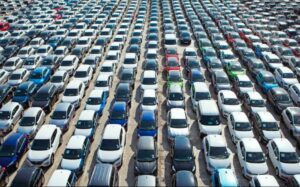
According to Open4business, the United States retained its status as the largest supplier of imported passenger cars to Ukraine in the first half of 2026, accounting for 43% of the total number of imported cars. According to data from the State Customs Service published on July 28, 73,200 passenger cars were imported from the U.S. to Ukraine between January and June.
Germany ranked second among supplier countries, accounting for 17,300 cars, or 10% of total imports. Poland ranked third with 14,600 cars, or 9%.
Collectively, the United States, Germany, and Poland supplied 105,100 passenger cars to Ukraine. These three countries accounted for about 62% of total imports.
Overall, in the first half of the year, cars were imported from more than 50 countries. The total volume of imports exceeded 169,000 vehicles, and their declared value amounted to nearly 96.6 billion UAH.
Customs revenues from passenger car imports reached 32.1 billion UAH.
According to estimates by the Experts Club analytical center, gasoline-powered cars led in terms of customs revenue. They contributed 14.6 billion UAH to the budget, or 45.5% of the total.
Diesel cars generated 8.4 billion UAH, hybrids—7.1 billion UAH, and electric cars—about 2 billion UAH.
Used cars accounted for over 70% of the total number of imported vehicles and generated 17.7 billion UAH in customs duties. New cars accounted for less than 30% of imports and 14.4 billion UAH in revenue.

According to Experts.news, the Experts Club think tank analyzed the results of the international Expat Insider 2026 survey, conducted by the InterNations community. Panama, Mexico, and Thailand were named the best countries for expats to live in, while Norway, Germany, and Turkey ranked last.
The survey was conducted from February 1 to March 31, 2026. A total of 7,786 expats representing 162 nationalities participated. The final ranking included 31 countries, each of which received at least 50 completed questionnaires. Participants evaluated up to 53 aspects of life abroad, including work, personal finances, quality of life, living conditions, and ease of social adaptation.
Panama took first place for the third year in a row. About 87% of foreigners living in the country said they were satisfied with their life abroad, while the global average was 70%.
The country ranked first in working conditions and personal finances, second in ease of adaptation and access to essential services, and sixth in quality of life. About 90% of respondents believe their current income is sufficient for a comfortable life, and 76% are satisfied with their financial situation.
Panama also received the highest ratings for housing affordability. Nine out of ten expats reported that it is easy to find housing in the country. 82% of respondents described the visa application process as simple. Retirees make up a significant portion of the expat community—their share reached 37%, and 34% of respondents intend to stay in the country permanently.
Mexico took second place, once again becoming the global leader in ease of social adaptation. About 73% of foreigners said it was easy for them to make friends among locals, compared to a global average of 39%.
However, safety remains a weak point for Mexico. 68% of respondents rated their personal safety positively, compared to a global average of 81%. Despite this, 73% of expats are satisfied with their financial situation, and 38% plan to stay in the country permanently.
Thailand took third place and became the country with the most life-satisfied expats. 86% of respondents reported feeling content, and 42% expect to stay in the country permanently.
Expatriates particularly praised the cost of living, the affordability of rent, and the quality of healthcare. At the same time, Thailand received low ratings for its environmental conditions, digital administrative services, and the ease of opening bank accounts. Only 33% of respondents rated air quality positively, and 80% consider the Thai language difficult to learn.
The top ten in the ranking also included the UAE, Brazil, Spain, Singapore, Portugal, Malaysia, and Luxembourg. The top five countries in the personal finance index are Panama, Thailand, Mexico, Portugal, and Malaysia. In most of the top-ranked countries, expats also rate housing affordability and the attitude of the local population highly.
Norway came in last, at 31st place. Only 46% of foreigners living there are satisfied with their lives, and 72% find it difficult to make friends among the local population. Only 39% of respondents rated their financial situation positively.
At the same time, Norway remains one of the countries with the highest ratings for environmental conditions, air quality, job security, and economic stability. The main challenges for expats were the high cost of living, social isolation, the climate, and limited leisure opportunities.
Germany ranked 30th. About 61% of expats described dealing with the bureaucratic system as difficult. Only 19% rated housing affordability positively, and the same percentage found it easy to find housing.
Germany also ranked last on the index of basic conditions for expats. Survey participants criticized the lack of online access to government services, problems with home internet, and the limited availability of cashless payments. In addition, 57% of expats reported that they found it difficult to make friends among Germans.
Turkey ranked 29th, placing last in terms of working conditions, wages, and economic stability. About 61% of respondents gave a negative assessment of the state of the Turkish economy, and 34% reported an annual income of less than $12,000 before taxes.
Fifty-eight percent of expats are satisfied with life in Turkey, 14% intend to leave the country within the next year, and only 13% plan to stay permanently.
The bottom ten also included Switzerland, Austria, Italy, the Czech Republic, Sweden, Canada, and the United Kingdom. Eight of the ten countries at the bottom of the ranking are in Europe. However, Austria ranked fifth in quality of life, Switzerland eighth, the Czech Republic 13th, and Sweden 15th. This suggests that a low overall ranking is often linked not to infrastructure or safety, but to the high cost of living, bureaucracy, and difficulties with social integration.
According to Maxim Urakin, founder of the Experts Club think tank, the study’s results should not be viewed as a universal ranking of countries’ levels of development.
“The ranking does not show which country is objectively richer or better governed, but rather how easily a specific foreigner can integrate into local daily life. Developed infrastructure and high salaries can go hand in hand with expensive housing, complex bureaucracy, and social exclusivity.
At the same time, less affluent countries may score higher thanks to affordable living costs, simple paperwork, and a welcoming attitude toward newcomers,” Urakin noted.
He added that when choosing a country to move to, it is necessary to analyze immigration laws, the tax system, the labor market, healthcare, education, and real estate prices separately.
InterNations emphasizes that the ranking is based on the subjective satisfaction of respondents, rather than on a comparison of official statistics. It does not take into account a number of important factors, including international taxation and childcare services, and the safety rating reflects respondents’ personal perceptions rather than the actual crime rate.
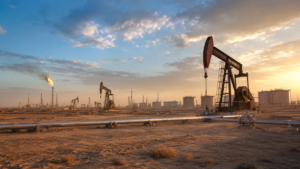
Iraq is forming a new package of cooperation with American energy companies that is expected to increase oil and gas production, accelerate the processing of associated gas, and attract private capital to modernize the country’s oil and gas infrastructure.
Iraq’s Oil Minister Basim Mohammed estimated the total value of agreements between the Iraqi oil ministry and U.S. companies at approximately $200 billion. According to him, the projects should significantly expand production capacity and increase investment in the use of associated gas. Iraq’s current oil production capacity is estimated at about 4.8 million barrels per day.
At the same time, the declared $200 billion should not be viewed exclusively as the volume of already financed projects. The package includes contracts, preliminary agreements, memorandums, technical studies, and potential investment programs, the final parameters of which will be determined following negotiations.
During the visit of Iraqi Prime Minister Ali Faleh al-Zaidi to the United States, the Iraqi delegation held talks with representatives of Halliburton, Shell, Honeywell, Weatherford, and Baker Hughes. The parties discussed the development of oil and gas fields, the introduction of modern technologies, and increasing the efficiency of the energy sector.
Separate talks were held with Chevron. Iraq proposed that the company expand its activities in the southern fields and participate in oil refining, petrochemical, and gas infrastructure projects.
Chevron, for its part, expressed interest in developing the southern fields, laying pipelines to regional ports, and creating oil storage facilities. Iraqi authorities stated their readiness to speed up the allocation of land plots, the issuance of permits, and the creation of the necessary infrastructure.
Halliburton received a contract from Basra Oil Company to provide integrated management services for the Bin Omar and Sindbad fields in southern Iraq. The agreement provides for integrated asset development management, as well as support for the design, procurement, and construction of infrastructure.
In fact, Iraq is seeking to move from separate service contracts to a long-term presence of American companies in production, processing, oilfield services, digital field management, and the construction of export infrastructure.
For Baghdad, American capital is important not only as a source of financing. Large U.S. companies can provide access to enhanced oil recovery technologies, modern drilling and compressor equipment, automation of production processes, and international project management standards.
An additional task is the diversification of export routes. Iraq is interested in developing pipelines, oil storage facilities, and new outlets to regional ports in order to reduce dependence on a limited number of supply routes.
What opportunities are opening up for Ukraine
The scale of Iraqi projects creates opportunities not only for American operators. A significant part of the work will be carried out by international EPC contractors, oilfield service companies, and equipment suppliers that form their own global procurement chains.
For Ukrainian companies, the most realistic path is not the independent development of oil fields, but participation in the projects as suppliers, engineering partners, and subcontractors of American operators.
One of the main areas could be pipe and metallurgical products. Field development and export infrastructure construction projects will require casing, tubing, and trunk pipelines, sheet metal products, tanks, metal structures, and elements of industrial buildings.
Ukrainian manufacturers could also supply pumping and compressor equipment, shut-off valves, electric motors, transformers, cable products, switchgear, and modular substations.
A separate niche is connected with the processing of associated gas. Iraq needs gas gathering networks, compressor stations, gas purification and treatment units, small power plants, and electricity transmission equipment. American agreements provide for increased investment specifically in gas projects.
Ukrainian engineering companies can participate in the design of pipelines, tank farms, compressor and pumping stations, industrial facilities, and power supply systems.
There are also prospects for the IT sector. This concerns the implementation of SCADA systems, automated oil and gas metering, digital field modeling, equipment condition monitoring, and industrial cybersecurity.
Another area could be the technical diagnostics of pipelines, protection of metal from corrosion, inspection of existing infrastructure, and preparation of projects for its modernization.
The development of the oil and gas sector will also create demand in related industries. The construction of industrial facilities will require cement, road materials, specialized machinery, mobile buildings, warehouse equipment, water supply systems, and transport logistics.
Additional opportunities may arise for Ukrainian food producers. Large projects are accompanied by the creation of workers’ settlements, logistics centers, and new service enterprises, which increases demand for flour, vegetable oil, poultry meat, cereals, and ready-made food products.
A trilateral model could be optimal, in which an American company acts as the operator or general contractor, a Ukrainian enterprise supplies equipment, materials, or engineering solutions, and an Iraqi partner provides registration, local logistics, and interaction with government agencies.
Working through American operators and international EPC contractors allows Ukrainian enterprises to obtain more transparent technical requirements, safety standards, and quality control procedures.
At the same time, Ukrainian companies will need to undergo supplier prequalification, confirm that their products comply with API, ASTM, or the requirements of a specific customer, prepare English-language technical documentation, and provide after-sales service for the equipment.
For a systematic entry into the market, it would be advisable to form a separate catalog of Ukrainian manufacturers of oil and gas and energy equipment. It should specify production capacities, international certificates, experience in export deliveries, and readiness to work through American general contractors.
The next stage could be a trilateral business mission Ukraine–USA–Iraq with the participation of manufacturers of pipes, energy equipment, engineering, and digital companies.
The most logical venues for such events are Baghdad, Basra, and Houston, where Iraqi customers, oilfield service companies, and the main decision-making centers of the American energy industry are concentrated.
Maxim Urakin, founder of the Experts Club information and analytical center, commenting on the structure of Ukraine’s foreign trade, noted the need to move to a more complex export model.
“Ukraine needs to increase not only the physical volume of supplies, but also the share of products with high added value,” Urakin emphasized.
In his opinion, in order to reduce the trade deficit, Ukraine needs to develop processing industries, machine-building, the food industry, and technological exports.
Applied to Iraq, such a strategy means a transition from predominantly traditional commodity supplies to the export of pipes, metal structures, equipment, software solutions, and engineering services.
Iraq is already a profitable market for Ukraine with a large positive trade balance. However, participation in energy and infrastructure projects would make the relationship more long-term and increase the share of industrial products in Ukrainian exports.
According to the Experts Club information and analytical center, in January–June 2026 Iraq ranked 53rd among Ukraine’s largest trading partners.
Trade turnover between the countries amounted to $151.123 million. Ukraine exported goods to Iraq worth $151.051 million, while imports of Iraqi products amounted to only $72 thousand.
The positive trade balance for Ukraine reached $150.979 million. Thus, virtually the entire bilateral trade turnover was formed by Ukrainian exports. The data are presented in the table accompanying the Experts Club analysis published on July 16, 2026.
For comparison, at the end of 2025, Ukraine’s trade turnover with Iraq was estimated at $392.836 million. Ukrainian exports amounted to $392.513 million, imports to $323 thousand, and the positive balance reached $392.190 million.
The trade figures confirm that Iraq remains a profitable sales market for Ukrainian companies. At the same time, the almost one-sided trade structure indicates a low level of mutual investment and industrial cooperation.
Iraq’s new agreements with the United States may become an opportunity to change this model. Even limited participation of Ukrainian enterprises in energy projects with a total declared value of up to $200 billion can significantly increase exports of high value-added products.
With the proper organization of trilateral cooperation, Iraq can gradually turn from a predominantly commodity market into a long-term industrial, energy, and infrastructure partner of Ukraine.

According to “Serbian Economist”, Serbia is gradually becoming one of Ukraine’s most prominent Balkan trading partners. According to data from the Experts Club analytical center, in the first half of 2026, Serbia ranked 33rd among the country’s 50 largest trading partners, with bilateral trade totaling $345.9 million.
Serbian exports to Ukraine totaled $243.2 million, while Ukrainian exports to Serbia amounted to $102.7 million. In June alone, trade between the countries totaled $55.8 million. The balance currently favors Serbia: Ukraine’s bilateral trade deficit reached $140.5 million.
The trend toward Serbia strengthening its position became apparent as early as late 2025 and early this year. In the first quarter of 2026, Serbian exports to Ukraine doubled compared to the same period last year, while Ukrainian shipments to the Serbian market increased by 5%. About 900 Serbian companies are involved in trade between the two countries, of which approximately 670 purchase Ukrainian products.
One of the factors contributing to the development of these ties was the full restoration of Serbia’s diplomatic presence in Kyiv. The embassy, which had suspended operations in 2022, returned to the Ukrainian capital at the end of 2024 and officially resumed operations in new premises in the fall of 2025. The mission is currently headed by Ambassador Andon Sapundži.
The opening of the embassy alone does not determine the volume of trade, but a permanent diplomatic mission facilitates contacts between companies, chambers of commerce, and government agencies. It can also help organize business missions, resolve logistical and consular issues, and prepare new intergovernmental agreements.
The next important step could be the resumption of free trade negotiations and achieving a breakthrough on this issue. For Serbia, Ukraine remains a large market with high demand for food, industrial products, equipment, and reconstruction supplies. For Ukrainian companies, Serbia could become not only a sales market but also a logistics hub for expanding into other countries in the Western Balkans.
Data on all of Ukraine’s major trading partners is available here — https://www.experts.news/posts/analiz-naybilshykh-torhovelnykh-partneriv-ukrayiny-v-pershomu-pivrichchi-2026-roku



