

On July 4, the United States marks the 250th anniversary of the adoption of the Declaration of Independence — the key document that began the formation of the American state. The central events are taking place in Washington, where the anniversary is combined with the traditional Independence Day and the federal America250/Freedom 250 program.
The National Mall in Washington has become the main venue for the celebration. Under the Freedom 250 program, the day will feature the Great American State Fair, FIFA Fan Zone, aviation demonstrations and flyovers above the center of the capital, an evening concert program, an address by US President Donald Trump, and a major fireworks display. Organizers said the fireworks show is expected to be the largest in history and begin at 10:30 p.m. local time.
The anniversary is not taking place without adjustments. Because of extreme heat in Washington, organizers moved some activities to a later time, expanded cooling points, water stations, and medical support. The National Independence Day Parade, which was supposed to take place on July 4, was canceled because of an excessive heat warning.
Events are also taking place in other US cities. Associated Press notes that the celebration includes fireworks, concerts, and public ceremonies in Washington, New York, Chicago, Los Angeles, and other cities, while the anniversary is taking place against the backdrop of political polarization and debates about the country’s future.
“The 250th anniversary of the United States is not only a historic date, but also an occasion to assess the balance of strength and vulnerability of the world’s largest economy. America retains first place in nominal GDP, military spending, the depth of its financial market, the role of the dollar, and its energy base, but at the same time enters the anniversary year with debt of almost $39.4 trillion. For the global economy, this means that the United States remains the main center of power, but its fiscal sustainability is becoming one of the key risks of the next decade,” said Maksym Urakin, founder of the Experts Club analytical center.
Historically, Independence Day is associated with the decision of the 13 American colonies to sever political ties with Great Britain. The Declaration of Independence was adopted by the Continental Congress on July 4, 1776. Formal international legal recognition of US independence by Great Britain came later — under the Treaty of Paris of 1783, which ended the War of Independence.
Today, the United States remains a federal presidential republic consisting of 50 states and the federal District of Columbia. The country’s population, according to the IMF estimate, is about 343 million people, while nominal GDP in 2026 is estimated at approximately $32.38 trillion, preserving the United States’ status as the world’s largest economy at current prices.
The United States also retains several leading global positions. According to SIPRI, the country remains the world’s largest military spender: in 2025, US spending amounted to $954 billion, or about one-third of global military expenditure. According to the EIA, the United States set a new oil production record in 2025 — 13.6 million barrels per day — remaining the world’s largest oil producer. The US dollar, according to IMF COFER, accounted for 57.13% of allocated global foreign exchange reserves in the first quarter of 2026, remaining the world’s leading reserve currency.
The American financial market also remains the largest center of global capital. According to the World Federation of Exchanges, the two largest US exchanges alone — Nasdaq and NYSE — each had tens of trillions of dollars in domestic market capitalization at the end of 2025, significantly ahead of most global exchanges.
The main weak point of the United States in the anniversary year is the national debt. According to the US Treasury, as of July 2, 2026, total federal debt stood at $39.375 trillion, of which $31.679 trillion was debt held by the public.
The US Congressional Budget Office forecasts that the federal deficit in fiscal year 2026 will amount to $1.9 trillion, or 5.8% of GDP. Debt held by the public, according to the CBO estimate, will reach 101% of GDP by the end of 2026 and rise to 120% of GDP by 2036.
Thus, the United States enters its 250th anniversary as a country with a unique combination of global leadership and internal imbalances. The American economy remains the largest in the world, the dollar is the key currency of the international system, and the capital market is the main source of liquidity. But the scale of the debt and chronic budget deficits are increasingly becoming factors that investors, US allies, and competitors take into account no less than the country’s technological, military, and financial power.

The article presents key macroeconomic indicators of Ukraine and the global economy as of the end of March 2026. The analysis was prepared on the basis of current data from the State Statistics Service of Ukraine (SSSU), the National Bank of Ukraine (NBU), the International Monetary Fund (IMF), the World Bank, as well as leading national statistical agencies (Eurostat, BEA, NBS, ONS, TurkStat, IBGE). Maksym Urakin, PhD in Economics and founder of the Experts Club information and analytical center, presented an overview of current macroeconomic trends that determined the situation in Ukraine and the world at the beginning of 2026.
Macroeconomic indicators of Ukraine
As of the end of March 2026, the Ukrainian economy remained in a mode of managed macrofinancial stabilization, but the first quarter showed a noticeable deterioration in the balance of risks compared with the beginning of the year. After a relatively favorable January, when inflation was declining, reserves were at a historically high level, and the NBU began cautious easing of interest rate policy, the situation became more complicated in February-March. Inflation accelerated again, international reserves declined for the second month in a row, the foreign exchange market required significant interventions by the regulator, and the first quarterly GDP estimate showed a decline.
According to the preliminary estimate of the State Statistics Service, Ukraine’s real GDP in Q1 2026 decreased by 0.6% compared with Q1 2025, and by 0.7% compared with the previous quarter, taking into account the seasonal factor. Nominal GDP amounted to UAH 2,047.2 billion. This became an important signal that economic recovery remains unstable and highly sensitive to energy, military and foreign trade shocks.
In its April Inflation Report, the National Bank worsened its forecast for Ukraine’s real GDP growth in 2026 to 1.3%, taking into account further destruction of infrastructure, larger electricity deficits and the effects of a significant increase in energy prices. This means that even if international support is maintained and the situation on the foreign exchange market remains controlled, the economy is entering 2026 on a lower growth trajectory than previously expected.
“The first quarter of 2026 showed that the Ukrainian economy has still not moved into a classic recovery phase. We have a stabilization model that works thanks to international financial support, budget expenditures, business adaptation and NBU policy. But the decline in GDP in the first quarter indicates that the margin of safety remains limited. Energy destruction, labor shortages, weak exports and military risks are quickly affecting the real sector. Therefore, the main task for 2026 is to gradually restore the productive base of the economy,” Urakin noted.
Inflation dynamics in March also became less favorable. According to the State Statistics Service, as commented on by the NBU, consumer inflation accelerated to 7.9% year-on-year in March 2026. Month-on-month, prices rose by 1.7%. After the January slowdown to 7.4% and the February acceleration to 7.6%, the March figure confirmed that the disinflationary trend had become less stable.
The NBU explained the March acceleration primarily by the increase in prices for raw food products, fuel and certain services. Additional pressure was created by energy risks, rising business costs, the impact of external energy prices and increasing geopolitical tension. At the same time, core inflation remained closer to the forecast trajectory, which allowed the regulator not to move to a sharp tightening of policy, but at the same time limited the room for a further rapid reduction in the rate.
At the end of March, the NBU key policy rate remained at 15.0%. On March 20, the Board of the National Bank decided to keep it unchanged after the January reduction from 15.5% to 15.0%. The regulator explained this by the need to maintain the attractiveness of hryvnia assets, preserve the stability of the foreign exchange market and control inflation expectations.
“March effectively paused the discussion about rapid monetary policy easing. Inflation accelerated, the foreign exchange market remained tense, and external risks increased. Under such conditions, keeping the rate at 15% was a logical decision. Ukraine cannot afford to stimulate the economy at the cost of losing confidence in the hryvnia. In a wartime economy, the stability of expectations is often more important than a short-term reduction in the cost of credit,” Urakin emphasized.
The foreign exchange sector remained controlled but required significant support from the NBU. As of April 1, 2026, Ukraine’s international reserves amounted to almost $52.0 billion. In March, they decreased by 5.0%. This dynamic was caused by the National Bank’s foreign exchange interventions and the country’s debt payments in foreign currency, which were only partially compensated by inflows from international partners and the placement of foreign currency domestic government bonds.
Despite the decline, reserves remained high by historical standards and continued to serve as the main financial safety cushion. At the same time, the very need for large interventions indicated that the private foreign exchange market continued to have a structural currency deficit. Ukraine imports significantly more than it exports, and therefore exchange rate stability is largely supported by external financing and the NBU’s reserves.
Foreign trade in the first quarter confirmed this problem. According to the State Customs Service, Ukraine’s trade turnover in January-March 2026 amounted to $33.5 billion. Imports reached $23.4 billion, while exports amounted to $10.1 billion. Thus, the goods deficit over three months amounted to about $13.3 billion, and imports were more than twice as high as exports.
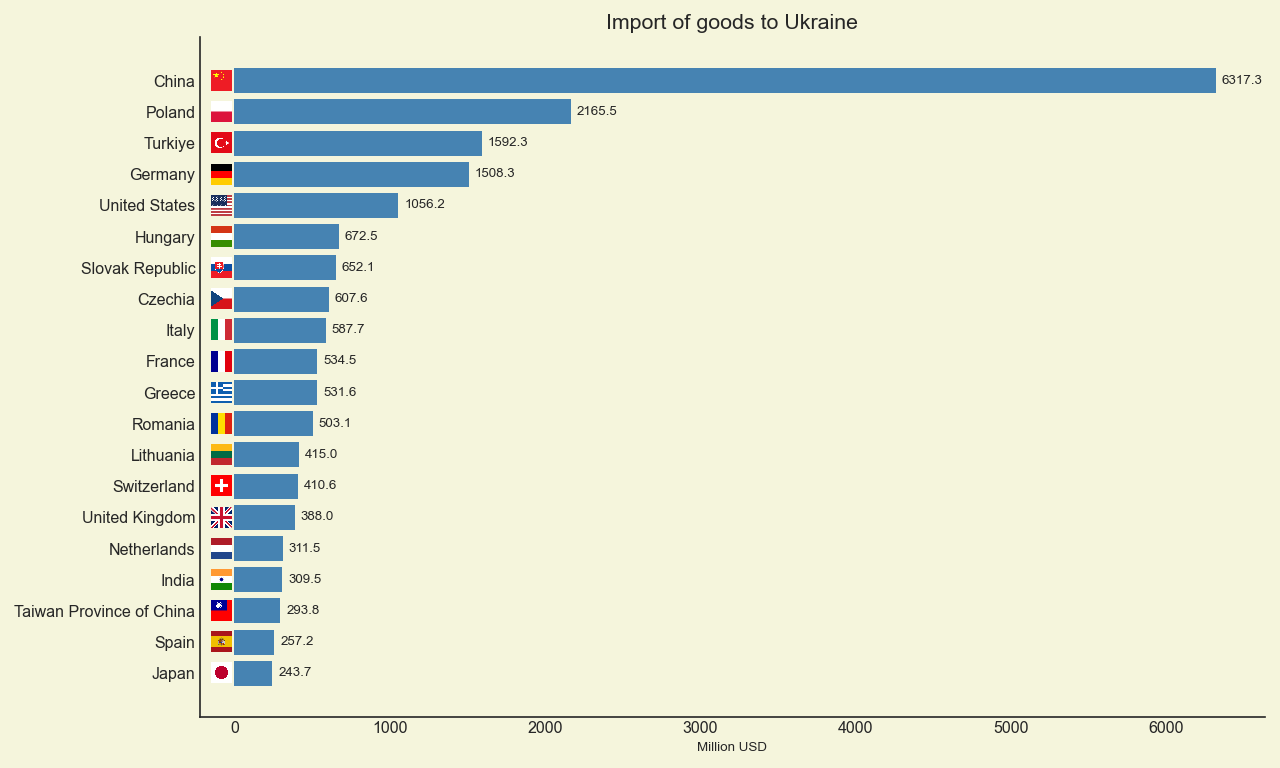
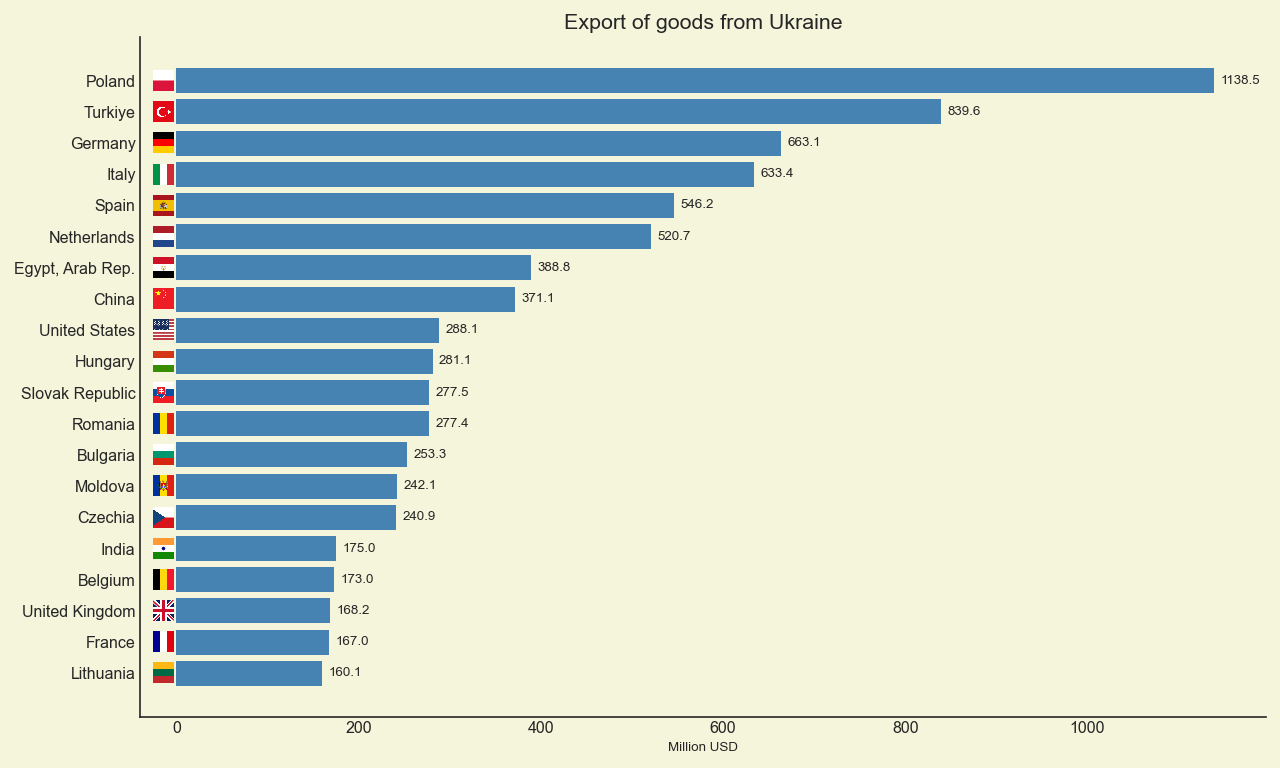
In the import structure, machinery, equipment, transport, fuel and energy goods, and chemical industry products played a key role. China, Poland and Turkey remained the largest import trading partners. The export base remained significantly narrower: the main positions were food products, agricultural products, metals and certain machinery products. The main export destinations remained EU countries and Turkey.
“The trade deficit of the first quarter is one of the most important indicators of the vulnerability of the Ukrainian economy. Reserves and external assistance make it possible to pass through this period without a currency crisis, but they do not replace the country’s own export capacity. When imports are more than twice as high as exports, it means that the country is financing a significant part of its needs through external resources. In wartime conditions this is inevitable, but strategically such a model cannot be permanent. Ukraine must increase exports of products with higher added value, develop processing, logistics, energy autonomy and the defense-industrial complex,” Urakin stressed.
The budget situation following the results of the first quarter also remained tense. According to the Ministry of Finance, UAH 734.6 billion was received by the general fund of the state budget in January-March 2026. At the same time, cash expenditures of the general fund for this period amounted to UAH 916.4 billion, which is 7.1% more than in the corresponding period of the previous year. In March, expenditures amounted to UAH 369.1 billion.
Expenditures on security and defense in January-March amounted to UAH 570.9 billion, or 62.3% of all expenditures of the general fund. This confirms that the state budget in 2026 remains primarily a war budget. The largest areas of expenditure included remuneration in the budget sector with accruals, social security, subsidies and transfers to enterprises, payment for goods and services, servicing of public debt and transfers to local budgets.
“The budget of the first quarter of 2026 shows that the state maintains financial manageability, but the price of this manageability is very high. More than 60% of general fund expenditures are directed to security and defense, and this is absolutely understandable in wartime conditions. But such a structure means that the room for classic investment in development is limited. Therefore, international support, the domestic government bond market and the government’s ability to expand its own tax base through the restoration of economic activity remain critically important,” Urakin noted.
Global economy
As of the end of March 2026, the global economy remained resilient, but less predictable than at the beginning of the year. While in January the IMF’s baseline scenario projected global economic growth of 3.3% in 2026, in the April World Economic Outlook the Fund revised its estimates amid new geopolitical tensions in the Middle East. Under the baseline assumption of a limited conflict, the IMF forecast global growth of 3.1% in 2026 and 3.2% in 2027.
The IMF noted that the global economy had once again faced a shock related to war, rising commodity prices, stronger inflation expectations and tighter financial conditions. This meant that the global environment for Ukraine became less favorable: energy prices, risks to trade and the cost of capital again began to play a greater role.
The United States remained one of the main centers of global resilience. In the first quarter of 2026, U.S. real GDP grew by 2.1% year-on-year, according to the BEA estimate. Growth was supported by investment, exports, government spending and consumer spending. At the same time, inflation in the United States accelerated noticeably in March: the consumer price index rose by 3.3% year-on-year after 2.4% in February, while core CPI stood at 2.6%.
The Federal Reserve in March kept the target range for the federal funds rate at 3.5–3.75%. This meant that U.S. monetary policy remained restrictive, while expectations of a rapid rate cut were postponed. For countries with elevated risk, including Ukraine, this meant the preservation of a relatively high cost of global capital.
The eurozone was in a more difficult position. Its economic growth remained weak, while inflation again rose above the ECB’s target. According to Eurostat’s preliminary estimate, annual inflation in the eurozone in March 2026 stood at 2.5%, while the final estimate later showed 2.6%. In February, the figure was 1.9%, meaning that March brought a noticeable acceleration of price pressure. The main factor was energy, while core inflation remained more moderate.
The European Central Bank in March kept key rates unchanged: the deposit rate at 2.0%, the main refinancing operations rate at 2.15%, and the marginal lending facility rate at 2.40%. For Ukraine, the eurozone remains the most important external economic environment due to trade, financial assistance, EU integration, migration flows and logistics corridors. However, the weak growth rate in Europe limits the potential for a rapid increase in Ukrainian exports.
The United Kingdom also entered 2026 with a combination of moderate growth and an elevated inflation background. In March, the British CPI rose to 3.3% year-on-year after 3.0% in February. The Bank of England kept the Bank Rate at 3.75%, reflecting the regulator’s caution in the face of the risk of a new inflation acceleration. For the European region as a whole, this meant that the cycle of rapid monetary easing had not begun.
“The global economy did not enter a recession in the first quarter of 2026, but it became noticeably more nervous. The United States maintains stable growth, but is facing a new inflation acceleration. The eurozone has a weaker economic impulse and again sees inflation above the target. The United Kingdom also remains in a mode of cautious monetary policy. For Ukraine, this means that the external world does not create a catastrophic background, but also does not provide an easy impulse for recovery. Under such conditions, it is impossible to rely only on external demand,” Urakin noted.
The Chinese economy maintained relatively strong dynamics in the first quarter of 2026. According to the National Bureau of Statistics of China, China’s GDP grew by 5.0% year-on-year in Q1, and by 1.3% quarter-on-quarter. Nominal GDP amounted to about 33.4 trillion yuan. At the same time, inflation remained moderate: CPI rose by 1.0% year-on-year in March, and averaged 0.9% in January-March.
China continued to demonstrate a strong manufacturing base and export potential, but structural problems — weaker domestic demand, the real estate market, debt burden and dependence on external markets — remained important constraints. For Ukraine, China remained a key source of imports, primarily machinery, equipment, electronics and industrial goods.
India retained its status as one of the main drivers of global growth. According to the government’s first advance estimate, India’s real GDP in the 2025/26 fiscal year was expected to grow by 7.4%, while nominal GDP was expected to grow by 8.0%. The main driver remained the services sector, as well as domestic demand and public investment. The Indian economy remained one of the most convincing examples of combining high growth with relatively controlled inflation.
Turkey remained an example of an economy with relatively high business activity, but a very difficult inflationary legacy. According to official TurkStat data, in March 2026 consumer prices rose by 1.94% month-on-month and by 30.87% year-on-year. This was lower than in February, when annual inflation was 31.53%, but still remained an extremely high level. At the same time, the Turkish economy grew by 3.6% in 2025, which indicated the preservation of domestic demand despite inflationary risks.
Brazil looked more balanced among large emerging economies. According to IBGE, Brazil’s GDP in 2025 grew by 2.3%, to 12.7 trillion reais at current prices. Growth was observed in the agricultural sector, industry and the services sector. According to the preliminary IPCA-15 indicator, inflation in March 2026 amounted to 0.44% for the month and 3.90% over the last 12 months. This confirmed that Brazil maintained a relatively controlled inflation background, although its economy also felt the impact of high rates and external uncertainty.
“China, India, Turkey and Brazil show different development models of large emerging economies. China maintains scale and manufacturing strength, but has structural imbalances. India demonstrates the highest dynamics among major economies and relies on domestic demand and the services sector. Turkey is growing, but pays for it with high inflation. Brazil is moving more slowly, but more balanced. For Ukraine, it is important to look at these examples practically: in global competition, those countries win that can simultaneously maintain macro-stability, production, exports and domestic investment demand,” Urakin believes.
Conclusions
As of the end of March 2026, Ukraine maintained macrofinancial manageability, but the first quarter demonstrated the fragility of economic stabilization. Real GDP in Q1 decreased by 0.6% year-on-year, inflation accelerated to 7.9% in March, the key policy rate remained at 15.0%, international reserves declined to about $52.0 billion, and the goods deficit in January-March exceeded $13 billion. The budget remained functional, but its structure was fully subordinated to wartime needs: more than 60% of general fund expenditures were directed to security and defense.
The main risks for Ukraine remained wartime losses, destruction of energy infrastructure, weak exports, labor shortages, high budget dependence on external financing and the structural foreign exchange deficit of the private sector. Positive factors included a significant level of international reserves, the NBU’s controlled policy, continued international support, business adaptability and the state’s ability to fulfill key budget obligations.
The global economy in the first quarter of 2026 remained relatively resilient, but less stable than at the beginning of the year. The IMF forecast global growth of 3.1% in 2026, provided that the conflict in the Middle East remained limited. The United States maintained positive dynamics but faced a new inflationary impulse; the eurozone remained weak in terms of growth rates and again saw inflation above the target; China demonstrated 5% growth; India remained the main driver among large economies; Turkey struggled with high inflation; Brazil maintained moderate, more balanced dynamics.
“March 2026 became a moment for Ukraine to test the real strength of its stabilization model. High reserves, international assistance and the NBU’s controlled policy allow the system to be kept in working condition. But the decline in GDP in the first quarter, accelerating inflation and a large trade deficit show that financial stability alone is not enough. The next stage must be the transition from a survival model to a model of productive recovery. This means investment in energy, the defense-industrial complex, processing, logistics, export production, technologies and human capital. Without this, even significant reserves and external assistance will remain only a safety cushion, not a source of long-term development,” Maksym Urakin concluded.
The monthly analytical and statistical product “Economic Monitoring” is available to clients of Interfax-Ukraine.
Head of the “Economic Monitoring” project, PhD in Economics Maksym Urakin

The political crisis in Romania has deepened after parliament failed to approve the government proposed by Prime Minister Adrian Vestea. The cabinet received 189 votes in favor, falling short of the required minimum of 233, which prevented it from being sworn in and beginning its work.
Following the failed vote, Romanian President Nicușor Dan is expected to hold a new round of consultations with the parties represented in parliament and propose a new candidate for the position of prime minister. This could be either a new politician or a candidate previously discussed, provided the parties can agree on a new majority configuration.
The situation is complicated by the fact that this is the second consecutive failed attempt to form a new government. Previously, candidate Yevhen Tomak withdrew his nomination after failing to secure sufficient support in parliament. Now, the failure of Veshta’s cabinet increases the risk of a protracted political deadlock.
According to Romanian procedures, if two attempts to form a government within the established timeframe do not result in the cabinet’s approval, the president may have grounds to dissolve parliament and call for early elections. Formally, such a scenario is becoming increasingly likely, but politically it remains risky for pro-European parties, as the crisis strengthens the positions of right-wing populist and Euroskeptic forces.
Prolonged political instability in Bucharest could have consequences not only for domestic economic policy but also for regional stability.
Experts at the Experts Club think tank note that the current crisis in Romania reflects a broader trend in Central and Eastern European countries—the fragmentation of party systems, growing distrust of traditional political forces, and the rise of parties that base their campaigns on criticism of Brussels, migration policy, support for Ukraine, and fiscal discipline.
For Ukraine, the situation in Romania is of particular importance. Bucharest remains an important partner for Kyiv in the areas of security, transportation infrastructure, and European integration. Significant volumes of Ukrainian trade pass through Romania, and the Danube region has taken on strategic importance for Ukrainian exports since the start of the full-scale war.
According to an assessment by Experts Club, the baseline scenario for now remains that early elections will not be held, but rather that political parties will attempt to agree on a new, possibly more limited or technical government. The reason is simple: early elections could strengthen parties that are already benefiting from the crisis of confidence in traditional political elites.
At the same time, every new failed attempt to form a government raises the cost of compromise. The longer Romania remains without a fully functioning government, the more difficult it will be to make decisions regarding the budget, reforms, relations with the EU, and economic stabilization.
Romania is already facing a high budget deficit, inflationary pressures, and the need to maintain access to European funding. Under these conditions, a political crisis could increase uncertainty for investors and slow down the implementation of reforms necessary to support macroeconomic stability.
He noted that Romania is entering a period of heightened political turbulence, where the issue of forming a government is directly linked to exchange rate stability, economic policy, and the country’s role in the region.
early elections, EXPERTS CLUB, GOVERNMENT, RISK, ROMANIA, voting

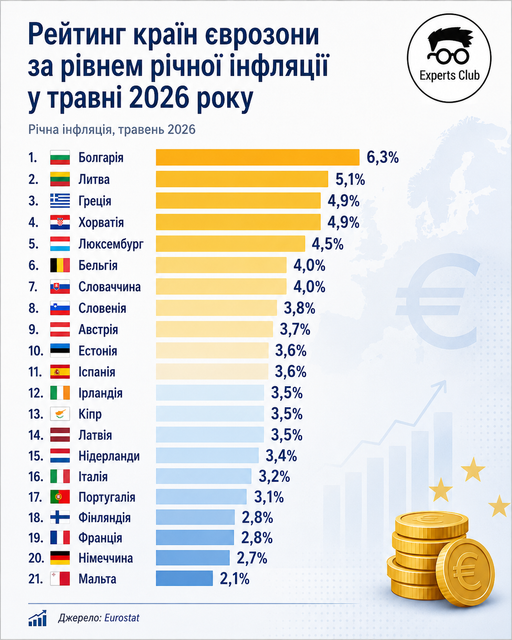
Inflation in the eurozone in May 2026 accelerated to 3.2% year-on-year against 3.0% in April, according to Experts Club. data.
In the European Union as a whole, annual inflation amounted to 3.3%. The highest indicator among all EU countries was recorded in Romania — 9.7%. However, Romania is not part of the eurozone, therefore it is not taken into account in the ranking of the countries of the currency bloc.
Among the eurozone countries, Bulgaria became the anti-leader, where annual inflation in May reached 6.3%. Bulgaria joined the eurozone on January 1, 2026, and became the 21st country of the monetary union.
Second place in the eurozone was taken by Lithuania with inflation of 5.1%, third place — Greece with 5.0%. The lowest indicators among eurozone countries were recorded in Malta — 2.1%, Germany — 2.7%, and France — 2.8%.
Thus, in May two different rankings were formed. For the EU as a whole, the main anti-leader was Romania, which remains outside the eurozone. For the eurozone, Bulgaria became the leader in price growth.
Inflation anti-leaders in the EU in May 2026:
Romania — 9.7%
Bulgaria — 6.3%
Lithuania — 5.1%
Inflation anti-leaders in the eurozone in May 2026:
Bulgaria — 6.3%
Lithuania — 5.1%
Greece — 5.0%
According to the analytical center Experts Club, the difference between the EU ranking and the eurozone ranking is important for the correct interpretation of the data. The eurozone reflects the situation in countries with a single currency and the common monetary policy of the ECB, while the EU also includes countries with national currencies, including Romania, Poland, the Czech Republic, Hungary, Denmark and Sweden.
“Romania cannot be included in the eurozone ranking, but it also cannot be ignored. It is the main inflation anti-leader of the entire EU. For business, this means that inflation risks in Europe differ greatly not only between countries, but also between currency zones. In the eurozone, the most problematic case now is Bulgaria; in the EU as a whole — Romania,” said Maksym Urakin, founder of Experts Club.
The main contribution to eurozone inflation in May came from services, energy carriers, food products, alcohol and tobacco, as well as industrial goods excluding energy. Energy prices rose by 10.9% year-on-year, services became 3.5% more expensive, and food products, alcohol and tobacco — by 2.0%.

In January–May 2026, Ukraine increased its imports of aluminum and aluminum products by 20% compared to the same period last year, reaching $247.912 million.
In May, imports of aluminum and aluminum products amounted to $58.220 million.
At the same time, exports of aluminum and aluminum products in January–May of this year rose by 25.3% compared to the same period last year—to $72.393 million. In May, $18.641 million worth of aluminum was exported.
As reported, Ukraine increased imports of aluminum and aluminum products by 15.3% in 2025 compared to 2024, reaching $514.098 million. Exports of aluminum and aluminum products in 2025 rose by 22.9% to $152.919 million.
Aluminum is widely used as a structural material. The main advantages of aluminum are its lightness, formability, corrosion resistance, high thermal conductivity, and the non-toxicity of its compounds. In particular, these properties have made aluminum extremely popular in the production of cookware, aluminum foil in the food industry, and for packaging. The first three properties have made aluminum the primary raw material in the aviation and aerospace industries (though it has recently been replaced by composite materials, primarily carbon fiber). After construction and packaging production—aluminum cans and foil—the largest consumer of the metal is the energy sector.
For a more detailed overview of global aluminum production from 1970 to 2024, watch the video on the Experts Club YouTube channel.

In January–May of this year, Ukrainian companies increased imports of copper and copper products by 9.4% in monetary terms compared to the same period last year, reaching $85.297 million.
According to customs statistics released by the State Customs Service of Ukraine on Friday, exports of copper and copper products during the period increased by 1.3% to $39.247 million. In May, copper imports totaled $20.421 million, while exports amounted to $9.237 million.
As reported, in 2025, Ukrainian companies increased imports of copper and copper products by 23.2% in monetary terms compared to the previous year, reaching $173.453 million, while exports of copper and copper products rose by 17.7% to $103.848 million.
Copper is widely used in electrical engineering, in the production of pipes, for creating alloys, in medicine, and in other industries.
Earlier, the Experts Club information and analytical center released a video dedicated to global copper production and leading producing countries – https://youtube.com/shorts/_h8iU50z8C0?si=a-XkgGEfeUxseQNa



