
Global food prices fell 1.2% in October compared with the revised September figure, according to the monthly report by the FAO (the UN Food and Agriculture Organization).
The FAO Food Price Index stood at 133.9 points in October, down 1.6 points from the revised September figure. The index was 5.9% higher than in October 2025 but 16.4% below the peak reached in March 2022.
The cereal price index fell by 4.5% compared with September. In particular, global wheat prices declined after rising for the previous four consecutive months, reflecting lower international demand and improved harvest forecasts, particularly in Argentina.
Global corn prices, which reached a three-year high in September, also fell in October amid expectations of a good harvest in the U.S. and ample supply from major exporters in South America, as well as hopes for a reduction in tensions in the Black Sea region, the report states.
Meanwhile, the sub-index for all types of rice rose by 1.6% due to delayed harvests in several major exporting countries and challenging weather conditions.
The vegetable oil price index in October was 0.3% higher than in September, as rising prices for soybean and sunflower oil fully offset the decline in rapeseed oil prices. Global soybean oil prices reached their highest level since late 2022 due to strong demand for raw materials used in biofuel production and a seasonal decline in supplies from South America.
The meat price index fell by 1.2% in October. This was driven by weaker prices for pork, lamb, and beef, while poultry prices remained generally stable.
The dairy price index last month was 1.1% lower than in September, largely due to lower prices for butter and cheese, while milk powder prices continued to rise.
The sugar price index rose for the fourth consecutive month and reached its highest level since December 2024. The increase compared to September was 6.6%, and compared to October 2025, it was 28.8%. The increase is mainly due to difficulties with the sugarcane harvest and processing caused by heavy rains in Brazil’s key sugarcane-growing region, as well as concerns about sugar production in India, the EU, and Thailand during the 2026–27 agricultural year, the report notes.
The FAO Food Price Index is a weighted average that tracks changes in international prices for five major food commodity groups.
In addition, the FAO raised its forecast for global grain production in 2026 to 2.999 billion metric tons from the previously expected 2.979 billion metric tons. At the same time, the figure is expected to be lower than the all-time high recorded a year earlier.
Production is expected to decline across all major grain crops, with the drop in rice production (by 2.5%, to 552 million metric tons) potentially marking the first decline in four years.
The organization expects global grain stocks to rise by 1.8%, or 17.2 million metric tons, driven by increased wheat stocks in Russia and Ukraine, where export disruptions are occurring.
According to the FAO forecast, global grain trade will decline by 3.3% to 507.7 million metric tons in the 2026–27 agricultural year.

Due to the security situation in the capital, the International Exhibition Center (IEC) in Kyiv has rescheduled three major industry exhibitions—WorldFood Ukraine, Agro2Food, and inSKLAD, originally planned for October 28–30, 2026—to spring 2027. The food industry exhibitions WorldFood Ukraine and Agro2Food will take place on April 21–23, while the warehouse logistics exhibition inSKLAD will be held on May 11–13.
According to a press release from ARS Capital, the decision to postpone the events was made with the safety of participants, visitors, partners, and exhibition complex staff in mind.
“We understand that visitors, participants, and partners have been looking forward to these events and have put a great deal of effort into preparing for them. But under the current circumstances, we are forced to make difficult decisions and prioritize people’s safety above all else. We thank everyone for their understanding, support, and trust. We hope to return to our normal routine as soon as possible,” the holding company stated.
According to the updated calendar from organizer Premier Expo, the WorldFood Ukraine 2027 international food and beverage exhibition will take place on April 21–23. It traditionally brings together Ukrainian and foreign food producers, retail chains, distributors, importers, exporters, and representatives of the restaurant industry.
Agro2Food, an exhibition dedicated to technologies, equipment, and comprehensive solutions for the agricultural processing and food industries, is scheduled for the same dates, April 21–23, 2027. Among the exhibition’s main focus areas are equipment for processing agricultural products, production lines, packaging technologies, plant automation, and modern solutions for food production.
Prior to the postponement, organizers had planned for over 150 companies to participate, representing more than 250 brands of equipment and technologies. The expected number of trade visitors exceeded 6,000.
The inSKLAD International Warehouse Logistics Exhibition has been rescheduled for May 11–13, 2027. The event is aimed at manufacturers and suppliers of warehouse equipment, logistics operators, retail chains, distribution companies, and e-commerce businesses.
The inSKLAD program includes presentations on warehouse automation systems, cargo storage and handling technologies, material-handling equipment, warehouse management software, and other logistics solutions.
The postponement of these three major industry exhibitions will affect the calendar of business events for Ukraine’s food industry, agricultural sector, and logistics business. Participating companies will have to adjust their schedules for product presentations, negotiations with potential partners, and the search for new customers.
At the same time, holding the events in the spring of 2027 will allow organizers to maintain the planned professional platforms for manufacturers, equipment suppliers, trading companies, and investors.
It was previously reported that a shelter capable of accommodating approximately 2,300 people at a time has been set up at the International Exhibition Center. However, amid regular air raid alerts and missile and drone attacks on Kyiv, organizers of large-scale events are forced to take additional security risks into account.
The International Exhibition Center is located on Brovarsky Avenue in Kyiv. The complex’s total area exceeds 73,000 square meters, of which approximately 38,700 square meters are exhibition halls. The complex is used to host international exhibitions, conferences, economic forums, and specialized industry events.

Global food prices rose by 1.5% in September compared with the revised August figure, driven by higher prices for grains, vegetable oils, and sugar, according to the monthly report by the FAO (the Food and Agriculture Organization of the United Nations).
The FAO Food Price Index stood at 136 points in September, 2 points (1.5%) higher than the revised August figure. The index was 5.8% higher than in September 2025 but 15.1% below the peak reached in March 2022.
The Cereal Price Index rose by 5.1% compared with August and by 17.2% compared with September 2025. On a monthly basis, global wheat prices rose by 6.3%, reaching their highest level since August 2023. However, the report notes that daily prices declined somewhat toward the end of the month.
“This increase was primarily driven by logistical challenges in the Black Sea region, which prompted importers to turn to alternative suppliers. Drought conditions in some parts of North America ahead of the winter wheat planting season were an additional factor driving price increases,” the document states.
Global corn prices rose 5.6% compared to August and reached their highest level in the past three years. This is due to a projected decline in supply caused by lower-than-expected yields in the U.S. and reduced export capacity in Brazil. “Trade disruptions in the Black Sea region have led to a reduction in corn export supply, while ongoing uncertainty regarding shipping through the Strait of Hormuz has fueled concerns about high costs for fuel, fertilizers, and freight. This exerted additional upward pressure on commodity prices, especially for biofuel production, particularly corn,” the report states.
The price index for all types of rice rose by 1.4% amid higher prices for long-grain rice (indica) due to concerns about weather conditions and a seasonal decline in supply.
The vegetable oil price index in September was 0.9% higher than in August and 18.3% higher year-over-year. The increase was primarily driven by rising global prices for palm oil, which fully offset the decline in sunflower oil prices. Sunflower oil prices fell for the third consecutive month amid forecasts of abundant supply in the Black Sea region; however, ongoing logistical difficulties and limited capacity on alternative export routes prevented prices from falling further, according to the report.
Soybean and canola oil prices remained virtually unchanged over the month.
The meat price index in September fell by 1.1% compared to the revised August figure and is in line with the level from a year ago. This was driven by weaker poultry and pork prices, while beef and lamb prices remained generally stable. Global poultry prices fell amid a significant volume of export supply from Brazil and weaker import demand from the EU. Pork prices declined amid substantial supply in major exporting countries. Australian beef export prices fell amid intensifying competition in the global market, while prices in Brazil rose as demand from the U.S. picked up. Lamb prices remained virtually unchanged.
The dairy price index in September was 0.1% lower than in August. On a year-over-year basis, prices fell by 19.1%.
“The decline in cheese prices was almost entirely offset by rising prices for dry milk, while butter prices remained virtually unchanged,” the report states. “Prices for nonfat dry milk were 33.1% higher than last year’s level, and prices for dry milk rose in all major exporting countries due to sustained import demand, particularly from Asian countries.”
The sugar price index in September was 6.1% higher than in August and 14.7% higher than in September 2025. The index has been rising for the third consecutive month and is at its highest level since April 2025.
The increase is primarily driven by the projected decline in global sugar supply during the 2026/27 agricultural season. In particular, it is expected that a reduction in planted acreage and unfavorable weather conditions during the growing season in the EU will lead to a decline in the sugar beet harvest. A decline in sugar production is forecast for Thailand, and the outlook for India is also less favorable. In addition, delays in the harvest in Brazil’s key sugarcane-growing region due to heavy rains have exerted additional upward pressure on global sugar prices.
The FAO Food Price Index is a weighted average that tracks changes in international prices for five major food commodity groups.

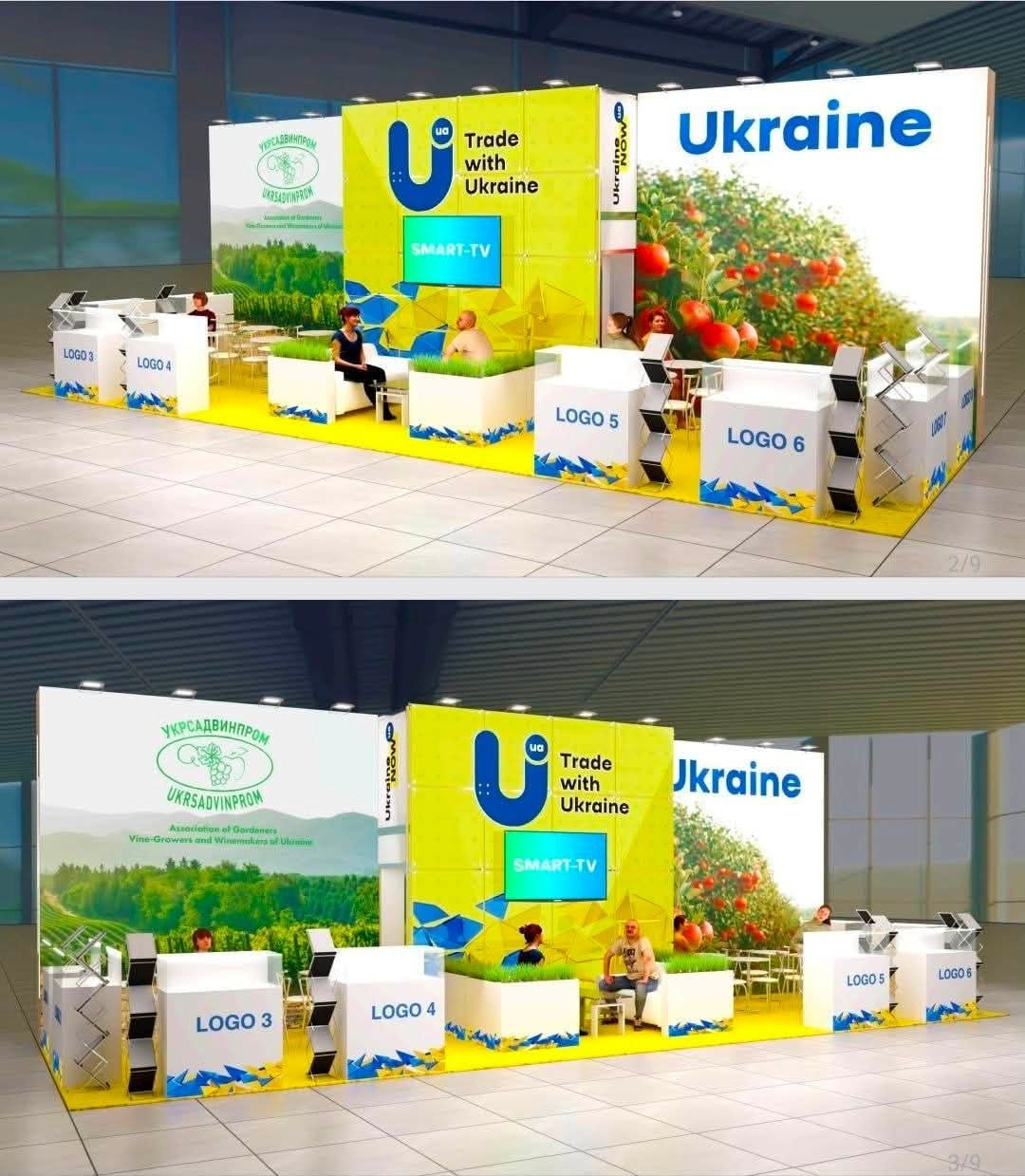
The Public Union UkrSadVinProm has begun recruiting Ukrainian companies to participate in the international food industry exhibition SIAL Paris 2026, which will take place on 17–21 October at the Paris Nord Villepinte exhibition centre in France.
Ukrainian producers of food products and beverages, fruit, vegetables, berries, nuts, processed products, and other representatives of the agri-food sector are invited to participate.
According to the association, participation in SIAL Paris gives Ukrainian companies an opportunity to present their products to international importers, distributors, and retail chains, hold negotiations on future contracts, and expand the geography of their exports.
A separate area of work for the Ukrainian delegation will be familiarisation with global food industry trends, including new product and packaging formats, changes in consumer preferences, and technological innovations.
UkrSadVinProm notes that companies that participated in SIAL Paris together with the association in previous years gained new business contacts, expanded the geography of their exports, and established international partnerships.
The official organiser of SIAL Paris confirms that the exhibition in 2026 will be held from 17 to 21 October. Around 295,000 professionals from 205 countries are expected to participate. The organisers also report around 5,000 key buyers with a combined purchasing power of more than EUR60 billion. Following the previous exhibition in 2024, 88% of exhibitors reported concluding contracts with partners from countries that were new to them.
Participation in such exhibitions remains one of the channels for Ukrainian food products to enter new markets, especially for companies planning to work not only with local importers but also with international retail chains, the HoReCa sector, and major distributors.
To obtain information about the participation terms, UkrSadVinProm invites companies to contact it at info@ukrsadvinprom.com.
The Public Union UkrSadVinProm is the Association of Horticulturists, Grape Growers and Winemakers of Ukraine. According to the organisation, it brings together around 200 producers of fruit, berries, nuts, and grapes, processing and winemaking enterprises, as well as scientific institutions. The association works to develop exports, introduce modern production, storage, and transportation technologies, and implement the GlobalG.A.P., ISO, and HACCP international standards. Products made by members of the association are exported to various markets around the world.
SIAL Paris is held once every two years and is one of the largest international B2B exhibitions in the food industry. Its participants include food and beverage producers, importers, distributors, retail chains, HoReCa representatives, buyers, technology companies, and start-ups. The 2026 exhibition will take place at Paris Nord Villepinte and will be open only to a professional audience.

Food and non-alcoholic beverages in Ukraine fell by 0.2% in July 2026 compared to June, but remained 6.5% more expensive than a year earlier. Food alone, excluding non-alcoholic beverages, rose in price by 6.4% over the year.
The most significant year-over-year increases among major food categories were recorded for fish and fish products (22.4%), sunflower oil (21.8%), and bread and bakery products (18.6%).
Bread prices rose by 15.4%, pasta by 9.9%, milk by 8%, vegetables by 7.8%, cheese by 4.6%, and meat and meat products by 2.4%.
At the same time, a number of products became significantly cheaper over the course of the year. Eggs cost 25.4% less than in July of last year, fruit—9.5% less, and sugar—8.1% less.
In July alone, eggs became 6% cheaper, vegetables 5.9% cheaper, and meat and meat products 0.6% cheaper. At the same time, fruit prices rose by 1.5%, fish by 1.3%, and sunflower oil by 1.2%.
Seasonal trends are particularly noticeable: since the beginning of the year, eggs have become 43.1% cheaper, while fruit has become 26.2% more expensive and vegetables 18.7% more expensive.
Ukraine exported $14.1 billion worth of food products in January–July 2026, according to data from the State Customs Service. Based on calculations using State Customs Service statistics, food products accounted for about 58.5% of Ukraine’s total merchandise exports, which amounted to $24.1 billion over the seven-month period.
Metals and metal products ranked second among export categories at $2.5 billion, or slightly more than 10% of total exports.
Machinery, equipment, and transportation vehicles were exported in the amount of $2.1 billion, corresponding to approximately 8.7% of total exports.
Thus, food products, metal products, and machinery collectively accounted for about 77.6% of Ukraine’s merchandise exports.
Poland remained the largest market for Ukrainian goods over the seven-month period, with $2.8 billion worth of products shipped there. Exports to Turkey totaled $2 billion, and to Germany—$1.5 billion.
Overall, Ukrainian exports in January–July 2026 grew by 3.8% compared to the same period last year—rising to $24.1 billion from $23.2 billion.
At the same time, imports grew much faster—by 26.6%, to $58.1 billion.




 Image