
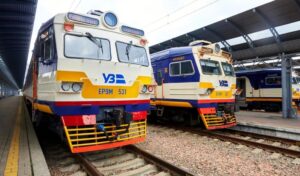
Oleksandr Pertsovskyi, Chairman of the Board of JSC “Ukrzaliznytsia,” announced the implementation of measures in October to reduce personnel costs: the company must save at least 200 million hryvnias per month in payroll expenses; in particular, the management staff will switch to a four-day workweek.
“These steps will not be easy and will affect a significant portion of our staff. This will mean fewer paid working hours and lower earnings. I understand how painful this is for your families, especially as winter approaches. However, without these steps, the railway cannot survive under current conditions,” Pertsovskyi noted in an address on the “UZ” corporate channel.
He emphasized that Ukrzaliznytsia’s priority will remain minimizing the impact of these measures on the operational staff who ensure train operations and perform repairs on the railway infrastructure.
According to him, the implementation of these decisions will primarily affect management bodies—specifically, the central office and regional branches—as well as administrative and engineering staff.
Among other measures is the suspension of bonus payments to administrative staff in the management offices of branches, regional offices, and operational units.
“This is the only way to preserve bonuses for the operational staff—those who work day and night on restoration and repairs and ensure train operations. We appreciate the contribution of administrative staff and understand the importance of their work, but today we are forced to make this choice,” added Pertsovskyi.
At the same time, he mentioned the possibility of offering part-time work in the company’s divisions and branches.
“I can assure you: as soon as the situation begins to stabilize (at least when freight volumes partially recover and the ports reopen), the first thing we will gradually ease is the restrictions on personnel expenses to improve our employees’ situation!” emphasized the chairman of the UZ board.
He noted that meetings with staff will be held in the coming days and weeks to explain these decisions.
In addition, Pertsovskyi announced that a briefing on the current situation and future plans will be held for railway employees at least once a month.
Ukrzaliznytsia explained that these decisions are driven, in particular, by a decline in freight volume to less than 250,000 metric tons per day—down from 450,000 metric tons in July and over 730,000 metric tons prior to Russia’s full-scale aggression.
The situation is further complicated by Russian attacks, which put up to 40 locomotives out of service each month, requiring significant resources for repairs.
In addition, Pertsovskyi pointed out the need to secure “hundreds of millions of hryvnias” to build mobile shelters at the company’s facilities to ensure the safety of its employees.
“Therefore, without optimizing personnel costs—a last resort to which we are resorting—we will not be able to survive!” the chairman of the board concluded.
The Interfax-Ukraine news agency contacted the Ukrzaliznytsia press service for comment to clarify the details of the decision.
cost savings, FREIGHT TRANSPORTATION, STAFF, UKRAINE, UKRZALIZNYTSIA
JSC “Ukrzaliznytsia” expects to post a net loss of 21.9 billion hryvnia and a liquidity shortfall of 26.3 billion hryvnia for 2026, assuming no fare indexation, said the company’s CEO, Oleksandr Pertsovskyi, during a press conference on Tuesday, according to a correspondent for the “Interfax-Ukraine” news agency.
According to him, among the main reasons for the deterioration in financial performance are a 2.4-fold increase in the cost of electricity, which led to additional expenses of 15.4 billion hryvnia; the need to index wages—13.4 billion hryvnia; a decline in revenue from freight transportation—7 billion hryvnia—due to hostilities and the occupation of parts of the territory; an increase in exchange rate losses from the revaluation of liabilities amounting to 3.8 billion hryvnia; and a 28% rise in diesel fuel prices, which cost the company an additional 2.1 billion hryvnia.
According to the company’s estimates, due to the suspension of fare indexation, the shortfall in cash receipts for the period from 2023 through the first three months of 2026 amounts to 99.5 billion UAH.
To cover this financial shortfall, Ukrzaliznytsia is implementing additional optimization measures for 2026, which will allow it to raise 1 billion UAH from the sale of non-core and surplus assets and 2.3 billion UAH in loans from international financial institutions, provided that fare indexation takes place.
Other measures include optimizing CAPEX, through which the company plans to accumulate 6.9 billion UAH by addressing the underfunding of critical capital investment needs. At the same time, internal funds for financing CAPEX in 2026 will amount to approximately 16.1 billion UAH.
A government decision is also required to resume, effective July 1, 2026, the sale of electricity to Ukrzaliznytsia through specialized auctions, with the introduction of a corresponding discount from the weighted average market price of electricity.
Other factors include a plan to increase suburban rail fares by 100%, though this requires approval from regional military administrations.
Among the proposed measures to stabilize Ukrzaliznytsia’s financial situation, the company also proposes raising freight rates by 30% effective August 1, 2026. The first phase involves an immediate rate increase and the standardization of rates for empty railcars.
Pertsovskyi emphasized that June is a critical period for making a decision on revising tariffs, as the regulatory procedure takes about two months.
“This is the last chance to make a decision before August, and by August we’ll simply be heading straight into the red at this pace. We still have a guaranteed debt payment due in August,” added the chairman of the board.
According to Pertsovskyi, a second phase could involve a further tariff adjustment of up to 15% starting in January 2027, though no such decision has been made yet.
As noted in the draft order, the need to adjust tariffs stems from the deteriorating financial condition of JSC “Ukrzaliznytsia,” whose revenues are insufficient to cover current expenses. The ministry noted that the last tariff adjustment took place nearly four years ago, while between July 2022 and April 2026, the industrial producer price index rose by 252.1%.
According to the Ministry of Development, in 2025, freight volumes decreased by 12.5% compared to the previous year, and Ukrzaliznytsia’s net loss amounted to 7.6 billion UAH. In the first four months of 2026, the loss reached 9.3 billion UAH.
At that time, the ministry noted that without tariff indexation, the company’s projected net loss for 2026 would exceed 13 billion hryvnia, and the funding shortfall would reach over 26 billion hryvnia.
Among other things, in January of this year, Ukrzaliznytsia refused to make $45 million in coupon payments on its 2026 Eurobonds with an 8.25% coupon rate totaling $703.2 million and on its 2028 Eurobonds with a 7.875% coupon rate totaling $351.9 million, and announced its intention to begin a comprehensive restructuring of its bond obligations with the assistance of financial and legal advisors.
The company cited the ongoing decline in revenue from freight transportation amid a decrease in freight volumes, as well as an increase in attacks on the railway—the total number of which in 2025 (1,195) exceeded the combined total for 2023–2024—as the main reasons for suspending debt service on the Eurobonds.
FARE, FREIGHT TRANSPORTATION, liquidity, LOSS, UKRZALIZNYTSIA

First Logistics Company (FLC), a leader in grain transportation by rail, has demonstrated growth in freight traffic for the third consecutive year. In particular, in 2025, it increased the transportation of agricultural products by 8.1% and construction materials by 6.8% compared to 2024, according to the company’s press service.
“A year of challenges, a year of tension, a year of working in conditions of full-scale war. And at the same time, another year in which we proved that development is possible even in the most difficult conditions,” the company wrote on its Facebook page.
PLK specified that in 2025, it transported 2.26 million tons (48.7%) of grain cargo and 1.16 million tons (51.3%) of inert materials. Of this, 900,000 tons were delivered to Ukrainian seaports and 200,000 tons to the land border with the EU.
As the company noted, these results were made possible by the work of the team, the trust of customers and partners, and the defenders of Ukraine, who ensure the ability to work in wartime conditions.
PLC expressed its conviction that in 2026 it will be able to achieve even greater results — already in the conditions of recovery and development of a peaceful Ukraine.
First Logistics Company is one of the leaders in the Ukrainian market for the transportation of grain crops by rail. It cooperates with international traders ADM, Bunge, CHS, NCH, Louis Dreyfus, Glencore, Cargill, and others. It has its own rolling stock of over a thousand railway cars and leased cars of various modifications.
PLC provides a full range of services in the field of freight transportation by rail and is part of the MS Capital holding. MS Capital also includes Ukraine’s largest Audi dealership, Audi Center Odessa South, the Avtostrada group of companies, the Pryluky Agricultural Company, and the Bekhivsky Granite Quarry.
According to YouControl, the founder and beneficiary of First Logistics Company is Maxim Shkil.
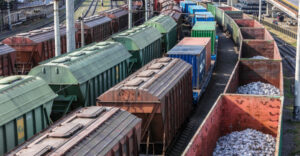
The volume of freight traffic carried by Ukrzaliznytsia in 2025 will decrease by 7% compared to last year, from 173 million tons to 160 million tons, and in subsequent years it will only be possible to increase it to 161 million tons and 162 million tons, respectively, the company announced to journalists during a presentation on November 7.
According to the presentation, it is expected that in 2025-2026, the volume of ore and manganese transportation will amount to 44 million tons compared to 43 million tons last year, and in 2027, it will decrease to 42 million tons.
Grain and flour transportation in 2025-2027 is forecast at 31 million tons, which is 22.5% or 9 million tons less than in 2024.
Ukrzaliznytsia noted that it expects a reduction in the transportation of building materials from 35 million tons in 2024 to 30-32 million tons in 2025-2027.
According to the presentation, coal transportation volumes in 2025-2027 will decrease by 17.4% compared to 2024, from 23 million tons to 19 million tons.
The company plans to partially offset these losses by increasing the transportation of other cargo from 32 million tons last year to 36 million tons this year, and then increasing it by 1 million tons annually.
Ukrzaliznytsia added that the total volume of cargo transportation from 2021 to 2025 decreased by 49% – from 315 million tons to 160 million tons. In particular, during this period, there was a 43% reduction in ore transportation, 52% in building materials, and 62% in coal.
According to the presentation, the forecast for the profitability of freight transportation is even worse: last year’s profit of UAH 20.4 billion will decrease to UAH 3.2 billion next year, and the following year, freight transportation will bring a loss of UAH 0.6 billion, and in 2027 – UAH 4.8 billion.
The company cites the freezing of tariffs, which were last increased in 2022, as the reason, although the producer price index has risen by 69.3% since then.
In September 2025, Valery Tkachov, deputy director of the commercial department of Ukrzaliznytsia, reported that the company expects freight traffic to decline this year to 162-165 million tons from 175 million tons last year, after partially recovering from a drop to 150-155 million tons in the first two years of Russia’s full-scale aggression from 312-315 million tons.
Tkachov then stressed that in order to rectify the situation, an active search for new cargoes is underway, in particular, retail and small and medium-sized business cargoes, ranging from forest products to industrial products and a large number of other segments.
Serhiy Leshchenko, deputy chairman of the supervisory board of Ukrzaliznytsia, reported last week in the Verkhovna Rada that the company’s net loss for the first nine months of this year amounted to UAH 7.195 billion.
According to him, the company proposes to index freight tariffs by 27.5% from January 1 next year and by another 11% from July 1.
The volume of Ukrzaliznytsia’s export shipments in January-June 2025 decreased by 13.5% to 38.7 million tons, domestic shipments by 11.7% to 35.5 million tons, while the volume of import transportation increased by 5.4% to 5.3 million tons.
In 2024, the company increased its revenue by 11.1% to UAH 102.87 billion, but incurred a net loss of UAH 2.71 billion compared to a net profit of UAH 5.04 billion in 2023.

Associations of mining and metallurgical, other industrial and extractive enterprises, manufacturers of building materials and cement have spoken out against increases in freight and electricity tariffs due to the risk of enterprises shutting down or a significant drop in production.
They made this statement at a press conference at the Interfax-Ukraine agency on Tuesday on the topic of “The tariff policy of state monopolies – JSC Ukrzaliznytsia and NEC Ukrenergo, their negative impact on industry and the economy of Ukraine.”
Alexander Kalenkov, president of the Ukrmetallurgprom association of enterprises, noted that the consumers of the services of so-called natural monopolies are mining and metallurgical companies, cement producers, building materials manufacturers, and the like.
“These are the main customers of companies such as Ukrzaliznytsia and Ukrenergo. Before the war, the mining and metallurgical complex, together with ferroalloy plants, consumed about 60% of all electricity supplied to industry and transported more than 40% of the traffic provided by Ukrzaliznytsia. Therefore, we are dependent on the activities of these companies, just as they are dependent on us,” Kalenkov stated, expressing hope that in the future these markets will become more competitive and monopolies will be broken up. But until then, the state must ensure that these monopolies do not abuse their position, he believes.
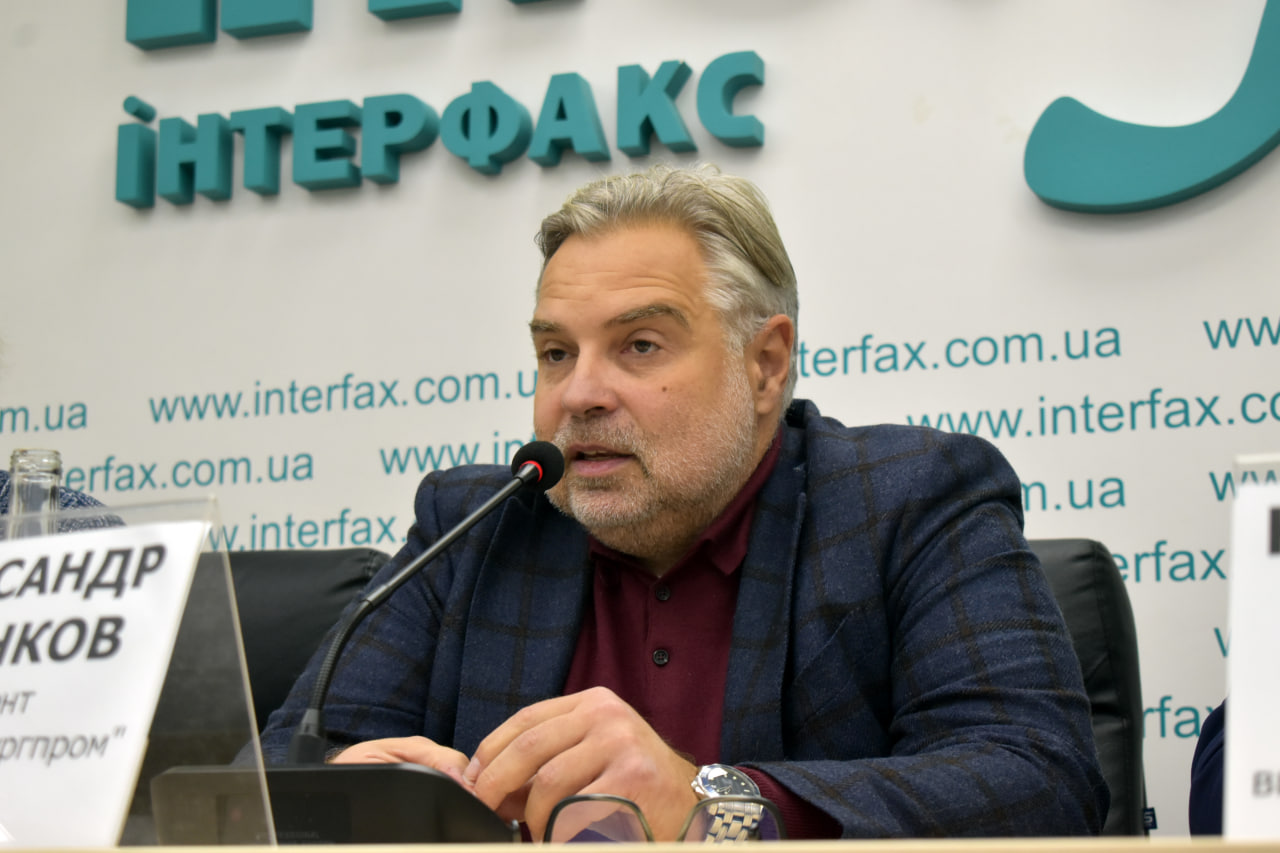
The head of Ukrmetallurgprom emphasized that Ukraine has the highest electricity tariffs in Europe. “In practice, this means that we are losing the competitive struggle to all entrepreneurs from the EU. I am not even talking about companies located in countries that still consume Russian energy resources—there, prices are several times lower than ours, both for gas and electricity. And that is why we are losing our traditional markets,” Kalenkov stressed.
As for railway tariffs, he said that they are currently cheaper in Poland and Slovenia than in Ukraine. “We already transport cargo by Ukrzaliznytsia at a cost that is 15-20% higher than in Europe, and there are plans to increase tariffs by another 37%. This is not only economically unreasonable and unjustified, it is a dead end,” Kalenkov said.
In his opinion, the tariff policy of Ukrzaliznytsia and Ukrenergo requires attention at the level of the Cabinet of Ministers and the Verkhovna Rada. Ideally, an independent body on transport tariffs, similar to the National Energy and Utilities Regulatory Commission, should be created. To subsidize passenger transportation, UAH 26 billion should be allocated in the budget for 2026 so as not to increase freight tariffs. Otherwise, due to the increase in tariffs, our enterprises will begin to reduce production or exit the market.
Executive Director of the Ukrainian Cement Manufacturers Association (Ukrcement) Lyudmila Kripka emphasized that two-thirds of the cement produced in Ukraine, as well as the raw materials for it, are delivered by rail. Therefore, the industry is very sensitive to unjustified increases in freight tariffs.
“We have already gone down this road, such actions have already had negative consequences in the past, and this time there will be no miracles either. This will lead to negative consequences. Manufacturers will be forced to pass on the increase in tariffs to their products, that is, to the end consumer. This will reduce consumption of products and, consequently, reduce their production and transportation,” Kripka stressed.
At the same time, she pointed out the need to develop state support instruments for energy-intensive export-oriented industries as a temporary anti-crisis measure. According to her, technical and economic criteria should be introduced specifically for enterprises in priority industries. At the same time, the funds saved from the reduction in tariffs for electricity transmission and dispatching could be directed towards investment in our own renewable energy sources.
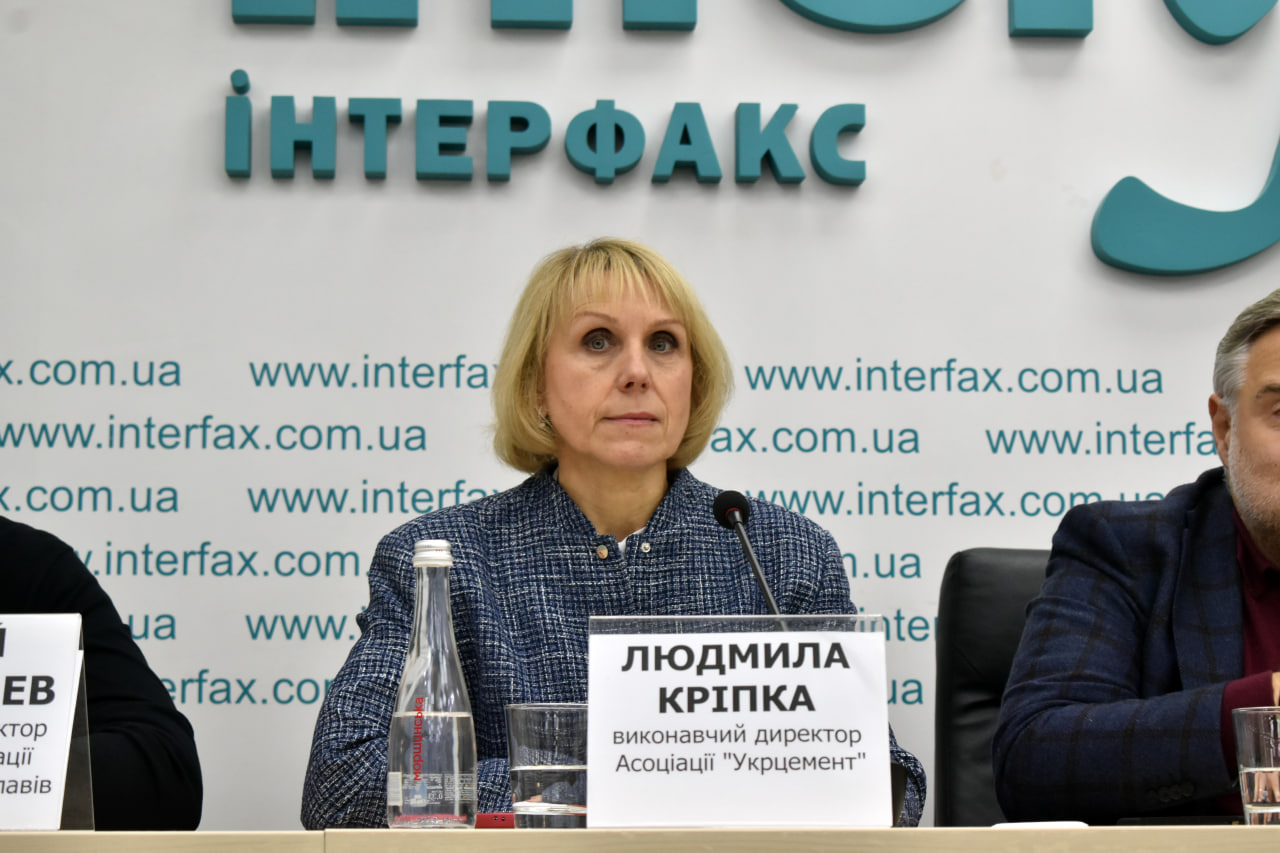
“In this way, we would fulfill the decarbonization targets set for us by the European Union,” Kripka stated.
She cited data from the state-owned company Ukrpromvneshexpertiza, according to which a 30% increase in freight tariffs would lead to a reduction in GDP of almost UAH 100 billion, a loss of foreign exchange earnings of UAH 98 billion, annual budget losses of more than UAH 36 billion, and the elimination of at least 76,000 jobs.
Sergey Kudryavtsev, executive director of the Ukrainian Association of Ferroalloy Producers (UkrFA), noted that the majority of ferroalloy enterprises are located along the shore of the Kakhovka Reservoir, i.e., in an area close to the combat zone, where working conditions are extremely difficult. In particular, manganese plants have been idle for two years.
“We cannot transport raw materials to ferroalloy plants because the railway lines have been destroyed. And we cannot pay to transport the raw materials needed for ferroalloy production by detours. Ferroalloy plants are currently operating at 15-20% of their capacity. This situation will lead to the end of ferroalloy production in Ukraine. Imported alloys will be brought to us, and the workers will be left without jobs,” Kudryavtsev said.
According to him, this frontline zone is currently being held together thanks to the Nikopol Ferroalloy Plant (NFP), Nikopol pipe and metallurgical enterprises, but it could become “gray” if people leave.
“Today, we have problems with production, logistics, staff shortages, and electricity. This is a region that used to produce electricity, but today we get it from western Ukraine. The tariff is unaffordable for us. Therefore, we are in a situation where we may have to shut down, and it will not be possible to recover. Enterprises are currently operating at 15% capacity, maintaining a continuous process. Because if you stop a ferroalloy furnace, it will take six months to start it up again,” added the executive director of UkrFA.
Source: https://www.youtube.com/live/ATmga3Sdn3g
ELECTRICITY, FREIGHT TRANSPORTATION, KUDRYAVTSEV, TARIFF, КАЛЕНКОВ, КРИПКА

The volume of freight transportation in January-August 2025 amounted to 208.9 million tons, which is 11.3% less than in the same period of 2024, while in January-July the decline was 12.6%, according to the State Statistics Service (Derzhstat) on its website.
According to its data, rail transport remains the leader in terms of freight volume, with 106.9 million tons, which is 9.4% less than in the same period last year.
Rail freight turnover for the reporting period amounted to 67.70 billion tonne*km, which is 11.8% less than for the same period in 2024.
According to the State Statistics Service, road transport carried 77.4 million tons of cargo in the first eight months of this year, which is 9.3% less than in the first eight months of 2024.
Cargo transportation by water transport in January-August 2025 amounted to only 0.6 million tons, or 53.3% of the volume in January-August 2024.
Data on cargo transportation by pipeline and rail transport during martial law are not disclosed.
As reported, freight traffic in 2024 increased by 7.8%, and freight turnover by 13%, to 184.58 billion tons/km.
At the beginning of this year, the decline in freight transportation in Ukraine accelerated and reached 18.5% in the first four months, including a 21.3% decline in rail transportation, but since then, the decline has been slowing down every month.



