
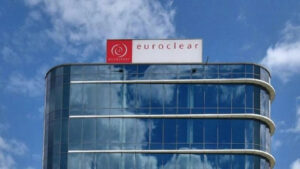
According to the “Serbian Economist,” as of September 1, 2026, Serbia’s long-term government bonds denominated in dinars have become available to international investors through the Euroclear Bank system, which is expected to simplify global funds’ access to the Serbian debt securities market and increase its liquidity.
The Serbian Ministry of Finance announced this on August 31. At the same time, the National Bank of Serbia announced that Euroclear Bank has become a participant in its RTGS payment system and in the securities settlement system of the Central Registry, Depository, and Clearing House of Serbia.
In the first phase, transactions involving five long-term issues of Serbian government bonds denominated in dinars, which are already in circulation, can be conducted through Euroclear. In the future, the system will also be available for certain new issues of government securities.
International investors can now hold and settle Serbian dinar-denominated bonds through their existing Euroclear accounts, without having to set up a separate infrastructure directly in the Serbian market.
For large investment funds, this significantly reduces operational barriers. Banks, pension and investment funds, insurance companies, and asset management firms that already operate through Euroclear will find it easier to include Serbian dinar-denominated securities in their portfolios.
Serbian Finance Minister Sinisa Mali called the connection to Euroclear an important step toward transitioning from a domestic to an internationally integrated government securities market.
The project to integrate the Serbian market with the international settlement infrastructure has been underway since 2019, with the participation of the Ministry of Finance, the National Bank of Serbia, the Central Securities Register, and international partners.
The country’s credit rating has served as an additional factor in attracting international capital. Back in October 2024, S&P Global Ratings upgraded Serbia’s sovereign rating to investment grade BBB- with a stable outlook for the first time. In July 2026, Fitch maintained Serbia’s rating at BB+ with a positive outlook.
The issuance of dinar-denominated infrastructure bonds through Euroclear also has longer-term significance for Serbia. Expanding the pool of foreign buyers could increase trading volume in the secondary market and help establish a more liquid yield curve in dinars.
Euroclear Bank is one of the largest international clearing and depository institutions, enabling institutional investors to hold and settle securities from various countries through a single infrastructure.

Ukraine ranks 38th among the countries of the world in terms of the absolute amount of government debt, estimated at about $276.2 billion, or 122.6% of projected GDP in 2026, according to an analysis by the Experts Club information and analytical center.
The ranking was compiled on the basis of the International Monetary Fund’s April World Economic Outlook database. The General government gross debt indicator — the gross debt of the general government sector — was used to compare countries.
This approach makes it possible to compare countries using a single methodology, since national definitions of government debt may differ significantly.
According to the IMF estimate, Ukraine’s government debt in 2026 amounts to about $276.2 billion, corresponding to 122.6% of projected GDP. This figure is higher than the often-published data on direct government and government-guaranteed debt because the general government methodology covers a broader public administration sector.
In the global ranking, Ukraine is positioned between Sweden, which ranks 37th with debt of $279.3 billion, and Taiwan, which ranks 39th with $269.2 billion.
In terms of the debt-to-GDP ratio, Ukraine has a significantly higher debt burden than most countries in Central and Eastern Europe.
For comparison, Poland has about $745.5 billion in government debt, or 65.7% of GDP, Romania — $297.8 billion and 61.9% of GDP, Hungary — $211.1 billion and 77.9% of GDP, and Serbia — $47.77 billion and 42.6% of GDP.
The world’s largest government debtors in absolute terms remain the United States — about $40.73 trillion, China — $22.29 trillion, and Japan — $8.95 trillion.
The total government debt of 180 countries for which comparable IMF statistics for 2026 are available amounts to about $119.4 trillion, with the top ten accounting for approximately 81% of this amount.
Experts Club notes that assessing a country’s debt sustainability requires taking into account not only the absolute size of the debt, but also its ratio to GDP and the cost of servicing it.

Managing Director of the International Monetary Fund (IMF) Kristalina Georgieva expressed concern about the growing amount of government debt during a speech on Wednesday ahead of the annual meeting of the IMF and the World Bank.
Global government debt is projected to exceed 100 percent of GDP by 2029 at the expense of both developed and emerging economies.
“Higher debt increases interest payments, puts pressure on borrowing costs, constrains other spending, and reduces the ability of governments to cushion shocks,” Georgieva said.
As a result, she said, aid from developed nations to the neediest countries unfortunately continues to decline.
The rate of increase in the global economy is expected to be around 3% in the medium term, down from 3.7% before the COVID-19 pandemic.
“Global growth patterns have changed over the years, with China’s rate of recovery in particular steadily slowing, while India is emerging as a key engine of growth,” the IMF chief notes.
“Sustained growth requires higher private sector productivity. To achieve this, governments must ensure and protect the essential elements of a free market, including property rights, rule of law, reliable data, effective bankruptcy codes, strong financial sector supervision, and independent but accountable institutions,” she said.
Georgieva said that in too many countries, private sector productivity is “entangled in red tape” and startups are not emerging or cannot grow. “Competition is key and regulation should not allow or create an unfair advantage,” she believes.
“So today I am calling on all our member countries to undertake a regulatory housecleaning to unleash entrepreneurial energy backed by strong institutions and governance. Now is not the time to harm ourselves: now is the time to clean up,” the IMF chief said.
She also called on “my beloved, native Europe” to act.
“Consider appointing a ‘single market czar’ with real powers to push reforms forward. Eliminate border frictions in the labor market, trade in goods and services, energy and finance. Create a single European financial system. Create an energy union. Finalize your project. And watch the dynamics of the US private sector,” Georgieva said.
According to her, “one picture can say more than a thousand words.” “Look at how seven US mega-companies, none of which existed 51 years ago, boast market capitalizations larger than their European counterparts,” the IMF chief said.
Video analysis of the ratio of government debt to GDP is available on the channel of the analytical center Experts Club – https://youtube.com/shorts/skgFqF0c4Gw?si=oJPXANSuNNpWxsmY.



