

Buying real estate in Serbia is not only a profitable investment, but also an obligation to pay annual property tax. All property owners, both Serbian citizens and foreigners, must pay this tax, regardless of whether the property is used or not.
Payment schedule
Property tax in Serbia is paid quarterly:
Important: in case of late payment, a penalty of 16.5% per annum is charged, and in case of systematic evasion, penalties are possible.
How to pay tax for the first time?
For non-residents of Serbia, the procedure begins with a personal visit to the tax office. Notifications are not sent to foreigners automatically.
You must provide:
If there are several owners
Documents must be submitted simultaneously by all co-owners. The tax is calculated based on the shares:
If the shares are not specified, the amount is divided equally.
Property tax rates in Serbia (2025)
The tax is calculated based on the estimated value of the property and is divided into several categories:
Source: https://t.me/relocationrs/1036

A sharp drop in the Euribor interbank rate by 0.25 percentage points in June 2024 and subsequent easing reduced the cost of mortgage lending. This brought buyers back to the market, especially large families and investors.
After the winter slump, an unexpected surge in transactions was observed in January: the number of available properties fell by more than a third, and some market segments experienced shortages. This signaled a recovery in demand.
New changes in legislation have eased refinancing conditions, with a number of fees abolished and commission thresholds reduced. This has encouraged homeowners who are willing to change their loan terms.
Renting a home to avoid extreme risks is becoming a lifestyle choice—renting is no longer just a temporary measure, but a full-fledged alternative to buying. Cafes, coworking spaces, and city services have moved renting into a new category.
Latvians continue to invest in housing abroad, especially in Southern Europe, and foreign investors are attracted by the growing rental market – but government regulation has already restricted short-term rentals in some countries.
There is active construction of rental housing (ALTUM projects) in the regions. However, housing shortages in cities such as Ventspils, Cesis, and Jurmala remain a problem.
According to estimates, average housing price growth rates in Latvia are expected to be in the range of 3-7% by the end of the year. For example, a 60 m² apartment in Riga for €150,000 could rise in price to €154,500-160,500.
Breakdown by property type:
Property type Growth forecast
Studio (30 m², €75,000) to €77,250-80,250
Apartment (75 m², €200,000) to €206,000-214,000
Penthouse (100 m², €500,000) up to €515,000-535,000
Where the highest price growth is expected
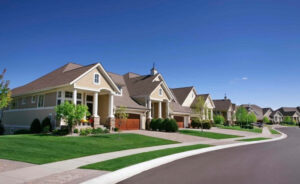
The number of housing starts in the United States in March fell by 11.4% compared to the previous month and amounted to 1.324 million in annualized terms, the country’s Commerce Department reported.
This is the maximum decline in the last year.
According to the revised data, in February the number of new buildings amounted to 1.494 million, not 1.501 million, as previously reported.
Analysts on average had forecast a 5.4% decline from the previously announced February level, to 1.42 million, according to Trading Economics.
The construction of single-family homes fell by 14.2% last month to 940 thousand. At the same time, the number of new apartment buildings (including apartments and condominiums), a more volatile segment of the market, remained unchanged at 371 thousand.
The number of permits for the construction of new homes in March increased by 1.6% to 1.482 million in terms of annualized rates. Experts expected an average of 1.45 million.
The number of building permits for single-family homes decreased by 2% to 978 thousand, while the number of apartment buildings jumped by 10.1% to 445 thousand.
The number of new buildings in the US last month was 1.9% higher than in March 2024.

The Greek residential real estate market 2025 continues to show steady growth despite global economic challenges. Demand for housing remains high among both local residents and foreign investors, which contributes to higher prices and the development of new projects.

We provide an analysis of the residential real estate market in Bratislava with a description of the main districts, current prices, trends and forecast for 2025-2026.
The main districts of Bratislava and real estate prices:
Old Town (Staré Mesto):
The central district with historical buildings and developed infrastructure.
In the third quarter of 2024, prices for secondary housing increased by 5.8%.
Nové Mesto:
Combines residential and commercial areas, popular with families and young professionals.
Housing prices in this area also increased by 6.5% in the third quarter of 2024.
Ružinov:
Known for its proximity to the center and developed infrastructure, including parks and schools.
Moderate price growth is expected due to environmentally friendly urban projects and the construction of new schools and parks.
Investropa
Petržalka:
The most densely populated neighborhood with numerous panel houses and developing infrastructure.
High price growth is expected due to limited housing stock and upcoming renovations of historic buildings.
Karlova Ves:
A green neighborhood that attracts families and students due to its proximity to universities.
Average price growth is forecast due to the development of hybrid workspaces and new multifunctional complexes.
Current prices and trends:
In the third quarter of 2024, the average price per square meter of secondary housing in Bratislava was €3,748, which is 9.97% higher than in the previous year.
The average rental price for a one-bedroom apartment in 2025 is about €900 per month.
At the end of 2024, there was a surge in real estate purchases, driven by the expected increase in VAT and lower mortgage rates.
Forecast for 2025-2026:
Real estate prices in Bratislava are expected to grow by 3-7% annually, depending on the area and type of property.
Supply and demand: Despite a temporary decline in demand in early 2025 after a surge in late 2024, the number of transactions is expected to stabilize and continue to grow until spring 2025.
Influence of economic factors: Inflation is expected to reach 5.1% in 2025, which may affect purchasing power and the availability of mortgages.
Overall, the residential real estate market in Bratislava is showing steady growth, driven by a combination of high demand, limited supply and economic factors.
Source: http://relocation.com.ua/analysis-of-residential-real-estate-market-in-bratislava-from-relocation/
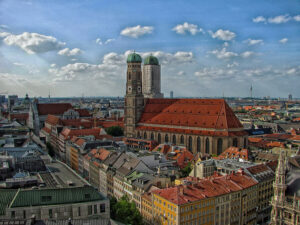
In 2024, the German residential real estate market faced a number of challenges, including falling prices, slowing construction and rising borrowing costs. Here are the key trends and forecasts for 2025, focusing on the country’s largest cities.
Decline in housing prices
In the first half of 2024, the average asking prices for new and existing apartments decreased by about 3.6% compared to the same period in 2023. This decline is less pronounced than in previous periods, when the drop reached 7.3% and 7.4%, respectively. The largest annual decline was recorded in Frankfurt am Main – by 6.5%, while in Hamburg the decline was only 0.6%.
The situation in major cities
Munich: The most expensive city in Germany with an average price of about 11,000 euros per square meter. In 2024, there was a 5.2% decline in prices for new buildings.
Berlin: The average housing price was around 7,920 euros per square meter.
Hamburg: A 5% decline in new construction prices, which is one of the smallest declines among major cities.
Frankfurt am Main: The largest year-on-year price decline of 6.5%.
Düsseldorf and Leipzig: On the contrary, these cities recorded an increase in prices for new buildings by 4.1% and 8.7%, respectively.
Housing shortage and construction activity
According to a study by the Federal Institute for Building, Urban and Spatial Research (BBSR), Germany needs to build 320,000 new apartments every year until 2030 to meet growing demand, boosted by the influx of immigrants from Ukraine and Syria. However, in 2024, only 216,000 apartments were authorized, the lowest number since 2010 and reflecting the real estate crisis.
Financial performance and investments
Germany’s largest real estate group, Vonovia, reported its third consecutive annual loss in 2024, amounting to EUR 962.3 million, due to significant write-downs in property values. Nevertheless, CEO Rolf Buch predicts a return to profitability in 2025, provided that real estate prices stabilize.
Forecast for 2025
German house prices are expected to grow by 3.5% in 2025, although there is a significant risk of weaker growth. The market continues to face difficulties due to high borrowing and construction costs. Rental growth is expected to exceed house price growth, making it difficult for potential buyers to save a down payment.
In general, the German residential real estate market in 2024 was characterized by declining prices and slowing construction activity. Forecasts for 2025 suggest a moderate increase in prices, but the market remains sensitive to economic and political factors.
Source: http://relocation.com.ua/analysis-of-residential-real-estate-market-in-germany/



