
Latvia announced a contribution of 50,000 EUR to the Ukrainian Cultural Heritage Fund (UCHF), according to Ukraine’s Deputy Prime Minister for Humanitarian Policy and Minister of Culture Tetiana Berezhna.
“This is the eleventh country to support the Fund,” she wrote on Facebook on Tuesday.
The Ukrainian Cultural Heritage Fund was established as an international mechanism to mobilize resources for the protection and restoration of Ukrainian cultural heritage. To date, the Fund has already raised over EUR4.3 million, Berezhna noted.
“Funds from the Ukrainian Cultural Heritage Fund are directed toward specific projects—the protection, restoration, and preservation of Ukrainian cultural heritage. The first project to receive support is ‘Mystetskyi Arsenal,’” the post states.
Berezhna thanked Latvia for its support of Ukraine, its solidarity with Ukrainian culture, and its willingness to invest resources in its preservation.
As previously reported, in July 2025, the Ministry of Culture, together with its partners, presented new international instruments to support Ukrainian culture at the Recovery Conference in Rome (Italy): the Alliance for Cultural Resilience, the Ukrainian Cultural Heritage Fund, and Team Europe Ukraine.
In early November 2025, the second international conference, “Cooperation for Resilience,” took place in Copenhagen, Denmark, where the operational framework of the Ukrainian Cultural Heritage Fund was presented. Following the conference, Denmark, the Netherlands, Poland, and the United Kingdom announced that they would invest EUR 3 million in the newly established Ukrainian Cultural Heritage Fund.
In late January 2026, Berezhna stated that launching the UCHF’s operations would require an initial budget of EUR10–15 million. In June, she confirmed that EUR15 million would need to be raised by the end of 2026 for the UCHF to fully launch.
The following countries have announced their contributions: the Kingdom of Denmark—10 million Danish kroner; the Kingdom of the Netherlands—1 million euros; the United Kingdom—200,000 pounds sterling; the Republic of Poland and the Kingdom of Spain—0.5 million euros each; the Republic of Estonia—20,000 euros; the Republic of Latvia – 50,000 euros
It has been reported that the first site to be restored under the auspices of the Ukrainian Cultural Heritage Fund will be the History and Local Lore Museum in Ivankiv (Kyiv Oblast), which was destroyed by the occupiers and once housed paintings by Ukrainian artist Maria Pryimachenko.
In Latvia, the so-called “golden visa” program has once again found itself at the center of a scandal after the country’s Financial Intelligence Unit identified more than 20 companies that, according to its assessment, were used for fictitious investments with the aim of obtaining residence permits. This was reported by the Latvian public media outlet LSM, citing the investigative program De Facto.
According to the investigation, approximately 200 foreigners invested more than 10 million euros in the authorized capital of such companies. At the same time, it is noted that the funds were often not used for actual economic activity but were redirected to the scheme’s organizers or circulated among related parties, providing no tangible benefit to Latvia’s economy but formally justifying applications for residence permits.
The program provides for the possibility of obtaining a temporary residence permit in Latvia upon investing 50,000 or 100,000 euros in a company’s capital. In 2025, this procedure brought the country nearly 6 million euros, and a total of 341 people received residence permits through it, including investors and their family members. At the same time, as LSM emphasizes, the state does not systematically assess how significant the actual contribution of these companies is—in terms of turnover, number of employees, or actual activities.
Interest in the program has grown in recent years. According to the Latvian Office of Citizenship and Migration Affairs, 109 applications were submitted last year—more than five times as many as in 2021, when there were 20. However, only about one-third of the applications received a positive decision, as applicants undergo security and reliability checks.
The investigation also cites the example of L Hotels, a company established about a year and a half ago. Nine of its investors applied for residence permits last year, and the company’s list of shareholders includes 30 people from India, Afghanistan, Pakistan, Turkey, Chile, Malawi, Syria, Vanuatu, and other countries. Most of them invested 100,000 euros each but received Class B shares, which, according to the articles of association, do not carry voting rights.
Toms Platacis, head of the Financial Intelligence Unit, stated that in some cases, the 50,000 euros required by law were in fact the same funds, recycled multiple times in a loop. LSM emphasizes that the story has once again intensified criticism of the program, which was originally intended to stimulate investment and attract wealthy foreigners but has been plagued by allegations of abuse from the very beginning.
In March 2026, Ukrainians’ attitudes toward Latvia were characterized by a high level of positive perception and a low proportion of negative assessments. According to the results of a survey conducted in March 2026 by the research company Active Group in collaboration with the Experts Club information and analytical center, a total of 71.6% of respondents expressed a positive attitude toward this country, which is only slightly less than in August 2025 (72.7%). At the same time, the share of negative assessments has more than halved—from 5.3% to 2.6%—indicating a further strengthening of the overall positive perception.
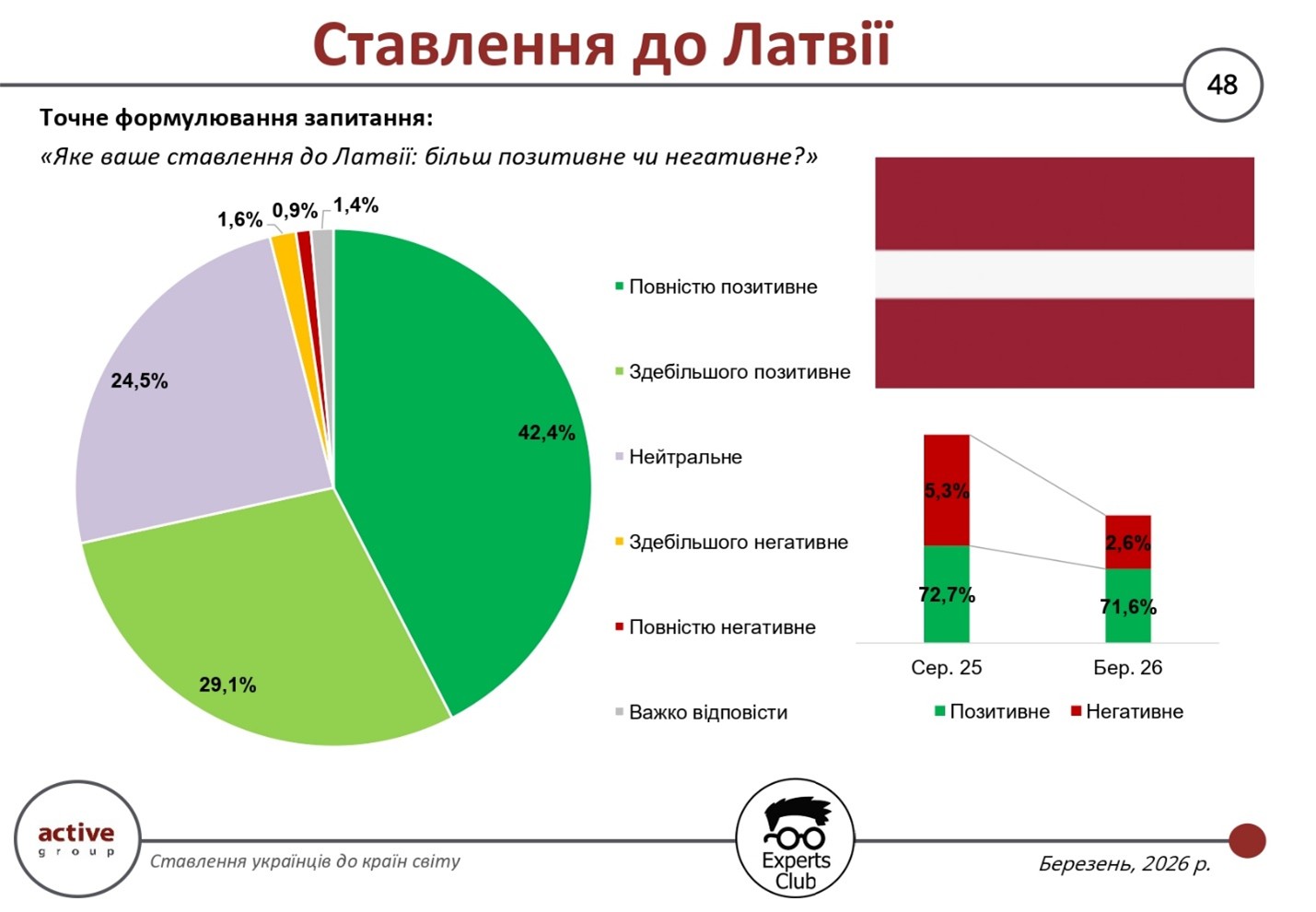
The breakdown of responses shows a clear dominance of positive assessments. The share of those who have a completely positive attitude toward Latvia stands at 42.4%, while another 29.1% selected the “mostly positive” option. Thus, it is the category of unconditionally positive perception that forms the foundation of the country’s image in Ukrainian society. A neutral attitude was reported by 24.5% of respondents, which is a relatively low figure for international studies of this type.
Negative assessments remain marginal. Only 1.6% of respondents expressed a mostly negative attitude, and another 0.9%—a completely negative one. At the same time, the share of those who could not decide on an answer is 1.4%, which also confirms the established and stable nature of public opinion regarding Latvia.
The dynamics of change over the past six months reveal an interesting trend. A slight decrease in the share of positive responses is accompanied by an even more significant reduction in negative assessments. This means that a portion of respondents who previously held a critical stance have shifted to either a neutral or positive stance, which generally improves the overall balance of perceptions of the country.
Compared to other European Union member states, Latvia remains among the countries with the highest levels of trust and favorability among Ukrainians. This result can be explained by a combination of political support for Ukraine, an active stance in international organizations, and clear communication at the level of state policy.
At the same time, a relatively significant share of neutral responses (24.5%) indicates that there remains potential for further strengthening the country’s image. For some Ukrainians, Latvia is not yet a country with a sufficiently deep informational or economic presence, which opens opportunities for strengthening contacts in the spheres of business, culture, and humanitarian cooperation.
“Ukrainians generally distinguish very well between countries that demonstrate consistent support for Ukraine. At the same time, the level of positive attitude is shaped not only by political statements but also by concrete actions that people can feel. That is why even small countries can have a very strong positive image,” noted Oleksandr Pozniy, director of the research company Active Group.
Thus, the survey results confirm that Latvia has established itself in Ukrainian public perception as a reliable and friendly partner. A high level of positive sentiment with minimal negativity creates favorable conditions for the further development of bilateral relations, particularly in the areas of the economy, security, and humanitarian cooperation.
According to a study conducted by the Experts Club information and analytical center based on data from the State Customs Service, Latvia ranks 35th in total trade volume of goods with Ukraine, with a figure of $522.7 million. At the same time, Ukraine has a positive bilateral trade balance, as exports of Ukrainian goods exceed imports from Latvia.
The study was presented at the Interfax-Ukraine press center; the video can be viewed on the agency’s YouTube channel. The full version of the study can be found at this link on the Experts Club analytical center’s website.
ACTIVE GROUP, EXPERTS CLUB, LATVIA, Pozniy, SOCIOLOGY, SURVEY, UKRAINE, URAKIN
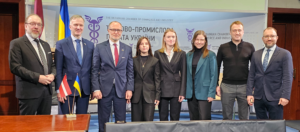
Latvia and relevant Ukrainian business and defense associations are deepening their cooperation in the defense industry sector. This was announced during the Latvian-Ukrainian Defense Forum 2026, which took place on March 23 in Kyiv at the premises of the Ukrainian Chamber of Commerce and Industry. The event culminated in the signing of a memorandum of understanding between the Latvian Ministry of Defense and a number of Ukrainian organizations, which provides for long-term cooperation, technology exchange, and state support for Ukrainian companies planning to enter or expand their operations in the Latvian market.
The forum was attended by government officials, diplomats, business representatives, and industry associations from both countries. The event was opened by Gennadiy Chizhikov, President of the Ukrainian Chamber of Commerce and Industry; Andris Spruds, Minister of Defense of Latvia; Serhiy Boev, Deputy Minister of Defense of Ukraine; and Andrejs Pildegovičs, Ambassador of Latvia to Ukraine. As the organizers noted, the forum was aimed not only at providing political confirmation of support for Ukraine but also at establishing practical mechanisms for cooperation between manufacturers, investors, and government institutions of the two countries.

On the Ukrainian side, the Ukrainian Council of Arms Manufacturers, the National Association of Defense Industries of Ukraine, the Federation of Employers of Ukraine, and “Technological Forces of Ukraine” joined the agreements. According to the Latvian side, the document is intended to serve as a tool for building a joint defense industry ecosystem that will combine the combat experience of Ukrainian manufacturers with Latvia’s technological and institutional potential. The Latvian Ministry of Defense emphasized that the memorandum provides for targeted state support for Ukrainian companies planning to launch or expand their operations in Latvia.
“The combat experience of the Ukrainian defense industry and Latvia’s technological potential are a powerful combination for joint development. The memorandum is not merely declarative but practical in nature and is intended to serve as a platform for creating innovative solutions that will strengthen the security of both countries and the capabilities of their armed forces,” noted Latvian Defense Minister Andris Spruds.
The Latvian Ministry of Defense also emphasized that the country aims to become a stable base for Ukrainian companies in Europe, while simultaneously developing its own industrial potential.
Gennadiy Chizhikov, President of the Ukrainian Chamber of Commerce and Industry, for his part, emphasized that deepening cooperation in the defense sector “strengthens our countries and industries.”
“The implementation of the agreements will take place with the participation of the Latvian Investment and Development Agency, as well as the Latvian Ministry of Economy and Ministry of Defense. This involves, in particular, promoting Ukrainian business in the Latvian market and supporting the development of a broader defense industry ecosystem,” he added.
The practical part of the forum included a bilateral business session and a panel discussion featuring Oleksandr Kamyshin, Advisor to the President of Ukraine on Strategic Issues; Vadym Yunyk, co-founder of Baltic Forces Hub; Ihor Fedirko, CEO of the Ukrainian Defense Industry Council; representatives of the Federation of Employers of Ukraine, Latvian business organizations, LIAA, DAIF Latvia, the Latvian Embassy in Ukraine, and private companies in the defense and technology sectors. This composition of participants indicates that the parties are striving to translate political support into concrete production, investment, and cooperation decisions.
Further confirmation of the practical nature of the visit came from the fact that the Latvian Investment and Development Agency had announced as early as the beginning of March a trade mission of Latvian defense and security companies to Kyiv for March 23–25, coinciding with the working visit of the Latvian Minister of Defense. The program included direct contacts with representatives of the Ukrainian defense sector and B2B meetings with potential partners. The forum in Kyiv thus became part of a broader effort to institutionalize Latvian-Ukrainian cooperation in the defense industry against the backdrop of the war and the growing role of this sector in the economies of European countries.
The event was organized by the Latvian Ministry of Defense, the Latvian Investment and Development Agency, and the Latvian Embassy in Ukraine, while the Ukrainian Chamber of Commerce and Industry served as a co-organizer, and the Ukraine Facility Platform acted as a partner for the forum. Given the content of the signed agreements, this is no longer merely a matter of Latvia’s political solidarity with Ukraine, but an attempt to establish a sustainable bilateral cooperation mechanism.
Interfax-Ukraine is the forum’s media partner.

The Government Office for Coordination of European and Euro-Atlantic Integration, the Ministry of Digital Transformation of Ukraine, language technology company Tilde, and the Latvian National Center for Artificial Intelligence have signed a memorandum of cooperation.
“The document establishes a framework for cooperation in the development of language models, exchange of experience, and implementation of AI tools to support Ukraine’s institutional capacity on the path to EU membership,” according to a statement from the Office of the Deputy Prime Minister for European and Euro-Atlantic Integration.
As Deputy Prime Minister for European and Euro-Atlantic Integration of Ukraine Taras Kachka said during the signing, Ukraine is currently in the active phase of negotiations on accession to the European Union, and the next 24 months will be decisive.
“And right now, it is important to join forces to implement not only legislation but also tools that strengthen the institutional capacity of the state,” he added.
In his opinion, such tools include artificial intelligence technology, in particular for the translation and analysis of EU legal acts, as well as the importance of preserving the culture of the Ukrainian language and its authentic models in public documentation related to European integration.
“The language technology company Tilde was chosen as the most suitable solution for Ukrainian needs, as this platform takes into account the peculiarities of the Ukrainian language, its phraseology, morphology, and stylistics, which ensures the authenticity of translations. This solution will also allow for further scaling of the technology to involve other ministries, state bodies, and enterprises. The cooperation provides for the exchange of experience between experts from the parties to the memorandum, the joint development of language models, and support for new digital services,” the statement said.
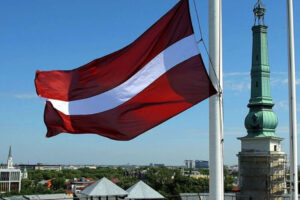
Ukrainian Foreign Minister Andriy Sibiga thanked Latvian Foreign Minister Baiba Braže, who is visiting Kyiv, for additional energy support for Ukrainians.
“Special attention was paid to supporting the energy system, especially on the eve of winter. The Russian Federation’s attacks have caused significant damage, so such support is critically important. We are grateful for the additional decisions made by our friends to support our energy stability,” he said at a press conference with his Latvian counterpart Baiba Braže in Kyiv on Thursday.
According to the press service of the Ukrainian Foreign Ministry, the Ukrainian side is grateful for Latvia’s additional contribution of EUR 125,000, which will contribute to the restoration of energy facilities, uninterrupted power supply, and stabilization of the energy system.
Sybiga also expressed gratitude to Latvia for its comprehensive support of Ukraine from the first days of the full-scale invasion, in particular for its annual defense assistance amounting to 0.25% of Latvia’s GDP. In total, its volume has already exceeded 1.6% of Latvia’s GDP.
“This includes weapons, ammunition, training of military personnel, and financial support. We are also grateful to Latvia for joining the PURL and for the recent transfer of 42 PATRIA 6×6 armored personnel carriers,” the foreign minister added.
The minister thanked his colleague for rebuilding critical and civil infrastructure in the Chernihiv region and for providing recreation in Latvia for children from the Ukrainian region. The ministers discussed the implementation of this year’s projects in the Chernihiv region, totaling EUR 5.7 million, as well as prospects and priorities for next year.
“Yesterday, you opened two facilities in Chernihiv that were rebuilt with Latvian funds: the pediatric wing of the Chernihiv Central District Hospital and the Human Rights Protection Center. We greatly appreciate these efforts,” Sibiga said.



