
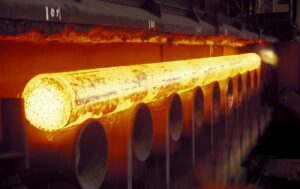
In the first quarter following the EU’s introduction of quotas on metal product shipments, Ukrainian metal exporters used 100% of their quarterly guaranteed quota for duty-free shipments to the EU of cold-rolled flat products made of unalloyed and alloyed steel, hollow sections, and other seamless pipes, according to a statement on the website of the “Ukrmetallurgprom” association.
According to the statement, as of September 30, 2026, the quotas in the following categories under the global (final) quotas in which Ukraine participates have been exhausted: metal-coated sheets (MFN subgroup—“Most-Favored-Nation treatment”), metal-coated sheets (FTA subgroup—“countries with a free trade agreement with the EU”), unalloyed and other alloyed steel bars and light sections (MFN subgroup—“most-favored-nation treatment”), stainless steel bars, billets, and small-section products (MFN subgroup – “most-favored-nation treatment”) and stainless steel bars, billets, and small-section products (FTA subgroup – “countries with a free trade agreement with the EU”).
Among competing countries, the guaranteed quota as of September 30 has been exhausted for the following categories: rebar – Turkey; wire rod of non-alloy and alloy steel – Turkey; hollow sections – Turkey and Macedonia; seamless stainless steel pipes—India; cold-rolled bars and rods of unalloyed and alloyed steel—Switzerland; and unalloyed wire—Turkey.
As of September 29, 2026, the competitive quota has been exhausted for the following categories: hot-rolled flat products of unalloyed and alloyed steel, rebar, wire rod of unalloyed and alloyed steel, hollow sections, seamless stainless steel pipes, other seamless pipes, and non-alloy wire.
As previously reported, once the guaranteed and competitive quotas are exhausted, further shipments to the EU are subject to a 50% tariff. “Ukrmetallurgprom” criticized the EU’s decision to restrict shipments of Ukrainian steel products, which had been supplied to Europe duty-free for the first three years following Russia’s full-scale aggression. The association believes that Ukraine currently poses no threat to European producers, as the war initially caused the country’s steel production to plummet from 40 million metric tons to 7.5 million metric tons, and currently, nearly all steel plants are shut down due to shelling.
EU, EXPORTS, METALLURGY, QUOTA, UKRAINE
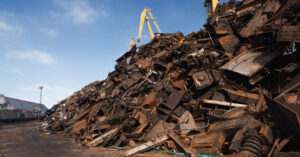
The European Business Association (EBA) calls for maintaining a zero quota on ferrous scrap exports, which would effectively ban scrap metal exports in 2027, Alternatively, should the quota be abolished, member companies propose imposing an export duty of EUR 180 per metric ton for all export destinations, taking into account Ukraine’s international obligations.
“Domestic processing of scrap metal in Ukraine allows for the creation of added value, the preservation of jobs and tax revenues, and the provision of raw materials for the production of steel and finished metal products. The use of scrap also helps reduce energy consumption and CO₂ emissions in steel production, which takes on additional significance in light of the EU’s Carbon Border Adjustment Mechanism (CBAM),” the publication states.
According to the publication, EBA member companies have appealed to the Cabinet of Ministers and the Ministry of Economy.
Recently, following the shutdown of most Ukrainian steel mills due to massive Russian shelling, scrap metal collection companies have called on the government to review restrictions on scrap exports. Previously, scrap collectors had advocated for lifting the de facto ban on scrap exports from Ukraine and introducing quotas for shipments of this raw material to EU countries in the amount of 200,000 metric tons per year.
As reported, the Cabinet of Ministers of Ukraine established a zero quota on scrap metal exports effective January 1, 2026, to ensure Ukrainian enterprises have access to this raw material.
The EBA noted that, according to 2025 figures, exports of ferrous scrap from Ukraine increased by 53% compared to 2024—reaching 448,680 metric tons. The business community believes that easing the current restrictions could lead to a rise in exports and a shortage of raw materials for Ukrainian manufacturers.
According to data from “UAVtormet,” 4.3 million metric tons of steel were produced in the first 8 months of 2026 (compared to 7.41 million metric tons in 2025), 925,400 metric tons of scrap were delivered to steel mills (1.56 million metric tons), and scrap procurement totaled 971,700 metric tons (2.11 million metric tons). According to preliminary forecasts, 6.4–6.5 million metric tons of steel will be produced in 2026, 1.2–1.25 million metric tons of scrap will be delivered to steel mills, and scrap procurement will total 1.22–1.25 million metric tons.
In January–August of this year, Ukrainian companies reduced exports of ferrous scrap by more than 20 times compared to the same period last year—to 13,86 thousand metric tons from 283,06 thousand metric tons, and in monetary terms—to $3.930 million from $85.4 million. At the same time, 9.31 thousand metric tons were exported in January due to the completion of last year’s contracts, compared to 68.52 thousand metric tons in December 2025. There were no exports in February through May of this year; 4.08 thousand metric tons were exported in June, 315 metric tons in July, and 157 metric tons in August.
On April 29, 2026, the Cabinet of Ministers, by its Resolution No. 563, amended Annex 1 to its Resolution No. 1795 of December 31, 2025, permitting the export of scrap metal on the basis of licenses issued by the Ministry of Economy to to foreign economic activity entities that were the winners of electronic auctions held in December 2025 for the sale of such goods in accordance with the Procedure for the Alienation and Lease of Property of Business Entities in which more than 50% of the shares in the authorized capital are owned by the state or by another legal entity whose sole participant is the state.
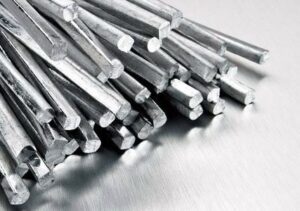
In January–August 2026, Ukraine increased its imports of tin and tin products 2.4-fold compared to the same period last year, reaching $6.352 million.
According to statistics released by the State Customs Service of Ukraine, imports of tin and tin products in August totaled $830,000.
Exports of tin and tin products in January–August 2026 totaled $740,000, and in August—$45,000, compared to $104,000 in January–August 2025.
As previously reported, Ukraine increased its imports of tin and tin products by 36.5% in 2025 compared to 2024, reaching $4.352 million. Exports of tin and tin products totaled $241,000, compared to $389,000 for the 12 months of 2024.
Tin is used primarily as a safe, non-toxic, corrosion-resistant coating, either in its pure form or in alloys with other metals. The main industrial applications of tin are in tinplate (tinned iron) for the manufacture of food packaging, in solders for electronics, in plumbing pipes, in bearing alloys, and in coatings made of tin and its alloys. The most important tin alloy is bronze (with copper).
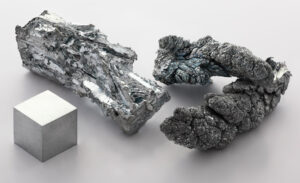
In January–August 2026, Ukraine reduced imports of zinc and zinc products by 35% compared to the same period last year, down to $24.126 million.
According to statistics released by the State Customs Service of Ukraine, imports of zinc and zinc products in August totaled $3.306 million.
Zinc exports for the eight-month period totaled $1,108 million; in August, they amounted to $189,000, compared to $888,000 in January–August 2025.
As previously reported, Ukraine reduced its imports of zinc and zinc products by 9.6% in 2025 compared to 2024, down to $52.982 million. Zinc exports last year reached $1.234 million, whereas in 2024 they totaled $563,000.
Pure metallic zinc is used to recover precious metals, protect steel from corrosion, and for other purposes.

According to Experts Club, Vietnam is showing the highest growth rates in steel production among the world’s top ten countries, as evidenced by data published on September 24 by the World Steel Association.
In August 2026, the country produced approximately 2.7 million metric tons of steel, increasing output by 36.4% compared to August of last year.
From January through August, production reached 20.6 million metric tons, rising by approximately 29% year-over-year. This represents the highest growth rate among the world’s largest producers.
Based on cumulative results, Vietnam is already among the top ten global steel producers, closing in on Brazil in terms of production volume; Brazil produced 21.8 million metric tons over the same eight-month period.
By comparison, the world’s largest producer—China—reduced production by 3.1% to 651.9 million metric tons over the same period, while India increased its output by 6% to 115.9 million metric tons. The United States increased production by 5.5%, Turkey by 6.8%, and Germany by 6.3%.
As a result, the global steel market is becoming increasingly heterogeneous: despite an overall 0.7% decline in production from January through August, certain Asian markets continue to rapidly expand their capacity and production volumes.
The difference is particularly noticeable within Asia. In August, production across the Asia-Pacific region fell by 1.4% due to a decline in output in China, while India and Vietnam continued to grow.
As of the end of August, countries in Asia and Oceania accounted for 106.7 million metric tons of the 144.2 million metric tons of global output, or about 74% of global steel production.
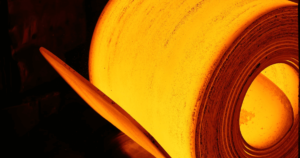
Global steel production in August 2026 fell by 1.2% compared to August of last year, to 144.2 million metric tons, according to data from the World Steel Association (Worldsteel) published on September 24.
The statistics cover 70 countries, which accounted for about 98% of global steel production in 2025. From January through August 2026, they produced 1.225 billion metric tons of steel, which is 0.7% less than a year earlier.
China remains the largest producer, having produced 74.6 million metric tons of steel in August, a 3.7% year-over-year decline. Thus, China accounted for more than half of global output.
India, which ranks second, increased production by 4.6% to 14.8 million metric tons. The United States increased production by 3% to 7.3 million metric tons, while Japan increased production by 0.4% to 6.7 million metric tons.
Russia produced about 5.5 million metric tons of steel, down 0.3% from August of last year, while South Korea increased production by 2.6% to 5.4 million metric tons.
Turkey produced about 3.4 million metric tons of steel, which is 0.4% less than last year’s figure. Brazil’s production fell by 6.2% to 2.7 million metric tons, while Germany increased its output by 1.7% to 2.6 million metric tons.
Among the largest producers, Vietnam showed the strongest growth: the country’s steel production rose by 36.4% to 2.7 million metric tons.
From January through August, China produced 651.9 million metric tons of steel, which is 3.1% less than a year earlier. India increased production by 6% to 115.9 million metric tons, and the United States by 5.5% to 57.5 million metric tons.
The top ten producers since the beginning of the year also include Japan (54 million metric tons), Russia (43.8 million metric tons), South Korea—42.8 million metric tons, Turkey—26.6 million metric tons, Germany—23.9 million metric tons, Brazil—21.8 million metric tons, and Vietnam—20.6 million metric tons.
Vietnam has also shown the fastest growth among this group since the beginning of the year—approximately 29%. Production in Russia fell by 5.1%, in China by 3.1%, and in Brazil by 1.8%.



