
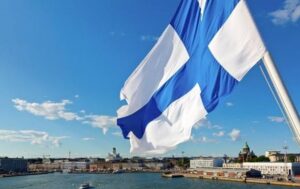
Finland continues to enjoy one of the highest levels of positive perception among Ukrainians: in August 2026, 71.3% of respondents viewed the country positively, while only 2% viewed it negatively. Compared to March, the share of positive assessments has decreased slightly, while the share of neutral responses has increased, according to the Experts Club Information and Analytical Center.
According to the results of the August survey, 34.1% of Ukrainians view Finland entirely positively, and 37.2% view it mostly positively. A neutral stance is held by 25.4% of those surveyed. 1.8% view the country mostly negatively, only 0.2% view it entirely negatively, and another 1.4% were undecided.
The balance between positive and negative assessments stands at plus 69.3 percentage points. Positive attitudes thus outweigh negative ones by more than 35 times, characterizing public perception of Finland as distinctly favorable.
In March 2026, 76.2% of respondents had a positive attitude toward Finland: 38% viewed it entirely positively and 38.2% viewed it mostly positively. A neutral attitude was expressed by 21.4% of respondents, a negative one by about 1.1%, and another 1.2% were undecided.
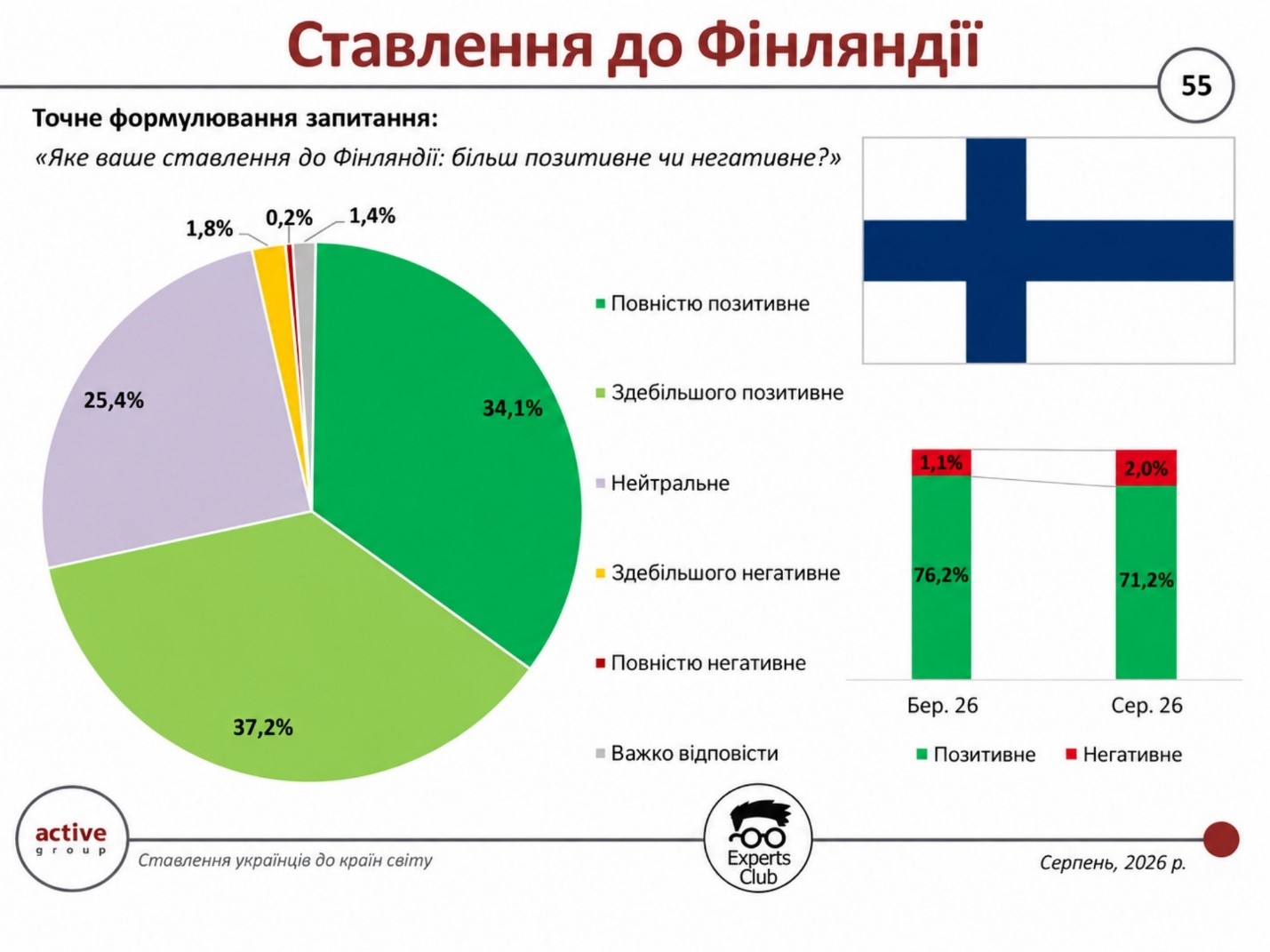
Thus, over the course of five months, the positive segment decreased by 4.9 percentage points—from 76.2% to 71.3%. The share of negative assessments increased by approximately 0.9 percentage points, while neutral responses rose by 4 percentage points. The balance between positive and negative attitudes decreased from plus 75.1 to plus 69.3 percentage points, respectively.
The most notable decline was in the share of respondents with a completely positive attitude—from 38% to 34.1%. The share of mostly positive responses changed much less—from 38.2% to 37.2%. In other words, the bulk of the changes was not due to a shift toward a negative attitude, but rather to an increase in the neutral segment.
Alexander Pozniy, director of the research firm Active Group, previously attributed Finland’s consistently high ratings to the trust and predictability of its image among Ukrainians.
“Ukrainians quite clearly distinguish between countries based on the level of trust and predictability of their policies. Where there is consistency and a clear position, a stable positive attitude is formed. That is why countries like Finland maintain high ratings regardless of short-term fluctuations in the news,” Pozniy noted.
The August wave shows a certain softening of assessments, but no fundamental change in public perception. More than seven out of ten respondents continue to view Finland positively, while the share of negative responses remains at just 2%.
The previous wave of the survey was conducted in March 2026 among 800 Ukrainian citizens aged 18 and older using an online questionnaire. The sample was representative in terms of age, gender, and region.
ACTIVE GROUP, EXPERTS CLUB, FINLAND, international relations, NORTHERN EUROPE, Pozniy, PUBLIC OPINION, SOCIOLOGY, UKRAINE
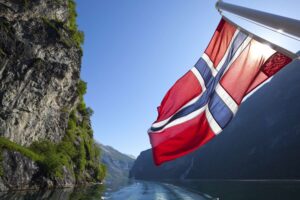
Norway continues to enjoy one of the highest levels of positive perception among Ukrainians: in August 2026, 72% of respondents viewed the country positively, while only 2.7% viewed it negatively. Compared to March, the positive rating has declined slightly, but the overall pattern of assessments remains stable, according to the Experts Club Information and Analytical Center.
According to the results of the August survey, 35.8% of Ukrainians view Norway entirely positively, and 36.2% view it mostly positively. A neutral stance is held by 24.1% of respondents. 2.3% view the country mostly negatively, 0.4% view it entirely negatively, and another 1.2% were undecided.
The balance of positive and negative assessments stands at plus 69.3 percentage points. Thus, positive attitudes toward Norway outweigh negative ones by more than 26 times. According to the overall survey results, the country remains among the leaders in terms of public sentiment, alongside Canada, Sweden, the Netherlands, and Finland.
In March 2026, 72.7% of respondents had a positive attitude toward Norway. At that time, 37.1% of those surveyed described their attitude as entirely positive, and 35.7% as mostly positive. A neutral stance was held by 24.2%, a negative one by 1.9%, and another 1.2% were undecided.
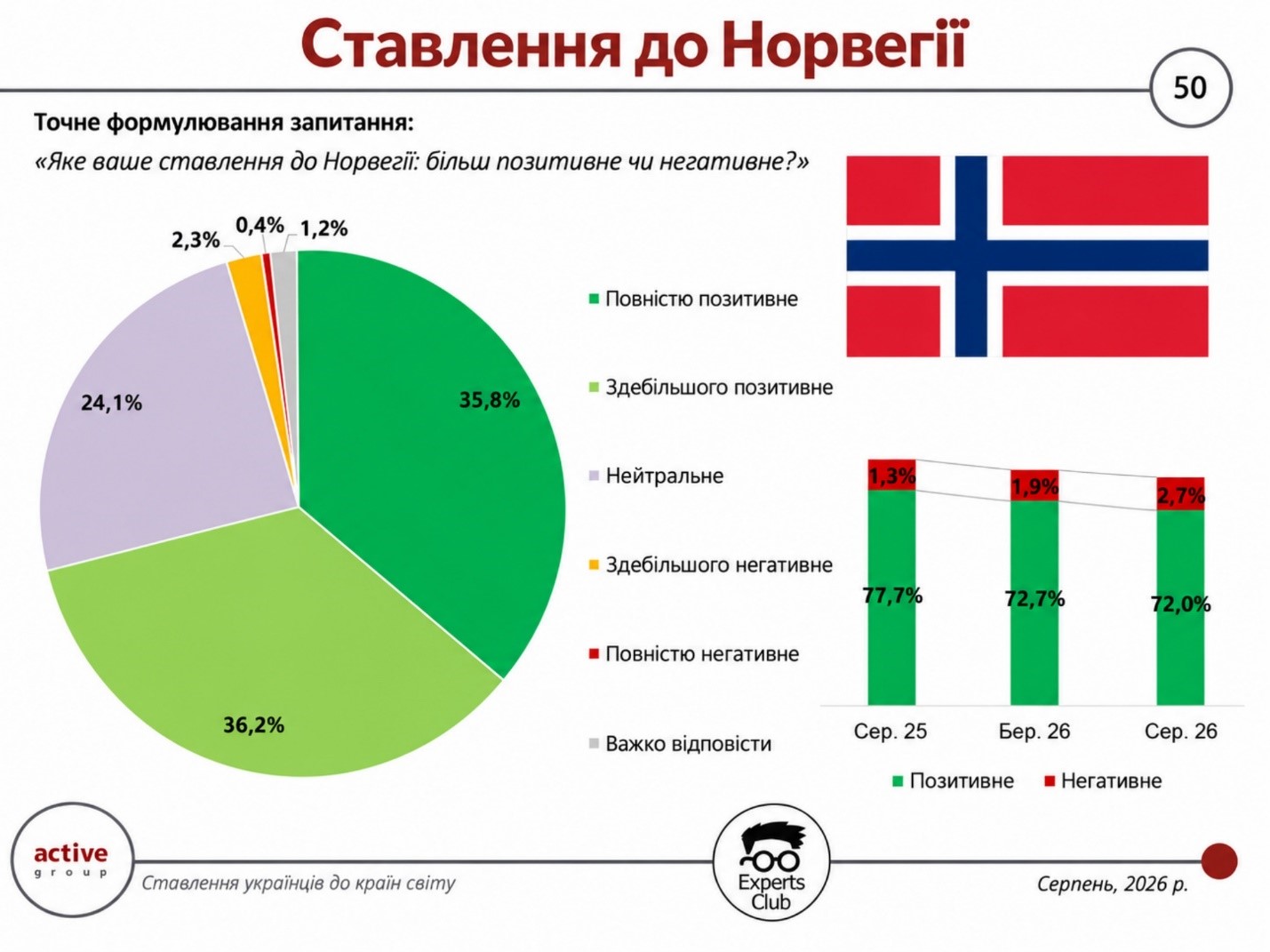
Thus, over the course of five months, the overall share of positive assessments decreased by only 0.7 percentage points—from 72.7% to 72%. The neutral segment remained virtually unchanged—24.2% in March versus 24.1% in August. At the same time, the share of negative responses increased by 0.8 percentage points—to 2.7%.
The balance between positive and negative attitudes decreased from approximately plus 70.8 to plus 69.3 percentage points. The changes remain insignificant and do not indicate a fundamental shift in attitudes toward the country: nearly three-quarters of Ukrainians continue to view Norway positively.
Oleksandr Pozniy, director of the research firm Active Group, commenting on the results of the previous wave, emphasized the stability of the established image of Norway.
“Ukrainians quite clearly differentiate between countries based on levels of trust and actual support. In the case of Norway, we see a consistently high level of positive sentiment, which is not shaped by current events but is based on a long-term perception of the country as a reliable partner. Even a slight decline in the figures does not change the overall picture—Norway remains one of the most positively viewed countries among all those surveyed,” Pozniy noted.
The results of the August wave effectively confirm this assessment. Despite a slight increase in the negative segment, it remains minimal, and the share of neutral responses has remained virtually unchanged. This distinguishes Norway from countries where public assessments have fluctuated significantly over the course of the year.
The previous survey wave was conducted in March 2026 among 800 Ukrainian citizens aged 18 and older using self-administered online questionnaires on the SunFlowerSociology panel. The sample was representative by age, gender, and region; the maximum theoretical margin of error for indicators at the 50% confidence level was ±3.5 percentage points.
ACTIVE GROUP, EXPERTS CLUB, international relations, NORTHERN EUROPE, NORWAY, Pozniy, PUBLIC OPINION, SOCIOLOGY, UKRAINE
Denmark continues to rank among the countries with the highest level of positive perception among Ukrainians: in August 2026, 66.9% of respondents viewed it positively, while only 1.8% viewed it negatively. Compared to March, the share of positive assessments has decreased slightly, but the overall attitude remains distinctly favorable, according to the Experts Club Information and Analytical Center.
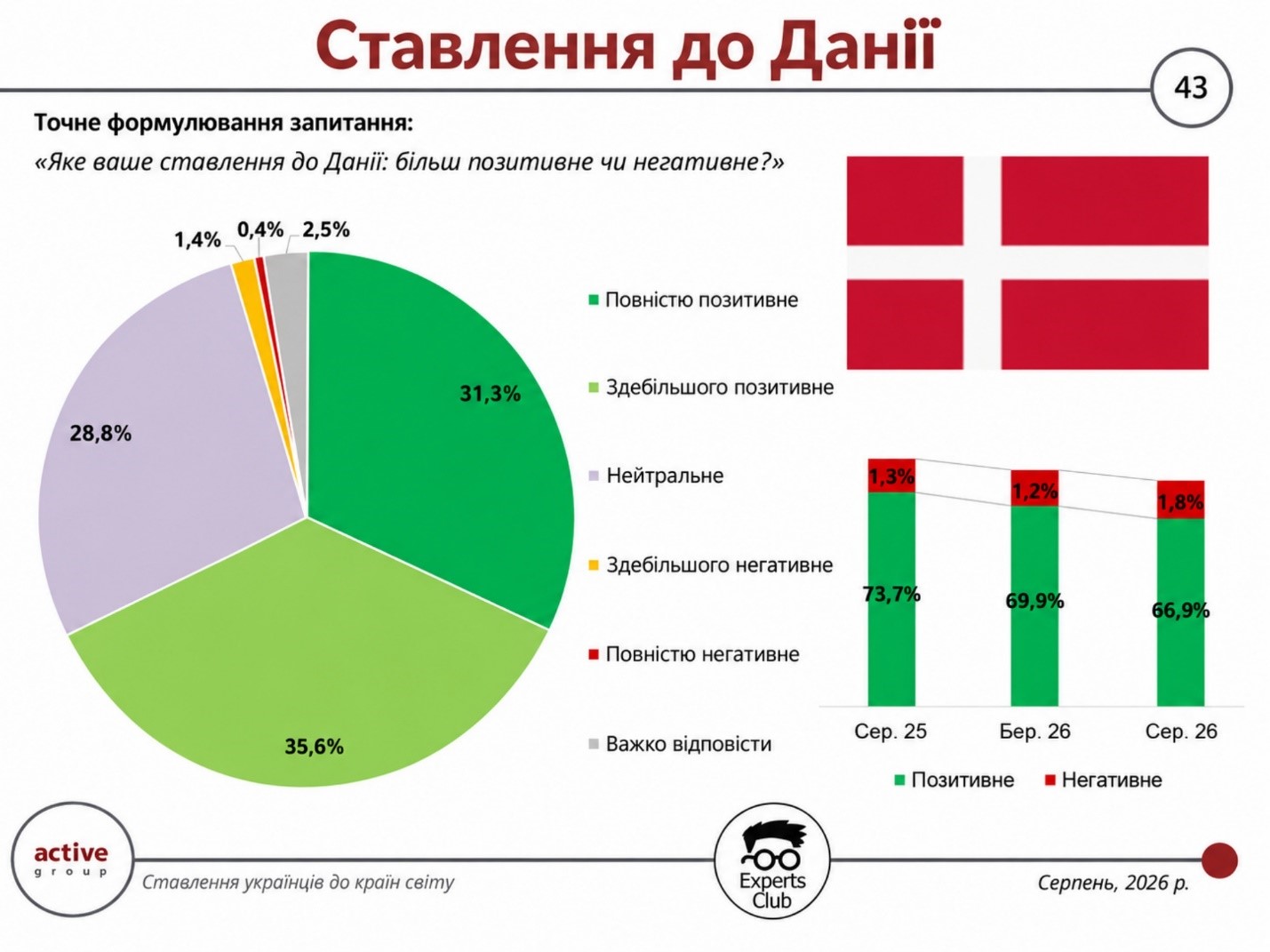
According to the results of the August survey, 31.3% of Ukrainians have a completely positive attitude toward Denmark, and 35.6% have a mostly positive attitude. A neutral stance is held by 28.8% of respondents. Only 1.4% expressed a mostly negative attitude, 0.4% a completely negative one, and another 2.5% were undecided.
The balance of positive and negative assessments stands at plus 65.1 percentage points. Thus, positive responses outnumber negative ones by more than 37 times. Denmark remains among the group of Northern European countries that enjoy very high public favor among Ukrainians.
In March 2026, 69.9% of respondents viewed Denmark positively: 33.3% viewed it entirely positively and 36.6% viewed it mostly positively. A neutral attitude was expressed by 26.8% of respondents, a negative one by only 1.2%, and another 2.1% were undecided.
Thus, over the course of five months, the share of positive assessments decreased by 3 percentage points—from 69.9% to 66.9%. The neutral segment increased by 2 percentage points—to 28.8%—while negative attitudes rose by only 0.6 percentage points. The balance of positive and negative assessments decreased from +68.7 to +65.1 percentage points, respectively.
There has also been a noticeable and definite decline in the intensity of positive attitudes: the share of fully positive responses fell from 33.3% to 31.3%, and that of mostly positive responses—from 36.6% to 35.6%. At the same time, the increase in the negative segment remains minimal, so the current trend suggests that some respondents are shifting to a neutral position rather than developing a critical attitude toward Denmark.
Oleksandr Pozniy, director of the research firm Active Group, commenting on Denmark’s high ratings in previous waves of the survey, noted: “Ukrainians perceive Denmark as a sincere partner and a reliable ally under the current circumstances. The high level of trust reflects both the humanitarian aid and Copenhagen’s consistent political support for Ukraine.” In the broader context of the survey, he also emphasized: “Ukrainians clearly associate the support received primarily from European Union countries and the United Kingdom with a positive attitude toward them.”
The latest wave of the survey shows that this positive image persists. Despite a decline in the figure compared to March, approximately two-thirds of Ukrainians continue to view Denmark positively, while the share of negative responses does not even reach 2%.
The previous wave of the survey was conducted in March 2026 among 800 Ukrainian citizens aged 18 and older using self-administered online questionnaires on the SunFlowerSociology panel. The sample was representative by age, gender, and region; the maximum theoretical margin of error for indicators at the 50% confidence level was ±3.5 percentage points.
ACTIVE GROUP, DENMARK, EUROPEAN UNION, EXPERTS CLUB, international relations, NORTHERN EUROPE, PUBLIC OPINION, SOCIOLOGY, UKRAINE
Sweden remains among the countries with the highest level of positive perception among Ukrainians: in August 2026, 71.4% of respondents expressed a positive attitude toward it, while only 0.8% expressed a negative one. Compared to March, the share of positive assessments decreased slightly, but negative attitudes also declined, according to the Experts Club Information and Analytical Center.
According to the results of the August survey, 31.9% of Ukrainians have a completely positive attitude toward Sweden, and 39.5% have a mostly positive attitude. A neutral stance is held by 26.2% of respondents. Only 0.8% view the country mostly negatively; no entirely negative assessments were recorded in the survey, and another 1.6% were undecided.
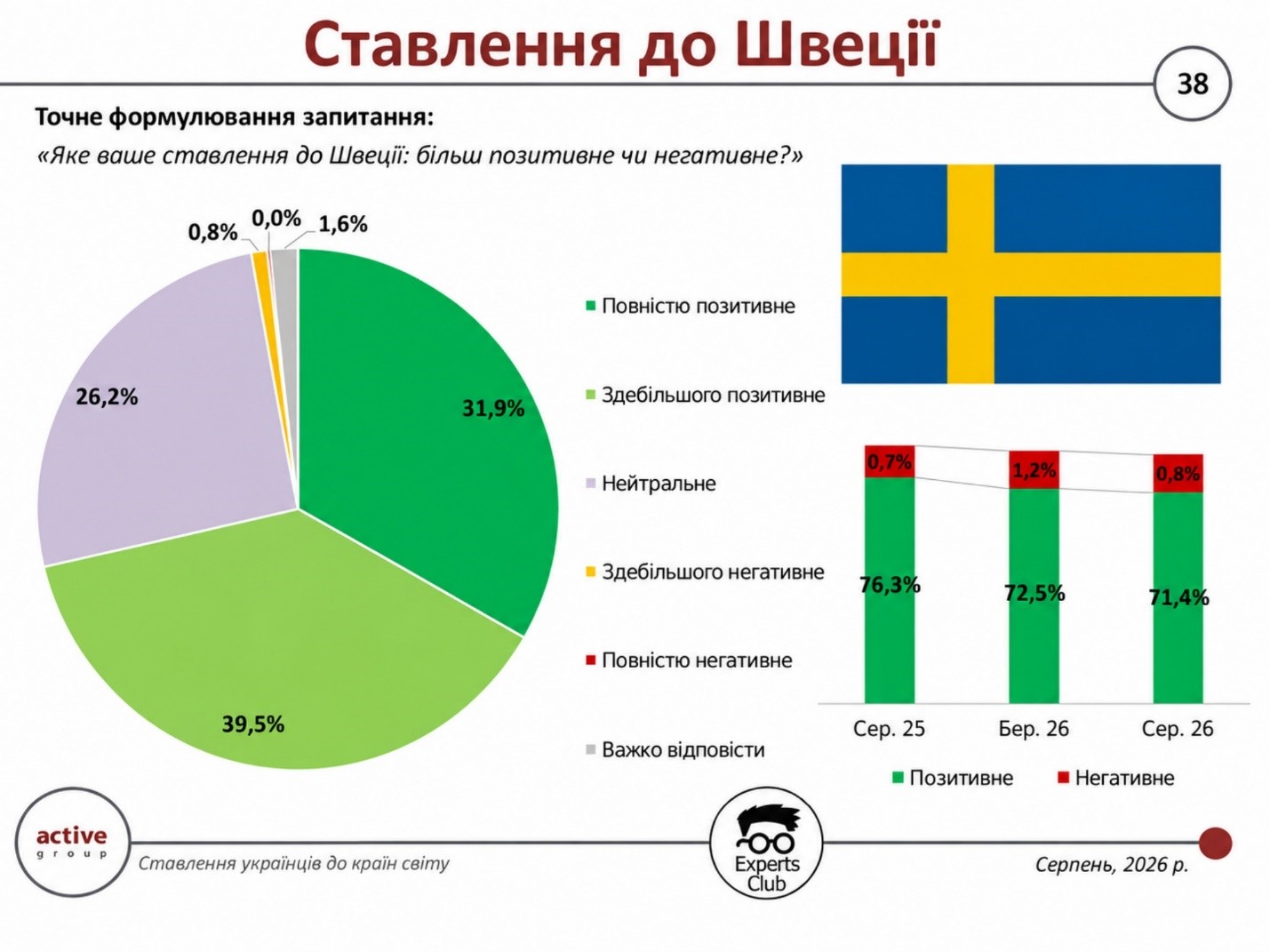
The balance between positive and negative assessments stands at plus 70.6 percentage points. By this measure, Sweden ranks among the highest of all countries included in the study. Positive attitudes outnumber negative ones by nearly 90 to 1.
In March 2026, 72.5% of respondents viewed Sweden positively: 35% viewed it entirely positively and 37.5% viewed it mostly positively. At that time, 24.7% of respondents held a neutral stance, while negative attitudes accounted for about 1.2%.
Thus, over the course of five months, the share of positive assessments decreased by only 1.1 percentage points—from 72.5% to 71.4%. Negative responses decreased by 0.4 percentage points, while the neutral segment increased by 1.5 percentage points—from 24.7% to 26.2%. The balance between positive and negative attitudes remained virtually unchanged—from approximately plus 71.3 to plus 70.6 percentage points.
At the same time, there was a certain redistribution within the positive segment. The share of fully positive assessments decreased from 35% to 31.9%, while the share of mostly positive assessments rose from 37.5% to 39.5%. This indicates a moderate decline in the intensity of positive attitudes rather than a deterioration in the country’s overall image.
Oleksandr Pozniy, director of the research firm Active Group, commented on the previous wave of the survey by highlighting the stability of Ukrainians’ attitudes toward Sweden.
“Sweden remains a country with a very high level of trust among Ukrainians, and this is evident from the structure of the responses. At the same time, we are observing a certain increase in the share of neutral assessments, which indicates not a change in attitude but a decrease in its intensity. This is a typical effect for countries that are not constantly in the spotlight,” Pozniy noted.
The new results effectively confirm this trend. The proportion of neutral responses continued to rise moderately, but this was not accompanied by an increase in negative attitudes. Sweden remains one of the countries with the most consistently positive image in Ukrainian society.
The previous wave of the survey was conducted in March 2026 among 800 Ukrainian citizens aged 18 and older using self-administered online questionnaires in the SunFlowerSociology panel. The sample was representative by age, gender, and region; the maximum theoretical margin of error for indicators at the 50% confidence level was ±3.5 percentage points.
ACTIVE GROUP, EXPERTS CLUB, international relations, NORTHERN EUROPE, Pozniy, PUBLIC OPINION, SOCIOLOGY, SWEDEN, UKRAINE



