
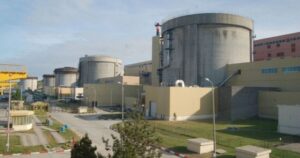
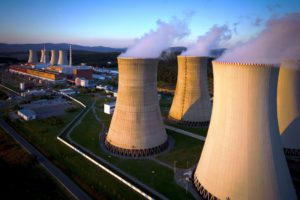
On August 13, the Romanian state-owned company Nuclearelectrica began a controlled shutdown of the second power unit at the Cernavodă Nuclear Power Plant due to a prolonged drop in the water level of the Danube, leaving the country’s only nuclear power plant temporarily without any operating reactors.
Nuclearelectrica’s official announcement was sent to the Bucharest Stock Exchange on August 13. The company notes that the decision was made due to a “significant and prolonged drop in water levels in the Danube,” based on forecasts from Romania’s National Institute of Hydrology and Water Management (INHGA).
The procedure for the controlled reduction of Unit 2’s output began this morning. Nuclearelectrica Director Romeo Urian previously reported that output is expected to drop to zero around noon, after which the unit will be disconnected from the national power grid.
Chernavoda’s Unit 1 was shut down for the same reason on July 28. At that time, Nuclearelectrica also attributed this decision to the unprecedentedly low water level in the Danube caused by a severe drought.
Each of the two operating CANDU-type reactors has a capacity of about 706 MW. Together, under normal operating conditions, they account for approximately 20% of Romania’s electricity production.
The water situation remains extremely challenging. According to INHGA data as of the morning of August 13, the Danube’s flow rate at its entry into Romania near Băziaș was only 1,350,000 cubic meters per second.
The long-term average for August is about 3,900 cubic meters per second. Thus, the current flow rate corresponds to only about 35% of the typical August level.
Most importantly, the official hydrological forecast does not yet predict a significant recovery.
This means that even if the Danube’s level stabilizes at current levels, there is still insufficient basis for a rapid return of the nuclear units to operation.
Prior to the shutdown of Unit 2, Romanian authorities took extraordinary engineering measures to divert more water toward Cernavodă.
In one section, controlled blasting was carried out on a rocky obstacle, the riverbed was deepened, and four barges loaded with rocks were deliberately sunk to partially redirect water from the Bala branch into the main channel of the Danube.
These measures yielded temporary results. After the barges were sunk, the water level in the Cernavodă area was approximately 8 cm higher than the projected trajectory, which allowed the second reactor to remain operational for several more days.
However, in the long term, it was not possible to compensate for the lack of water through engineering measures.
For the recovery of Cernavoda, what matters is not so much local precipitation directly near the plant as it is rainfall across a large area of the upper and middle Danube basin—primarily in Germany, Austria, Slovakia, Hungary, and further downstream.
The current 10-day forecast shows the first noticeable change in weather in the upper part of the basin on August 18. Thunderstorms are forecast for Vienna on August 17, and rain on August 21. Heavy rain is expected in Bratislava on August 17, followed by localized thunderstorms on August 18.
However, further downstream, the situation is less favorable. No significant precipitation is currently forecast for Budapest through August 22. Belgrade is also expected to experience mostly dry and hot weather.
In Černavoda itself, the forecast through August 22 is almost entirely dry, and after August 17, temperatures may rise above 30 degrees again.
Based on a combination of hydrological and meteorological forecasts, no significant improvement is expected by August 20.
Optimistic scenario: Heavy rainfall will occur in Austria and Slovakia on August 17–18, a new weather front will arrive around August 21, after which the Danube’s water level will begin to rise noticeably. In that case, the technical conditions for preparing the restart may be met around August 23–26.
The baseline scenario is that precipitation will be moderate and will only halt the further decline in water levels. In that case, a restart is more likely in the last week of August, around August 26–31.
The negative scenario is that rains will be localized, and the heat will persist in the middle and lower reaches. In that case, both units may remain offline into early September.
To compensate for the lost generation, the authorities will utilize several sources.
The Ministry of Energy is counting on an increase in wind power generation: in the coming days, average capacity is estimated at approximately 525 MW, and during certain periods it may reach 1.56 GW.
In addition, the 330-MW Rovinari 4 coal-fired power unit has been placed on standby, and Hidroelectrica is expected to provide at least about 300 MW of available additional capacity within the limits of existing hydropower resources. Romania has also begun purchasing electricity from Ukraine.
The total cross-border transmission capacity of the Romanian power grid for imports is approximately 4 GW. The authorities are considering, in particular, electricity supplies from southern Europe via Bulgaria.
At the same time, the shutdown of “Cernavodă” increases price risks.
NNEGC Energoatom has connected a 1000 MW nuclear power unit to the Ukrainian power grid 12 days ahead of schedule, the company said.
“On October 1, after scheduled preventive maintenance, Energoatom specialists successfully connected a power unit of one of the nuclear power plants to the grid. The power is being ramped up. Thanks to the high-quality work of nuclear engineers, the unit was brought out of repair 12 days ahead of schedule,” the company said in a telegram on Tuesday.
It added that after the unit reaches full capacity, the power system will have plus 1000 MW of capacity.
“The repair campaign is entering the home stretch and by the start of the outage, all nine units located in the government-controlled territory will be ready to operate during the most difficult months. I thank the team for their excellent work in difficult conditions,” Energoatom CEO Petro Kotin said in a statement, emphasizing that the work is being performed efficiently and ahead of schedule.
As reported, after the occupation of the 6 GW Zaporizhzhya NPP on March 4, 2022, nine units at the South Ukrainian, Khmelnytsky and Rivne NPPs with a total installed capacity of about 7.8 GW have been operating in the Ukrainian power system.
NNEGC Energoatom is to repair two more nuclear power units this year in preparation for the upcoming heating season, said the company’s acting chairman of the board Petro Kotin.
“We have two more power units left to repair this year, which will be in the grid until November, and we will operate all nine units in the OOP, as we announced earlier,” Kotin said at a press conference during a visit to one of the nuclear power plants on Wednesday, answering questions from Energoreforma.
He also noted that the company managed to reduce the duration of repairs by more than 40 days to return the units to the grid faster.
“After the Russian occupation of Zaporizhzhia NPP, Energoatom has three nuclear power plants – Rivne, Khmelnytsky and South Ukrainian NPPs with a total capacity of 9 power units of 7.8 GW. The company indicated that the repair of one more of them, in addition to the above two, is likely to be postponed until next year.
Source: https://interfax.com.ua/

NNEGC Energoatom President Petr Kotin and U.S. Holtec International President and CEO Chris Singh on April 21 signed an agreement on cooperation in the deployment of small modular reactors (SMRs), which provides for construction of up to 20 SMR-160 reactors, with implementation of the first pilot project and reaching minimum regulated reactor capacity and grid connection by March 2029.
According to Energoatom’s Web site on Saturday, Kotin signed the agreement in Kiev and Singh signed it in Camden, New Jersey, USA. Ukrainian Energy Minister Herman Galushchenko and Riaz Awan, Holtec International’s vice president of operations in Ukraine, also attended the ceremony.
“The construction of the SMR in Ukraine will not only contribute to strengthening the energy security of the state, but will also make it possible to replace the thermal power capacity destroyed by Russian attacks and achieve the goals of decarbonization. Ukraine has a significant human resource potential for the development of leading nuclear technologies and will make every effort, particularly in cooperation and with American partners, to oust the Russian nuclear industry from the world market. MMR is a powerful technology which will also allow us to decentralize generation,” Galushchenko said.
According to Energoatom’s president, the agreement with Holtec International “is based on 20 years of successful cooperation between the companies.” “It will enable the introduction of promising, safe, clean, reliable and efficient small modular reactor technologies and make Ukraine the world’s leading country in clean energy,” Kotin said.
The document also envisages the deepening of cooperation between the companies to strengthen the energy security of Ukraine. In addition, the agreement will contribute to the universal decarbonization of the Ukrainian energy sector, strengthen Ukraine’s energy independence and begin high-tech production of parts for SMRs in our territories.
“We are grateful to esteemed Energy Minister Galushchenko and the esteemed President of Energoatom, representing the government of Ukraine, for restoring your nation’s confidence in our company by choosing our extremely safe SMR-160 reactors and Holtec International as a partner to meet the country’s clean energy needs…We are committed to helping the Ukrainian people rebuild their energy infrastructure when Russian aggressors are driven from the country,” Singh said at the signing ceremony.
According to Energoatom, Holtec International, their longtime partner, served as the contractor for the Centralized Spent Nuclear Fuel Storage Facility, which went into operation in April 2022.
The SMR-160 is a 160-MW pressurized light-water reactor that uses low-enriched uranium as fuel and is flexible to produce process heat for industrial applications and hydrogen production.
“Energoatom is the operator of all four operating nuclear power plants in Ukraine. It operates 15 power units equipped with water-water power reactors with a total installed electric capacity of 13.835 GW.
National Nuclear Generating Company Energoatom, taking into account the political situation, has prepared an order to harden the protection of its nuclear facilities and their infrastructure, Head of Energoatom Petro Kotin has said.
“We are introducing a special order to harden security at all our nuclear facilities and their infrastructure. It will, of course, provide for additional steps for the physical protection of the facilities. Of course, we will harden these measures. And, if necessary, we will allocate additional funding,” Kotin told Interfax-Ukraine during a visit to the Central Spent Nuclear Fuel Storage Facility (CSFSF).
According to him, now law enforcement agencies are working out all the necessary steps to improve safety at the nuclear power plant.
“These are organizational steps. As for additional funding, issues are resolved within the framework of security protocols that are signed with the National Guard and other relevant bodies, in particular, the SBU. Now, this work is being carried out at all nuclear power plants,” Kotin said.
Concerning the CSFSF, the head of Energoatom said that all the required protection steps are also being taken on it.
“This is a nuclear facility, and therefore it is also very vulnerable from the point of view of a terrorist attack. It is only 14 km from the border with Belarus. All necessary steps are being taken to protect it physically, there are many of them, they are sufficient. You heard that the representative of the National Guard from the unit that will guard it said that security will be ensured,” Kotin said.
Energoatom has announced a tender for the supply of equipment and materials for the solar power plant Sonechko-1, which is to be built in the territory of Zaporizhia nuclear power plant (NPP).
According to the ProZorro system, the corresponding auction is scheduled for June 24. The expected cost of work is UAH 270.52 million.
Energoatom proposes to supply 48,900 single-crystal or polycrystalline Risen photovoltaic modules with a capacity of 310–320 W, some 360 network inverters, 13 complete substations of 0.4/6 kV and one substation of 35/6kV, as well as 119,300 meters of copper cable.
Energoatom announced the intention to build a solar plant with a capacity of about 15 MW at Zaporizhia NPP in 2017. Since then, there have been preparatory work: design, geodetic studies. It was assumed that the solar station will be located on 37 hectares, in the territory of hydraulic structures between the cooling pond and the Kaniv water reservoir.
BUILD, ENERGOATOM, NUCLEAR POWER, PLANT, SOLAR PLANT, TENDER



