
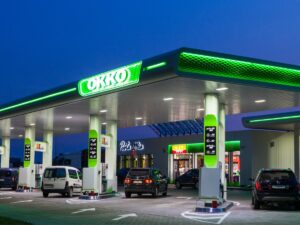
The OKKO network remains the largest importer of automotive gasoline into Ukraine: in August 2026, the company imported 46,100 metric tons of fuel, and 302,000 metric tons since the beginning of the year, according to data from the A-95 Consulting Group. OKKO accounts for about 27% of all Ukrainian gasoline imports since the beginning of the year.
The next group of largest suppliers consists of WOG, UPG, and “Ukrnafta.”
In August, WOG imported 20,200 metric tons of gasoline, UPG—20,000 metric tons, and “Ukrnafta” imported 19,400 metric tons.
Next are “BRSM-Nafta” with 7,000 metric tons, Amic with 3,400 metric tons, and “Avantage” with 3,100 metric tons.
Gaztrim and KLO each imported 2,400 metric tons, and Bars 2000 imported 2,200 metric tons.
Other market participants accounted for 26,100 metric tons.
In total, Ukraine imported 152,000 metric tons of motor gasoline in August.
The largest countries of origin for the fuel were Lithuania—51,800 metric tons—and Poland—40,100 metric tons. The ORLEN Group supplied more than half of August’s imports.
According to Experts.news, in August 2026, the OKKO Group became the largest importer of diesel fuel into Ukraine, supplying nearly 89,000 metric tons—a 47% increase compared to August of last year, as reported by the A-95 Consulting Group.
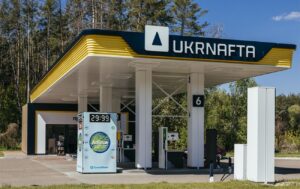
Ukrnafta took second place with a volume of nearly 77,000 metric tons. Over the past year, the company increased its imports by 2.4 times.
“Energo Trade JSC” became the third-largest importer, with 55,600 metric tons, although its shipments fell by 44%.
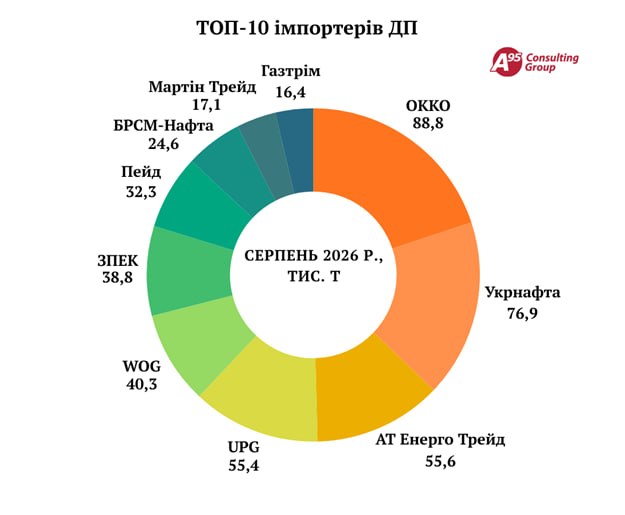
UPG imported 55,400 metric tons, a 3% increase, while WOG imported 40,300 metric tons, a 46% increase compared to last year.
The Western Fuel and Energy Company (ZPEK) also showed significant growth, increasing its imports by a factor of 2.2 to 39,000 metric tons.
According to the “A-95” chart on the third page of the press release, the rest of the top 10 importers for August included “Paid” with 32,300 metric tons, “BRSM-Nafta” with 24,600 metric tons, “Martin Trade” with 17,100 metric tons, and “Gaztrim” with 16,400 metric tons.
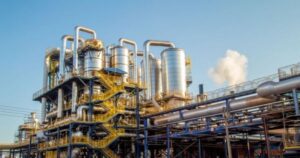
Following the completion of construction of the first phase of its bioethanol plant with an annual capacity of 83,000 metric tons, the OKKO Group plans to build the second phase with an annual capacity of 120,000 metric tons, according to the group’s CEO, Vasyl Danyliak.
“We are first building the first phase of the plant with a capacity of 83,000 metric tons of bioethanol, and then we will expand capacity. And we want to produce 120,000 metric tons of bioethanol per year in the second phase,” Danilyak said on the Fedoriv vlog on YouTube.
He added that the group plans to consume 50% of the bioethanol it produces in the future and export the remaining 50% to European markets.
Citing the experience of bioethanol production in the U.S., he noted that the capacity of plants in that country is at least 1 million metric tons, which, he said, allows for “economies of scale.”
As reported in early July 2026, citing Vasyl Danylyak, CEO of the OKKO Group of Companies, the group had to postpone the full launch of its EUR110 million bioethanol plant from the third quarter of 2026 to the first quarter of 2027. Danylyak attributed this to delays in the manufacture of certain units.
He noted, however, that part of the facility—specifically, the storage area for finished products—has already been completed.
Danylyak also pointed out that the retail chain itself would not be able to consume all of the plant’s bioethanol—which has a design capacity of 83,000 metric tons—even if it were to add 10% bioethanol to gasoline on its own. At the time, he noted that the group would be able to consume up to 60% of the bioethanol production capacity.
The group planned to sell the remainder to other retail chains or export it.
Of the total investment in the plant during 2024–2026, amounting to EUR 110 million, EUR 35 million is the group’s own contribution, and EUR 75 million is debt financing. Of this amount, EUR 60 million was provided by the EBRD for a nine-year term, and another EUR 15 million by Raiffeisen Bank Ukraine for a seven-year term.
According to Danilyak, the plant’s annual capacity is 83,000 metric tons of bioethanol, 70,000 metric tons of animal feed, and 270,000 metric tons of corn processing.
OKKO Group brings together more than 10 diverse businesses in the fields of manufacturing, trade, construction, insurance, services, and other sectors. The group’s flagship company is the “Galnaftogaz” concern, which operates one of Ukraine’s largest gas station networks under the “OKKO” brand, comprising approximately 400 gas stations.
The group’s founder and ultimate beneficiary is Vitaliy Antonov.
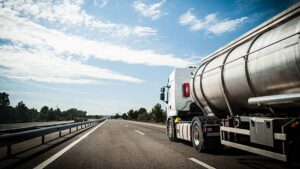
In July 2026, the state-owned company Ukrnafta increased its diesel fuel imports by 2.4 times compared to July of last year—to nearly 60,000 metric tons—ranking second among the country’s largest importers.
These figures were reported by the “A-95 Consulting Group.” A total of 134 companies imported diesel fuel in July.
The OKKO Group retained first place, importing more than 73,000 metric tons of diesel fuel. Its imports rose by 32% compared to July 2025.
Ukrnafta accounted for about 59,800 metric tons, or approximately 10.6% of the country’s total diesel fuel imports in July.
UPG took third place with 53,200 metric tons. Next came Energo Trade JSC with 50,700 metric tons and WOG with 42,900 metric tons.
Thus, the five largest importers together imported about 280,000 metric tons of diesel fuel—nearly half of the total volume of supplies to Ukraine in July.
Among the major market players, the Western Fuel and Energy Company (ZPEK) demonstrated the highest growth rate, increasing its imports by a factor of 5.3—to approximately 32,000 metric tons.
The sharp increase in Ukrnafta’s purchases comes amid its growing role in the Ukrainian petroleum products market following the expansion of its own network of gas stations and trading operations.
Overall, Ukraine imported 562,000 metric tons of diesel fuel in July—5% more than a year earlier.
However, despite the rise in imports, A-95 reported a fuel shortage in the market. Analysts cite several reasons for this, including increased demand following a rise in global prices, higher purchases by industrial and private consumers, and increased consumption due to the shift in agricultural exports toward road and rail transport.
In August, analysts expect the situation to gradually normalize thanks to a decline in global prices and an increase in fuel supply.
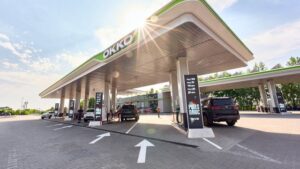
The OKKO gas station chain is investing over $120 million to open 20 new 3.0-format gas stations and renovate another 60 existing ones by 2029, according to OKKO Group CEO Vasyl Danyliak.
“We are probably the company that has carried out the most renovations during the full-scale war… We not only quickly restored damaged gas stations, but also launched a program back in the fall of 2022 to upgrade and rebuild our stations; over the years, we have renovated more than 200 facilities. But we see how requirements are changing—that’s why we developed the 3.0 format,” Danilyak told reporters during a press tour on Wednesday.
The first complex of this format was built and opened in Irpin, and the second was renovated to the 3.0 format in Hatne. The next step is the construction of a flagship highway complex in Zvyagel.
According to Danylyak, investments in the construction of the gas station in Irpin amounted to approximately $3 million; highway complexes in the new format are estimated to cost $4–5 million, while the renovation of existing highway stations will cost about $2 million. By 2029, the company plans to invest over $120 million in the development of the 3.0 format, specifically to build 20 new stations and renovate about 60, thereby covering approximately 20% of the network.
The new format emphasizes technology, the digitalization of the customer journey (OKKO PAY, OKKO Drive, the Smart Kitchen system), expanded food service, energy independence, and the development of infrastructure for electric vehicles, as well as simple navigation, accessibility, and modern design. In particular, the gas stations now feature OKKO Work Spaces—rooms for phone calls and online meetings, an all-season terrace, children’s play areas, and more.
In addition to the rooftop solar power plant, solar panels have also been installed as a canopy over the charging stations. In total, a 69 kW solar power plant has been installed at the Irpin gas station, and a 48 kW plant in Hatne, with plans to expand to 100 kW. During peak generation periods, these systems can cover up to 50% of the complex’s own electricity consumption. Combined with generators and backup power, this allows the gas stations to remain operational even during power outages. By the end of 2026, solar power plants will be operating at more than 300 gas stations in the network, with a total capacity exceeding 6 MW.
According to Danylyak, the company also plans to install solar power plants near gas stations “where it is possible to lease land.” In particular, this has already been done in Kalynivka, and such a mini-solar power plant will soon be installed in Ivankiv.
OKKO has been developing its electric vehicle initiatives since 2014, when it became the first gas station chain in Ukraine to begin building a systematic charging infrastructure. Today, this includes approximately 100 Ultra Fast Chargers at 63 locations. In the new format at gas stations, the charging area is located under a separate canopy with solar panels, separated from the fueling lanes.
“Together with the European Bank for Reconstruction and Development, the company is preparing a $10 million financing program to expand its network of high-speed charging stations,” Danilyak said.
According to Vasyl Dmytriv, OKKO’s vice president of marketing and development, the company now competes not only with gas stations but also with fast-food chains, restaurants, and stores. OKKO 3.0 features a full-fledged dining area offering Ukrainian, European, and Asian cuisines, plus a section for ready-to-eat meals: soups, main courses and side dishes, salads, burgers, pizza, WOK dishes, and pasta. The key difference of the new format is the open kitchen. Thanks to the expanded kitchen infrastructure, the company can now operate multiple culinary concepts simultaneously—including preparing dishes “to order.” OKKO remains Ukraine’s No. 1 coffee chain by sales: in 2025, customers purchased nearly 34 million cups. In the new gas station format, the coffee area has been expanded; specifically, the location in Hatne offers over 150 coffee options.
electromobility, gas station, INVESTMENT, Даниляк, ОККО, СЕС
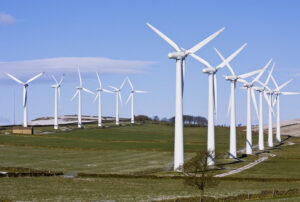
The European Bank for Reconstruction and Development (EBRD) plans to sign an agreement at URC 2026 to provide a long-term loan of up to 50 million euros to Volyn West Wind-2 LLC and Volyn West Wind-3 LLC (Volyn Oblast) for the development and construction of a 189 MW wind farm in Ukraine.
“The total amount of debt financing is 191.3 million euros, provided by a consortium of five international development finance institutions: IFC, EBRD (up to 50 million euros), BSTDB, BI Ukraine Limited, and Swedfund International AB,” according to the project description in the EBRD’s indicative action plan for URC 2026 on Thursday.
It is noted that the project will receive a guarantee and funds for technical assistance under the European Union’s Ukraine Investment Framework Hi-Bar program.
The loan itself will be used to finance the purchase of wind turbines, construction of the power plant’s infrastructure, civil and electrical engineering works, as well as related infrastructure.
It is noted that the borrowers are controlled by VI.AN Holding, which is part of OKKO Group AG.
As previously reported, a few days earlier, the EBRD decided to provide a long-term loan of up to 50 million euros to Volyn West Wind-2 LLC and Volyn West Wind-3 LLC for a 189 MW wind farm, while the IFC decided to provide a 42 million euro loan to these companies.
OKKO Group unites more than 10 diverse businesses in the fields of manufacturing, trade, construction, insurance, services, and other sectors. The group’s flagship company is the “Galnaftogaz” concern, which operates one of Ukraine’s largest gas station chains under the “OKKO” brand, comprising approximately 400 gas stations.
The founder and ultimate beneficiary of the group is Vitaliy Antonov.



