
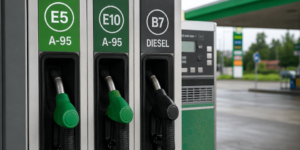
According to the Experts Club analytical center, citing data from the A-95 Consulting Group, the Ukrainian gasoline market continues to be concentrated around supplies from Poland and Lithuania: in July 2026, these two countries accounted for 55% of total imports.
Ukraine received 56,100 tonnes of gasoline from Lithuania and 51,700 tonnes from Poland. Together, this amounted to around 107,800 tonnes out of total imports of approximately 196,000 tonnes.
The Polish supply route is demonstrating particularly high growth rates. Compared with July last year, the volume of supplies increased by 68% and reached its highest level since August 2025.
Imports from Lithuania increased by 16% year-on-year.
The ORLEN oil refining group plays a key role in both supply routes. The group’s facilities in Poland and Lithuania supplied around 97,000 tonnes of gasoline to the Ukrainian market.
A-95 estimates ORLEN’s share at more than half of total imports. Comparing the rounded figures of 97,000 tonnes and the total volume of 196,000 tonnes, this represents approximately half of the market.
The high level of concentration has a dual effect.
On the one hand, the large and stable refineries in Poland and Lithuania allow Ukraine to rapidly increase purchases during periods of higher demand and compensate for the loss of other suppliers.
On the other hand, more than half of the available supply comes from only two geographical routes, while a very significant share of deliveries is linked to a single refining group.
Poland’s importance increased particularly after Ukraine switched to E10 gasoline. The change in standards limited the possibility of using some traditional sources, including certain Greek refineries.
At the same time, Greece has not disappeared from the market entirely. In July, Ukraine imported around 25,000 tonnes of gasoline produced by Motor Oil.
Germany became another rapidly growing supply route. It supplied 21,000 tonnes of gasoline, 78% more than in July 2025. The UPG network imported the entire volume.
Thus, the structure of imports in July demonstrates two parallel trends: ORLEN’s growing role as a key supplier and simultaneous attempts by Ukraine’s largest fuel retail networks to diversify purchases through Germany, Romania and Greece.
Polish company ORLEN S.A. supplied Ukraine with a total of 137,000 tonnes of diesel fuel from its refineries in Poland and Lithuania in July 2026, retaining its status as the largest corporate supplier of the resource to the Ukrainian market.
The company’s supply volume increased by 25% compared with July 2025 and by 61% compared with July 2024, according to data from the A-95 Consulting Group.
In total, Ukraine imported 562,000 tonnes of diesel fuel in July. Thus, ORLEN accounted for about 24.4% of total monthly imports, or virtually every fourth tonne of diesel imported into the country.
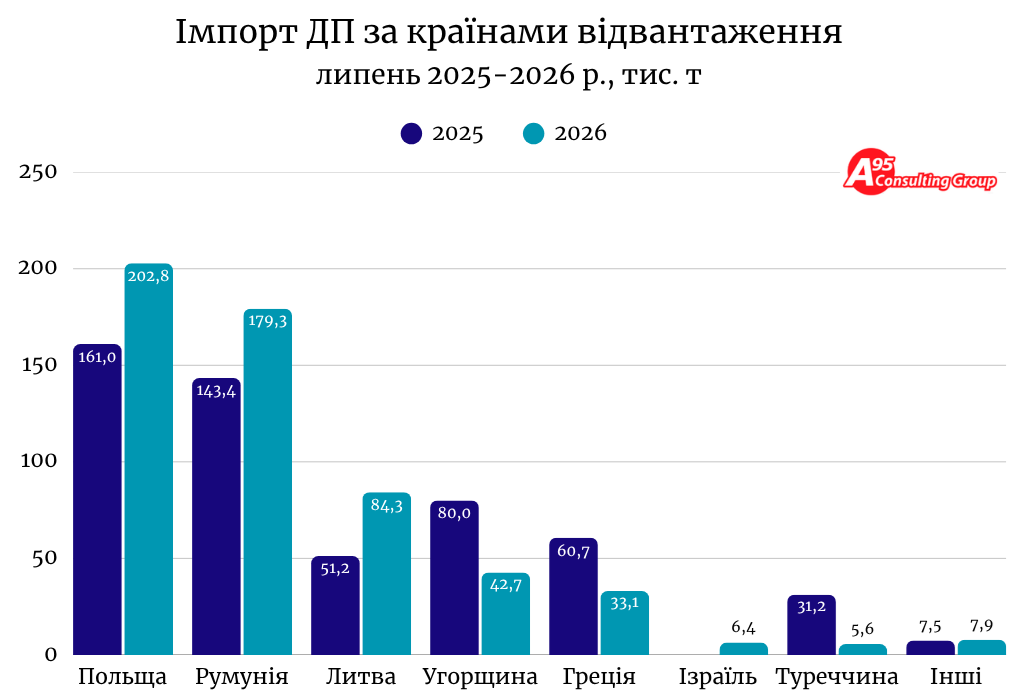
The growth in ORLEN’s supplies is taking place alongside the increasing role of the Polish and Lithuanian routes in Ukraine’s fuel logistics.
In July, 202,800 tonnes of diesel fuel were imported from Poland, compared with 161,000 tonnes a year earlier, representing growth of about 26%. Supplies from Lithuania increased even faster—by 65%, from 51,200 tonnes to 84,300 tonnes.
A-95 Director Serhii Kuiun attributes the increased pressure on the Polish route primarily to the record shallowing of the Danube and security risks that complicated traditional logistics via the southern route.
At the same time, despite a 5% year-on-year increase in total imports, the Ukrainian market faced a diesel fuel shortage in July. Among the reasons, A-95 cites rising global prices following a renewed escalation in the Middle East, increased demand from industrial and private buyers, and higher fuel consumption due to the rerouting of part of agricultural exports to road and rail transport.
In August, analysts expect the situation to normalise thanks to lower global prices for petroleum products and increased supplies.
Source: A-95 Consulting Group, Experts Club
The Polish group Orlen is interested in expanding its presence in Ukraine and is considering the possibility of acquiring a stake in JSC “Ukrnafta,” the Polish online portal bankier.pl reported on Thursday, citing Orlen CEO Ireneusz Fafar.
“We have begun discussions regarding the possibility of our participation in Ukrnafta. We are one of the partners in this process. Whether this participation will take place and what form it will take is a matter for negotiations with the Ukrainian side,” he stated at a press conference.
According to him, the Ukrainian market is of paramount importance to the group, especially for the oil refinery in Mažeikiai (Lithuania), which sells nearly 18% of its products there.
“We believe that the war will end and Ukraine will emerge victorious. We would like to participate more actively in this market than we do now. We are one of the main partners supplying fuel to Ukraine and would like to strengthen this position,” Fafara emphasized.
He added that Orlen sells about 1.5 million tons of petroleum products in Ukraine annually.
JSC “Ukrnafta” is Ukraine’s largest oil production company, carrying out a full cycle of activities in the field of production: exploration, oil and gas production, provision of oilfield services, as well as management of the largest network of gas stations in Ukraine, UKRNAFTA.
The company has over 1,106 oil wells and 131 gas wells on its balance sheet.
The shareholders of JSC “Ukrnafta” are NJSC “Naftogaz of Ukraine” and the Ministry of Defense of Ukraine. Since 2022, the company has been under state management and is implementing a large-scale business transformation.
The UKRNAFTA gas station network is the largest network of gas stations in Ukraine, comprising nearly 700 stations and ranking among the top three in terms of fuel sales volume. The UKRNAFTA brand consolidates networks that previously operated under the Glusco, Shell, and U.Go brands.
On December 4, Kyiv hosted the Petroleum&LPG Ukraine 2025 forum, a long-standing meeting place for operators in the Ukrainian petroleum products market. The conference brought together 280 delegates from 120 companies in the fuel sector, representatives of government agencies, and companies. The forum was organized by the A-95 Consulting Group.
One of the main topics of the conference was international cooperation. Representatives of the Ministry of Energy of Ukraine, Naftogaz of Ukraine, Ukrnafta, and the Polish energy company ORLEN S.A. took part in the discussion. As noted by Robert Kwiatkowski, Director of Strategy and Strategic Transformation at ORLEN S.A., Ukraine is a strategic direction for the company’s current activities and development.
“We understand that if we do not help Ukraine, it could be our biggest mistake,” said the Polish top manager.
ORLEN is currently the largest supplier of light petroleum products to Ukraine: according to the A-95 Consulting Group, in 2023-2025, gasoline supplies increased threefold, and diesel fuel supplies increased one and a half times. The company is also a major supplier of road bitumen, lubricants, and petrochemical products.
Serhiy Koretsky, Chairman of the Board of Naftogaz of Ukraine, spoke very highly of the company’s cooperation with the Polish concern.
“ORLEN has become so deeply integrated into the Ukrainian market that sooner or later, the company will likely acquire its own assets in Ukraine,” said the head of Naftogaz, who is actively developing cooperation with the Polish concern in LNG imports and other areas.
According to Deputy Minister of Energy Mykola Kolisnyk, integration into the EU is a guarantee of long-term development of the Ukrainian fuel market. He noted that the transition of the Ukrainian fuel market to EU standards requires the introduction of high environmental standards and modern approaches to the processing of petroleum product waste.
A separate session was devoted to tax discipline, attended by a large delegation of leading officials from the State Tax Service, headed by Acting Chair Lesya Karnaukh. She gave preference to public communication with forum participants, who had a unique opportunity to ask any questions. The greatest interest was in the mechanism for companies to be included in the list of “risky” ones, as well as the tax authorities’ approaches to tax payment standards.
“Without interaction with the market, which strives for fair conditions, we will not be able to work effectively. We are not a punitive body; our goal is to fairly determine tax liabilities,” Lesya Karnaukh said following the discussion.
In turn, A-95 estimated that in 2023-2025, the payment of operating taxes by the largest gas station chains would increase more than twofold, by almost UAH 10 billion.
Other topics of in-depth discussion at Petroleum&LPG Ukraine 2025 included post-war development of maritime and railway infrastructure, creation of petroleum product reserves, development of the bioethanol industry and use of alcohol-containing gasoline, electromobility, and expansion of non-fuel activities at gas stations.
“The fuel market remains the most resilient energy sector thanks to the comprehensive restructuring of the geography and logistics of supplies in 2022. Despite constant shelling and losses, companies in this market are a reliable support for consumers and the state, ensuring stable fuel supplies and paying taxes that are growing year after year,” said the event moderator, Director of the A-95 Consulting Group, Serhiy Kuyun.
The conference partners were traditionally the largest market operators: ORLEN S.A., JSC Ukrnafta, OKKO, UNIMOT S.A. (Poland), UPG, Kemexon (Switzerland), JSC Energo Trade, Western Fuel and Energy Company, AGTG (Switzerland).
The Petroleum&LPG Ukraine 2025 forum has been held annually by the A-95 Consulting Group since 2023. From 2009 to 2019, the company held the Petroleum Ukraine conference, and from 2010 to 2020, the LPG Ukraine conference.
In 2022, the annual Petroleum Ukraine forum was also launched in Warsaw. Warsaw, which is one of the largest events in Eastern Europe dedicated to the motor fuel market.
Interfax-Ukraine is an information partner.
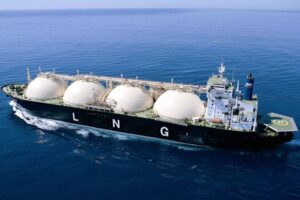
Naftogaz Group and Polish oil concern ORLEN have signed a new agreement for the supply of 100 million cubic meters of liquefied natural gas (LNG) to Ukraine.
“This is the third contract within the partnership signed in the spring of this year. The total volume of contracted gas is 300 million cubic meters,” the company said on Thursday.
The signing of the contract was announced at the annual ORLEN GAS Meeting, a leading industry event dedicated to the region’s energy security.
The gas will be supplied from the US, regasified at the terminal in Świnoujście (Poland) and transported to Ukraine via the Polish gas transportation system.
“We are already preparing for the next heating season, and such contracts are an important part of our strategy to diversify supplies and ensure the country’s energy stability,” said Roman Chumak, CEO of Naftogaz Group.
In turn, according to Robert Soschinsky, Vice President of Operations at ORLEN, the new agreement with Naftogaz emphasizes the growing role of ORLEN as a natural gas supplier in the region.
“Our partnership significantly strengthens Ukraine’s energy security thanks to ORLEN’s diversified supply portfolio and efficient use of the Polish gas transportation infrastructure,” he emphasized.
As reported, in March 2025, Naftogaz and ORLEN signed a memorandum of long-term cooperation in the field of liquefied natural gas (LNG), under which they signed a contract for the supply of the first 100 million cubic meters. The memorandum establishes long-term strategic cooperation between the companies and will enable Ukraine to create a more diversified gas supply system.
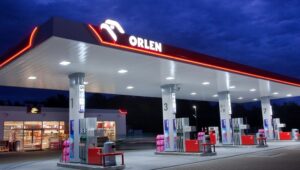
Polish oil concern Orlen, which owns Orlen Lietuva, which operates the Mazeikiai refinery, sold PLN2.292 billion ($513.1 million at current exchange rates) worth of products to customers headquartered in Ukraine in the first half of 2023, up 61.9% from the first half of 2022.
According to the company’s consolidated report on the Warsaw Stock Exchange, meanwhile, revenue in Ukraine fell by 8.2% to PLN1.046 billion ($234.2 million) in the second quarter of this year to the second quarter of last year.
The document specifies that directly Polish Orlen increased sales for Ukraine in the first half of the year to PLN1.253 billion ($280.5 million), although in the second quarter they decreased by 39.2% to PLN541 million ($121.1 million)
Overall, the Polish oil major’s sales jumped 79.1% to PLN184.891 billion ($41.4 billion) in the first half of this year, including a 29.1% jump to PLN74.612 billion ($16.7 billion) in the second quarter of this year.
The report indicates that since the beginning of February 2023, after the expiration of the contract with Rosneft, Russian oil supplies have covered only about 10% of the company’s demand for the commodity.
“These were only pipeline deliveries that were not subject to international sanctions,” Orlen pointed out.
It added that at the end of February 2023, the Russian side suspended deliveries through the Druzhba pipeline to Poland, which consequently led to the termination of the last contract with Tatneft for pipeline deliveries of crude oil to Poland from the Russian direction, so currently ORLEN refineries in Poland do not receive crude oil from Russia.
It is emphasized that the company has recently taken intensive actions to diversify supplies to the above mentioned refineries, which are carried out by sea transport from the North Sea, West Africa, the Mediterranean basin, as well as the Persian Gulf and the Gulf of Mexico. Among others, Saudi Aramco is an important partner in the import portfolio for this feedstock, with whom Orlen has a strategic contract for crude oil supply in 2022. In addition, a long-term contract with BP for the supply of Norwegian crude oil was also concluded in 2023. Thus, according to the group, the suspension of oil supplies from Russia will not affect the supply of the company’s Polish customers, including gasoline and diesel fuel.



