
The cost of construction and installation work on civil engineering projects in Ukraine in June 2026 rose by 24.3% compared to June of last year—the highest rate among the major construction segments. According to data from the State Statistics Service, nonresidential construction rose in price by 23.8% over the same period, while residential construction rose by 19.2%. On average across the construction industry, the increase was 23.1%.
Civil engineering also led the way in terms of monthly trends. In June, compared to May, prices in this sector rose by another 1.8%, compared to 1.3% in non-residential construction and 0.8% in residential construction.
In the second quarter of 2026, civil engineering and installation work cost 22.4% more than in April–June of the previous year. A similar increase—22.4%—was recorded in non-residential construction, while residential construction prices rose by 18.2%.
The quarterly trends are particularly telling. Compared to the first quarter, prices for engineering work rose by 12.4% in the second quarter, and for non-residential construction by 12%, while the residential sector saw an increase of only 0.4%.
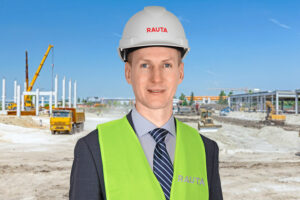
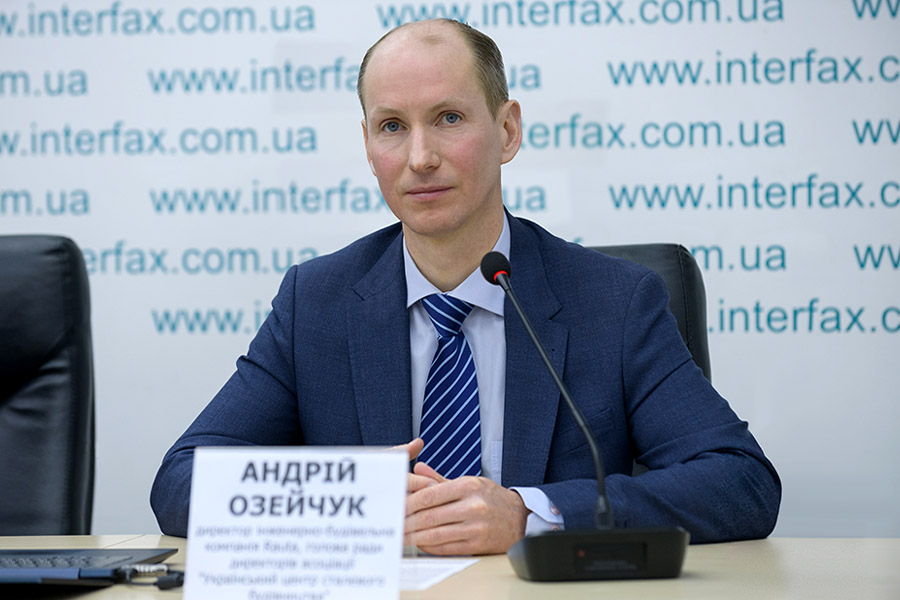
According to Andriy Ozeychuk, owner and director of the engineering and construction company Rauta, the shortage of skilled workers remains one of the key factors driving up construction costs.
“The market is currently short about 30% of construction specialists,” Ozeychuk noted, commenting on the situation in the industry in February 2026.
According to his data, the labor shortage has already led to a noticeable acceleration in wage growth. While wages in the construction sector grew by an average of approximately 15–20% annually between 2022 and 2024, the growth rate reached 25–30% in 2025. Wages rose particularly sharply for concrete workers—by 50%, surveyors—by 44%, and concrete pourers—by 38%.
Thus, the current rise in the cost of construction work is not driven solely by prices for building materials and equipment. The cost of construction work itself and labor is playing an increasingly important role.
Ozeychuk also drew attention to the long-term nature of the labor shortage. According to him, vocational schools are facing both a shortage of students enrolling in construction programs and a high dropout rate as early as the first years of study.
“In the long run, this could lead to an even greater labor shortage and slow down Ukraine’s recovery,” says the owner of Rauta.
According to the company’s estimates, the labor shortage is already forcing the construction industry to seek workers outside Ukraine, particularly in India, Nepal, Bangladesh, and Pakistan.
The rising cost of civil engineering is of particular importance to Ukraine due to the massive need to rebuild energy, transportation, utilities, and other critical infrastructure. According to Rauta’s estimates for 2025, the segment of critical infrastructure restoration and protection already accounted for about 20% of the Ukrainian construction market.
Therefore, further increases in the cost of civil engineering work could directly impact the cost estimates for restoration projects. If the cost of construction and installation work rises by 20–25%, projects whose budgets were established much earlier may require additional funding or a revision of technical solutions and implementation timelines.
At the same time, non-residential and infrastructure construction remain among the most active segments of the market. In 2025, the main targets for investment in commercial real estate were warehouse, industrial, and retail buildings, while the most attractive regions for new construction were the Kyiv, Lviv, and Ivano-Frankivsk regions, Ozeychuk noted.
In the first half of 2026, civil engineering construction costs rose by 16.1% year-over-year, non-residential construction by 16.5%, and residential construction by 13.7%.
“Rauta” operates in the fields of design, construction, and installation of buildings and is a member of the European Construction Industry Association. According to data from the Unified State Register, Andriy Ozeychuk owns 100% of the company’s authorized capital.
CONSTRUCTION, INFRASTRUCTURE, OZEYCHUK, PRICE, RAUTA, RESTORATION, STAFF
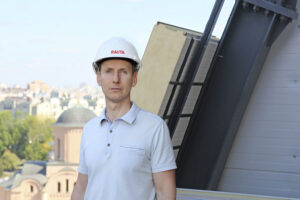
Ukraine’s post-war reconstruction will create a massive market for the construction sector, industry, and related sectors; however, Ukrainian companies need to start preparing now to compete with international contractors, according to Andriy Ozeychuk, director of Rauta and chairman of the board of directors of the Ukrainian Steel Construction Center Association.
In his column for The Page, he noted that once the war ends, demand for construction will be significant from the general public, the government, and the business sector alike. According to estimates by the Ministry of Foreign Affairs, there are about 8 million Ukrainians abroad who fled during the full-scale invasion, and the UN forecasts the return of 3–3.5 million people once lasting peace and security guarantees are in place.
According to the expert, a significant portion of those who return, as well as internally displaced persons, will need new housing or the restoration of damaged homes. At the same time, reconstruction will not be limited to the housing stock. According to estimates by the Kyiv School of Economics, residential buildings account for only about one-third of the direct losses from the war, while significant losses were also sustained by transportation and energy infrastructure, corporate assets, industry, and the agri-industrial complex.
Ozeychuk notes that, according to World Bank estimates, Ukraine’s reconstruction will require more than EUR500 billion over the next decade. This is nearly three times Ukraine’s GDP in 2025 and creates significant opportunities not only for the construction sector but also for the entire economy.
In his estimation, every hryvnia invested in construction has a multiplier effect and stimulates 1.5 to 3 times greater growth in related sectors. Examples include the postwar reconstruction of Germany and South Korea, where the construction sector became one of the catalysts for economic growth.
The expert identifies the main sources of funding for large-scale projects as direct financial assistance from international partners—including the G7, the EU, and the U.S.—the attraction of large private investments backed by state guarantees, as well as reparations and confiscated frozen assets of the Russian Federation. Ukraine’s European integration should serve as an additional incentive, as it will eventually open access to specialized EU development funds.
At the same time, Ukrainian construction companies may already face stiff competition from European players. According to Ozeychuk, the most realistic scenario would be a consortium model in which a European general contractor would work alongside Ukrainian subcontractors and use local materials certified to European EN standards.
Under this scenario, foreign companies could be involved in high-tech work, while Ukrainian businesses would handle local logistics, specialized work, and the construction of utility networks, roads, and capital construction projects.
The expert identifies financing conditions as the main barrier for Ukrainian companies. While in Ukraine construction is often carried out using substantial advance payments, the EU commonly uses a post-audit payment model—based on the completion of specific project phases. This requires significant working capital, whereas Ukrainian companies have limited access to low-cost long-term loans.
To level the playing field, Ozeychuk believes the government should launch programs for affordable long-term loans backed by state guarantees, provide preferential financing for the modernization of Ukrainian building materials plants, simplify the adoption of EN standards, and advocate for Ukrainian businesses’ participation in international grant programs.
A separate challenge will be the construction industry’s transition to European design standards. By 2028, the Ukrainian system is expected to fully integrate into the European space and adopt Eurocodes. This will remove some barriers for foreign engineers but will also require Ukrainian specialists to rapidly upgrade their qualifications.
Among the technological trends in reconstruction, the expert cites BIM modeling, digital twins of buildings, energy-efficient solutions, and the concept of net-zero energy buildings. In his assessment, the market will shift toward rapid modular construction, eco-friendly materials, and innovative solutions.
Another key constraint will be a labor shortage. According to Ozeychuk, demobilized military personnel and men returning from abroad will only partially offset the labor shortage. High demand could lead to rising wages in construction, particularly for blue-collar jobs, and could also encourage the retraining of specialists from other sectors, as well as the more active involvement of women, veterans, and older workers.
In addition, Ukrainian companies are already beginning to collaborate with agencies that specialize in the official recruitment of construction workers from South Asian countries, including India, Nepal, Bangladesh, and Pakistan.
Ozeychuk believes that the two main principles of the future reconstruction are speed of implementation and the “Build Back Better” approach—that is, rebuilding to a higher standard than before the destruction. It is precisely these criteria that will determine the demand for modern materials, technologies, and production capacity in Ukraine.
Rauta is a Ukrainian company operating in the field of prefabricated buildings, facade and roofing systems, sandwich panels, and steel construction. The “Ukrainian Center for Steel Construction” Association brings together companies working in the segments of metal structures, building materials, design, and industrial construction.
CONSTRUCTION, Eurocode, INVESTMENT, OZEYCHUK, RAUTA, RECONSTRUCTION
According to estimates by experts at the Ukrainian Center for Steel Construction, the market for steel structures in 2025 reached 108,000 tons.
Imports of steel structures increased 2.4-fold, while the domestic market showed a 3% increase.
Steel structures were actively used in projects to restore and protect critical infrastructure facilities, as well as in the construction of industrial and logistics buildings.
According to industry experts’ forecasts, the steel structure market could grow by approximately 9% in 2026 and reach about 117,000 tons by year-end.
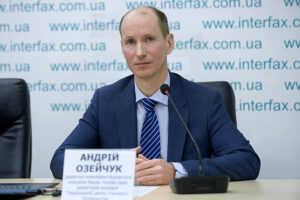
“Following a sharp drop in demand for steel structures in 2022, we are seeing steady annual growth in consumption of 15–20%. However, we are still far from the 2021 figures, when the steel structures market reached 154,000 tons,” said Andriy Ozeychuk, director of the construction company Rauta and chairman of the board of directors of the Ukrainian Steel Construction Association (UCSA).

Ukrainian manufacturer of passive fire protection systems Kovlar Group is expanding its presence in the Moldovan market and expects to make this direction one of the first stable export channels for its products.
According to the company, it has been supplying fire protection products for engineering communications to Moldova for the past two years. Kovlar Group notes that there is virtually no domestic production of passive fire protection materials on the Moldovan market, so local partners are showing interest in Ukrainian systems.
The company specifies that regular technical meetings are held with Moldovan specialists to introduce the products, during which issues of fire protection system design, national regulatory requirements, and features of material application are discussed. According to preliminary agreements, the Moldovan side plans to purchase a significant part of Ammokote products.
The presence of Ammokote products on the Moldovan market is also confirmed by open specialized resources: in particular, the specialized platform Antikor.md features Ammokote products for fire protection of engineering communications with technical documentation and certificates.
Kovlar Group LLC was founded in 2015 in Kyiv and is the largest manufacturer of passive fire protection products in Ukraine. According to OpenDataBot, the company’s authorized capital is UAH 1.2 million, and its ultimate beneficiaries are Kostyantyn Kalafat (40%), Andrii Ozeychuk (35%), and Liubov Vakhitova (25%). The company’s revenue for 2024 amounted to UAH 91.37 million, which is twice as much as a year earlier, and its net profit was UAH 13.4 million, which is 1.7 times higher than in 2023. In the first quarter of 2025, the company’s revenue amounted to UAH 13.5 million, with a net profit of UAH 1.983 million.
Ukrainian fireproof materials manufacturer Kovlar Group LLC (Kyiv) considers the information attack on the company to be an element of unfair competition.
“Against the backdrop of high-profile corruption scandals related to procurement for Ukraine’s energy sector and Kovlar Group LLC’s offer of Ukrainian-made fire-retardant materials at prices significantly lower than those of the winners of state tenders, we consider such actions to be an element of discrediting the Ukrainian manufacturer and unfair competition,” the company said in a statement posted on its website.
The company received a journalist’s request (dated February 18, 2026), the content of which indicates an attempt to repeat the information discrediting campaign, as in the summer of 2025.
In August 2024, a large-scale information attack was carried out against Kovlar Group, accompanied by commissioned publications of similar materials in a number of media outlets. Their goal was to discredit the company during its active participation in state tenders for the protection of energy infrastructure facilities.
At that time, the company chose the legal route of defense: it appealed to the court, the Prosecutor General’s Office of Ukraine, the National Police, the Ministry of Justice, and financial monitoring authorities. As a result of the inspections, official confirmation was received: the company and its founders operate in accordance with Ukrainian law, are not subject to sanctions, and have no restrictions on their economic activities.
Currently, Kovlar Group LLC continues to operate as usual, fulfills its contractual obligations, and develops production, emphasizing that all products under the Ammokote trademark are manufactured in accordance with current regulatory documents, and that the technical and licensing documentation is valid and complies with regulatory requirements.
“The company operates openly, professionally, and within the framework of current legislation. Participation in government tenders is carried out on a competitive basis. The company is a conscientious taxpayer and has a high level of tax discipline. The company has already proven the groundlessness of previous accusations in the legal field, so we are confident that this time the truth will be on our side,” the statement said.
Kovlar Group LLC was founded in 2015. It is the largest manufacturer of passive fire protection products in Ukraine.
According to OpenDataBot, the company’s authorized capital is UAH 1.2 million. The ultimate beneficiaries are Konstantin Kalafat (40% of shares), Andriy Ozeychuk (35%), and Lyubov Vakhitova (25%).
discrediting, fire protection material, information attack, Kovlar Group, OZEYCHUK, Калафат
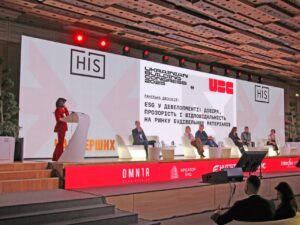
Engineering and construction company Rauta will launch sandwich panels, ventilated facades, and roofing materials made from “green” steel on the Ukrainian market next year, Rauta Director Andriy Ozeychuk announced during a panel discussion at the 5th Ukrainian Construction Congress in Kyiv on Friday.
“In 2026, Rauta will launch sandwich panels, ventilated facades, and roofing materials made from ‘green’ steel, which is produced using hydrogen, electricity, and biogas instead of fossil fuels. The residual product of this production process is not carbon dioxide, but water,” he said, citing an example of the company’s implementation of ESG principles (Environmental, Social, Governance – environmental, social and corporate responsibility).
According to him, the use of “green” steel, in particular, will significantly reduce the amount of embodied carbon and increase the number of points when certifying a building according to the LEED and BREEAM environmental systems.
Rauta systematically implements key ESG principles in its activities, because a transparent corporate culture and reputation are important to the company’s customers. “The projects implemented by our company always incorporate solutions that comply with ESG principles. For example, the Energy series’ airtight technology and sandwich panels reduce operational carbon and increase the sustainability of the facility,” says Ozeychuk.
In 2022, Rauta was the first in Ukraine to introduce Environmental Product Declarations (EPDs) for building envelopes. The company is also actively involved in social projects: it partners with architectural competitions, provides grants for training young architects at InLab and Plus Minus schools, has set up a training stand in a specialized energy conservation auditorium at KNUSA, and has launched an educational project on sustainable design.
The expert noted that the advantage of steel solutions for the customer is the speed of project implementation and the ability to create large-span spaces. If necessary, steel frames can be relatively easily relocated or 100% recycled as scrap metal, which significantly increases their value for the customer compared to reinforced concrete solutions.
Ozeychuk stated that European construction customers implementing projects in Ukraine are not only willing to pay for steel solutions, but also often insist on the use of more environmentally friendly and energy-efficient materials.
“This is due to a more conscious attitude towards ecology and construction experience in the EU, where the European Energy Performance of Buildings Directive (EPBD) is in force, which sets requirements for improving the energy efficiency of existing and new buildings, which directly affects the criteria for selecting materials. Unfortunately, Ukrainian construction customers mainly look at low prices rather than environmental or quality characteristics,” he said.
According to his forecast, if Ukraine implements the European Directive, the demand for materials with better thermal and environmental characteristics will increase. “This will increase competition between Ukrainian and European manufacturers and force the former to invest in modern production processes to improve the environmental friendliness and energy efficiency of their products,” Ozeychuk believes.
Rauta is a leader in the Ukrainian steel construction market and a member of the European Construction Industry Association. The company provides design, manufacturing, and installation solutions in accordance with current EU standards. The company is licensed to perform construction work with medium and significant consequences (CC2, CC3). According to the Unified State Register, Andriy Ozeychuk owns 100% of the company’s authorized capital.



