

The “Podorozhnik” pharmacy chain (Lviv) has topped the ranking of the country’s pharmacy chains by number of locations and sales.
According to the publication “Apteka,” second in the ranking of the largest chains by number of locations is the “Apteka 9-1-1” chain (Kharkiv), which operates under the “9-1-1” and “Apteka Wholesale Prices” brands; in third place is “Apteka-Magnolia” LLC (Zaporizhzhia), known for the brands ANC, “Kopiyka,” “Shara,” and “Blagodiya”; in fourth place is “Sirius-95” LLC (Kyiv), which operates under the “We Wish You Health” brand; in fifth place is “Pharmastor” LLC (Kyiv, “Good Day Pharmacy”).
In terms of sales volume, “Apteka-Magnolia” ranks second in the top 5, third place goes to the “Apteka 9-1-1” chain, and fourth and fifth places are held by “Sirius-95” and “Farmastor” (“Bazhaemo Zdorov’ya” and “Apteka Dobrogo Dnya”).
The publication does not report the number of retail locations, but media outlets cite varying numbers depending on the calculation method.
As the “Podorozhnik” chain clarified to the Interfax-Ukraine news agency, as of the end of August 2026, this pharmacy chain’s turnover reached 3.814 billion UAH, with approximately 2,400 retail locations.

As a result of an enemy attack, the Kusum pharmaceutical plant in Sumy was destroyed, and one employee was killed.
“This morning, the production facility of the Kusum pharmaceutical company in Sumy was destroyed as a result of an enemy attack. Unfortunately, the attack claimed the life of company employee Yevgeny Vladimirovich Miroshnichenko, who had worked in the plant’s engineering department since 2009. ‘Kusum’ extends its sincere condolences to his family and loved ones,” the company stated on its website.
The company reports that ‘Kusum’ continues to operate.
” In addition to its production facilities in Ukraine, the company has manufacturing sites in India—in Indore and Bhiwadi. “This will allow us, in the absence of artificial regulatory barriers, to restructure our processes and work to ensure uninterrupted supplies of medicines to Ukraine,” the pharmaceutical company stated.

The biopharmaceutical company Biopharma Plasma (Kyiv) has opened a plasma center in Kolomyia (Ivano-Frankivsk Oblast), marking the company’s 23rd plasma center. The company announced this on LinkedIn.
“This new center is another step toward expanding access to plasma donation and strengthening our contribution to the production of life-saving medicines,” the company stated.
As previously reported, in June, Biopharma Plasma opened a plasma center in Zhytomyr, which became the company’s 22nd plasma center. Before the war, Biopharma Plasma planned to open approximately four to five new centers each year, investing about $2.5 million in each.
By the end of 2027, Biopharma plans to launch a plant in Oradea, Romania, with an initial investment of 85 million euros. In September of this year, the company plans to launch the first phase of its plant in Uzhhorod for the production of pharmaceutical products and immunobiological preparations, which will provide a full cycle of blood plasma processing. The company has already invested 67 million euros in the construction; the total cost of the first phase is 75 million euros. According to the plan, the volume of blood plasma-based drug production in Uzhhorod will be twice that of production in Bila Tserkva, amounting to up to 1.5 million liters of blood plasma per year, while the project in Romania will be twice as large.
Biopharma Plasma, Donation, Kolomyia, PHARMACEUTICALS, PLASMA
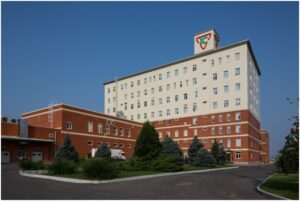
Bringing pharmaceutical production into compliance with European requirements demands significant investments from Ukrainian pharmaceutical manufacturers, which could lead to higher production costs, according to Anatoliy Reder, CEO of the pharmaceutical company “Interchem.”
“We are operating within the paradigm that our country is currently moving toward—alignment with European requirements. We must understand that compliance with European standards, EU directives, and the principles and approaches currently in effect in Europe will require significant additional investments from us—in production, regulatory processes, research, and so on. In other words, this involves enormous additional costs in order to meet, within a relatively short period of time, the requirements that are currently the norm in the European Union. With a gradual transition to these requirements, it must be acknowledged that production costs will rise significantly,” he said in an interview with the “Interfax-Ukraine” news agency.
As Reder noted, compliance with European standards—particularly those incorporated into Ukraine’s law on medicinal products—will automatically require additional investments, which will inevitably lead to price increases.
“We need to speak openly about this. You can’t make pills out of thin air. If additional controls are needed, additional costs will be incurred. Today, we monitor every batch of manufactured products throughout their entire shelf life—something that wasn’t required before—and this involves hundreds and thousands of manufactured batches and, consequently, enormous costs. The additional control points in production required of us by European Union legislation—this means additional equipment, additional laboratory staff, and additional production processes—represent objectively large-scale investments. These costs will inevitably lead to price increases,” he stated.

A new, potentially multibillion-dollar market is emerging in the global pharmaceutical industry for drugs that target the orexin system in the brain. The first drug in this new class has already received approval from the U.S. regulatory agency for the treatment of narcolepsy, while pharmaceutical companies are beginning to explore the same mechanism for other sleep disorders, attention disorders, cognitive disorders, and neurological diseases.
On August 11, 2026, *The Economist* described these developments as a potential “Ozempic moment” for the brain—drawing an analogy with GLP-1 drugs, which were initially developed primarily to treat diabetes but later radically transformed the obesity treatment market and began to be investigated for a whole range of other diseases.
In the case of brain disorders, the orexin system could become such a universal mechanism.
A key milestone occurred on August 5, 2026, when the U.S. Food and Drug Administration (FDA) approved Takeda’s drug Orzeyful (oveporexton) for adults with type 1 narcolepsy.
This is the first approved drug that directly targets the biological mechanism of this disease.
Type 1 narcolepsy is associated with the death of brain cells that produce orexin—a neuropeptide that regulates wakefulness, sleep, and muscle tone. When orexin is deficient, the brain has a harder time maintaining a stable state of wakefulness and distinguishing between sleep and wakefulness.
Traditional therapies have primarily targeted individual symptoms—for example, by promoting alertness or reducing cataplexy. Oveporexton works differently: the drug activates the orexin receptor OX2R, thereby partially restoring the missing signal.
This is precisely what makes this new approach particularly interesting for the pharmaceutical industry.
The FDA’s decision was based, in particular, on two 12-week randomized, double-blind, placebo-controlled trials involving 273 adult patients with type 1 narcolepsy.
Patients who received oveporestone showed improved ability to remain alert during the day, as well as reduced subjective sleepiness and frequency of cataplexy episodes. Improvements were also observed in other symptoms of the disease.
However, the drug is not without side effects. The FDA lists insomnia, frequent urination, urinary urgency, and increased salivation among the most common side effects.
So, for now, we’re not talking about a “brain-boosting pill,” but rather a medication with a specific medical indication and known risks.
However, the pharmaceutical industry’s interest extends far beyond type 1 narcolepsy.
A good illustration of the scale of these expectations is Eli Lilly’s deal with the British company Centessa Pharmaceuticals.
On June 24, 2026, Lilly completed its acquisition of Centessa, gaining a portfolio of experimental OX2R receptor agonists.
When announcing the deal on March 31, Lilly estimated the initial purchase price at approximately $6.3 billion, with up to an additional $1.5 billion potentially payable depending on the achievement of certain regulatory milestones. Thus, the potential value of the deal reaches about $7.8 billion.
Centessa’s lead drug—cleminorexton, formerly known as ORX750—has already completed a Phase 2a trial in patients with Type 1 and Type 2 narcolepsy and idiopathic hypersomnia. Lilly notes that other drugs in this platform could potentially be studied for a broader range of neurological, neurodegenerative, and neuropsychiatric disorders.
In fact, one of the world’s largest pharmaceutical companies paid billions of dollars for the opportunity to secure a position in a new class of drugs even before most of its potential applications had been proven.
Takeda and Lilly are not the only players in the market.
Alkermes is developing its own OX2R agonist, alixorexton. By 2026, it will already be in Phase 3 trials for narcolepsy types 1 and 2 and in Phase 2 trials for idiopathic hypersomnia.
At the same time, the company is beginning to explore other molecules in this class. ALKS 7290 is in the early stages of development for the treatment of attention-deficit/hyperactivity disorder, and ALKS 4510 is being studied as a potential treatment for fatigue associated with multiple sclerosis and Parkinson’s disease. For now, both programs are still in the early clinical stages.
It is precisely the potential to extend the application of a single biological mechanism to numerous diseases that explains the comparison with GLP-1.
Orexin was discovered relatively recently—in the late 1990s. It is produced by a small group of neurons in the hypothalamus, but their signals spread throughout numerous areas of the brain.
The orexin system is involved in more than just maintaining alertness. It is linked to attention, motivation, energy balance, mood, and other functions of the central nervous system.
Takeda explicitly views orexin as a system linked to sleep and wakefulness, attention, mood, metabolism, and respiration.
This means that pharmacological intervention targeting orexin receptors could theoretically be beneficial not only in cases where there is a direct deficiency of this neuropeptide.
Following the approval of oveporexton, *Nature Reviews Drug Discovery* also noted that the pharmaceutical industry is already exploring broader indications for drugs in this class.
The history of GLP-1 has shown pharmaceutical companies just how valuable a mechanism can be that targets not a single symptom but a fundamental system of the body.
GLP-1 drugs have expanded from treating diabetes to a global market for obesity therapy and are now being studied for a multitude of comorbidities.
Orexin-based drugs may follow a similar trajectory: a rare and well-studied disease serves as the first proof of concept for a new mechanism, after which developers begin testing it for much more common conditions.
This is precisely why the FDA’s approval of oveporexton is important not only for patients with narcolepsy.
It marked the first time a major regulatory agency confirmed that restoring a specific neurochemical signal can directly influence the fundamental mechanism of a brain disorder.
The comparison is interesting, but it’s important not to take it literally.
Proven efficacy currently exists primarily for type 1 narcolepsy. For type 2 narcolepsy and idiopathic hypersomnia, other drugs are in the clinical trial phase, while the use of orexin agonists for ADHD, Parkinson’s disease, multiple sclerosis, and other conditions is still in much earlier stages.
There is no evidence that these drugs will become universal cognitive stimulants or will be able to treat a wide range of mental and neurodegenerative disorders.
Therefore, the main significance of these developments lies not in the emergence of an “Ozempic for the brain” as a single miracle drug, but in the emergence of a new pharmacological platform.
And if further research confirms the ability to safely regulate wakefulness, attention, and other brain functions through the orexin system, this class of drugs could indeed become one of the most important new areas in global neurology and psychiatry.
The combination of the first FDA approval, several competing clinical programs, and multibillion-dollar investments from the largest pharmaceutical companies indicates that the industry is already placing a serious bet on this mechanism.
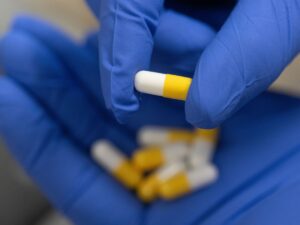
The pharmaceutical company “JSC Galichpharm” (Lviv) produced 3.934 million packages of finished pharmaceutical products in the second quarter of 2026, worth approximately 981.424 million UAH.
According to the company’s disclosure in the National Securities and Stock Market Commission (NSSMC) disclosure system, the average cost per package of medicines is 213.18 UAH for injectables, 52.11 UAH for infusions, 117.25 UAH for liquids and syrups, and 52.6 UAH for tablets.
Galichpharm’s total revenue for the second quarter of 2026 amounted to 354.394 million UAH. Total exports reached 115.4 million UAH, or 48.3% of total sales.
Currently, the company supplies products to the Ukrainian market and exports them to Kazakhstan, Uzbekistan, Latvia, Australia, and other countries.
As previously reported, “Galichpharm” (Lviv) produced 22.098 million packages of medicines in 2025 and sold finished products worth 1.774 billion UAH. The company then reported a net loss of 1.151 billion UAH, compared to a net profit of 13.705 million UAH in 2024 (-39% compared to 2023).
As previously reported, in May 2025, the Commercial Court of Lviv Oblast opened bankruptcy proceedings against the pharmaceutical manufacturer JSC “Galichpharm” based on claims filed by LLC “Sky-Development” in the amount of 479.262 million UAH. On April 21, 2025, Sky-Development LLC acquired from JSC “Bank Finansy i Kredit” the rights to claims against JSC “Galichpharm” under loan agreements and security agreements.
The investment company “Sky-Development” won an open auction organized by the Deposit Guarantee Fund for Individuals and acquired the claims of the insolvent JSC “Bank ‘Finansy i Kredit’” under ten loan agreements with leading Ukrainian pharmaceutical companies: JSC “Galichpharm” and JSC “Kyivmedpreparat.” According to Sky Development, the total amount of its claims exceeds 3.5 billion UAH.
For their part, “Kyivmedpreparat” and “Galichpharm” stated that the information disseminated by Sky Development Investment Company is “inaccurate, manipulative, and shows signs of a deliberate attempt to discredit the companies’ operations.” In particular, both companies denied having “multi-billion debts” to “Sky Development.” The pharmaceutical companies characterized the statements by “Sky Development” LLC as “an attempt to illegally and artificially create non-existent creditor debt for a possible future hostile takeover of the companies.”
EXPORTS, Galichpharm, MANUFACTURING, MEDICINES, PHARMACEUTICALS



