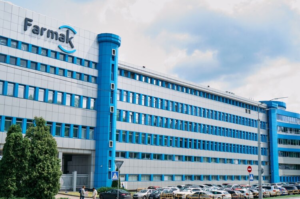
Pharmaceutical products, medical goods and equipment in Ukraine cost an average of 2.9% less in July 2026 than a year earlier, while outpatient medical services increased in price by 13.3%, according to data from the State Statistics Service.
Overall, the healthcare category rose in price by only 2.2% over the year, significantly slower than the general consumer inflation rate of 7.7%. Prices in this group increased by 0.6% in July.
Pharmaceutical products, medical goods and equipment became 0.9% cheaper from the beginning of 2026. In July, however, this category rose in price by 0.6% compared with June.
Outpatient services, by contrast, increased in price by 0.8% over the month, by 8.3% from the beginning of the year and by 13.3% year-on-year. On average, they cost 13.6% more in January–July than during the same period of 2025.
Thus, a noticeable gap can be observed within the medical segment between the price dynamics of medical goods and those of services themselves.
Ukrainian pharmaceutical manufacturers expect the government to facilitate the launch of tools for 2D verification of medicines in Ukraine.
As Petro Bagriy, president of the Association of Ukrainian Drug Manufacturers (AULU), told the “Interfax-Ukraine” news agency, this specifically involves facilitating pharmaceutical manufacturers’ access to software that will allow them to verify pharmaceutical products using a 2D code compatible with European systems, as well as the introduction of certain tax incentives for the purchase of the necessary equipment.
Bagriy noted that these issues were discussed during the most recent working meeting of members of the newly established “National Organization for the Verification of Medicines” (NOVLM).
“There is a provision in the new law on medicines stipulating that 2D coding of medicines must be operational in Ukraine by 2028. Such verification is one of the tools for combating counterfeit medicines. Ukraine is integrating into the EU, where this is a mandatory requirement, as only medicines verified by a 2D code are permitted for sale within the EU. Moreover, when exporting their medicines, Ukrainian pharmaceutical manufacturers label their products with 2D codes. But this is expensive; it requires significant investment in equipment and the renovation of packaging facilities,” he said.
The president of the Association of Pharmaceutical Manufacturers of Ukraine (AVLU) believes that not only pharmaceutical manufacturers but also distributors, pharmacies, and healthcare facilities that purchase medicines should participate in the launch of the system.
“We want to build a completely transparent system that will fully satisfy all participants, discriminate against no one, and provide equal rights and opportunities. In addition, it is important for the system to be fully integrated into the EU. We are discussing the possibility of engaging a software developer who will support the 2D verification—specifically, the one who developed it for EU countries—so that our product is fully integrated into all EU markets,” he emphasized.
Bagriy noted that, as a result, the QR codes used in Ukraine will be accepted in Europe, which will help promote Ukrainian medicines in European markets and also simplify the circulation of imported medicines in Ukraine.
“For example, ‘Farmaka,’ which will apply its code to its products, will find it easier to sell them in European pharmacies, and ‘Sanofi’ products will be easier to verify in Ukraine,” explained the president of the AULU.
He noted that “there is an initiative to exempt equipment imported for the implementation of the 2D-coding program for medicines from import duties and VAT.”
In addition, Bagriy reported that the Ministry of Health “is helping to negotiate a preferential price for the software in order to facilitate the financing of this project.”
“We have made a request, and the Minister of Health has promised us support so that we can gain access to software that has already been developed in the EU and be able to use it at a discounted price,” he said.
The president of the Association of Pharmaceutical Companies of Ukraine noted that the pilot system is scheduled to launch on January 1, 2027, and the system is expected to be fully operational as of January 1, 2028.
As previously reported, five pharmaceutical industry associations have registered the “National Organization for the Verification of Medicines” (NOVLM) to prevent and combat the circulation of counterfeit medicines in Ukraine in cooperation with European counterparts and the European Organization for the Verification of Medicines.
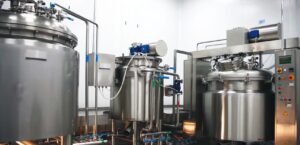
The “Chervona Zirka” Chemical and Pharmaceutical Plant (Kharkiv) produced goods worth 546.883 M UAH in 2025 and sold goods worth 526.744 M UAH.
According to a report published on the company’s website, the cost of goods sold in 2025 amounted to 213.733 million UAH.
The company reported that 96.4% of its output consisted of pharmaceutical products in the form of tablets, capsules, ointments, and tinctures.
Meanwhile, production of perfumes and cosmetics, which accounted for 2.9% of total sales, amounted to 15.121 million UAH.
“Despite the difficult times our country is facing, the company operated as usual in two shifts, with production capacity utilized at 67%. Currently, the company has increased its production and sales volumes compared to the pre-war period. Sales of finished products were primarily conducted on a credit basis, sometimes with payment terms of up to 60 days or on a prepayment basis. Sales volumes for the reporting year amounted to approximately 44 million UAH per month. “The share of the Ukrainian market is up to 2%; there were no exports in 2025,” the company’s report states.
“Chervona Zirka Chemical and Pharmaceutical Plant is a Ukrainian manufacturer of pharmaceuticals, therapeutic cosmetics, and dietary supplements.
According to data from the OpenDataBot system, the company’s net profit for 2024 was 24.063 million UAH, which is 64% more than in 2023.
The company’s ultimate beneficiary is Olena Galkina.
KHARKIV, MANUFACTURING, MEDICATION, PHARMACEUTICALS, Червона зірка

The biopharmaceutical company Biopharma plans to launch a plant in Arad, Romania, in late 2027, with an initial investment of EUR85 million, company president Kostyantyn Yefimenko told the Interfax-Ukraine news agency.
“We have already completed construction of the building and will finish installing all utility lines by September 1. We have already ordered the filling line. By the end of June, we will have contracted for the reactor equipment and all other process equipment. We will begin operations in December 2027,” Yefimenko said.
The initial investment in the plant in Arad is EUR85 million; the Romanian project as a whole will consist of four phases of varying sizes. Total investment in the plants in Uzhhorod and Arad is approximately $500 million.
He noted that the company’s development is not focused on a single project.
“Bila Tserkva is our flagship plant. We’re not shifting our focus; we’re developing all of them—Uzhhorod and Arad—and we’ll continue to build in Latin America,” Yefimenko said.
As previously reported, Biopharma plans to launch the first phase of its plant for the production of pharmaceutical products and immunobiological preparations in Uzhhorod in September 2026, which will provide a full cycle of blood plasma processing. The company has already invested EUR67 million in construction; the total cost of the first phase is EUR75 million. According to the plan, the volume of blood plasma-derived drug production in Uzhhorod will be twice that of production in Bila Tserkva, amounting to up to 1.5 million liters of blood plasma per year; the project in Romania is twice as large.
During the “Industrial Evolution: Manufacturing Drives the Economy” forum in Bila Tserkva, Yefimenko also announced that Biopharma had registered its albumin product in Brazil.
Biopharma exports its products to dozens of countries and plans to expand its presence in Europe, the Middle East, and Latin America while continuing to increase its production capacity.
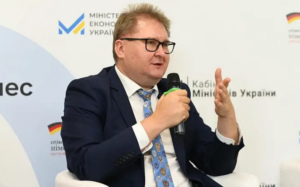
Ukraine has the legal and regulatory capacity to launch programs supporting domestic pharmaceutical manufacturers, but funding is lacking amid the war, according to Taras Kachka, Deputy Prime Minister for European and Euro-Atlantic Integration.
“Let’s just focus on the possibilities for support: the legal framework is there, but as for financial resources—you understand how constrained and limited our financial capabilities are in wartime,” he said during the conference “Regional Dialogues with Business on European Integration: The Pharmaceutical Industry” in Uzhhorod on Thursday.
At the same time, Kachka noted that “within the framework of existing support programs, there is a whole range of additional options.”
“We are ready for this dialogue. We just need to clearly identify exactly which needs we need to address,” he said.
BUSINESS, EUROPEAN INTEGRATION, PHARMACEUTICALS, STATE SUPPORT, Качка

On 25 November 2025, the Ukrainian House hosted a gala ceremony to award the winners of the annual competition for professionals in the Ukrainian pharmaceutical industry, Panacea-2025, the main national event that recognises market leaders, innovations and industry achievements.
The ceremony was traditionally hosted by Timur Miroshnichenko, and the musical atmosphere of the evening was created by the band KADNAY.
The pharmaceutical industry in 2025: a year of courage, innovation and resilience
The awards ceremony brought together the leading companies, experts and innovators of the year.
In 2025, the Ukrainian pharmaceutical industry continues to operate in conditions of full-scale war and economic instability. Despite the pressure of circumstances, the market demonstrates a unique ability to adapt: companies invest in innovation, develop new approaches to products and services, implement digital solutions and support patient access to quality treatment.
This year’s ceremony was an evening of gratitude to all those who are making the Ukrainian healthcare system stronger and the pharmaceutical industry more competitive on a global level. Before announcing the winners, guests honoured the defenders of Ukraine with a minute of silence.
Winners of Panacea-2025
COMPANY OF THE YEAR
AI Excellence Award, Artificial Intelligence in Pharmacy
Winner: Roche
The company was recognised for its breakthrough in the application of artificial intelligence and the implementation of the project ‘Screening for diabetic retinopathy using AI’ — an innovation that gives patients access to fast and accurate diagnostics.
Investors in innovative treatment during wartime. International sponsors of clinical trials
Winner: MSD
The company was recognised for its continued support of clinical trials in Ukraine, increased investment in scientific programmes, and ensuring patients have access to modern treatments even during wartime.
PROJECT OF THE YEAR
Introduction of eCTD in Ukraine
Winner: State Expert Centre of the Ministry of Health of Ukraine
Ukraine has switched to the international format of registration dossiers eCTD, used by the EU, the US and leading regulators around the world, in record time. This step has already been recognised as one of the most important digital breakthroughs in Ukrainian pharmaceuticals.
EDUCATIONAL PROJECT OF THE YEAR
Polpharma Academy
The project was recognised for creating a modern interactive educational space for doctors with a focus on practice, professional support and uniting the medical community around knowledge and development.
DRUG OF THE YEAR — OVER-THE-COUNTER GROUP
2025 winners:
• AMIKSIN IS, Interchem
• PROKTOZAN NEO, STADA
• LAFEROBION, STADA
• NIKSAR, Berlin-Chemie Menarini
• HILO-KOMOD, Sona Exim
These drugs have become reliable ‘first-line solutions’ for patients in 2025.
Dynamic leader in the low-cost segment
Winner: PULMOBRIZ, MOVIHealth
The drug was recognised for its high efficacy, affordability and significant contribution to the treatment of seasonal respiratory diseases.
Panacea-2025 was made possible thanks to the support of:
• Analytical partners: IQVIA, SMD, Business Credit
• Professional associations: AIMP, AVLU, APRAD, APAU, Association of Medical Device Market Operators, Pharmaceutical League of Ukraine, Ukrainian Association of Evidence-Based Healthcare
• Legal partner: GelOn
• Tourism partner: DinAdis
• Media partners: Pharmaceutical Industry, Interfax-Ukraine
• Organiser: Zdorovo production company
This year’s Panacea has once again proven that the Ukrainian pharmaceutical industry is not just holding its own during the war — it is growing, reforming and boldly implementing global standards.
Innovative solutions, educational projects, support for clinical research and modern approaches to treatment — all this is shaping a new, strong and competitive Ukrainian pharmaceutical industry.
The organisers of the competition thanked all partners and participants for their contribution to the development of the industry and invited the community to the Panacea-2026 ceremony.
Interfax-Ukraine is the information partner of the Panacea Award