
According to Serbian Economist, the U.S. Embassy in Pristina has warned citizens about possible large-scale demonstrations on September 16 in downtown Pristina and other major cities in Kosovo. According to the diplomatic mission, the demonstrations could lead to road blockages, major traffic jams, and serious disruptions to public transportation.
U.S. citizens are advised to limit their travel and, if possible, avoid routes passing through areas where protests are taking place. U.S. government employees are advised to avoid any non-essential travel near locations of mass gatherings and not to send their children to school on September 16 due to likely transportation problems.
The heightened security measures are related to the expected September 16 ruling by the Kosovo Chambers in The Hague in the case of former Kosovo President Hashim Thaçi and three former leaders of the Kosovo Liberation Army—Kadri Veseli, Jakup Krasniqi, and Redžep Selimi. All four deny the charges of war crimes and crimes against humanity.
On September 12, a rally attended by thousands took place in Pristina in support of the defendants.
Kosovo declared independence from Serbia in February 2008, but its statehood still lacks universal international recognition. Serbia does not recognize Kosovo’s independence and continues to consider it part of its territory. Kosovo is also not recognized by, among others, China, Russia, and Ukraine, and within the EU—Spain, Greece, Romania, Slovakia, and Cyprus. The European Parliament notes that the issue of Kosovo’s status remains linked to the EU-mediated dialogue between Belgrade and Pristina.
https://t.me/relocationrs/3669
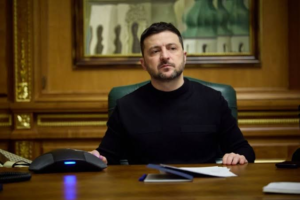
Ukrainian President Volodymyr Zelensky ranked 21st in the 2026 ranking of the 50 most influential Jews in the world, compiled by the Israeli newspaper The Jerusalem Post.
In the overall table, The Jerusalem Post calls Zelensky “the Jewish face of Ukrainian resistance,” while a separate article about the Ukrainian president is titled: “The Jewish president who became the face of Ukraine’s resistance.”
The authors of the ranking note Zelensky’s role in leading the country during the full-scale war with Russia, advancing Ukraine toward membership in the European Union, and developing new approaches to warfare, in particular drone technologies.
The Jerusalem Post also draws attention to the Jewish origins of the Ukrainian president and repeated attempts by the Russian authorities to combine accusations of “Nazism” against Ukraine with the fact that its president is Jewish.
The publication recalls that Zelensky’s relatives were killed during the Holocaust, while his paternal grandfather fought against Nazi Germany during World War II. Zelensky himself has repeatedly said that his Jewish background is part of his biography but does not define his political activity.
Zelensky has repeatedly appeared in The Jerusalem Post’s annual ranking. In 2022, after the start of Russia’s full-scale invasion, he took first place, and the publication then named him the most influential Jew of the year. In the 2024 ranking, the Ukrainian president was in 23rd place. Thus, in 2026 he rose by two positions compared with the ranking two years earlier.
The Jerusalem Post gave first place in its 2026 ranking to Jared Kushner and Ivanka Trump. Every year, the publication includes politicians, entrepreneurs, scientists, public figures, representatives of the technology industry, culture and religious organizations who, in the editorial board’s assessment, exert significant influence on global processes.
Primary source — The Jerusalem Post, 50 Most Influential Jews of 2026 ranking.
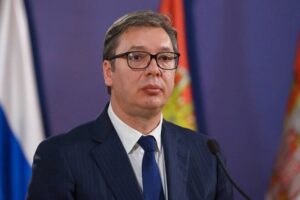
The Serbian business publication Parametar has prepared an interesting analysis of the parliamentary elections in Serbia. President Aleksandar Vučić has called for early parliamentary elections on October 25. Serbia has 250 parliamentary seats to fill, but in essence, the campaign is turning into a choice between preserving the current model of government and attempting a political reset.
The main favorite is the “Aleksandar Vučić—United Serbia” bloc centered around the SNS. Vucic himself is running as a candidate for prime minister. According to the Serbian media outlet Parametar, his campaign will focus on stability, infrastructure development, investment, economic growth, and the argument that the country must not return to a period of political instability.
For the first time, the main competitor is not a traditional party, but the Student List, which emerged from the protests following the tragedy in Novi Sad. Its main themes are corruption, government accountability, the independence of institutions, and bringing new people into politics. The movement’s slogans are as simple as possible: “Students Will Win” and “Either Serbia or the Mafia.”
Part of the opposition has already decided to support the students, but there will be no single anti-government list. Running separately are the pro-European “European Serbia,” the “People’s Serbia” bloc, Ivica Dačić’s Socialists, and several national-conservative and sovereigntist groups.
The campaigns of the two main power centers are also divided by fundamentally different emotional agendas. According to sociologist and co-founder of Active Group Aleksandar Pozniy, Vučić will build his campaign primarily around the theme of stability—reminding voters of economic growth, large-scale infrastructure projects, an influx of investment, and the overall progress Serbia has made in recent years. This strategy aims to convince voters that a change in government carries the risk of losing the country’s hard-won achievements. The Student List, on the other hand, will appeal to the long-standing demand for fighting corruption and reforming the political system, contrasting the current elite with new faces unaffiliated with traditional parties. Thus, the election may largely turn into a clash between two basic formulas—“stability and economic results” versus “a change in power and the cleansing of institutions.”
That is precisely why the key question will be what voters deem more important: preserving economic and political stability or the demand for profound systemic change.
Parties representing national minorities will traditionally form a separate segment. A special electoral system applies to minorities: they are not required to clear the general 3 percent threshold, and when seats are allocated, their results are adjusted using a special coefficient. At the start of the campaign, the Union of Vojvodina Hungarians (SVM), the Bosnian parties SPP and SDA, representatives of the Albanian and Romani populations, and a number of small regional groups are expected to participate. Their composition may still change before the registration deadline.
Polling data so far is conflicting. Faktor Plus gives the SNS about 47% and the Students’ Party about 32%. An earlier CRTA poll showed the opposite picture—about 45% for the Students’ Party versus 36% for the SNS.
On international betting platforms, Vučić currently appears to be the clear favorite, but there is still a month and a half until the election, and the final list of candidates is still taking shape.
Read more at Parametar.rs.
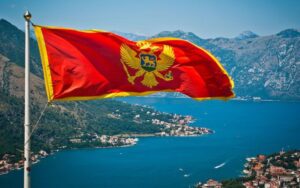
According to “Serbian Economist”, Montenegro expects to join the European Union as a full and equal member and does not agree to a model under which new member states would be granted limited rights, Minister of European Affairs Maida Gorčević stated on September 9.
According to her, Podgorica is prepared to adopt additional safeguards against a potential democratic backslide following EU accession, but does not want to become a “second-class member” with limited voting rights or other temporary restrictions.
Various models for future enlargement are currently being discussed within the European Union, including the possibility of temporarily restricting certain rights of new members regarding the budget, foreign policy, or the exercise of the veto. Gorčević emphasized that Montenegro is prepared to accept the strictest mechanisms for monitoring the rule of law, but considers the equality of members to be a fundamental condition.
At the same time, Podgorica is trying to dispel Brussels’ concerns about possible vetoes in advance. Gorčević stated that Montenegro has no intention of using the veto as a tool for exerting pressure and sees itself rather as part of a group of small and predictable EU members, such as Slovenia, Malta, or the Baltic states.
Montenegro remains the most advanced candidate for EU accession in the Western Balkans. Negotiations have been ongoing since 2012, and all 33 negotiation chapters have been opened. Following the closure in July of the chapters on competition and the customs union, the number of provisionally closed chapters reached 18.
The government expects to close the remaining chapters by the end of 2026 and is aiming for EU accession in 2028. Back in the spring, Gorčević stated that the country’s goal is full membership, rather than an interim or simplified form of integration.
For Ukraine, Podgorica’s position is also of interest as a potential precedent. If Brussels does indeed decide to impose transitional restrictions on new EU members regarding the right of veto or other powers, such a model could potentially be applied to other Western Balkan countries that join later. This model could also be applied to other EU candidate countries.
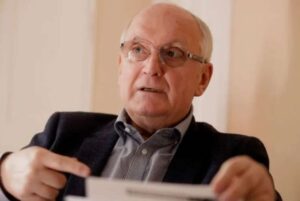
András Baku has become Hungary’s new president, according to Hungarian media reports.
“On Tuesday, the Hungarian Parliament elected 73-year-old lawyer and former Chief Justice of the Supreme Court András Baku as the country’s new president,” the reports state.
It is noted that 140 lawmakers voted in favor of his candidacy, while six voted against it. Representatives of the former ruling coalition, Fidesz—the Christian Democratic People’s Party—had announced in advance that they would not participate in the vote.
Hungary’s new Prime Minister, Péter Magyar, has repeatedly stated since his election in May that he intends to reform the Hungarian government; in particular, he has sought the resignation of President Tamás Szujók. Magyar believes that Szujók was not fulfilling his role and was serving the interests of former Prime Minister Viktor Orbán and his government.
Szujok refused to step down voluntarily, stating that he saw neither constitutional nor legal grounds for doing so. Later, in July, the Hungarian parliament approved a package of constitutional reforms that, among other things, provided for the president’s resignation. As a result, last week Szujok signed the constitutional amendments and stepped down from his post.
Magyar nominated renowned Hungarian chess grandmaster Judit Polgár for the position of the country’s new president, but she declined the offer.
The president in Hungary performs mainly ceremonial functions. The government is headed by the prime minister.
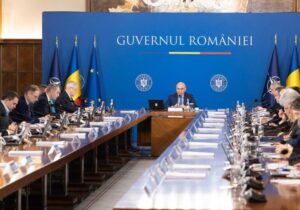
The Parliament of Romania has supported a vote of no confidence in the government of Prime Minister Ilie Bolojan, leading to the سقوط of the pro-European cabinet and opening a new phase of political uncertainty in one of the key countries on the eastern flank of the EU and NATO.
A total of 281 deputies voted in favor of the no-confidence motion, exceeding the required minimum of 233 votes. Only four parliamentarians voted against. This result became one of the largest no-confidence votes in the history of Romanian parliamentarism.
The political crisis escalated after representatives of the Social Democratic Party (PSD) withdrew from the government. Following this, the Social Democrats, together with right-wing and far-right forces, initiated the consideration of the no-confidence motion at a joint session of the Chamber of Deputies and the Senate. Immediately after the announcement of the voting results, Bolojan left the parliament building and returned to the government residence.
One of the causes of the crisis was disagreements over fiscal austerity measures. Bolojan’s cabinet pursued a course of deficit reduction, tax increases, and spending cuts, which provoked resistance from the Social Democrats. After PSD’s withdrawal from the coalition, the government effectively lost its stable majority.
Bolojan remains acting prime minister until a new government is formed; however, his powers will be limited. The President of Romania, Nicușor Dan, is expected to begin consultations with political parties to find a new cabinet formula. Possible scenarios include restoring a pro-European coalition in a revised composition, appointing a technocratic prime minister, or forming a new minority government.
The political situation is further complicated by the fact that the Romanian parliament remains highly fragmented. Following the parliamentary elections of December 1, 2024, no party secured a majority in either the Chamber of Deputies or the Senate.
In the Chamber of Deputies, the Social Democratic Party (PSD) became the largest force with 86 seats. It is followed by the right-wing nationalist Alliance for the Union of Romanians (AUR) with 63 seats, the National Liberal Party (PNL) with 49 seats, the liberal Save Romania Union (USR) with 40 seats, the far-right S.O.S. Romania with 28 seats, the Party of Young People (POT) with 24 seats, and the Democratic Alliance of Hungarians in Romania (UDMR) with 22 seats. An additional 19 seats are held by representatives of national minorities.
In the Senate, PSD secured 36 seats, AUR — 28, PNL — 22, USR — 19, S.O.S. Romania — 12, UDMR — 10, and POT — 7 seats.
Politically, the parliament is now условно divided into three blocs. The first consists of moderate pro-European parties: PSD, PNL, USR, UDMR, and representatives of national minorities. In theory, they could form a new majority, but they have significant disagreements over budget, taxation, and social policy. The second bloc is the nationalist and eurosceptic flank, primarily AUR, S.O.S. Romania, and POT. The third consists of situational groups and individual deputies, whose role increases in tight votes.
The crisis in Bucharest has not only domestic but also regional significance. Romania remains one of the most important countries for Ukraine’s logistics, exports via the Danube and the Black Sea, hosting NATO infrastructure, and maintaining security on Europe’s eastern flank. Any prolonged political uncertainty may complicate decision-making on budgetary, defense, and infrastructure issues.
Economic risks are also substantial. Political instability increases concerns about Romania’s sovereign ratings, access to EU funds, and the stability of the national currency. Bucharest must implement reforms and meet deficit reduction targets to maintain access to significant resources from European recovery funds.
According to the analytical center Experts Club, the fall of the Romanian government creates three main risks for the region: slower fiscal consolidation, increased volatility in financial markets, and weakened political predictability in matters of support for Ukraine.
“For Ukraine and the entire region, it is important that the political crisis in Romania does not turn into institutional paralysis. Romania is not a peripheral player, but one of the key hubs of Eastern European security, Danube logistics, and interaction with the EU. If a new government is formed quickly and maintains a pro-European course, the effect will be limited. However, if the crisis drags on, it may affect infrastructure projects, defense coordination, and the investment climate across the region,” said the founder of Experts Club, Maksym Urakin.
According to him, the factor of far-right forces that supported the no-confidence vote is of particular importance.
“The no-confidence vote itself does not mean a turn away from the EU or NATO. However, it shows that protest against fiscal austerity and social pressure can be used by forces advocating a more confrontational and less predictable foreign policy. For neighboring countries, this is a signal: economic fatigue of the population is becoming a security factor,” Urakin noted.
Experts Club believes that the baseline scenario remains an attempt by the president and moderate parties to restore a manageable pro-European configuration without the participation of the far right. However, even in this case, the new government will have to balance between EU requirements for deficit reduction, social discontent, and the need to maintain Romania’s active role in regional security.



