
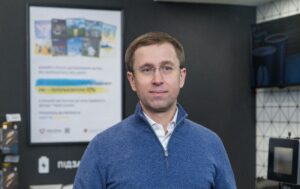
The Verkhovna Rada has appointed Serhiy Koretsky, chairman of the board of NAK “Naftogaz of Ukraine,” as Prime Minister of Ukraine.
His nomination, put forward by President Volodymyr Zelenskyy, was approved by 289 members of parliament during a session on Thursday.
As prime minister, Koretskyi replaced the former head of the Ukrainian government, Yulia Svyrydenko, who had held the position for exactly one year, beginning on July 17, 2025.
Koretsky was born on March 14, 1978, in Lutsk. He received his higher education at Lutsk Technical University, majoring in “Mechanical Engineering” and “Business Economics,” as well as at the Ivano-Frankivsk National Technical University of Oil and Gas, where he majored in “Oil and Gas Production.”
He rose through the ranks from junior analyst at the Continuum Group of Companies (since 1999) to CEO of Continuum (since 2007).
From 2013 through the end of 2018, he developed the WOG gas station chain as CEO.
He then began working on his own projects. He was a co-founder and chairman of the board of the energy trader Centurion Group SA (Switzerland).
From November 9, 2022, he served as director of PJSC “Ukrnafta” and PJSC “Ukrtatnafta.” Since May 14, 2025, he has been chairman of the board of NJSC “Naftogaz of Ukraine.”
According to the “Chesno” movement, from 2002 to 2006 and from 2012 to 2014, he served as a volunteer assistant to Ihor Yeremeyev, a member of the Verkhovna Rada of the 4th and 7th convocations.
In 2006, he ran for the Volyn Regional Council of the 5th convocation as a candidate for the Lytvyn People’s Bloc, and also for the Verkhovna Rada of the 5th convocation as a candidate for the same bloc.
From 2007 to 2012, he served as a volunteer assistant to Kateryna Vashchuk, a member of the Verkhovna Rada of the 6th convocation elected from the Lytvyn Bloc.
Koretsky declared 32.3 million hryvnias in income for 2025, land plots with a total area of 261,600 square meters in the Donetsk Oblast, and six watches from the brands Rolex, Patek Philippe, Breguet, OPUS, and Ulysse Nardin, among others.
GOVERNMENT, Koretsky, NAFTOGAZ, PRIME MINISTER, VERKHOVNA RADA
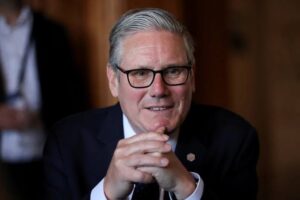
U.S. President Donald Trump has suggested that British Prime Minister Keir Starmer may resign as head of government following what he claims are failures on immigration policy and energy issues.
“Keir Starmer will resign as Prime Minister of the United Kingdom. He has suffered a major defeat on two very important issues—IMMIGRATION AND ENERGY (THE OPENING OF OIL FIELDS IN THE NORTH SEA!). I wish him all the best!” Trump said in a post published on the social media platform Truth Social.
As previously reported, Reuters noted that British Prime Minister Keir Starmer plans to announce his resignation on Monday and intends to present a clear timeline for his departure.
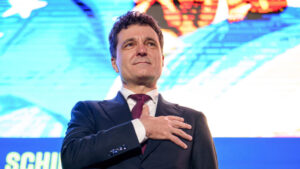
Romanian President Nicușor Dan stated that he would not propose a candidate for prime minister without a pre-agreed parliamentary majority, following the dismissal of Ilie Bolojan’s government via a vote of no confidence.
According to Digi24, Dan intends to invite parliamentary parties for consultations on Thursday or next Monday. He emphasized that he does not want to “experiment” with appointing a prime minister who would then be unable to secure a majority in parliament.
The president also did not rule out the option of a technocratic government, which could be led by an independent expert. At the same time, he said, there are “relatively few” options capable of securing a stable majority, as the parties’ positions remain rigid following the fall of Bolojan’s cabinet.
The political crisis in Romania began after parliament passed a no-confidence vote against the Bolojan government on May 5. A total of 281 deputies voted for the cabinet’s resignation, significantly exceeding the required minimum of 233 votes. The motion was supported by the Social Democratic Party and the right-wing nationalist Alliance for the Union of Romanians.
After the vote, Bolojan’s National Liberal Party announced its move to the opposition and its refusal to form a new coalition with the Social Democrats. This sharply narrows the scope for the rapid formation of a government, as it will be difficult to secure a stable majority without the PSD or a portion of its votes.
Among the scenarios being discussed are Bolojan’s return to the post of prime minister, the formation of a technocratic cabinet, a new agreement between pro-European parties, or a more complex configuration involving the PSD. UDMR leader Hunor Kelemen stated that the option of a technocratic prime minister could be acceptable if the ministers remain political appointees of the parties that secure the majority.
For Romania, a prolonged crisis carries economic risks. The country needs to continue fiscal consolidation and meet the conditions for receiving EU funds, whereas a caretaker government has limited powers. Bolojan previously warned that the absence of a full-fledged cabinet could complicate access to European funding.
Romania remains one of the key countries on the eastern flank of the EU and NATO, as well as an important logistical partner for Ukraine on the Danube and the Black Sea.
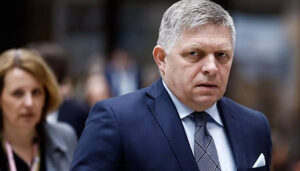
Slovak Prime Minister Robert Fico has announced his intention to stop emergency electricity supplies to Ukraine if Ukraine does not resume oil supplies on Monday, February 23, which were interrupted after an accident on the Druzhba oil pipeline near the Ukrainian city of Brody in the Lviv region in January.
“If the Ukrainian president does not resume oil supplies to Slovakia on Monday, then on the same day I will ask the relevant Slovak companies to stop emergency electricity supplies to Ukraine,” Fico wrote on Twitter.
He also accused Ukrainian President Volodymyr Zelensky of allegedly “refusing to understand our peacemaking approach” and therefore, according to Fico, “behaving maliciously towards Slovakia,” which he believes treats Slovakia “as an enemy country.”
“First, he stopped gas supplies to Slovakia, causing us losses of €500 million a year. Now he has stopped oil supplies, causing us further losses and logistical difficulties. If the West does not object to the Nord Stream gas pipeline being blown up, Slovakia cannot view Slovak-Ukrainian relations as a one-way ticket that is only beneficial to Ukraine,” the Slovak prime minister wrote.
Fico added that he is a “proud and sovereign Slovak” and intends to ask the state-owned joint-stock company SEPS to stop emergency electricity supplies to Ukraine. “In January 2026 alone, these emergency supplies, necessary to stabilize the Ukrainian power grid, were twice as much as in the whole of 2025,” he said.
The head of the Slovak government also stressed that Slovakia has been helping Ukraine since the beginning of the war. “About 180,000 Ukrainians are currently on our territory, we are providing humanitarian aid and organizing joint government meetings. We are doing much more for Ukraine than some other countries,” Fico wrote.
As reported, on February 18, the export of diesel fuel from Hungary to Ukraine was suspended until the resumption of Russian crude oil transit through the Druzhba pipeline, said Hungarian State Secretary for Public Diplomacy and Public Relations Zoltán Kovács. In his opinion, Ukraine “unilaterally stopped supplies on January 27 for purely political reasons, although technically their resumption is possible.” Statements about the suspension of diesel exports to Ukraine also came from the Slovak side.
Earlier, Hungary and Slovakia asked Croatia to allow Russian oil to be supplied to Hungary and Slovakia via the Adria pipeline. Meanwhile, Slovakia has declared a state of emergency in the oil industry due to the lack of oil supplies.
Croatian Economy Minister Ante Šušnjar, in turn, said that the Adria pipeline is ready for operation, but that there are no technical justifications for any EU country to remain tied to Russian crude oil. “A barrel bought from Russia may seem cheaper for some countries, but it helps finance the war and attacks on the Ukrainian people,” he said.
The transport of Russian crude oil through Ukraine via the Druzhba pipeline has been halted since the end of last month due to large-scale Russian attacks on Ukrainian energy infrastructure.
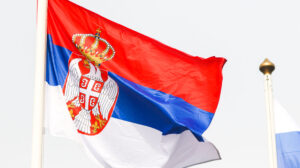
According to Serbian Economist, Serbian Prime Minister Džuro Mačut stated at a meeting with the new Ukrainian ambassador to Belgrade, Alexander Litvinenko, that Serbia will continue to provide humanitarian aid to vulnerable groups in Ukraine within the limits of its capabilities.
According to a statement on the Serbian government’s website, this assistance will take the form of financial support and supplies of medical and electrical equipment. Matuz also noted that Belgrade is closely monitoring developments in Ukraine, especially the impact on the civilian population and the humanitarian situation.
The ambassador, in turn, expressed his gratitude for the assistance that Serbia has already provided to Ukraine.
Litvinenko is the new head of the Ukrainian diplomatic mission in Serbia and presented his credentials on February 3, 2026.
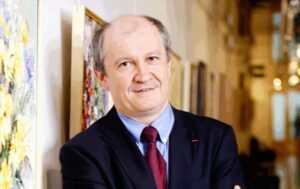
Moldovan President Maia Sandu signed a decree on Friday appointing economist and entrepreneur Alexander Munteanu as prime minister after her party won last month’s parliamentary elections.
The decree was published on the Moldovan president’s website.
“I wish him success in forming a government that will gain the trust of parliament and meet the most important expectations of citizens: protecting peace, preparing the country for EU accession, strengthening the economy, and improving people’s living standards,” the head of state said.
According to the document, “the designated candidate must present to parliament a team and a management program in order to obtain a vote of confidence and invest the new government of the Republic of Moldova.”
According to the Moldovan publication Point, Sandu signed the decree after consultations with the Action and Solidarity Party (PAS).
It is noted that Munteanu is an economist, professor, and entrepreneur with 25 years of experience in international investment.
According to open sources, Munteanu lived in Ukraine for 20 years. He is 61 years old. He calls himself “an American of Moldovan origin” and has not previously been involved in politics. He is a successful businessman, founder of the investment company 4i Capital Partners, operating in Moldova, Ukraine, and Belarus, and has experience working for companies such as WNISEF/Horizon Capital and Dragon Capital.
Moldova is a unitary parliamentary republic.



