
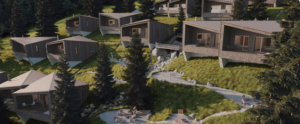
Ribas Hotels Group will take over management of a project by the investment and development company Arha Group—the Pótay cottage community currently under construction in the village of Yablunytsia (Ivano-Frankivsk Oblast), the company’s press service told the Interfax-Ukraine news agency.
The 3-hectare project involves the construction of 64 detached homes and 18 hotel rooms, as well as a restaurant, a spa, an all-season infinity pool, and other recreational facilities. Pótay is located at an altitude of about 970 meters above sea level, with views of Hoverla and Petros. The complex will combine the privacy of a private cottage with the service and infrastructure of a full-fledged hotel.
“We see that it’s no longer enough for guests to simply choose a destination. They choose a vacation experience: privacy, natural surroundings, the opportunity to spend time with loved ones, and at the same time enjoy hotel-level service. The Pótay concept is shaped precisely at the intersection of these needs,” noted Artur Lupashko, founder of Ribas Hotels Group, whose remarks are quoted in the press release
The grounds will also feature a sauna, lounge and children’s areas, fire pits, spaces for fitness and meditation, and a contemporary art gallery created in collaboration between Arha Group founder Ihor Ilchyshen and People’s Artist of Ukraine Volodymyr Kozuk.
One of Ribas Hotels Group’s tasks within the framework of this collaboration will be to develop the complex’s operational model, service standards, and guest experience, the company noted.
Ribas believes that the cottage complex format is becoming a more prominent part of tourist demand. For example, this summer, hotel occupancy rates in the Carpathian region averaged 67% on weekdays and 72% on weekends. The company has also observed a shift in demand toward locations and formats adjacent to major tourist centers, where guests can enjoy greater privacy and closer contact with nature.
Ribas Hotels Group—founded in 2014 in Odessa—is an international full-cycle hotel management company and hospitality ecosystem. Ribas Hotels Group’s portfolio includes over 50 projects currently under construction, in the launch phase, or under management in Ukraine, Poland, Turkey, and Bali. The company develops city and resort hotels under the Ribas Hotels, Ribas Rooms, WOL home + hotel, and Mandra Moments brands.
Arha Group is an investment and development company. It is implementing residential and commercial real estate projects with a total area of over 15,000 square meters: the AMA Family Resort in Bukovel, the WOL aparthotel in Vinnytsia, the Pótay cottage community in the Carpathians, and the Koreni club community near Vinnytsia.
CARPATHIANS, DEVELOPMENT, HOTEL, REAL ESTATE, RIBAS HOTELS GROUP
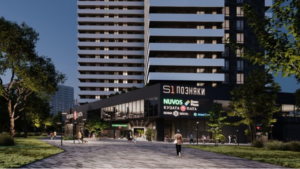
According to Interfax-Ukraine, S1 REIT, an investment company that manages real estate funds under the REIT model, has announced the launch of a new capitalization fund, “S1 Poznyaki,” with a total volume of 250 million hryvnia, which will invest in apartments in a high-yield residential building currently under construction on the shores of Lake Sribny Kil, according to the company’s press service.
According to the press release, the initial investment amount is 1,000 UAH, with the option to increase one’s share in increments of 100 UAH. The projected annual return is 9% in the local currency, and dividend payments will begin once the property is commissioned and rental operations commence.
“In the past, to make money on apartments, you had to buy a unit for tens of thousands of dollars. We’ve broken that barrier down into smaller parts. Now you can start with 1,000 UAH. The benefit for investors is simple: buy earlier—buy cheaper. As the building is under construction, the price per square meter rises, and with it, the value of the fund’s assets. So we want to acquire as many square meters as possible now—at an early stage, while prices are at their lowest. And we’re offering our clients the opportunity to buy alongside us,” explained Ihor Gifes, CEO of the investment company S1 REIT, whose remarks are quoted in the press release.
As previously reported, the National Securities and Stock Market Commission (NSSMC) decided at its September 16 meeting to register the prospectus and the issuance of investment certificates for the ZNPIF “S1 Poznyaki.”
“S1 Poznyaki” is a build-to-rent apartment building designed from the outset as a cohesive, professionally managed rental product, rather than a collection of individual apartments for private leasing. At the same time, the project embodies the “Live and Work in One Place” concept thanks to its well-developed residential and commercial infrastructure.
The “S1 Poznyaki” fund’s assets will consist of 80 apartments with a total area of 2,828 square meters in a 24-story apartment building containing 756 apartments, with a total area of 29,500 square meters.
The complex will feature approximately 1,500 square meters of internal infrastructure, including a coworking space, a gym, a lounge area, a movie theater, a spa area, indoor and outdoor spaces for relaxation and leisure, game and karaoke rooms, a children’s room, and a fully equipped shelter.
Another approximately 7,000 square meters on the ground floors will be allocated for commercial facilities: a supermarket, restaurants, coffee shops, pharmacies, a dental clinic, and other services.
Previously, as reported, S1 REIT launched the sale of “S1 Plaza Poznyaki,” whose assets will include commercial space in the shopping center near the “Poznyaki” metro station in Kyiv. The total area of the property is approximately 5,000 square meters, and the new fund’s offering amounts to 600 million UAH. The initial investment is 1,000 UAH, and the additional investment is 100 UAH. The projected annual return on “S1 Plaza Poznyaki” is 10.4% in currency terms.
The entire property will be managed by the real estate management company S1 Property, which will be responsible for operations and services for residents, as well as for ensuring stable rental income for investors.
The press release states that investors can use “S1 Poznyaki” as an investment vehicle and gradually increase their stake in the property. If the total value of accumulated certificates equals the cost of an entire apartment, investors will be able to exercise the option to exchange them for a completed apartment. The transition to physical ownership is not mandatory: certificates can continue to be held as an investment in the fund, and investors can receive dividend income once rental operations begin.
“For investors, the ‘S1 Poznyaki’ Fund offers new opportunities to acquire a share of unique, income-generating real estate in the capital and start earning from it immediately,” noted Gifes.
At the same time, it is clarified that these figures are projections, based on the project’s financial model, and do not guarantee future returns.
The company operates under the Real Estate Investment Trust (REIT) model, providing investors with the opportunity to participate in ownership and receive income from profitable properties without directly managing the assets.
Four funds are available for investment: “S1 VDNG,” S1 Obolon, “S1 Poznyaki,” and “S1 Plaza Poznyaki.” Their assets consist of income-generating real estate based on development projects by Standard One.

In Hungary, starting January 1, 2027, the VAT rate for certain new housing units may increase from the current reduced rate of 5% to the standard rate of 27%, which will put additional pressure on the prices of apartments in new buildings, according to local media reports.
The current preferential rate of 5% applies to new apartments with an area of up to 150 square meters and single-family homes with an area of up to 300 square meters that meet the established requirements. According to an official clarification from the Hungarian National Tax and Customs Administration (NAV), this regime, in its current form, remains in effect until December 31, 2026.
After that, the standard VAT rate of 27% will apply to properties that do not meet the conditions of the transition period.
However, a significant portion of projects already underway will be able to retain the tax benefit until the end of 2030. Specifically, the 5% rate may apply after December 31, 2026, if the required building permit has become final by the end of 2026. Transitional provisions are also in place for projects implemented under the construction notification procedure.
As a result, the Hungarian market may effectively feature new construction projects with varying tax burdens simultaneously, depending on the project’s start date and legal status.
The potential impact on housing prices could be significant. An apartment costing 100 million forints, taking into account the current 5% VAT rate, has a pre-tax price of approximately 95.2 million forints. If a 27% rate were applied to the same base, the final price would be approximately 121 million forints. The theoretical difference is about 21 million forints, or approximately 58,000 euros.
However, the actual price increase may be smaller, as developers may absorb part of the additional tax burden themselves in the face of weakening demand.
A decline in buyer activity is already being observed in the market. According to data from the National Bank of Hungary, the number of real estate transactions in the first quarter of 2026 fell by 18% compared to the same period the previous year. According to Duna House estimates, approximately 8,100 residential real estate transactions were concluded in August—13.1% fewer than in July and 29% fewer than a year earlier.
At the same time, developers are accelerating the preparation of new projects. In the first half of 2026, permits were issued and notifications were registered in Hungary for the construction of 16,588 residential units, which is 29% more than during the same period in 2025.
The change in the tax regime does not directly affect the resale housing market. However, the widening price gap between new projects subject to a 27% VAT rate, properties retaining the 5% rate, and the resale market may affect the structure of demand and housing prices overall.
Certain new apartments in officially designated “rust belt action areas” will remain an exception: provided they meet the requirements established for them, the preferential 5% rate will continue to apply even after January 1, 2027.

Residential real estate prices in Italy rose 4% in the second quarter of 2026 compared to the same period last year, according to preliminary data from the Italian National Institute of Statistics (Istat).
The pace of housing price increases slowed slightly: in the first quarter, the year-over-year increase was 5.1%.
Compared to the first quarter of 2026, the housing price index increased by 1.7%. Newly built homes rose in price by 5% over the year, while existing homes rose by 3.7%. In the previous quarter, these figures were 6.7% and 4.6%, respectively.
On a quarterly basis, prices for new housing rose by 2.7%, and for existing housing by 1.5%.
Among major Italian cities, housing prices rose the fastest in Turin. In the second quarter, prices there were 8.5% higher than a year earlier, whereas in the first quarter, the year-over-year increase was only 3.8%.
In Rome, residential real estate prices rose by 6.4% following a 5.5% increase in the first quarter.
In contrast, in Milan—which in previous years had been one of the country’s most dynamic real estate markets—the pace of growth slowed sharply. Prices rose by 2.4% year-over-year, compared to 7.1% in the first quarter.
The most noticeable slowdown in Milan was recorded in the new-construction segment: after a 20.1% jump in the first quarter, year-over-year growth in the second quarter was only 1.1%.
Regionally, Istat recorded the highest price growth in Central Italy—5.1%. In the northeast, housing prices rose by 4.2%; in the northwest, by 3.9%; and in the south and on the islands, by 2.6%.
The rise in prices is occurring against a backdrop of a de facto stabilization in the number of transactions. According to data from the Italian Tax Agency’s Real Estate Market Observatory, the number of housing transactions in the second quarter increased by only 0.1% year-over-year, following a 4.4% increase in the first quarter.
Based on the results of the first two quarters, the cumulative increase in the housing price index for 2026 stands at approximately 3.8%. Istat plans to release its next market assessment on December 17, 2026.

According to an analysis by the Serbian business portal Parametar, starting November 1, 2026, Montenegro will introduce a visa requirement for citizens of Russia, Belarus, and Turkey, which could significantly impact the country’s tourism, labor market, rental sector, and real estate market.
On September 24, the Montenegrin government confirmed the initiation of the procedure to terminate the existing visa-free travel agreements with these three countries. The decision was made as part of efforts to bring the country’s visa policy into line with European Union regulations. As early as July 23, the government approved changes to the visa regime, which are set to take effect on November 1.
Until October 31, citizens of Russia and Belarus may enter Montenegro without a visa and stay there for up to 30 days. A similar visa-free regime applies to Turkish citizens. Once the new rules take effect, holders of ordinary passports will need a Montenegrin visa. Regarding Turkey, Podgorica plans to conclude a separate agreement, maintaining visa-free entry for holders of diplomatic, service, and special passports.
However, there are significant exceptions. Citizens of these countries who hold a valid Schengen, U.S., British, or Irish visa or a corresponding residence permit will, as before, be able to enter Montenegro without a separate Montenegrin visa for up to 30 days.
The new regime also does not require a tourist visa for foreigners who already hold a valid temporary or permanent residence permit in Montenegro or a permit for temporary residence and work.
According to data from the Montenegrin Ministry of the Interior cited by Parametar, as of the end of 2025, 20,793 Russian citizens and 13,506 Turkish citizens held temporary or permanent residence permits. Together, these two communities account for approximately 5.5% of the country’s population, which totals about 624,000 people.
The Belarusian community is significantly smaller. According to the latest census, as of late October 2023, 738 Belarusian citizens had permanent residence in Montenegro; more recent data on Belarusians is not currently available.
Tourism could become one of the most vulnerable sectors. In 2025, Russian tourists accounted for 16.4% of all overnight stays by foreign visitors in Montenegro, while tourists from Turkey accounted for another 4.3%. In the private accommodation segment, the Russian market’s share reached 22.1%, while the Turkish market’s share was 4.9%. Thus, these two countries accounted for more than a quarter of all foreign overnight stays in apartments, villas, and other private accommodations.
According to Parametar’s assessment, the most noticeable impact may not be among Russians and Turks who already legally reside in Montenegro, but rather among new tourists, real estate buyers, renters, and those considering the country as a place to relocate. This is particularly important for Budva, Bar, Tivat, Kotor, and Herceg Novi, where foreign demand plays a significant role in the rental, real estate, hospitality, and service markets.
The changes may also affect the labor market. In 2025, 10,346 temporary residence and work permits were issued to Turkish citizens, and 7,429 to Russian citizens. Turkey has become the largest source of foreign labor in Montenegro. The introduction of an additional visa procedure for new workers could potentially delay their recruitment in the construction, hospitality, and other sectors.
The visa reform is linked to Montenegro’s EU accession process. The country’s government notes that full alignment of visa policy is one of the conditions for closing Negotiation Chapter 24, “Justice, Freedom, and Security.” Fulfilling this condition also paved the way for receiving approximately 4 million euros under the EU Growth Plan for the Western Balkans.
As part of a broader reform of Montenegro’s visa regime, visa requirements will also apply to citizens of China and Saudi Arabia starting November 1, since Podgorica’s previous policy toward these countries was also not in line with EU regulations. However, the government’s September 24 decision to suspend international agreements directly concerns Russia, Belarus, and Turkey.

Hong Kong remains the least affordable metropolis for homebuyers among the cities surveyed by UBS: a skilled service sector worker needs about 15 years’ worth of annual income to purchase a 60-square-meter apartment near the city center.
These figures are contained in the UBS Global Real Estate Bubble Index 2026, published on September 22.
More than ten years’ income is also required to purchase a similar apartment in Tokyo, Paris, London, and Seoul.
UBS also notes a high burden on buyers’ incomes in Singapore, Lisbon, Zurich, Geneva, São Paulo, Munich, Sydney, Milan, and New York.
At the other end of the ranking are Miami and Dubai. A 60-square-meter apartment there costs roughly five times the annual income of a skilled worker.
However, a relatively lower ratio of real estate prices to wages does not necessarily mean affordable housing. In the U.S. and Canada, affordability is further limited by high mortgage rates, bank requirements, and other costs of homeownership.
According to UBS’s calculations, compared to 2021, the average skilled worker in the cities surveyed can now afford about one-third less living space on their income.
Separately, UBS compared real estate prices to rent. The highest ratio was recorded in Zurich: the cost of an apartment is equivalent to approximately 46 years of rent. In Geneva, the ratio is about 40 years, while in Munich, Frankfurt, and Hong Kong, it exceeds 30 years.
A high ratio of purchase price to rent may indicate that investors are anticipating further significant price increases. If such expectations wane, the risk of property value losses increases, notes UBS.
Kyiv was not included in this study.



