

Nibulon Joint Venture LLC has joined the “Agency for Humanitarian Demining of Ukraine’s Waterways” consortium with the aim of helping to build Ukraine’s institutional capacity in this area, the company’s press service reported.
“The joint work will encompass humanitarian demining of Ukrainian waters, the development of technological solutions, scientific research and innovation, the implementation of standards, personnel training, and the execution of international projects,” the statement reads.
Nibulon noted that its participation in the consortium is a continuation of the company’s work in the field of humanitarian demining. With the support of the German organization DEG Impulse gGmbH, the company formed a specialized unit and strengthened its technical capabilities, specifically with GCS-200 mechanized demining machines. In July 2026, Nibulon received the relevant certification, confirming its professional readiness to carry out such work.
The company added that its participation in the Agency for Humanitarian Demining of Ukrainian Waters represents another consolidation of practical experience, infrastructure, and scientific and engineering expertise aimed at building Ukraine’s systemic capacity in underwater demining.
The initiative to create this consortium was launched by the NGO “International Business People’s Club.” The consortium also includes representatives from the Admiral Makarov National University of Shipbuilding and the “West-East” group of companies, which specializes in engineering and technological solutions.
Before the war, “Nibulon” Joint Venture LLC cultivated 82,000 hectares of land across 12 regions of Ukraine and exported agricultural products to more than 70 countries worldwide. In 2021, the grain trader exported 5.64 million metric tons of agricultural products—the highest volume in its history. After the war began, the company was forced to relocate its headquarters from Mykolaiv to Kyiv. Currently, “Nibulon” cultivates 52,000 hectares of land across four clusters. In addition to 23 grain elevator complexes, Nibulon has its own trucking and rail transport capabilities, as well as a fleet built at its own shipyard. During wartime, this fleet continues to provide river transportation services.
The company is also actively developing its own humanitarian demining unit to restore safety on leased lands and assist Ukraine’s agricultural sector. It is a certified mine action operator.

During her one-day visit on August 15, the Secretary-General of UN Tourism, Sheikha Nasser Al-Nuwais, expressed her support for the Ukrainian people and announced a series of international initiatives to support tourism in Ukraine; She cited medical tourism, IT, and digital technologies as promising areas for development, according to a statement from the press service of the State Agency for Tourism Development of Ukraine (SATD) to the Interfax-Ukraine news agency.
“Ukraine should leverage its strengths, such as medical tourism, IT, and digital technologies, as these are precisely what will enable it to establish a solid foundation for attracting foreign tourists in the future. Bringing together all stakeholders in the tourism sector and the government under one roof can offer great potential,” noted Sheikha Al-Nuwais, whose remarks were quoted in the statement.
She noted that ten years have passed since the Secretary-General of UN Tourism last visited Ukraine, and this visit is an opportunity to renew the partnership “and look to the future together.”
“Recovery efforts cannot wait for peace to arrive. They begin right now. UNESCO and UN Tourism. Culture and tourism. Side by side with Ukraine. The path to the future belongs to Ukraine. But Ukraine will not walk it alone. UN Tourism will be by its side. And our work begins right now,” emphasized Sheikha Al-Nuwais.
During the meeting with representatives of the industry and the innovation and technology community, the Secretary-General of UN Tourism paid special attention to international coordination and the exchange of experiences regarding the recovery of the tourism sectors after the crisis. Potential areas of cooperation include the safety of tourist destinations, accessibility, barrier-free travel, and inclusivity.
In turn, GART Chairwoman Natalia Tabaka noted that this visit demonstrates that Ukraine remains on the global tourism radar and that its recovery is a key focus of the international agenda.
“For us today, tourism is first and foremost about preserving and restoring people—their emotional and physical well-being—strengthening identity, and supporting communities. And we are grateful for the support shown to Ukraine and for the willingness to stand by us during this historic time for us,” Tabaka said.
During the visit, UNWTO announced a special category of its “Safe Destinations Challenge” initiative for Ukraine. This initiative provides technical support to member states in five different regions, one of which is Ukraine. The initiative aims to find innovative solutions for the safety, resilience, and recovery of tourist destinations, especially following periods of crisis and disasters, according to the statement.
“Amid a full-scale war, the Ukrainian tourism sector has learned to operate under constant risks—from air raid alerts and missile attacks to evacuations, crisis communications, and ensuring people’s safety. It is precisely this extensive experience that can serve as the foundation for new international solutions in the field of safe and sustainable tourism,” noted Sheikha Al-Nuwais.
As part of her visit, the UN Tourism Secretary-General visited two UNESCO World Heritage sites—St. Sophia Cathedral and the Kyiv-Pechersk Lavra—where she took part in celebrations marking the Lavra’s 975th anniversary.
Sheikha Al-Nuwais also presented awards to the winners of the UN Tourism “Best Tourist Villages of Ukraine” competition for 2024 and 2025. Specifically, the awards went to the Kolochava community (Zakarpattia Oblast) and the Urych community (Lviv Oblast).

From January through July 2026, 30 people sought medical assistance due to snake bites in Ukraine.
According to the Public Health Center (PHC) on its website, four of the victims were children.
Specifically, 10 cases were reported in Zhytomyr Oblast, nine in Ivano-Frankivsk Oblast, five in Lviv Oblast, four in Chernivtsi Oblast, and one each in Zakarpattia and Rivne Oblasts.
The PHC notes that data from the Luhansk region and the Autonomous Republic of Crimea are unavailable.
The PHC emphasizes that there are no deadly venomous snakes in Ukraine; however, there are three species of venomous snakes (the steppe viper, the common viper, and Nikolsky’s viper), whose bites typically prompt people to seek medical assistance.
“None of them are fatally venomous to a healthy adult. Snakes never attack first; if a snake is disturbed, it will be forced to defend itself. If you see a snake, do not make any sudden movements. Do not try to approach or chase it away, and certainly do not kill the animal. Calmly wait until it slithers away on its own,” notes the Public Health Center

According to Relocation, it is important for Ukrainian families living in EU countries to be aware of local child protection regulations: social services may initiate an investigation into living conditions if they receive reports of a potential threat to a child, and in serious cases, may temporarily remove the child from the family until the circumstances are clarified or a court decision is made.
As reported by Ukrainian media, citing materials for families abroad, social services do not intervene automatically due to a single domestic conflict, a bruise from a fall, or being late for school. However, repeated reports, complaints from the school, or concerns raised by neighbors, doctors, or the police can serve as grounds for an investigation into the family.
In different countries, these services have different names: Jugendamt in Germany, Aide Sociale à l’Enfance in France, and child protection services in Poland, the Czech Republic, Italy, the Netherlands, and other countries. Their underlying logic is similar: the state is obligated to intervene if it believes a child may be in danger or that the child’s interests are being violated.
Reasons for an investigation may include suspicions of physical or psychological abuse, systematic neglect of the child’s needs, lack of medical care, leaving a young child unsupervised, inadequate living conditions, truancy, aggressive behavior by the child, family conflicts, or parental failure to fulfill their duties.
For Ukrainian families, differences in legal systems remain a particular risk. What might be perceived in Ukraine as a domestic conflict or a “parenting method” may be considered unacceptable behavior in EU countries. Physical punishment, shouting, threats, leaving children home alone, or lack of contact with the school can lead to intervention by social services.
According to the 2023 annual report of the Ukrainian Parliament Commissioner for Human Rights, as of December 31, 2023, the competent authorities of host countries had removed 255 Ukrainian children from their parents or legal guardians abroad. Of these, 64 were orphans or children deprived of parental care, and 191 were children with parents.
The highest number of such cases was recorded in Germany—71 children—followed by Poland—33, Italy—25, the Czech Republic—24, and Sweden—17. Cases were also recorded in the Netherlands, France, Norway, Denmark, Spain, Switzerland, Finland, Austria, Lithuania, Luxembourg, Greece, Portugal, Slovakia, and other countries.
Among the most common reasons for the removal of Ukrainian children abroad, the Ukrainian ombudsman cited the failure of local authorities to recognize Ukrainian documents issued to guardians and adoptive parents, inadequate fulfillment of parental responsibilities, low levels of material and living standards, truancy, aggressive behavior by children, as well as the consequences of psychological trauma suffered by parents and children due to the war.
European statistics show that intervention by social services is a widespread and systematic practice, but reporting methods vary by country. In Germany in 2024, youth welfare authorities temporarily took approximately 69,500 children and adolescents into protective custody. Of these, 44% of such measures were related to the arrival of unaccompanied minors from abroad, 42% to an immediate threat to the child’s well-being, and 13% to children seeking help on their own.
In Poland, as of the end of 2024, 77,300 children were in the foster care system, of whom 59,800 were in family-based care and 17,500 were in institutional care. In Italy, as of the end of 2023, 42,000 children were in alternative care: 15,992 in foster care and 26,010 in residential care. In Sweden, according to Socialstyrelsen, 3,486 children were placed in compulsory care under the LVU Act in 2020.
These figures cannot be directly compared with one another as “removed children” because countries use different categories: temporary removal, foster care, institutional care, emergency protection, voluntary placement, compulsory placement, and care for unaccompanied minors. Nevertheless, they demonstrate the scale of the work carried out by European child protection systems.
There are no separate pan-European statistics available in an open, comparable format on how many children are removed specifically from families based on the parents’ “ethnic origin.” Some countries publish data on citizenship, migration status, ethnicity, or unaccompanied children, but these indicators vary in methodology and often do not allow for distinguishing family cases from migration and guardianship cases.
For Ukrainians, the most specific publicly available statistics are data from the Ukrainian Ombudsman’s Office on 255 children removed abroad as of the end of 2023. More recent comparable data for all EU countries is currently limited in open access.
Lawyers and human rights advocates advise Ukrainian parents abroad to carefully study the rules of their country of residence, not to ignore requests from schools, doctors, and social services, keep documents regarding the child’s legal representation, have translations of custody or adoption decisions, contact the Ukrainian consulate in a timely manner, and not attempt to “resolve” the conflict with child protection authorities on their own without legal assistance.
If social services initiate an investigation, it is important to cooperate, provide explanations, submit documents, engage an interpreter, and document all communications in writing. In most countries, the goal of initial intervention is not the automatic removal of the child, but rather a risk assessment and the search for a solution that will be considered safe for the child.

Ukraine and Moldova agreed to deepen cooperation in the field of food safety, as well as expand the list of permitted commodity items for export to Moldova, in particular, for pigs and composite products.
Relevant agreements were reached during a meeting between the head of the State Service of Ukraine on Food Safety and Consumer Protection, Anatoliy Vovniuk, and Ambassador of the Republic of Moldova to Ukraine Valeriu Chiveri, according to the website of the Ukrainian department.
According to the Food Safety and Consumer Protection Service, as of today, 18 forms of veterinary certificates for export from Ukraine to Moldova have been agreed between the countries.
“During the Russian military aggression against the Ukrainian people, the support of friendly countries is extremely important for our state,” Vovniuk said.
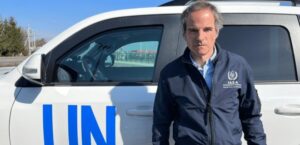
IAEA Director General Rafael Mariano Grossi called Wednesday meetings with high-ranking representatives of the Ukrainian government at the South Ukrainian NPP (SUNPP) very productive and announced the imminent arrival of experts at Ukrainian nuclear facilities.
“Teams of experts and additional safety equipment will arrive at Ukraine’s nuclear facilities very soon,” he tweeted at the end of the day.
The daily report of the organization indicates that at meetings with the Minister of Energy of Ukraine German Galushchenko, the heads of the nuclear regulator of Ukraine SNRIU Oleg Korikov and NNEGC “Energoatom” Petr Kotin, as well as the director of the South Ukraine NPP Igor Polovich, specific steps were considered to provide urgent assistance to Ukraine in protecting its nuclear facilities.
As reported, on March 30, Grossi visited South Ukraine NPP, where he met with representatives of the Ukrainian side. At a meeting with plant workers, he noted that the issue of the withdrawal of Russian troops from the Chernobyl and Zaporizhzhya NPPs “needs to be considered at different levels,” and it depends on the ceasefire agreements.



