
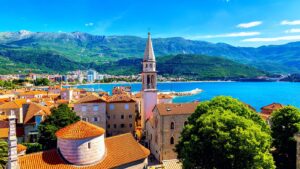
According to Serbian Economist, 815,916 tourists visited the Budva Riviera in Montenegro from January through August 2026, a 17% increase compared to the same period last year, with Ukrainians remaining one of the most prominent groups of foreign visitors to the resort.
This was reported by Milan Tičić, director of the Budva Tourism Organization, in an interview with the Montenegrin publication Vijesti, published on September 18. According to him, tourists from 205 countries visited Budva over the course of eight months.
Serbia and Russia remain the resort’s largest traditional markets. The number of tourists from Serbia has increased by approximately 19% since the beginning of the year, while the flow of Russian tourists has grown by as much as 34%.
Some Western European markets are growing even faster in 2026. The number of visitors from Poland increased by 83%, from Italy by 59%, from the Netherlands by 51%, from Spain by 46%, from the United Kingdom by 25%, and from Germany and France by approximately 15%. Thus, the geography of foreign tourism in Budva is gradually diversifying, although Serbian and Russian tourists still hold the leading positions.
Ukrainians are also among the key tourist groups. According to data from the Budva Tourism Organization, during the peak season on August 7, 2026, Ukrainian citizens were among the top ten largest groups of guests in group accommodations, alongside tourists from Serbia, Russia, Israel, the United Kingdom, Germany, Bosnia and Herzegovina, and Poland.
In the private sector, Ukrainians’ presence is even stronger. In early August, they were the fourth-largest group after tourists from Serbia, Russia, and Bosnia and Herzegovina. In hotels and group accommodations, Ukrainians also consistently ranked among Budva’s top ten source markets.
By the end of August, the pattern remained similar. Among the most numerous guests at hotels and other collective accommodations, the Tourism Organization listed tourists from Serbia, Russia, Israel, the United Kingdom, Bosnia and Herzegovina, Ukraine, Germany, Poland, Turkey, and China.
The importance of the Ukrainian market is also confirmed by Montenegro’s national statistics. According to MONSTAT, in 2025, Ukrainians accounted for 4.3% of all overnight stays by foreign tourists in the country, tying with tourists from Turkey in this regard. The largest shares of overnight stays were accounted for by visitors from Serbia (23.4%), Russia (16.4%), Bosnia and Herzegovina (8.1%), and Germany (4.6%).
In the segment of private apartments and other private accommodations, the share of Ukrainians was even higher—4.7% of all overnight stays by foreign visitors. Serbian tourists accounted for 25.6%, Russian tourists—22.1%, citizens of Bosnia and Herzegovina—9.4%, and Turkish tourists—4.9%. At the same time, 94.8% of all overnight stays in Montenegro’s private sector occurred specifically at seaside resorts.
In 2025, a total of 2.729 million tourists visited Montenegro, accounting for 15.367 million overnight stays. Foreign visitors accounted for 95.8% of all overnight stays, and coastal resorts accounted for 92.6%, underscoring the critical importance of Budva and other coastal cities to the country’s tourism economy.
The growth in tourist traffic is already having an impact on Budva’s revenues. From January through August 2026, revenue from the tourist tax collected by the city’s tourism organization reached a record 2.477 million euros, which is 6% more than the previous year. In July, revenue increased by 16%, and in August, by 13%.
Budva remains one of Montenegro’s main tourist centers and is particularly popular among citizens of Serbia, Russia, Ukraine, and countries in Central and Western Europe. At the same time, the rapid growth in tourist arrivals from Poland, Italy, the Netherlands, and the United Kingdom indicates a gradual reduction in the resort’s dependence on a few traditional markets.

The number of foreign tourists who visited Spain in July rose by 4.6% year-over-year, reaching 11.539 million people, according to the National Institute of Statistics (INE).
This is a record high for any month since records began in 1995.
The largest number of tourists last month came from the United Kingdom—nearly 2.2 million—followed by France (1.6 million) and Germany (1.2 million).
The number of visitors from other European countries rose by 10% to 1.12 million.
The Balearic Islands welcomed the most tourists (2.57 million), followed by Catalonia (2.37 million), Andalusia (1.69 million), and the Valencian Community (1.63 million).
Total spending by visitors to the country in July rose by 10.9% year-over-year, to EUR 18.22 billion, or an average of EUR 1,579 per person.
From January through July, tourist arrivals to Spain rose by 4.6%, to approximately 58.1 million people. This is also a record figure for that period. Foreign tourists spent EUR82.05 billion in the country over the seven-month period.
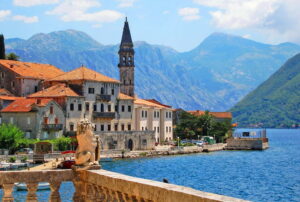
According to “Serbian Economist”, Ukraine ranked sixth among Montenegro’s foreign tourism markets in July 2026 in terms of the number of overnight stays in collective accommodation facilities, as evidenced by new MONSTAT data published on August 27.
Ukrainian tourists spent 43,400 nights in hotels, tourist complexes, hostels, and other collective accommodations. In total, approximately 7,350 tourists from Ukraine stayed at such accommodations during the month.
Serbia, Bosnia and Herzegovina, Poland, the United Kingdom, and Russia ranked ahead of Ukraine in terms of the number of overnight stays. Ukrainians accounted for about 4.4% of all overnight stays by foreign guests.
At the same time, the flow of tourists from Ukraine remains fairly stable. The number of tourists from Ukraine has remained virtually unchanged compared to July of last year, while the number of overnight stays decreased by approximately 3%.
Serbia remains the leader in Montenegro’s tourism market, accounting for about a quarter of all foreign overnight stays. At the same time, the influx of Russian tourists rose sharply in July: the number of overnight stays by Russians increased by more than 60% year-over-year.
In total, 244,800 tourists and 1.08 million overnight stays were registered in Montenegro’s collective accommodation establishments in July. Foreigners accounted for over 90% of overnight stays.
However, the actual role of Ukrainians in Montenegro’s tourism sector is greater than what the July hotel statistics indicate. MONSTAT does not include private apartments and vacation rentals—which Ukrainian tourists actively use—in this monthly report. As of 2025, Ukraine accounted for 4.7% of foreign overnight stays in Montenegro’s private sector.
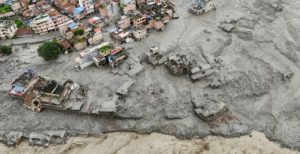
The Embassy of Ukraine in India, which also represents Ukraine in Nepal, has sent two staff members—including a consul—to that country to assist Ukrainian citizens following a massive flash flood and landslides in the Rasuwa district of Bagmati Province.
According to the embassy, Ukrainian diplomats will work directly on the ground in coordination with the relevant Nepalese authorities, local rescue services, and the Honorary Consul of Ukraine. The primary task is to locate Ukrainian citizens with whom contact has been lost and to provide them with consular assistance.
According to the latest data from the Ministry of Foreign Affairs of Ukraine, 55 Ukrainian citizens are considered missing as a result of the natural disaster in Nepal. These include two tourist groups consisting of 47 and seven people, respectively, as well as one Ukrainian woman who was part of a foreign tourist group. As of August 27, there is no information regarding Ukrainian citizens who have died or been injured.
According to information received by the Ukrainian Ministry of Foreign Affairs from local authorities, more than 1,100 people are considered missing following the massive flooding and landslides, including over 700 tourists from nearly 30 countries. At the time of the Ukrainian Foreign Ministry’s announcement, at least 165 fatalities had been confirmed.
The natural disaster occurred on August 26 in the Rasuwa mountain district near the Nepal-Tibet border. A powerful torrent of water, rocks, and soil swept through the valleys of the Bhote Koshi and Trishuli rivers, damaging settlements, roads, bridges, power facilities, and tourist infrastructure.
According to the latest expert assessments, one of the likely causes of the disaster may have been the collapse of a section of a glacier along with a mass of rocks and snow. Rescue operations are being hampered by damage to transportation and communications infrastructure.
The Embassy has urged Ukrainian citizens currently in Nepal to inform diplomats of their whereabouts and condition at the earliest opportunity, to follow the recommendations of local authorities and rescue services, and to avoid visiting the affected areas.
Relatives of Ukrainians with whom contact has been lost and who may have been in the disaster zone are asked to provide diplomats with information about their last known whereabouts.
Hotline of the Embassy of Ukraine in India: +91 92055 07157 (Viber, Telegram), email: consul_in@mfa.gov.ua.
Honorary Consul of Ukraine in Nepal: +977 1 441 6544, +977 1 441 6767.
24-hour hotline of the Ministry of Foreign Affairs of Ukraine: +38 044 238 1588, email: cons_or@mfa.gov.ua.
Original source — Embassy of Ukraine in the Republic of India, statement dated August 27, 2026. Additional up-to-date information on Ukrainian citizens was provided by the Ministry of Foreign Affairs of Ukraine to the Interfax-Ukraine news agency.
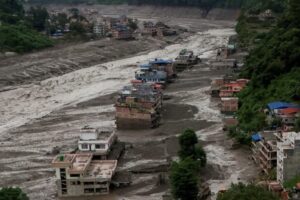
In Nepal, 53 Ukrainian citizens are currently listed as missing following the natural disaster, including 46 tourists with whom contact was lost on Wednesday morning, the press service of the Ukrainian Ministry of Foreign Affairs told reporters.
According to the Nepal Tourism Police, a total of 53 Ukrainian citizens are currently considered missing as a result of the natural disaster. Thus, the 46 tourists are included in the total number of missing persons.
“The Ministry of Foreign Affairs received a report regarding the loss of contact this morning with a group of 46 Ukrainian tourists in the disaster zone. Overall, according to the Nepal Tourism Police, 53 Ukrainian citizens are currently considered missing as a result of the disaster,” the statement reads.
The Ukrainian embassies in India and China are in contact with the relevant authorities in those countries regarding search operations that could help locate the Ukrainian citizens.
“At the same time, as of now, there is no information regarding the presence of Ukrainian citizens among the dead or injured,” the Ministry of Foreign Affairs noted.
According to information released by the ministry on Wednesday evening, at the personal instruction of Ukrainian Foreign Minister Andriy Sibiga, the Ukrainian embassies in India and China are using the known personal data of the missing citizens to take steps to establish contact with them and carry out other necessary actions.
In addition, the Ministry of Foreign Affairs’ “hotline” has received eight reports from relatives regarding the loss of contact with individuals on the aforementioned list. These reports are part of the total of 53 Ukrainian citizens who are currently considered missing.
The Honorary Consul of Ukraine in Nepal has also been involved on the ground.
The Ministry of Foreign Affairs, the Department of Consular Service, and the Ukrainian embassies in India and China are working to gather additional information, coordinate with foreign authorities to locate the Ukrainians, and provide information and assistance to their relatives.
As previously reported, as of Wednesday evening, at least 16 people had died as a result of flooding in Nepal’s Rasuwa District on the border with China, and at least 384 tourists are considered missing. Among them are 93 Nepalese residents and 291 foreigners, including citizens of the United Kingdom, the United States, Australia, the Netherlands, Malaysia, and India. The citizenship of 111 people is still being determined.
Nine police officers who were on duty along the Nepal-China border are missing.
The nationalities of the deceased have not been specified.
During the search and rescue operations, security forces managed to rescue 25 people. Operations are ongoing.
The flooding was caused by rising water levels in the Bhote Koshi River, which originates in Tibet and flows through Nepal. The settlements located near the river were hit the hardest, particularly Timure and Syaaprubesi. The water flooded marketplaces and residential neighborhoods, caused serious damage to police stations and hydroelectric facilities, and destroyed bridges and roads.
According to preliminary data, the rise in the river’s water level may have been caused by a landslide in Tibet.
The Ukrainian embassies in India and China promptly contacted the relevant authorities to inquire whether any Ukrainian citizens were among those affected by the landslides on the border between Tibet and Nepal.

The Ukrainian Embassy in Thailand has advised Ukrainian citizens to observe heightened security measures in the southern provinces of Pattani, Yala, and Narathiwat amid a sharp escalation of the situation and a series of simultaneous attacks that occurred on the night of August 23.
According to Thai security forces, 51 incidents were recorded in the three southern provinces on the evening of August 22, including explosions, arson, and damage to infrastructure. Of these, 22 incidents occurred in Narathiwat, 18 in Yala, and 11 in Pattani. In Narathiwat, at least two injured civilians were initially reported.
The attacks targeted, among other things, stores, telecommunications infrastructure, and other facilities. Following a series of attacks in Narathiwat Province, authorities temporarily imposed a curfew from 10:15 p.m. on August 22 until 6:00 a.m. on August 23.
On the morning of August 23, Thailand’s Prime Minister and Minister of the Interior, Anutin Charnvirakul, convened an emergency meeting of law enforcement leaders in response to the scale of the nighttime attacks. Authorities have stepped up security measures in the region.
The attacks also affected transportation. The State Railway of Thailand temporarily closed the section between the Maruebo and Tanyong Mat stations in Narathiwat after damage to the railroad tracks was discovered as a result of an explosion. New explosions were also reported in Pattani and Narathiwat that morning.
The Ukrainian Embassy has advised citizens already in Pattani, Yala, or Narathiwat to take extra personal safety precautions and follow the instructions of local authorities. In the event of a threat to life or health, Ukrainians are advised to contact the Embassy’s hotline in Thailand: +66 970 107 760.
The current escalation is not directly related to the conflict between Thailand and Cambodia, which is unfolding along another section of the country’s border.
Pattani, Yala, and Narathiwat are located in the far south of Thailand near the border with Malaysia. These are predominantly Muslim provinces that historically were part of the Malay Sultanate of Pattani.
An armed separatist conflict has been ongoing in the region for over 20 years. The Barisan Revolusi Nasional (BRN) is considered the main insurgent group. Since the conflict reignited in 2004, the violence has claimed the lives of over 7,800 people. In recent months, the number of attacks has risen again.
One of the most serious incidents was the July 22 attack on a checkpoint in Narathiwat: armed men opened fire and used improvised explosive devices, killing five paramilitary personnel and wounding civilians. Following this, special security measures were stepped up in the province.
The day before, on July 21, a car bomb exploded near a police facility in Narathiwat. This was the first such car bombing in Thailand’s southern region in 2026.
Back in June, two separate explosions in Yala and Pattani left 11 police officers injured, and in Pattani, armed men attacked a biomass power plant, after which a key section of the highway was temporarily closed.
Amid the ongoing threat, the Thai government extended the state of emergency for the 85th time in July across much of Narathiwat, Pattani, and Yala—from July 20 to October 19, 2026. However, a number of calmer areas were excluded from the state of emergency.
At the same time, Bangkok is attempting to resume political dialogue. Thailand’s new chief negotiator, Tanut Suwannananda, announced in August his intention to change the approach to the peace process with the BRN, including discussions on political demands, elements of decentralization, and a possible amnesty. Negotiations mediated by Malaysia have been ongoing since 2013 but have been repeatedly interrupted.
Even before the current series of attacks, a number of foreign governments had recommended avoiding non-essential travel to Pattani, Yala, and Narathiwat. For example, the British Foreign Office advises against traveling there unless absolutely necessary due to regular armed attacks near the Malaysian border.
Thus, the Ukrainian Embassy’s warning is not related to a general deterioration of security throughout Thailand, but rather to a sharp escalation of the chronic armed conflict in the three southernmost provinces. The country’s main tourist regions—Bangkok, Phuket, Pattaya, Koh Samui, Krabi, and Chiang Mai—are located outside this conflict zone.



