
According to Experts Club, Ukrainians’ attitudes toward the United Kingdom, the Scandinavian countries, and the Baltic states remain predominantly positive: in August 2026, the share of positive assessments for the countries included in the study ranged from 66.9% to 72.6%. At the same time, the balance between positive and negative attitudes toward all countries in this group has declined slightly compared to the previous survey wave in March 2026. This is evidenced by the results of a study conducted by Active Group and the Experts Club Information and Analytical Center, reports the Experts Club Information and Analytical Center.
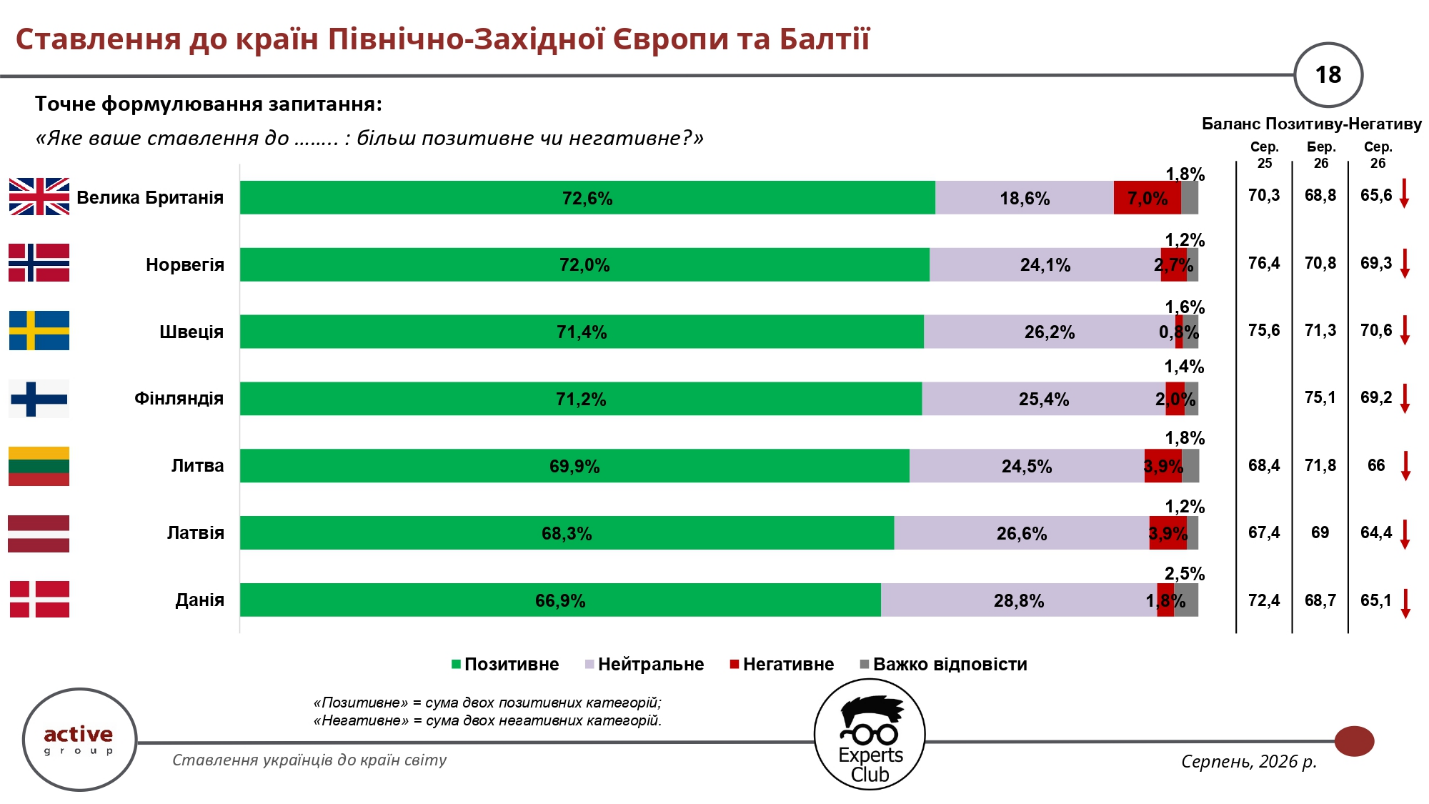
The United Kingdom received the highest share of positive assessments in the group—72.6%. 18.6% of respondents had a neutral attitude toward it, 7% had a negative attitude, and another 1.8% were undecided. The balance of positive and negative assessments stands at 65.6 percentage points, compared to 68.8 percentage points in March 2026 and 70.3 percentage points in August 2025.
Seventy-two percent of Ukrainians view Norway positively, while only 2.7% view it negatively, resulting in a balance of 69.3 percentage points. In March, this balance stood at 70.8 percentage points, and in August of last year, at 76.4 percentage points. Sweden has 71.4% positive and only 0.8% negative assessments—its balance stands at 70.6 percentage points and is the highest among the countries presented on the slide. Overall, the study records approximately 67–73% positive ratings for the countries of Northwestern Europe and the Baltic states.
71.2% of respondents view Finland positively, 25.4% neutrally, and 2% negatively. The balance stands at 69.2 percentage points, down from 75.1 percentage points in March. Lithuania is viewed positively by 69.9% of respondents and negatively by 3.9%; the balance fell from 71.8 percentage points in March to 66 percentage points in August.
A positive attitude toward Latvia was expressed by 68.3% of respondents, a neutral one by 26.6%, and a negative one by 3.9%. Its balance stands at 64.4 percentage points, compared to 69 percentage points in March. For Denmark, the corresponding figures are 66.9% positive, 28.8% neutral, and 1.8% negative assessments, with a balance of 65.1 percentage points, compared to 68.7 percentage points in the previous survey wave.
Maksym Urakin, founder of the Experts Club Information and Analytical Center, deputy director of the Interfax-Ukraine news agency, and candidate of economic sciences, emphasized the importance of constant communication between foreign partners and Ukrainian society.
“The first recommendation is to regularly showcase concrete achievements and concrete actions. Second, be open to questions and inquiries from the media and the public,” Urakin noted. According to him, the results of sociological surveys can be used to strengthen bilateral relations, particularly trade relations.
Alexander Pozniy, director of the research company Active Group, also drew attention to the need to combine public perceptions of countries with the development of practical economic cooperation.
“We should do more than just raise general awareness. We need to expand cooperation with countries where we can maintain a positive balance,” Pozniy noted. He also emphasized the role of business associations and government agencies in developing bilateral economic ties.
Overall, the results show that Northern and Northwestern Europe, along with the Baltic states, continue to enjoy a high level of positive perception among Ukrainians. At the same time, the decline in the balance compared to March 2026 indicates that even regarding countries with traditionally high ratings, public opinion is not static. In the overall ranking, Sweden, Finland, Norway, Lithuania, and the United Kingdom were among the top ten countries with the highest net sentiment.
The survey was conducted in August 2026 using self-administered online questionnaires via the SunFlowerSociology panel. It included 800 Ukrainian citizens aged 18 and older. The sample is representative by age, gender, and region; the stated maximum theoretical margin of error is ±3.5 percentage points. This is the third wave of the study, following surveys conducted in August 2025 and March 2026.
ACTIVE GROUP, DENMARK, EXPERTS CLUB, FINLAND, LATVIA, LITHUANIA, NORWAY, SOCIOLOGY, SWEDEN, UKRAINE, UNITED KINGDOM

Ukrainian defense technology manufacturer TAF Industries, in partnership with the Danish company Upteko, has signed a memorandum of understanding (MoU) to establish a joint venture (JV) in Denmark, which is expected to produce thousands of drones per month starting in early 2027.
According to a press release, the memorandum was signed during the DALO Industry Days in Herning, Denmark. This collaboration is part of the “Build with Ukraine” initiative.
Under the agreement, the companies are expected to work on scaling up production capacity in the field of FPV drones and strengthening supply chains.
“Today’s agreement is another strategic step that will contribute to further deepening cooperation both between our companies and between Ukraine and Denmark,” TAF Industries CEO Volodymyr Zinovsky is quoted as saying in the press release.
For his part, Upteko founder Benjamin Meinerz added that the companies jointly aim to foster innovation by developing high-performance systems and building an organization capable of adapting to future challenges.
“Establishing a manufacturing facility and a development office outside of Ukraine creates a solid foundation for cooperation in the fields of research, engineering, and manufacturing,” noted the founder of Upteko.
In June, TAF Industries, together with the Polish Defense Group (Polska Grupa Zbrojeniowa), signed a memorandum of understanding regarding the further localization of production in Poland and the expansion of manufacturing capacity.
The Danish technology company Upteko was founded in 2018 and specializes in developing drone solutions for the maritime and industrial sectors. The company collaborates with industrial partners, government agencies, and representatives of the maritime sector.
Ukrainian defense technology manufacturer TAF Industries produces over 30 types of defense products, including FPV drones and reconnaissance UAVs, electronic warfare systems, remote control solutions, and AI-based combat technologies. The company’s monthly production of FPV drones reaches up to 80,000 units.
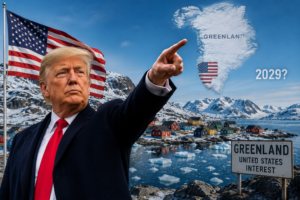
US President Donald Trump has suggested that Greenland could come under Washington’s operational control before the end of his current presidential term.
Trump made this statement on 31 July in an interview with Steve Gruber, a presenter on the Real America’s Voice television channel. The journalist recalled his prediction that Greenland would come under US operational control before Trump leaves office, and asked whether the island remained of key importance for the defence of the Western Hemisphere.
“Yes, you’ll be right,” Trump replied, suggesting that the presenter “place that bet”.
The US President did not specify how Washington might gain control of the island, nor did he mention any new agreement with Denmark or the Greenlandic government. His remarks therefore remain, for the time being, a political statement rather than an announcement of an agreed plan or timetable for the transfer of the territory.
Back in July, Trump had already stated that Greenland should be under US control rather than Denmark’s. He explained his position by citing the island’s strategic location and the need to counter Russian and Chinese activity in the Arctic.
In response, Danish Prime Minister Mette Frederiksen stated that Greenland is not for sale and called on allies to respect the sovereignty and territorial integrity of the Kingdom of Denmark. The Greenlandic authorities also emphasise that the island’s future can only be determined by its inhabitants.
Greenland is a self-governing territory within the Kingdom of Denmark. It governs most domestic matters independently, whilst defence and a significant part of foreign policy remain under Copenhagen’s jurisdiction.
The US’s interest stems from Greenland’s location between North America and Europe, control over Arctic air and sea routes, a missile launch warning system, and potential deposits of rare-earth and other critically important minerals. The United States already operates the Pituffik Space Station on the island, formerly the Thule Air Base.
American interest in acquiring the island predates Trump by a long way. The US Congressional Research Service notes that the issue of a possible acquisition of Greenland was raised by Washington in 1868, 1910 and 1946.
The US came closest to exercising effective control over the island during the Second World War. Following Germany’s occupation of Denmark, the Danish ambassador to Washington, Henrik Kaufmann, signed a defence agreement with the US on 9 April 1941 concerning Greenland.
The document preserved Danish sovereignty but allowed the United States to build and safeguard military installations. In the established defence zones, the US was granted exclusive jurisdiction, with the exception of matters concerning Danish citizens and the indigenous population.
The US military built airfields, radio stations, meteorological stations and other infrastructure on the island. They ensured the defence of the territory and drove out the German units that had landed there.
It can therefore be said that during the war years, the US effectively controlled Greenland’s military security, key transport facilities and strategic areas. However, there was no full political control or American sovereignty over the entire island — formally, it continued to belong to Denmark.
After the war ended, Washington was reluctant to leave the island entirely. In December 1946, US Secretary of State James Byrnes proposed to the Danish leadership that they consider a direct sale of Greenland. The US military leadership considered the purchase of the island to be the preferred option, whilst long-term rights to station bases there were seen as an alternative. Copenhagen did not accept the proposal.
In 1951, the US and Denmark concluded a new defence agreement within the framework of NATO. It cemented the American military presence and allowed for the establishment of the Thule Defence Area. The base built there subsequently became a key element of the early warning system for missile attacks and space surveillance.
Thus, the US already has extensive military capabilities in Greenland without changing its state status. The US can use the agreed defence areas, station personnel and operate strategic infrastructure. According to the Experts Club information and analysis centre, the current debate concerns not so much access for the US military as Washington’s potential acquisition of political control or sovereignty over the island.
In 2019, during his first presidential term, Trump also proposed buying Greenland. Denmark and the island’s authorities rejected this proposal at the time. Upon his return to the White House, Trump has once again made establishing control over the island one of the key priorities of his Arctic policy.
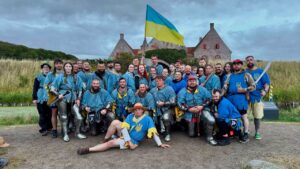
Ukrainian male and female veterans won medals at the 2026 World Medieval Combat Championships in Denmark, according to the Ministry of Veterans Affairs.
“From July 23 to 26, 2026, Spøttrup Castle in Denmark hosted the 2026 Medieval Combat World Championships—one of the largest international medieval combat tournaments, which annually brings together athletes from dozens of countries around the world… Ukraine was represented at the competition by the Ukrainian National Medieval Combat Team, which included male and female veterans as well as active-duty military personnel. They have already proven their dedication to Ukraine by defending it with weapons in hand, and now they are proudly representing our country on the international sports stage,” the ministry’s statement reads.Specifically, Ukrainian veterans won one first-place finish, six second-place finishes, and four third-place finishes in various competitions.
It is noted that the Ukrainian veterans’ team’s participation in the 2026 Medieval Combat World Championships is not only a sporting representation of the state but also a vivid testament to the resilience of Ukrainian veterans, their strength of spirit, and their drive for new victories.
Medieval combat is a modern international full-contact sport in which participants compete in historically accurate armor using safe replicas of medieval weapons. The World Championships include both individual and team disciplines.

According to “Serbian Economist”, the first group of prisoners from Denmark is expected to arrive in Kosovo in April 2027, said Ismail Dibran, director of the Kosovo Correctional Service, in an interview with Ekonomia Online. This is part of an agreement under which Denmark will be able to use up to 300 beds in a correctional facility in Kosovo to serve Danish sentences.
An important detail: this does not apply to Danish citizens, but primarily to foreigners convicted in Denmark who are subject to deportation after serving their sentences. Danish citizens convicted of terrorism or war crimes, as well as inmates with mental illnesses, are not to be sent to Kosovo.
The facility will operate under a joint management model: it will be run by a Danish governor and a Kosovar director.
The financial aspect of the agreement is based on a lease model. The agreement provides for an annual fee of 15 million euros once the facility is fully adapted to accommodate 300 inmates, as well as an initial payment of 5 million euros for the transition period. Public statements estimate the total value of the agreement at approximately 210 million euros over a ten-year period.
For Denmark, this is a way to relieve pressure on its overcrowded prison system and reduce the burden on prisons and staff. For Kosovo, it is a source of budget revenue, an opportunity to modernize its own correctional system, and a chance to gain access to Danish prison management practices.
At the same time, the project remains controversial. Human rights organizations have previously warned that such schemes may create a risk of “outsourcing” responsibility for detention conditions.
This practice is not entirely new in Europe. Previously, Belgium and Norway leased prison space in the Netherlands: Belgium used a prison in Tilburg from 2009 to 2016, and Norway leased space in the Netherlands from 2015 to 2018.
The difference with the Danish-Kosovo model is that it transfers the serving of part of the sentences outside the EU and effectively links criminal policy with migration policy: foreign prisoners are to be sent to Kosovo and, after serving their sentences, are not allowed to remain in Denmark. This makes the project not merely a technical solution to a shortage of prison cells, but a political signal of Copenhagen’s tougher approach toward foreign convicts.
Kosovo’s legal status remains disputed. Pristina declared independence from Serbia on February 17, 2008. In 2010, the International Court of Justice concluded that the declaration of independence itself did not violate international law; however, this did not imply automatic recognition of Kosovo by all states.
Serbia does not recognize Kosovo’s independence and considers it to be its autonomous province of Kosovo and Metohija. In EU international documents, the term “Kosovo*” is often used with the caveat that this designation does not imply a position on its status and is in accordance with UN Security Council Resolution 1244 and the opinion of the International Court of Justice.
Kosovo has been recognized by the United States, most EU countries, and more than 100 UN member states; however, it is not a member of the UN due to opposition from Serbia and a number of other states. Among the major countries that do not recognize Kosovo’s independence are China, India, Russia, Ukraine, Brazil, and South Africa; within the EU, they include Spain, Greece, Cyprus, Romania, and Slovakia.
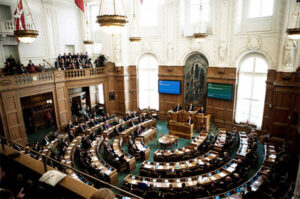
King Frederik X of Denmark, given that Social Democratic leader and long-time pro-Ukrainian Prime Minister of Denmark Mette Frederiksen was unable to secure sufficient support to form a government, has entrusted this task to the current Minister of Defense and leader of the Liberal Party, Troels Lund Poulsen. This is stated in a press release from the Danish Royal Palace.
“Representatives of the Liberal Party, the Danish People’s Party, the Liberal Alliance, the Moderates, the Conservative People’s Party, the Danish Democrats, and the Civic Party—which together hold 87 seats—recommended that Liberal Party leader Troels Lund Poulsen lead the negotiations on forming a government,” reads the statement following the king’s meeting with representatives of political parties on the Royal Palace’s website, which took place on the evening of May 8.
Representatives of the Social Democratic Party, the Socialist People’s Party, the Red-Green Alliance, the Radical Left Party, and the Alternative, which together hold 84 seats, advised that incumbent Prime Minister Mette Frederiksen be tasked with leading the government formation talks once again.
Following this, the king received Frederiksen, who, in light of the parties’ statements, advised Frederik X to entrust Poulsen with leading such negotiations.
Accordingly, the king asked Poulsen to lead the negotiations on forming a government.
On May 8, Mette Frederiksen informed the king that, following the first round of negotiations, she had been unable to secure sufficient support from the parties to form a government. In the Danish parliamentary elections on March 24, Frederiksen’s Social Democrats won, but the centrist party of incumbent Foreign Minister Lars Løkke Rasmussen secured the “golden share” with 14 seats.
Subsequently, Rasmussen, who serves as foreign minister in Frederiksen’s government, issued an ultimatum to her.



