

Turkey intends to participate in the Caspian Sea–Black Sea–Europe energy corridor (Black Sea Energy) project, which is designed to ensure the supply of “green” electricity from the South Caucasus to the European Union market, said Turkish Minister of Energy and Natural Resources Alparslan Bayraktar.
According to him, the project involves connecting the power grids of Azerbaijan and Georgia, followed by the transmission of electricity via an undersea cable across the Black Sea to Romania and on to Hungary. At the invitation of the Azerbaijani side, Turkey expressed its intention to join the initiative and supported its implementation.
Ankara’s interest in the project is also confirmed by preliminary negotiations with Baku. On August 1, Azerbaijan’s Minister of Energy Parviz Shahbazov reported following a meeting with Bayraktar in Istanbul that the parties had discussed Turkey’s potential cooperation within the framework of the “Caspian–Black Sea–Europe” energy corridor and had also agreed to accelerate the implementation of other joint energy projects.
According to Bayraktar, cooperation between Turkey and Azerbaijan in the electricity sector is currently developing along three fronts.
The first involves integrating Nakhchivan’s power grid with Turkey’s and organizing electricity exchanges. In the future, this route could be connected to the main territory of Azerbaijan via the Zangezur Corridor.
The second direction is the “green” energy corridor connecting Azerbaijan, Georgia, Turkey, and Bulgaria. It is intended to facilitate the export of renewable electricity generated in Azerbaijan through Georgia and Turkey to Bulgaria and onward to EU markets. In August 2026, Baku and Ankara separately agreed to accelerate the implementation of this project.
The third initiative is Black Sea Energy itself. The main participants in the project remain Azerbaijan, Georgia, Romania, and Hungary. The four countries signed an agreement on strategic partnership in the development and transmission of “green” energy in Bucharest on December 17, 2022. The European Union supports the project, viewing it as a new supply route for renewable electricity from the South Caucasus to the EU.
In July 2026, the project moved to the next phase of implementation following the completion and approval of feasibility studies. The project operator, Green Energy Corridor Power Company, has begun developing the conceptual design, engineering solutions, and procurement strategy.
According to recent statements by the Azerbaijani side, the plan is to gradually export up to 3.9–4 GW of green electricity through the corridor, starting in 2032. The project has also been included in the TYNDP 2026 portfolio of the European Network of Transmission System Operators for Electricity (ENTSO-E).
A key infrastructure element will be a high-voltage subsea direct-current cable between Georgia and Romania. The preliminary construction cost is estimated at approximately 3.5 billion euros, with a construction period of three to four years. It was previously reported that up to 2.3 billion euros in European funding could be secured. However, in the latest Global Gateway documents, 2.3 billion euros is also cited as the indicative investment amount for the strategic Black Sea electricity interconnector, so the final financing structure for the project is still to be finalized.
The European Commission views Black Sea Energy as one of the tools for diversifying the EU’s energy supply and integrating renewable generation from the South Caucasus. The project is intended to connect the Caspian Sea region to the European power grid via Georgia and Romania, while also strengthening the energy resilience of the participating countries.
If Turkey joins, the project will take on additional significance, as Ankara will be able to participate in several parallel transmission routes for Azerbaijani “green” electricity to Europe—via the Black Sea and via the Turkey–Bulgaria overland corridor.
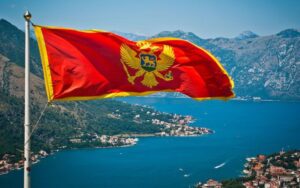
According to “Serbian Economist”, Montenegro expects to join the European Union as a full and equal member and does not agree to a model under which new member states would be granted limited rights, Minister of European Affairs Maida Gorčević stated on September 9.
According to her, Podgorica is prepared to adopt additional safeguards against a potential democratic backslide following EU accession, but does not want to become a “second-class member” with limited voting rights or other temporary restrictions.
Various models for future enlargement are currently being discussed within the European Union, including the possibility of temporarily restricting certain rights of new members regarding the budget, foreign policy, or the exercise of the veto. Gorčević emphasized that Montenegro is prepared to accept the strictest mechanisms for monitoring the rule of law, but considers the equality of members to be a fundamental condition.
At the same time, Podgorica is trying to dispel Brussels’ concerns about possible vetoes in advance. Gorčević stated that Montenegro has no intention of using the veto as a tool for exerting pressure and sees itself rather as part of a group of small and predictable EU members, such as Slovenia, Malta, or the Baltic states.
Montenegro remains the most advanced candidate for EU accession in the Western Balkans. Negotiations have been ongoing since 2012, and all 33 negotiation chapters have been opened. Following the closure in July of the chapters on competition and the customs union, the number of provisionally closed chapters reached 18.
The government expects to close the remaining chapters by the end of 2026 and is aiming for EU accession in 2028. Back in the spring, Gorčević stated that the country’s goal is full membership, rather than an interim or simplified form of integration.
For Ukraine, Podgorica’s position is also of interest as a potential precedent. If Brussels does indeed decide to impose transitional restrictions on new EU members regarding the right of veto or other powers, such a model could potentially be applied to other Western Balkan countries that join later. This model could also be applied to other EU candidate countries.
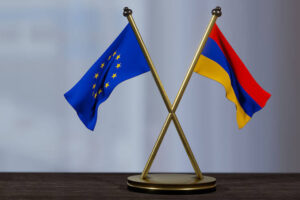
The European Commission has not confirmed that a visa-free regime between Armenia and the European Union will be introduced specifically in 2029, although Yerevan expects to complete the visa liberalization process by that date. This information is supported by recent statements from EU representatives and official documents from the European Commission.
On September 7, European Commission spokesperson Paula Pinho stated at a briefing in Brussels that it is currently too early to set a specific date for the abolition of visas.
“It is still too early to predict whether 2029 or any other date will mark the moment of visa liberalization,” the European Commission spokesperson said.
Thus, 2029 is a target set by the Armenian government, not a deadline agreed upon with the EU. Armenian Prime Minister Nikol Pashinyan has previously stated on several occasions that Yerevan hopes to achieve visa liberalization by 2029. In particular, on August 24, while presenting the government’s program for 2026–2031, he announced that Armenia intends to achieve the abolition of short-term visas for travel to the EU “during 2029.”
The dialogue between the EU and Armenia on visa liberalization was officially launched on September 9, 2024, and on November 5, 2025, the European Commission submitted the Visa Liberalization Action Plan (VLAP) to the Armenian authorities.
The plan calls for Armenia to meet requirements in four key areas: document security and biometrics; border management, migration, and asylum; public order and security; and fundamental rights. The document does not specify a fixed timeline—the process will continue for as long as necessary to meet all criteria.
In July, European Commission President Ursula von der Leyen also made it clear that the EU is not tying the decision to a specific year. She noted that Armenia is making good progress but described the process as “merit-based,” meaning it depends on the actual fulfillment of the established criteria.
Armenia is currently the only partner country with which the EU is engaged in an active new dialogue on visa liberalization, the European Commission noted. Subsequent assessment missions are to verify compliance with the remaining requirements.
Upon successful completion of all stages, the European Commission is expected to propose amendments to European visa legislation, after which the decision must undergo the necessary procedures within the EU. Therefore, Armenia’s fulfillment of the technical criteria does not in itself mean the automatic abolition of visas on a predetermined date.
ARMENIA, EUROPEAN UNION, MIGRATION, VISA-FREE TRAVEL, Єреван

In a referendum, Icelanders rejected the proposal to resume negotiations on the country’s accession to the European Union. 52.8% voted against, 47.2% voted in favor, and voter turnout was a very high 82.5%.
The vote was not directly about joining the EU, but only about resuming negotiations. Iceland submitted its application back in 2009, began negotiations, but effectively halted them in 2013.
Had the current vote been favorable, another referendum would have been required after the terms of accession were agreed upon.
One of the main reasons for Icelandic Euroskepticism is fishing. For the island’s economy, the issue of transferring part of the control over fishery resources to the EU’s common policy is particularly sensitive.
As of August 5, the European Union has changed the conditions for granting temporary protection to certain Ukrainian citizens subject to military service. New applicants will be required to confirm that they have complied with the requirements of Ukrainian law, have been exempted from military service, or have legally left the territory of Ukraine.
The relevant provisions are contained in EU Council Implementing Decision No. 2026/1912, adopted on July 30 and published in the Official Journal of the European Union on August 4, 2026. The decision entered into force the day after its publication.
The new restriction applies only to individuals who apply for temporary protection after the decision enters into force. Ukrainians who have already been granted this status in an EU country retain their rights, and the new rules do not apply to them.
To obtain temporary protection, a new applicant must confirm compliance with their military obligations in Ukraine. Evidence may include a passport with a stamp confirming lawful departure from the country, or a paper or electronic document confirming exemption from service or the fulfillment of relevant obligations. The decision will depend on the availability of documents confirming the legality of departure and the applicant’s status under Ukrainian law.
At the same time, the Council of the EU has extended temporary protection for Ukrainian citizens for another year—until March 4, 2028. Previously, the program was set to expire on March 4, 2027.
The Council of the EU explained that the new condition was introduced to simultaneously ensure protection for displaced persons and address Ukraine’s defense needs. EU member states agreed that, going forward, temporary protection should be granted only to new applicants who are fulfilling their military obligations in Ukraine.
Temporary protection grants Ukrainians the right to reside in EU countries, as well as access to the labor market, medical care, social security, housing, and education for their children.
According to the Council of the EU, as of the end of May 2026, approximately 4.38 million people who had left Ukraine after the start of the full-scale war were benefiting from temporary protection in the European Union.
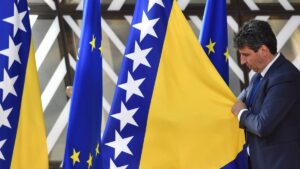
According to Serbian Economist, Bosnia and Herzegovina will receive €140.5 million in grant funding from the European Union following the country’s Presidency’s ratification of the IPA III package for 2025–2027.
The EU Delegation to Bosnia and Herzegovina announced the completion of the ratification on July 25. The funds are intended to bring the country’s legislation and institutions into line with European standards, support economic development, and implement reforms.
“The European Union remains Bosnia and Herzegovina’s most consistent partner,” the EU Delegation stated in its announcement.
The funding is provided under the Instrument for Pre-Accession Assistance (IPA III). According to the program approved by the European Commission, of the total amount, 30 million euros are allocated for 2025, 38.5 million euros for 2026, and 72 million euros for 2027. All funding is in the form of grants and does not require repayment.
The program covers four main areas: the rule of law, fundamental rights, and democracy; public administration and the alignment of legislation with EU standards; the “green” agenda and sustainable infrastructure; and enhancing competitiveness and inclusive economic growth.
https://t.me/relocationrs/3322



