

The Cabinet of Ministers of Ukraine has included “Klubovka Eco Park” (Izyaslav Territorial Community, Shepetivka District, Khmelnytskyi Oblast) in the Register of Industrial Parks. The project was initiated by the local company BIO Electrix LLC, which plans to attract nearly 2.05 billion hryvnias in investments, according to the Ministry of Economy and Environment.
According to the report, the park, covering an area of nearly 56.5 hectares, has been established for a term of 35 years; it is planned to house enterprises in the processing industry and alternative energy sector and create up to 2,200 new jobs.
“Priority will be given to the production of food products, paper and paper products, chemicals and chemical products, and plastics in primary forms,” the statement said.
Funding will come from the initiator, the management company, participants, and other entities within the industrial park, as well as government incentives and income tax exemptions.
According to YouControl, Bio Electrics LLC was registered in 2017, with its primary activity being electricity generation. Other areas of activity include the cultivation of grains and legumes, oilseed crops, vegetables, and melons.
The company is part of the “Ukraine 2001” group of companies, and the ultimate beneficiary is the group’s president, Vadym Leivi.
In 2025, “Bio Electrix” reported 120 million UAH in net revenue and 5.5 million UAH in net profit.
The main focus of “Ukraine 2001” is the production, processing, and sale of agricultural products. The group’s assets include a pig farm with a capacity of 40,000 head, the Teofipol Sugar Plant, the Rokytne Sugar Plant, a grain elevator, and a biogas plant.
According to the Ministry of Economy, there are currently 128 industrial parks registered in Ukraine across nearly all regions. As of the end of 2025, 37 industrial enterprises had been built or were under construction in industrial parks, and the volume of investments attracted exceeded 45 billion UAH.

Vasyl Khmelnytskyy, founder of the “Bila Tserkva” Industrial Park, announced the suspension of plans to build three plants within the industrial park due to high risks.
“I know that fortune often favors the bold. But today I went to Bila Tserkva and made a decision: for now, not to begin new construction of three factories. We’ll finish what we’ve already started, but put the large-scale plans on hold. Right now, the risks are too great—both for the business and for the people. I’m ready to take responsibility for the business. Although, to be honest, I’m already at my limit. But I’m not ready to expose people to a risk I can’t control,” he said on social media.
According to him, such decisions are difficult to make, but an entrepreneur’s responsibility also includes knowing when to stop.
“I don’t like the phrase ‘until better times.’ So I’ll be more specific: we’ll return to these plans when the risks are lower. Right now, our task is to finish what we’ve started, keep the team together, and maintain the ability to move forward,” the entrepreneur emphasized.
The projects of entrepreneur Vasyl Khmelnytskyi’s holding company, UFuture—FOP “Bila Tserkva” and “Bila Tserkva 2”—were included in the Register of Industrial Parks in 2018. The parks are home to more than two dozen tenants (including foreign companies).
The total area of the parks is 70.3 hectares, of which 45 hectares have already been developed. More than 85,000 square meters of industrial and warehouse real estate have been commissioned.
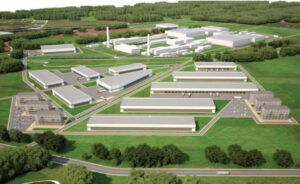
In 2026, the Ministry of Economy and Environment of Ukraine decided to provide state funding for infrastructure development to nine industrial parks totaling 557 million UAH, and will soon review applications from the “Uzhhorod” and “Khust” industrial parks for 120 million hryvnias, according to Dmytro Kysilevsky, deputy chairman of the parliamentary committee on economic development.
“In 2026, decisions have already been made regarding nine industrial parks totaling 557 million hryvnias. Among them are the Transcarpathian industrial parks ‘Tyachiv’ and ‘Friendly Wind Technology.’ Applications from the “Uzhhorod” and “Khust” industrial parks, totaling 120 million hryvnias, will also be reviewed in the near future,” he wrote on Facebook following a meeting held on Wednesday with the initiators and management companies of Transcarpathia’s industrial parks.
Kysilevsky noted that the state provides funding for the development of industrial infrastructure in industrial parks on a 50:50 co-financing basis; recipients are also required to build at least 5,000 square meters of industrial space and attract at least two tenants.
He noted that prior to the full-scale invasion, there was only one industrial park in the Zakarpattia region, but now there are already 12, and three more are preparing to apply for registration by the end of 2026.
“The security factor has become the main draw for industrial investment in the region. In terms of the number of industrial parks, the region is already among the top three, behind Kyiv and Lviv regions, and has well-founded ambitions to become a leader. There are 13 factories that have been built or are under construction in Transcarpathian industrial parks. They already provide jobs for about 2,000 workers,” the MP emphasized.
Kysilevsky also announced the start of construction on new production facilities in the industrial parks of Uzhhorod, Khust, and Svalyava.
As previously reported, as of September of this year, 125 industrial parks had been registered in Ukraine across nearly all regions. By the end of 2025, 37 industrial enterprises had been built or were under construction in these industrial parks. The total amount of investment attracted to the industrial parks exceeds 45 billion hryvnias.
government support, INDUSTRIAL PARK, INDUSTRY, INVESTMENT, UKRAINE
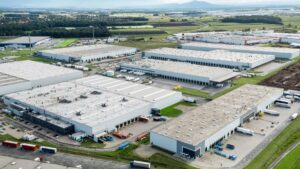
The Cabinet of Ministers of Ukraine has added the following industrial parks to the Register of Industrial Parks “Horvatskyi Hostynets” (Mykolaiv, Stryi District, Lviv Region), with an area of 32.34 hectares, and “Bessarabsky AgroTech Park” (Artsyz, Odesa Region), with an area of 23 hectares, to the Register of Industrial Parks, the Ministry of Economy and Environment reported.
According to a statement on the ministry’s website, the Mykolaiv City Council is the initiator of the park’s creation in Lviv Oblast. Preliminary estimates indicate that 913 million hryvnias will be invested in the development of “Khorvatsky Gostinets” by the initiator, private investors, and the management company.
The park is expected to create approximately 1,500 new jobs.
Key areas of focus include the production of electric motors, generators, and transformers; non-metallic mineral products; machinery and equipment for the mining and construction industries; construction materials; as well as the development of mechanical engineering and alternative energy.
The city council initiated the creation of the “Bessarabian AgroTech Park” industrial park in Artsyz, where approximately 1,000 jobs are planned to be created. A total of 884 million hryvnias is expected to be raised from the initiator, private investors, and the management company to develop the facility.
The main areas of focus will be food production—specifically, the processing and canning of potatoes, fruits, and vegetables; the production of vegetable oils and animal fats; other sectors of the food industry; and alternative energy.
“Two parks—two sectors that we really need: machine building and agricultural processing. Not raw materials, but finished products,” Deputy Minister of Economy Vitaliy Kondratov is quoted as saying in the announcement.
The Ministry of Economy notes that the management company of the “Bessarabian AgroTech Park” is eligible for government incentives in the form of non-repayable financial assistance of up to 150 million hryvnia for infrastructure development.
Currently, there are 125 industrial parks registered in Ukraine, spread across nearly all regions.
As previously reported, as of the end of 2025, 37 industrial enterprises had been built or were under construction in industrial parks. The total amount of investment attracted to industrial parks exceeds 45 billion hryvnias.
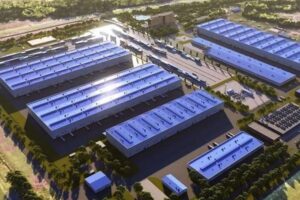
The Verkhovna Rada of Ukraine has approved, in its entirety, a bill to improve the operation of industrial parks (IPs). According to a correspondent for the “Interfax-Ukraine” news agency, 270 deputies voted in favor of the bill, exceeding the required minimum of 226 votes.
“Based on the results of ongoing monitoring of the development of industrial parks, we identified issues, the solutions to which have now been approved by the Rada. Essentially, these are technical issues that arose during the practical implementation of the legislation adopted in 2022. But resolving each of them will contribute to the faster development of this sector and the emergence of new manufacturing facilities,” wrote the bill’s sponsor, Dmytro Kysilevskyi, deputy chairman of the parliamentary committee on economic development.
He noted that the bill, in particular, more clearly delineates the functions of all entities within an industrial park, and grants the initiator of a park’s creation the ability to also act as the managing company without establishing a separate legal entity.
In addition, the concept of an “eco-industrial park” has been introduced, the Cabinet of Ministers has been granted the authority to establish criteria for them, and a new category of land use designation has been introduced: land for industrial parks.
The procedure for increasing and decreasing the area of an industrial park has also been regulated, as have issues regarding the transfer of ownership rights to a land plot within an industrial park from the park’s initiator to another party; opportunities for establishing industrial parks have been expanded: land plots may now be considered adjacent if there are forest buffer strips between them.
Among the issues addressed are improvements to the competitive selection process for management companies and the introduction of the possibility for management companies whose primary activity is the leasing of real estate to obtain loans under the “5-7-9” program.
Temporary restrictions on the acquisition of power capacity for small electricity distribution systems in industrial parks have also been lifted, and provisions regarding state incentives for industrial parks have been improved, in particular through the transfer of international technical assistance from local government bodies to industrial parks.
As of the end of 2025, 37 factories had been built or were under construction in Ukraine’s industrial parks. Throughout 2026, manufacturing enterprises in the parks continued to open.
As previously reported, Bill No. 12117 was adopted in principle on February 11, 2025, with amendments to its provisions, by a vote of 244 members of parliament.

According to Interfax-Ukraine, Valery Kirilko, CEO of the “Industrial Parks of Ukraine” group of companies, believes that one solution for changing Ukraine’s warehouse logistics model—given the enemy’s destruction of warehouse and logistics infrastructure—is to create a decentralized network of small warehouses, particularly within industrial parks.
“The war has shown just how vulnerable large distribution centers are. Therefore, we may need to partially move away from concentrating large volumes of goods in a single location and transition to a decentralized network of small warehouses,” –he wrote on Facebook.
According to his proposal, this could mean replacing a single large warehouse spanning tens of thousands of square meters with many smaller ones—ranging from 1,000 to 5,000 square meters—located in different regions and logistically convenient locations.
“That is precisely why we are currently developing the ‘HELP.Warehouse’ program. We are creating several standard designs for small warehouse complexes that can be quickly adapted to a specific plot of land and implemented simultaneously in different regions of Ukraine,” Kirilko noted.
He emphasized that the company is ready to take on the design of standard warehouse facilities, the search for and acquisition of land plots, matters related to utilities and infrastructure, the selection of construction contractors, the organization of construction, and the coordination of project implementation.
“With proper organization, such facilities can be built in approximately 3–5 months. And today, there is another important factor at play—the Ukrainian construction market is going through a challenging period. But that is precisely why many construction companies are willing to work with minimal profit margins, quickly assemble teams, and carry out projects at competitive costs,” he believes.
Kyrylko added that industrial park sites across Ukraine are being considered separately.
“Some of them are already prepared to provide land plots for such projects on preferential or even free terms during the initial period. We can begin restoring warehouse and logistics infrastructure right now,” he notes.
Kirilko invited those who are able to finance such projects—including those who own a land plot that can be leased free of charge for a year, industrial parks that can provide a small plot free of charge for a year, and construction companies acting as investors—to join the initiative.
The company “Industrial Parks of Ukraine” has been active in the development of industrial parks since 2019. According to its data, nearly one in three industrial parks established or registered in Ukraine is or has been supported by the company’s specialists.
According to information on its website, the company manages seven industrial parks, has developed 56 industrial park concepts, and has facilitated the registration of 37 industrial parks.
INDUSTRIAL PARK, INFRASTRUCTURE, LOGISTICS, UKRAINE, WAREHOUSE



