

In September 2026, Ukrainian citizens purchased 158 residential properties in Turkey, a 7.5% increase from August; however, they dropped from second to fifth place among foreign buyers. Russians retained their lead, increasing the number of purchases over the year by 45.3% to 388 properties, according to data from the Turkish Statistical Institute (TÜİK) published on October 16.
In September, Russian citizens purchased 388 apartments and houses, compared to 343 in August and 267 in September of last year. Thus, the number of transactions rose by 13.1% over the month and by 45.3% year-over-year. Russian buyers accounted for approximately 17.9% of all residential property sales to foreigners.
Iraqi citizens ranked second among foreign buyers with 166 properties purchased, followed by Germany in third place with 162. Next came Iran with 159 properties and Ukraine with 158. China ranked sixth, with its citizens purchasing 124 properties.
Despite dropping in the rankings, Ukrainian buyers have increased the number of transactions for the third consecutive month. In July, they purchased 145 properties; in August, 147; and in September, 158. The share of Ukrainians among all foreign homebuyers in Turkey in September was 7.3%, down from 7.6% in August.
A total of 2,167 residential properties were sold to foreign citizens in September, which is 9.9% more than during the same period last year. Compared to August, when foreigners purchased 1,938 properties, this represents an 11.8% increase.
However, over the first nine months of 2026, the number of apartments and houses purchased by foreigners decreased by 4.3% compared to the same period in 2025, totaling 15,308 properties. Foreign buyers accounted for 1.5% of the total number of transactions in September.
The domestic Turkish real estate market continues to decline. In September, 142,390 residential properties were sold in the country, which is 9.3% less than a year earlier. Sales of new homes rose by 3.9% to 51,519 units, while the number of transactions in the resale market fell by 15.3% to 90,871.
From January through September, total housing sales in Turkey amounted to 1.093 million units, a 7.2% decrease compared to last year.
Ukrainians remain one of the largest groups of foreign buyers of Turkish real estate. By the end of 2025, Ukrainian citizens had purchased 1,541 residential properties, ranking third behind Russians, who bought 3,649 properties, and Iranians, with 1,878 purchases. In 2024, Ukrainians purchased 1,631 properties.
As previously reported by Open4Business, in August 2026, approximately 78% of all residential property purchases by Ukrainian citizens in Turkey took place in the province of Antalya. There, Ukrainians purchased 114 out of 147 properties, while Russians purchased 226. Overall, Istanbul, Antalya, and Mersin remained the largest hubs for foreign purchases in August.
According to the international real estate agency Homium, the average budget for a Ukrainian buyer of real estate in Turkey in 2025–2026 is $100,000–$200,000. The main interest is focused on Antalya, Alanya, Istanbul, and other cities along the Mediterranean coast.
Thus, the September statistics indicate a revival in foreign demand for Turkish real estate against the backdrop of an overall contraction in the domestic market.

Net inflows from non-residents for real estate purchases in Egypt for the 2025/2026 fiscal year, which ended on June 30, increased by 47.4% compared to the previous fiscal year—rising from $1.9 billion to $2.8 billion. This is according to data from the Central Bank of Egypt (CBE) published on October 12, 2026.
Thus, revenues increased by approximately $900 million over the course of the year. This positive trend is driven by growing international demand for Egyptian real estate, the development of major construction projects, and government initiatives aimed at attracting foreign capital.
However, the Central Bank’s statistics include real estate purchases by all non-residents, including foreign nationals and Egyptians permanently residing abroad. Therefore, the $2.8 billion figure cannot be attributed entirely to foreign nationals.
The growth in real estate investment has become part of an overall increase in the inflow of foreign capital into Egypt’s economy. According to Central Bank data, the net inflow of foreign direct investment in the 2025/2026 fiscal year reached approximately $18 billion, compared to $12.2 billion a year earlier.
In particular, investments in the establishment of new enterprises and capital increases for existing companies rose to $8.8 billion from $5.5 billion. Reinvested earnings increased from $4.2 billion to $6.2 billion, while net proceeds from the sale of companies and production assets to non-residents totaled $433.2 million, compared to $399.8 million a year earlier.
Large-scale real estate development projects along the Mediterranean coast, in New Cairo, and in Egypt’s new administrative capital play a significant role in attracting investment.
In May 2026, Egypt’s Ministry of Justice finalized a draft law regulating the purchase of completed real estate and undeveloped land plots by foreign nationals. Its goal is to simplify property registration procedures and make the market more accessible to foreign investors.
The government is also developing digital mechanisms for real estate purchases by foreigners, which involve processing transactions and transferring funds through Egypt’s banking system.
Against the backdrop of growing foreign demand, the authorities are paying increasing attention to the transparency of development projects, property registration, and the protection of buyers’ interests.
Unlike Turkey, where the statistics agency publishes monthly data on the number of transactions with foreigners broken down by citizenship, Egypt does not provide a comparable nationwide ranking of real estate buyers that is publicly available.
Therefore, the structure of foreign demand must be assessed based on studies by consulting firms, reports from Egyptian developers, and regional real estate agencies.
One of the largest groups of buyers consists of citizens of Gulf states, primarily Saudi Arabia, Qatar, the UAE, and Kuwait.
According to an assessment by Basem Kalila, CEO of Kalila—the company that organizes the international Nile Property Expo—published by the Egyptian publication Osoul Misr on October 1, 2026, the most active foreign buyers of Egyptian real estate are citizens of Saudi Arabia and Qatar.
Saudi buyers are showing particular interest in real estate in Egypt’s new administrative capital. Qatari citizens are primarily considering projects on the northern coast of the Mediterranean Sea, while investors from other Gulf states are actively interested in the western districts of Cairo.
It should be noted that this is a market participant’s assessment, not an official statistical ranking based on the number of registered transactions.
The second largest category of buyers consists of Europeans and citizens of former Soviet Union countries, who traditionally purchase real estate in Red Sea resorts.
According to a September 19, 2025, article in the Egyptian newspaper Al-Masry Al-Youm, representatives of the local real estate development industry cited citizens of Russia, Germany, the United Kingdom, and Italy as among the most active foreign buyers in Hurghada.
Buyers from Poland, the Netherlands, the Czech Republic, and other European countries are also showing significant interest in resort housing.
Unlike investors from the Persian Gulf, who tend to focus on large residential complexes and high-end real estate in the capital region and along the Mediterranean coast, European buyers primarily consider apartments for vacation use, long-term residence, and subsequent rental.
The main centers of this demand remain Hurghada, El Gouna, Sahl Hasheesh, and other Red Sea resort areas. Sharm el-Sheikh holds a special place, as it has specific rules governing the registration of property rights for foreigners.
Ukrainian citizens are also among the foreign buyers of Egyptian real estate, primarily in the Red Sea resorts. According to a study by Experts Club and the Relocation.com.ua project, published on September 14, 2025, Ukrainians are among the most prominent groups of buyers of resort properties in Egypt, especially in Hurghada.
According to market participants, Ukrainian citizens began actively purchasing real estate in Egyptian resorts as early as the 2010s, and after the outbreak of full-scale war in 2022, some buyers began to view Egypt not only as a tourist destination but also as a place for long-term residence.
Ukrainians are most interested in relatively affordable apartments ranging from 40 to 70 square meters, which are purchased for personal use, seasonal vacations, or rental purposes.
A study by Experts Club noted that Ukrainian buyers are primarily concentrated in the affordable price segment, while wealthier investors are looking at properties priced at $300,000 and above, particularly due to the opportunity to participate in Egypt’s investment migration programs.
However, the country’s Central Bank has not published official data on the number of properties purchased by Ukrainian citizens in Egypt during the 2025/2026 fiscal year. Consequently, it is not yet possible to determine the exact share of Ukrainians in the total volume of non-resident investments or their current standing among foreign buyers.
The program for obtaining Egyptian citizenship through investment provides, in particular, for the purchase of real estate valued at no less than $300,000, subject to compliance with the conditions set by the state. This program is designed for a specific category of investors and does not reflect the typical budget of buyers of resort apartments.
Egyptian authorities view international real estate sales as one of the tools for attracting foreign currency, increasing investment, and developing the construction sector. One of the largest markets remains the northern coast of the Mediterranean Sea, where large-scale projects involving Arab capital are being implemented.

According to Fixygen, the cryptocurrency market is ending the week of October 12–16, 2026, amid heightened volatility and declining investor interest in risky assets. Bitcoin (BTC) is trading near $82,000, while Ethereum (ETH) is trading around $2,450. The main factors putting pressure on the market were accelerating inflation in the U.S., capital outflows from cryptocurrency ETFs, and MSCI’s decision to revise the criteria for including companies that hold digital assets in international stock indices.
According to market quotes as of October 16, Bitcoin has partially recovered after falling to a four-week low of around $79,800 the previous day. Earlier in the week, the largest cryptocurrency traded mostly above $82,000, but the release of U.S. macroeconomic data intensified selling pressure.
Ethereum showed weaker performance, falling to approximately $2,440–$2,450 from $2,500 at the end of the previous week. Other major digital assets were also under pressure, notably Solana, which traded at around $105.
The most significant event for financial markets was the release on October 14 of U.S. Department of Labor data on September inflation. The Consumer Price Index (CPI) rose 0.6% month-over-month and 3.7% year-over-year. Additional pressure came from producer price data released on October 15: the PPI rose by 1.3% month-over-month, marking the largest monthly increase since March 2022. Annual producer inflation reached 6.3%.
The acceleration in inflation has heightened market participants’ concerns regarding the future policy of the U.S. Federal Reserve. For cryptocurrencies, this implies the risk of persistently high interest rates, which limit the availability of liquidity and investment demand for highly volatile assets.
This negative trend has impacted U.S. exchange-traded funds (ETFs) focused on digital assets.
According to statistics from Farside Investors, over four trading sessions from October 12 to 15, net outflows from U.S. spot Bitcoin ETFs totaled approximately $146 million. The largest outflow was recorded on October 14, when investors withdrew $261.4 million. Meanwhile, on October 13, the funds attracted $175.7 million, and on October 15, another $5.1 million.
From spot Ethereum ETFs, investors withdrew approximately $250.4 million over the same period. The largest single-day outflow occurred on October 14 and totaled $129.5 million, while on October 15, the funds lost another $60.3 million.
Thus, the total net outflow from U.S. spot Bitcoin and Ethereum funds over four trading days reached approximately $396.4 million. The results of Friday’s trading session have not yet been included in these calculations.
A notable event of the week was the decision by international index provider MSCI, announced on October 15, to change the methodology for including non-operating companies in global stock indices.
The new rules provide for the exclusion of companies whose financial characteristics make them comparable to investment funds and other passive investment structures. The changes will take effect following the November index review, which is scheduled to conclude on November 30.
Public companies whose activities are largely related to the accumulation of Bitcoin and other digital assets fall under these potential restrictions. Among them are Michael Saylor’s U.S.-based Strategy and Japan’s Metaplanet.
MSCI intends to publish the final list of affected companies on November 11. The decision itself does not mean the automatic exclusion of all companies with cryptocurrency reserves: classification will depend on established financial criteria.
According to Reuters, Strategy had previously estimated the potential volume of sales of its shares by index funds in the event of exclusion from the indices at approximately $2.8 billion. Against the backdrop of this news, the company’s shares fell by more than 4% on October 16.
Meanwhile, corporate purchases of Bitcoin continue.
U.S.-based Strive Inc., whose shares trade on the Nasdaq, announced on October 13 that it had purchased 3,311 BTC between October 5 and 9 at an average price of about $84,500. The total value of the purchase was approximately $279.8 million, and the company’s total cryptocurrency reserve increased to 32,773 BTC.
On October 14, Strive announced the additional purchase of 2,822 BTC between October 12 and 13 at an average price of $83,270. The total value of this batch is estimated at approximately $235 million.
Thus, taking into account the two announced purchases, the company’s Bitcoin reserves are estimated to have reached 35,595 BTC.
At the same time, Strive reported the exercise of stock warrants, which is expected to raise approximately $369.2 million before deducting related expenses.
These transactions indicate that demand for Bitcoin from certain public companies remains strong, even amid downward pressure on prices and a decline in investments in exchange-traded cryptocurrency funds.
At the same time, the infrastructure for servicing digital assets by traditional financial institutions is developing.
On October 16, Deutsche Bank confirmed plans to launch its first cryptocurrency custody service for institutional and corporate clients in the coming weeks. Initially, the platform will operate in Germany, after which the bank expects to expand its presence to Asia’s major financial centers by 2027.
In the initial phase, the service will focus on storing Bitcoin and Ethereum. Going forward, Deutsche Bank plans to add transactions involving stablecoins, tokenized deposits, and digital securities.
The German bank views blockchain infrastructure as a complement to traditional financial services, rather than a replacement for them.
On the regulatory front, a document published by the Commodity Futures Trading Commission (CFTC) in the U.S. Federal Register on October 13 drew particular attention; it outlines the development of comprehensive rules for certain retail transactions involving cryptoassets.
The initiative was initially announced by the regulator on October 5. It aims to establish a legal framework for cryptocurrency markets, increase transaction transparency, and protect retail investors. The public comment period for the document will run until December 14, 2026.
At this stage, the focus is on drafting regulations, not on the new requirements taking effect.
Thus, the main theme of the week was the divergence between short-term cryptocurrency price movements and the development of industry infrastructure. Bitcoin, Ethereum, and other digital assets came under pressure from macroeconomic factors, yet traditional banks continued to develop new products, and some public companies continued to expand their cryptocurrency reserves.
Next week, investors will be watching the performance of U.S. Treasury bonds, changes in expectations regarding the Fed’s interest rates, capital flows into cryptocurrency ETFs, and the implications of MSCI’s decision.
For the corporate sector, preparations for the November 11 announcement of the final list of companies that may be removed from international stock indices will be particularly important.

International capital has become noticeably more active in Germany’s residential real estate market: in the third quarter of 2026, foreign buyers accounted for about 75% of investment volume in this segment, according to data from the international consulting firm CBRE.
The volume of residential real estate transactions in Germany from July through September totaled approximately €2.3 billion, marking the best quarterly result since the beginning of the year. Compared to the second quarter, investment volume increased by approximately 17%.
Overall, from January through September 2026, investment in German residential real estate approached 5.9 billion euros, which is approximately 4% less than during the same period last year.
However, CBRE does not disclose the geographic breakdown of foreign investors nor specify which countries’ capital accounted for the bulk of these investments. Therefore, the 75% figure should be viewed as the share of total foreign institutional capital, rather than as an indicator of investments by citizens of any specific country.
This primarily refers to professional investors—investment funds, management companies, family offices, and other large capital holders—who purchase residential portfolios and multi-unit properties. These figures do not reflect the activity of private foreign investors who purchase individual apartments or houses in Germany.
Large portfolio transactions played a key role in the market’s recovery. Portfolio transactions accounted for approximately 75% of total investment volume in the third quarter, with just a few large transactions accounting for more than half of the quarterly turnover.
Existing residential buildings and completed new-construction projects remain the primary focus of interest—they accounted for about 89% of transactions. Investments in projects in the early stages of construction, including forward purchases and forward funding, remain significantly weaker.
CBRE attributes this to a decline in the supply of new multifamily projects. High construction and financing costs, as well as risks for developers, are limiting the launch of new projects.
The most active investors were those focused on higher returns and future appreciation of property values. Value-add and opportunistic strategies accounted for about 58% of quarterly investment volume, while the more conservative core and core-plus strategies accounted for about 42%.
At the same time, the number of transactions fell to 44 from 51 in the second quarter. Thus, the increase in turnover is attributable not to a rise in the number of purchases, but primarily to a larger average transaction size.
Residential real estate remains the largest segment of the German investment market: in the first nine months of the year, it accounted for about 25% of total real estate investment in Germany.
As before, international capital continues to focus on the country’s seven largest markets—Berlin, Munich, Frankfurt, Hamburg, Düsseldorf, Cologne, and Stuttgart. At the same time, CBRE notes growing interest in regional markets, where investors expect to find a more attractive risk-return ratio.
The average peak yield for apartment buildings in the largest cities rose by 0.2 percentage points in the third quarter—to 3.59%—making entry prices more attractive to some investors.
Source: CBRE Germany — Residential Investment Market Q3 2026
foreign investor, GERMANY, HOUSING, INVESTMENTS, REAL ESTATE
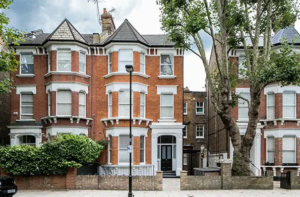
Nearly four out of ten apartments in London that were resold within 12 months as of August 2026, after five to ten years of ownership, were sold for less than their original purchase price. This is according to an analysis by e.surv Chartered Surveyors.
The share of loss-making apartment resales in the British capital reached 39.5%, the highest rate among regions in the United Kingdom. By comparison, among homes owned for the same period, the share of sales below the original purchase price was less than 4%.
In Southeast and East England, approximately one-third of apartments that owners had held for five to ten years were also sold for less than their purchase price. In central and northern England, such transactions accounted for about 20%, while the UK-wide average was slightly more than a quarter. In Scotland, the figure remained below 10%.
According to e.surv’s assessment, price trends for apartments and single-family homes began to diverge noticeably around 2017. Among the factors holding back apartment prices, analysts cite leasehold issues, high service charges, safety concerns regarding buildings, the cost of replacing cladding following the cladding crisis, and rising mortgage costs.
Additional pressure is coming from the general weakening of the London real estate market. According to the e.surv index, the average housing price in the United Kingdom in September 2026 was approximately £328,900, which is 1.5% higher than a year ago. However, London was the only major region to see a year-over-year decline in prices—by approximately 2.3%, to 594,200 pounds
A separate analysis by ValuQ also shows an increase in the number of loss-making transactions in England and Wales. In the first half of 2026, 16.3% of residential properties resold less than five years after purchase were sold for less than their original price. Among apartments, this figure reached 29.5%. The total difference between the purchase price and the resale price of such properties was estimated at approximately £210 million.
It is important to note that this is strictly a nominal comparison of purchase and sale prices. The calculation does not include stamp duty, mortgage interest, real estate agent commissions, renovation costs, maintenance fees, or other owner expenses. Therefore, the actual financial outcome for some sellers may be even worse.
Experts attribute the weak performance of the apartment market primarily to the fact that buyers are increasingly carefully evaluating the ongoing maintenance costs of apartment buildings and potential legal and technical risks. At the same time, demand for single-family homes and townhouses remains relatively more stable.

Foreign investors poured approximately 1.02 billion euros into Greek real estate in the first half of 2026, a 6.7% increase compared to the same period last year, according to data from the Bank of Greece.
At the same time, the growth in foreign investment is occurring against the backdrop of a sharp decline in the number of new applications under the Golden Visa program. This indicates that foreign buyers’ interest in Greek real estate is becoming less dependent on the possibility of obtaining a residence permit.
In the second quarter of 2026, the volume of foreign capital directed toward real estate purchases in Greece amounted to approximately 515.8 million euros. This is 11.2% less than in the second quarter of 2025; however, thanks to a strong first quarter, the result for the entire half-year remained higher than last year’s.
The primary source of these statistics is the Bank of Greece, which separately publishes quarterly and annual data on non-residents’ direct investments in Greek real estate. The statistics include real estate purchases by foreign investors as part of foreign direct investment. Bank of Greece
At the same time, the Greek Ministry of Migration and Asylum has recorded a decline in activity under the Golden Visa program. From January through June 2026, 2,551 new applications were submitted, compared to 4,553 during the same period a year earlier. Thus, the figure fell by approximately 44%. Ekathimerini
The decline in the number of applications is linked, in particular, to stricter program requirements. In the most popular regions—including Attica, Thessaloniki, Mykonos, and Santorini—the minimum threshold for a standard real estate purchase to qualify for a Golden Visa has been raised to 800,000 euros. In most other regions, it stands at 400,000 euros. A separate threshold of 250,000 euros has been retained for certain properties that are being converted from commercial to residential use or are subject to restoration.
However, statistics show that foreign capital continues to flow into the market even without a direct link to the immigration program.
Throughout 2025, foreign investors invested approximately €2.05 billion in Greek real estate. This was less than the record €2.75 billion in 2024, but remained one of the highest figures in recorded history. Between 2019 and 2025, the total inflow of foreign capital into Greek real estate reached approximately €12.4 billion. Ekathimerini
By comparison, the Bank of Greece reported that in 2024 alone, net inflows from real estate purchases by non-residents reached €2.75 billion, up from €2.13 billion a year earlier—an increase of 28.9%. Bank of Greece
The shift in demand means that foreign buyers are increasingly viewing Greek real estate not only as a means of obtaining a residence permit but also as an investment asset in its own right. Demand is driven by the tourism market, long-term rentals, rising housing prices in the most attractive regions, and international investors’ interest in hotel and commercial properties.
Foreign capital continues to be particularly active in Athens and Attica, Thessaloniki, Crete, Rhodes, and other tourist islands.
At the same time, Greek authorities continue to discuss further changes to the Golden Visa program amid a shortage of affordable housing. The growth in foreign demand and short-term rentals has become one of the arguments for raising investment thresholds and introducing additional restrictions on the use of purchased real estate.
Thus, preliminary data for 2026 indicate noticeable changes in the Greek market: the number of investors directly seeking to obtain a Golden Visa is declining, yet the total volume of foreign capital in real estate continues to grow for now.
foreign investor, golden visa, GREECE, INVESTMENTS, REAL ESTATE



